Grilled Eggplant Seasoning: Rubs, Methods and Tips
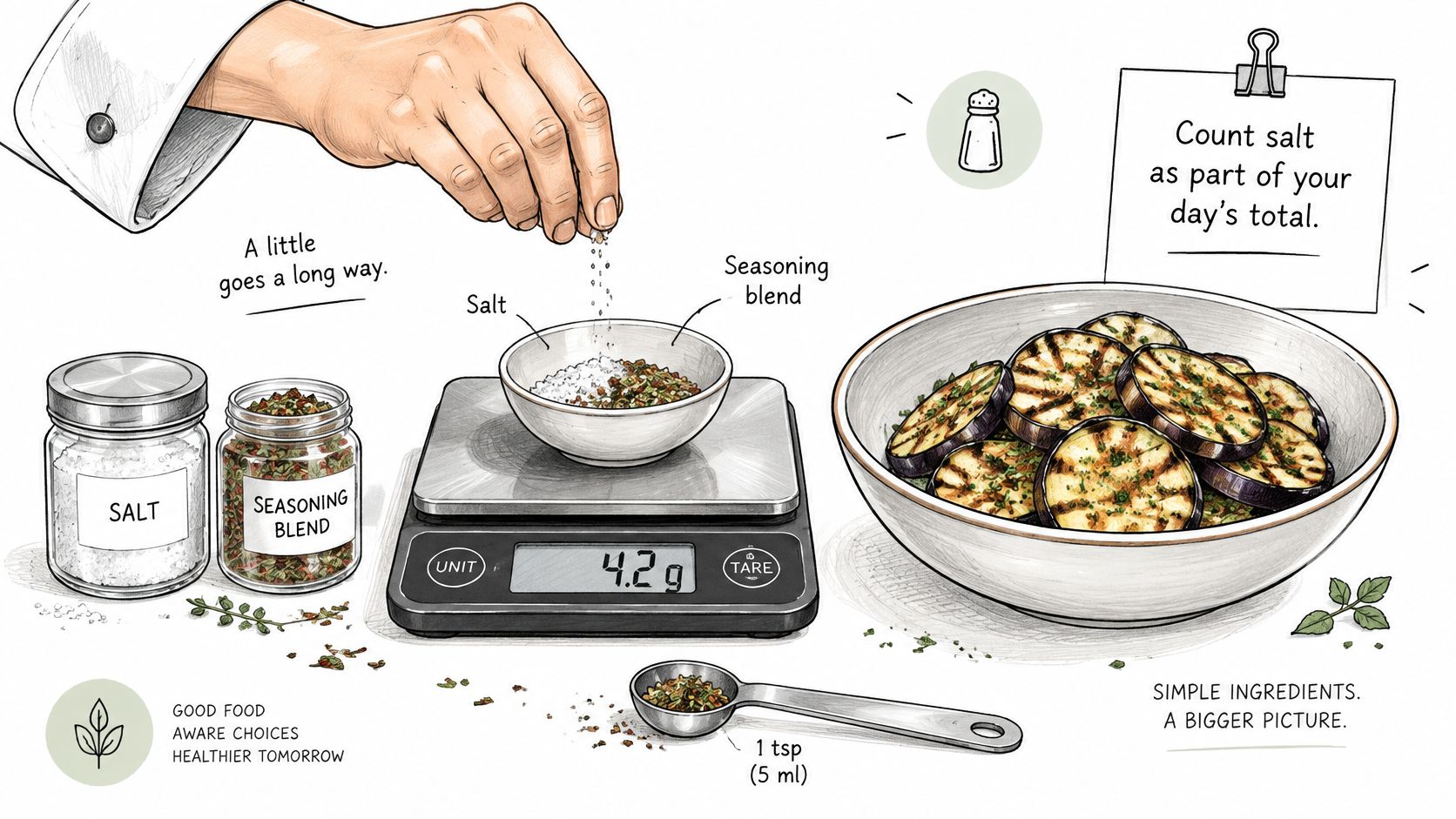
The coals are grey and the aubergine is thickly sliced, yet the first bite tastes mostly of water. Aubergine is mild, so seasoning needs to do more than add a pinch of salt.
A YouGov survey of 2,052 GB adults found that 10% liked aubergine steaks “a lot” and 14% “a little”; 5% had never tried them. A punchy, well-balanced seasoning can make grilled aubergine more inviting to a mixed table.
Aubergines are widely available in UK shops. For bold flavour without an excess of salt, start with a measured dry coat rather than a long wet soak, and avoid adding another handful of salt at the table.
Seasoning Blends for Grilled Eggplant
A pale, dry-looking round is usually under-seasoned, not undercooked. Aubergine carries almost no fat of its own, and the cut face drinks flavour then gives it back as steam if the spice never toasts.
Use 4-6 g of dry spice per 500 g of sliced aubergine, on both faces, whichever profile you pick. That dose is enough to brown without turning the slice into a spice crust that burns before the centre softens.
| Flavour profile | Example blend | Dry spice per 500 g | Best serving idea |
|---|---|---|---|
| Smoky and savoury | SPG (Salt Pepper Garlic) Base Blend | 4-6 g | Sliced with grains and yoghurt alternative |
| Smoky BBQ | Cherry Force BBQ Rub | 4-6 g | Wedges in a bun or flatbread |
| Citrus and bright | Miami Mojo Citrus Blend | 4-6 g | Salad with herbs and lemon |
| Chilli and lime | Holy Jalapeño Fajita Seasoning | 4-6 g | Fajita-style tacos |
| Taco-style | Al Pastor Taco Seasoning | 4-6 g | Tacos with pickled onion |
| Hot and punchy | Spitfire Spice Blend | 4-6 g | Hot skewers with cooling dip |
Which blend fits the meal
SPG is the weekday base. Salt, pepper and garlic let smoke from the coals do the talking, then grains and a yoghurt alternative make a full plate.
Cherry Force suits buns and flatbreads when you want a sweeter, smokier barbecue note without building a sauce.
Miami Mojo belongs on a herb salad, where citrus keeps the flesh from tasting one-note.
Holy Jalapeño and Al Pastor are the taco pair. One leans fajita heat and lime, the other a warmer taco spice that likes pickled onion.
Spitfire is the hot skewer choice. Pair it with a cool dip so the chilli doesn't flatten everything else.
UK buyers are already using more spice. Consumption reached 91,000 tonnes in 2024, up 9.7% from 2023, according to figures reported by Sanita Spices. More spice in the cupboard doesn't help if it never sticks to the vegetable.
Aubergine's mild, absorbent flesh needs smoke on the grill and acid at the end. Paprika, garlic and cumin brown. Lemon, lime or sumac wakes the bite up after cooking. If you want a wider vegetable method before you pick a jar, this guide to seasoning vegetables walks through coating rather than drowning.
These blends stay plant-based, with no filler bulk, and they ship in craft cans rather than loud novelty tubs. The flavour routes are global, from citrus and jalapeño to taco spice, which is the useful split when one grill is feeding several tastes. If you want to compare an all-purpose shaker set before you commit, the BBQ seasoning three-pack bundle on Loyaltie lines up SPG-style, garlic and hot honey profiles in one place.
Dry Rub or Wet Marinade for Grilled Eggplant
For grilled aubergine, a dry rub is the default and a wet marinade is the exception. A dry coat lets the cut face toast and char. A long soak waters the spice down and leaves grey, steamed slices.
| Method | Dry rub | Wet marinade |
|---|---|---|
| Oil and seasoning | 15-20 g oil and 4-6 g dry spice per 500 g | Spices and salt steeped in oil and acid |
| Resting time | 5 minutes after coating | Long soak that dilutes the rub |
| Surface result | Dry surface that chars over coals | Wet surface that steams, grey and soggy |
| Salt control | Salt weighed once in the blend | Salt split between marinade and rub, easy to overshoot |
| Best use | Thin rounds and planks grilled fast | Thick planks needing flavour pushed deeper |
The dry method in three moves
- Brush each 500 g of sliced aubergine with 15-20 g oil. That is a light film, not a puddle. Extra oil is what feeds flare-ups.
- Coat both sides with 4-6 g dry spice, and count any salt already in the blend toward the salty part of the plate.
- Rest 5 minutes, then grill. Long enough for the rub to grab, short enough that the surface doesn't weep.
A marinade still earns a place on a thick plank. A short dip in lemon juice can push flavour inward, then you wipe the face dry before the rub goes on. Leave it wet and the coals steam the outside while the core stays spongy.
Practical rule: The rub carries the seasoning's salt in either method, so weigh that salty part once and don't add a second salty layer "for luck".
Oil is the trade-off people miss. Too little and the spice falls off. Too much and the slice fries in drips, tastes greasy, and never takes a clean char.
Building Flavour With Less Salt
More seasoning doesn't mean more salt. Depth on aubergine comes from browning, smoke, chilli, garlic and a sharp finish. Salt is one tool, and it is already capped for the day.
People aged 11 and over should have no more than 6 g of salt a day, about one level teaspoon, and that total includes salt already in food plus salt added in cooking, as the NHS salt guidance sets out. A rub is not an open jar. A level teaspoon is only a rough picture of 6 g, because crystal size and mixed spices don't share one density. Weigh the salty part.

England's average adult intake sits about 40% above the recommendation. Research on meeting the UK 2024 salt targets, set out in government nutrient guidance, points to a possible average cut of 1.12 g a day, or 17.5%. That is why a grill recipe should measure, not pinch twice.
A salt budget you can actually cook
Keep salty seasoning to no more than 5 g per 500 g of aubergine, including salt inside the blend. A 150 g portion then carries about 1.5 g. That leaves most of the day's allowance for bread, sauce, cheese or whatever else is on the plate. The 6 g figure is a whole-day ceiling, not a target for one vegetable.
Salt once, lightly, before the grill. If the warm slice tastes flat, finish with acid or herbs, not another shake.
Salting helps texture only when you give it time, then wipe the surface. Salt and cook at once, and you mostly add sodium. Salt and walk away for an hour, and you pull out more water than you need.
Flavour that doesn't add sodium
Build the rest of the taste from ingredients that carry no salt of their own:
- Smoke and spice: smoked paprika and cumin brown on the cut face and read as barbecue without a second salty pass.
- Alliums and heat: garlic and chilli give savoury punch that salt usually gets credited for.
- Fresh finish: citrus zest, chopped herbs and sumac lift a soft slice after it leaves the heat.
Those same boosts suit a vegan plate, because they add depth with no dairy and no extra sodium. Still read the jar. A vegetable can be vegan while a blend is not, so check the label before you call the plate vegan. For blend choices built around less sodium, see this low-sodium seasoning guide.
Weigh the rub, taste the cooked slice, then decide. A second salty sprinkle is the habit that blows the budget, not the first measured coat.
How to Season and Grill Eggplant Step by Step
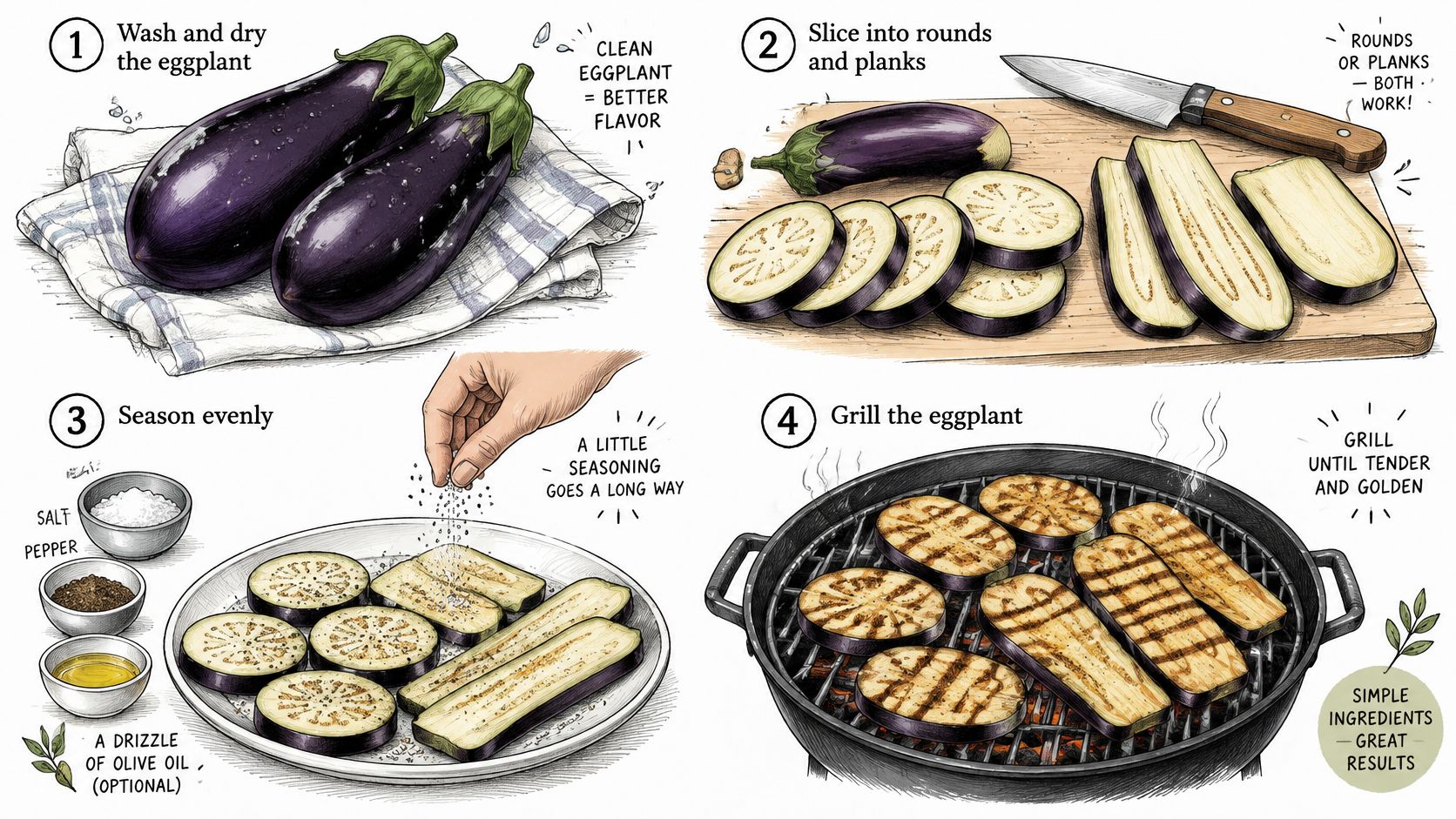
Work in one order so every slice sees the same salt, oil and heat. The picture below is the shape of that routine, from whole fruit to the grill.

Coventry's barbecue safety guidance is clear on the essentials: wash vegetables carefully, cook them thoroughly, and keep raw-food tools off ready-to-eat food. The steps below put that into a repeatable aubergine routine. If you want a short look at slicing and grill contact before you light the coals, this clip is worth two minutes.
- Wash, then dry. Rinse under running water before you cut, so soil isn't pushed through the flesh. Pat dry. Wet skin makes the board slippery and the seasoning slide.
- Cut even pieces. Aim for uniform 15-20 mm rounds or long planks. Even thickness means even seasoning and even heat. The slip is cutting thin. Thin slices dry out before the centre turns creamy.
- Salt once. Use no more than 5 g per 500 g, and that figure already includes salt in the blend. Rest 20-30 minutes. Longer than that keeps pulling water and the slice collapses.
- Wipe, don't rinse. Lift off the surface moisture with kitchen paper. Rinsing washes the salt you just measured and leaves a wet face the rub can't grip.
- Oil lightly. Brush 15-20 g oil per 500 g. You want a sheen. Pooled oil is the usual cause of flare-ups and of spice that never toasts.
- Coat both sides. Add 4-6 g dry spice across both faces and rest 5 minutes. One-sided seasoning tastes striped, strong on top and blank underneath.
- Grill on proper coals. Cook over glowing coals with a grey ash surface. Turn often and shift pieces away from flames. Blackened skin is not a reliable sign that the inside is done.
- Check the centre. You want a fully softened middle with no firm, spongy core. Thick planks take the longest. If the edge is charred and the core still fights the knife, move the slice to a cooler spot and give it more time rather than more flame.
For catering batches, write down slice thickness, salt percentage, grill position and how often you turn. That log is what makes the second tray match the first.
Avoiding Sogginess and Flat Flavour
The slice many people throw back is watery and grey. It steamed. It didn't char. The grill, not the recipe card, is usually where that happens.
| Symptom | Likely cause | Fix |
|---|---|---|
| Watery, grey slices | Salted too long or not wiped dry | Salt 20-30 minutes, then wipe dry |
| Rub slides off | Wet marinade or oil pooled | Coat both sides and rest 5 minutes |
| Bland flavour | Only salt used | Add smoke, citrus or herbs after grilling |
| Soft, spongy centre | Heat too low | Grill over glowing coals with grey ash |
| Flare-ups | Excess oil | Use 15-20 g oil per 500 g and move slices |
What the routine doesn't catch
Three grill mistakes sit outside the prep steps.
A crowded grate traps steam. Pieces touching each other braise in their own moisture. Cook in a single layer with a finger of space between slices. If the pile is large, do two rounds and hold the first batch at the cool edge.
Low heat leaves a spongy core. Coals should glow under a coat of grey ash before food goes on. If you can hold a hand over the grate only briefly, you are in the right zone. Lid down the whole time on a cool fire just sweats the flesh.
Pooled oil sheds the rub. Wipe drips off the board before you sprinkle. Spice stuck in oil smears, then burns in the flare.
Flat taste after a good char
If the colour is right and the flavour is still dull, you used salt as a stand-in for everything else. Add acid after grilling, not in a long soak beforehand. Lemon juice or lime zest brightens without more sodium. A spoon of fresh herbs, or the smoke already on the crust, supplies the rest.
Don't rescue a bland slice with another salty shake. That fixes nothing and spends the allowance you kept back for the rest of the meal.
Food Safety and Checking Allergen Labels
Keep raw meat away from the aubergine from the start. Prep the vegetables first, use separate boards and utensils where you can, and don't put cooked slices back on a tray that held raw food. Food Standards Agency guidance says washed produce should stay separate from ready-to-eat food, with thorough handwashing and separate equipment. The same outdoor standard is to hold finished aubergine at 63°C or above, refrigerate leftovers promptly, and discard perishables left unrefrigerated for more than two hours when the weather is unusually hot.
A vegan slice can still sit under an allergenic rub or sauce. GOV.UK food information rules require the product name, a quantitative ingredients declaration where it applies, an ingredients list that includes allergens, net quantity, and a best-before or use-by date. The allergen list covers cereals containing gluten, eggs, fish, peanuts, soybeans, milk, nuts, mustard, sesame, celery, lupin, crustaceans, molluscs, and sulphur dioxide or sulphites above 10 mg per kilogram or litre. Those allergens must be emphasised in the ingredients list, by font, style, background colour or bold type.
Read the jar before you serve anyone with an allergy. Mustard, sesame, soya and gluten show up in blends that look like "just spices" from the front of the pack. If gluten is the question on your table, this gluten-free seasoning guide is the label check to make before you season.
Your First Grilled Eggplant Plate and FAQ
Cook one plate this weekend and judge it hot, not from the raw slice.
Take 500 g of aubergine in 15-20 mm planks. Salt once, at no more than 5 g including the blend. Coat with SPG (Salt Pepper Garlic) Base Blend, grill over coals, and finish with lemon zest. Serve with flatbread and a herb yoghurt alternative.
You are looking for a softened centre, charred edges, and flavour that carries without a second salty pass. That is a main, not a token side. John Lewis Partnership reported that 46% of surveyed Waitrose customers were already trying, or interested in trying, 30 different plants a week, and 87% of interested non-adopters said plant-variety labelling would help. The same coverage put Waitrose searches for "vegan ready meals" up 31% over the previous 90 days. A seasoned plank with grains or pulses answers that appetite better than another plain grilled side.
Two easy follow-ons use the same heat and a different jar. A taco bowl with Al Pastor Taco Seasoning wants pickled onion and something fresh. A fajita plate with Holy Jalapeño Fajita Seasoning wants peppers and a cool dip.
If you are testing several profiles, the build your own bundle page lets you pick the jars. For a ready range, the Best Sellers seasoning gift set covers more than one cuisine in one go.
Is the aubergine done?
Yes when the centre is fully soft, the edges are charred, and there is no spongy core. If the middle still resists, it needs time on a cooler part of the grate, not more salt.
Is the seasoning balanced?
Taste a warm piece. If it tastes flat, add acid or herbs only. If it already tastes salty, stop. Bread and sauce on the same plate will add more.
Which blend suits a beginner?
Start with SPG. It is the most versatile base, and you can move to citrus, taco or chilli jars once the salt, oil and heat are under control.
Smokey Rebel makes small-batch, plant-based BBQ rubs in recyclable craft cans, with global flavours that work on grilled aubergine as well as the rest of the barbecue. If you want a measured rub instead of another salty sprinkle, start with a base blend and build the plate from there. See the range at Smokey Rebel.
Join our Mailing List
Sign up and get Smokey Rebel Recipes + weekly recipes straight to your inbox!
Recent articles
BBQ Rub for Pulled Pork Ratios and Method
Get a BBQ rub for pulled pork with gram ratios, a seasoning method, smoke or oven tips, and shredding advice.
Read moreGrilled Eggplant Seasoning: Rubs, Methods and Tips
Learn the best grilled eggplant seasoning rubs, marinade vs dry methods and grilling tips to avoid sogginess, with vegan-friendly flavour...
Read moreHow to Make a Dry Rub for Turkey That Actually Works
Learn how to make and apply a dry rub for turkey, with salt ratios by bird weight, oven times, safe...
Read more