BBQ Rub for Pulled Pork Ratios and Method
You've got a pork shoulder on the worktop, a cooker to light and no clear answer for how much rub it needs. Too little and the bark tastes faint. Too much and you get a dusty, salty crust that hides the pork. A good BBQ rub for pulled pork solves that with weight, not guesswork, and the same coat can then go into a smoker, a kettle or an oven.
Pulled Pork Rub Ratio by Weight
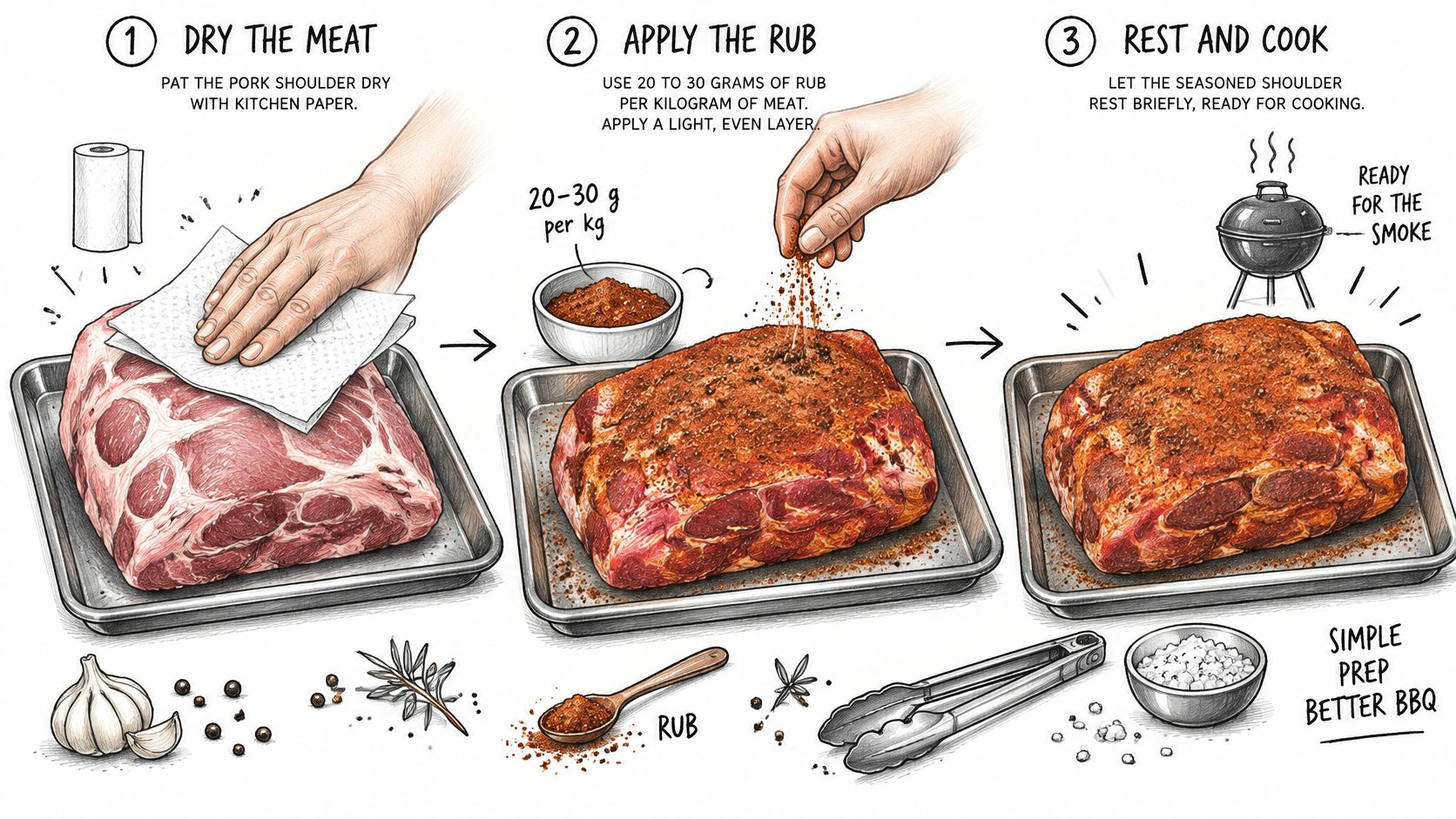
Start with the joint most UK cooks will buy, a 2 to 2.5 kilogram bone-in pork shoulder from a butcher or supermarket. Weigh it first, because every number that follows comes from that weight. Use 20 to 30 grams of rub per kilogram, so a 2.5 kilogram joint takes 50 to 75 grams in total. That's a visible, even coat, not a paste and not a light dusting you can't see after ten minutes.
This is a practical cut to learn on. Home-fed pig-meat production reached 920,000 tonnes in 2024, a 3.9% increase from 2023, according to Agriculture in the United Kingdom 2024 livestock data. Shoulder and leg joints are widely available at different price points, so a repeatable ratio helps you get the same seasoning whether you're cooking one small collar or a larger joint for a gathering.
Build the Mix by Share of Weight
If you're mixing your own, think in percentages of the rub, then convert to grams per kilogram of pork. Salt seasons the outer meat and helps bark set. Pepper and paprika bring warmth and colour, sugar adds mild sweetness and helps the surface darken, and garlic and onion round out the savoury base.
| Component | Role | Share of rub | Grams per kg |
|---|---|---|---|
| Fine sea salt | Seasons and helps the bark set | 25-30% | 6-8 g |
| Coarse black pepper | Warmth and aroma | 15-20% | 4-5 g |
| Demerara or soft brown sugar | Colour and mild sweetness | 20-30% | 5-8 g |
| Paprika, sweet or smoked | Colour and soft smoke | 15-20% | 4-5 g |
| Garlic powder | Savoury depth | 8-10% | 2-3 g |
| Onion powder | Rounded sweetness | 5-8% | 1-2 g |
| Chilli or mustard powder, optional | Heat or tang | 0-5% | 0-1 g |
| Whole rub on the joint | Visible coat, not a paste | 100% | 20-30 g |
Say you're cooking a 4 kilogram shoulder for a party. You don't need a new recipe. Multiply the grams per kilogram by four, so you need 80 to 120 grams of finished rub, and keep the same shares inside it. A small 1.2 kilogram collar works the same way in reverse.
When to Move Inside the Range
Two details move you to the top or bottom of the range. First, bone-in cuts with more exposed surface and creases take the top end, because you lose some rub in folds and on the tray. A leaner leg joint takes less salt, so stay nearer 25% salt and 20 grams per kilogram overall, or the finished meat can taste sharp once shredded. Second, heat changes sugar. On a hot kettle running above about 135 degrees Celsius, use the lower sugar share, nearer 20%, because sugar darkens quickly and can turn bitter before the centre is tender.
Practical rule: Change the sugar or salt share first. Don't change the total coat until you've cooked the same size joint twice.
If you don't want to mix and weigh seven ingredients, Hickory Hog Pork Rub replaces the homemade mix at the same 20 to 30 grams per kilogram. For a more savoury backbone, a light under-layer of SPG (Salt Pepper Garlic) Base Blend can sit beneath it, as long as both layers together stay inside that total. The point isn't more seasoning. It's the same measured coat, built in two layers.
Flavour Paths for Different Crowds
One ratio doesn't mean one flavour for every table. Keep the gram target steady and change the character of the coat to suit who's eating. That way you aren't relearning quantities every time the menu changes.
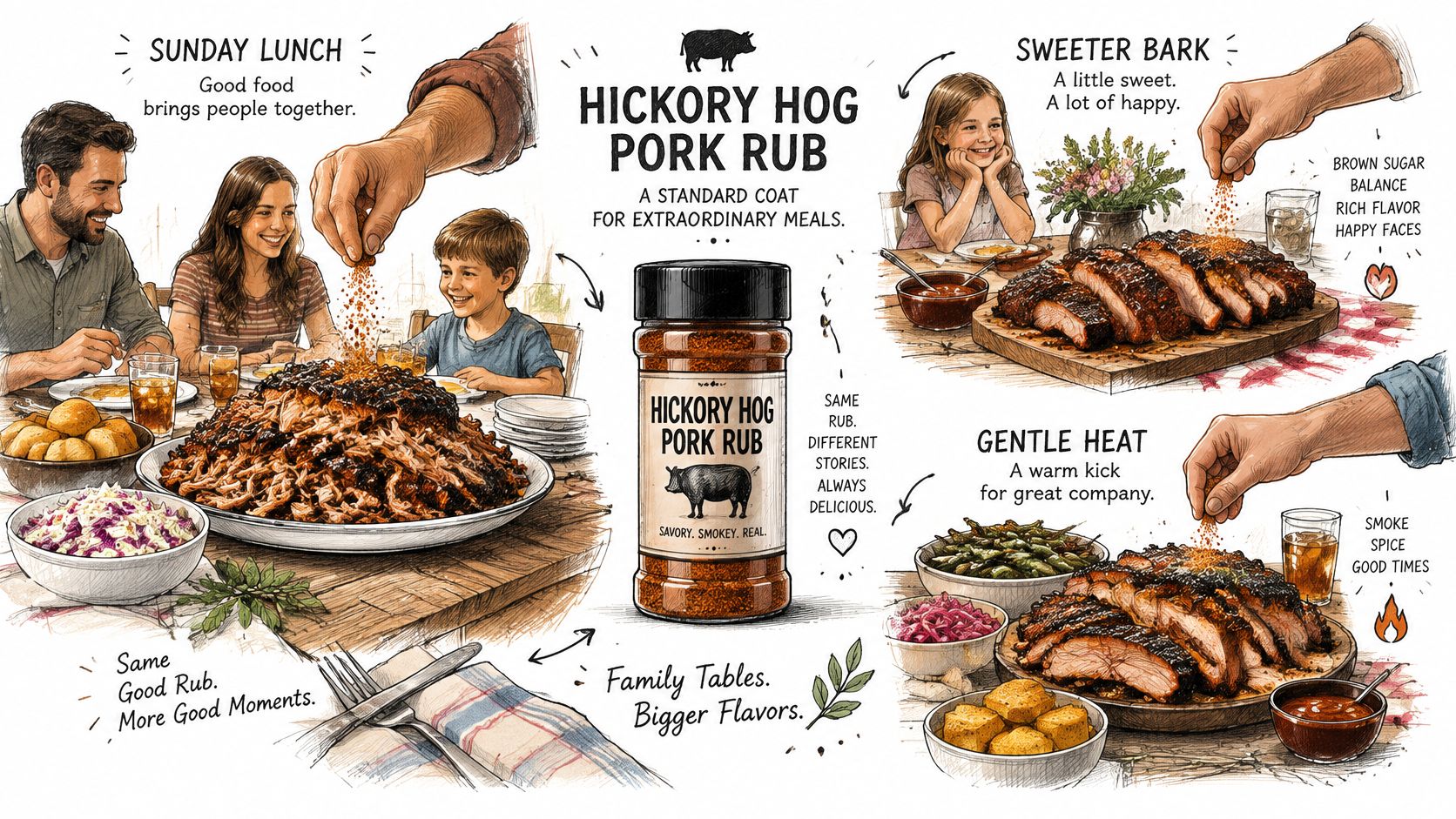
The family tray below shows the end you're aiming for, pork that's seasoned enough to eat well in a bun, a wrap or straight from the pile.

Family Sunday Lunch
For a mixed-age table, you want sweet bark and soft heat, not a joint that needs rescuing with sauce. Use Hickory Hog Pork Rub at the standard coat and keep any finishing sauce on the side. Adults can add more, children don't have to pick around a heavily sauced pile, and the bark stays the main flavour.
That matters because pulled pork is often served shredded and shared. If the rub is balanced before cooking, every portion that includes a bit of bark tastes complete. If all the flavour sits in sauce added later, the first servings taste different from the last.
Smokier and Less Sweet
Some guests prefer the plainer, pepper-led style they associate with Texas barbecue. Start with SPG as the savoury base, then use a lighter hand of the sweet pork rub over the top. Keep the combined weight inside 20 to 30 grams per kilogram, so you shift the balance toward salt, pepper and garlic without making the coat thicker.
This version works well when you're using real wood smoke and don't want sugar competing with it. You'll get a darker, more savoury bark and pork that suits pickles, mustard slaw or a thin vinegar dressing rather than a sweet glaze.
Fruit, Colour and Tacos
For a summer party where you want fruit and colour, switch the main coat to Cherry Force BBQ Rub. It suits pork without turning the tray into dessert, especially if you serve it with something sharp like pickled red onion. Use the same gram target, so the change is flavour, not intensity.
For tacos, go a different way and season with Al Pastor Taco Seasoning. Plan pineapple, diced onion and warm tortillas after shredding rather than a barbecue bun. The pork still cooks as a slow shoulder, but the serving plan is decided before the rub goes on.
Watch how a measured coat translates into a finished cook before you choose your own path.
If one guest wants heat, don't reload the whole joint. Offer a side pinch of Wingman Wing Rub or Spitfire Spice Blend at the table, so one portion can be hotter without changing everyone else's meal. Leave Revolution Beef Rub off the shoulder, because it's built for beef and will steer the flavour away from pork.
Cooks who want several pork options in one set can use the Pork Essentials 4 Pack. The craft-can format keeps blends tidy and measurable, and a filler-free mix means the flavour stays clean through a long cook instead of tasting padded or dusty. You're still weighing the coat, you're just not mixing it from scratch.
How to Apply the Rub Before Cooking
Put the shoulder on a tray that catches loose rub, weigh your 20 to 30 grams per kilogram into a small bowl, and work in order. Each step has a job. If you skip the drying or rush the coating, the rub slides off in wet patches and the bark sets unevenly.
The sequence is the same before a smoker, kettle or oven, so learn it once and reuse it.

A Seven Step Sequence for One Joint
- Pat the shoulder dry: Use kitchen paper on every surface, including creases around the bone, so the rub grips meat rather than sitting in surface moisture.
- Trim only what won't render well: Remove loose flaps and hard fat caps thicker than about 1 centimetre, but leave a thin fat layer so the outside doesn't dry out during the long cook.
- Add an optional binder: Spread a teaspoon of yellow mustard or a brush of oil thinly enough that no yellow pool shows, and skip it entirely if the meat already feels tacky.
- Sprinkle from a height: Start with the underside, then the sides, then the fat cap, pressing lightly with a dry hand so bare patches disappear without smearing the coat into paste.
- Weigh what's left: If rub remains in the bowl or on the tray, note it, because that tells you what stayed on the meat and makes the next cook repeatable.
- Rest the seasoned joint: Leave it uncovered on a rack for 20 to 40 minutes while the cooker heats, or cover and refrigerate for 4 to 12 hours when you want salt more time to season the outer layer.
- Stop adding rub: Don't rinse it off, and don't add a second heavy coat just before the heat or the crust will taste dusty and raw in places.
Overnight resting is useful for catered batches where you're seasoning several joints ahead of service. It isn't required for a weeknight shoulder that you're cooking the same day. The shorter rack rest still lets the surface become tacky, which is what helps the coat stay put when you lift the joint onto the grate.
What Good Seasoning Looks Like
Look for an even tan coat where you can still see the shape of the meat underneath. There shouldn't be wet clumps in the creases, dry piles on the fat cap or shiny bare patches on the sides. If you see a bare patch, pinch rub from the tray and press it on rather than shaking more over the whole joint.
A good coat is still visible after the first hour of cooking. If most of it is in the drip tray, the surface was too wet or the binder was too thick.
Handle the joint from underneath when you move it. Gripping the top with tongs scrapes lines through the bark before it has set. For two joints, season and tray them separately if you can, because stacking or crowding rubs the coat off the contact points. Small handling details like that explain why two shoulders seasoned with the same BBQ rub for pulled pork can finish with different bark, even in the same cooker.
Smoking Versus Roasting the Same Rub
The rub stays the same. Only the heat plan changes. That idea confuses people at first, because oven pulled pork can look paler than smoked pork, but colour isn't the measure of whether the seasoning worked. Temperature control and a probe check matter more than chasing a particular shade.
Cooker Plan for a 2 to 2.5 Kilogram Shoulder
| Cooker | Rough time | Wood or setting |
|---|---|---|
| Pellet or offset smoker | 8-12 hours | Fruitwood or hickory pellets |
| Kettle, indirect | 7-10 hours | Two or three wood chunks |
| Domestic oven | 5-7 hours | No wood; rub supplies colour |
Run a pellet or offset smoker at 110 to 120 degrees Celsius for about 8 to 12 hours. A kettle with indirect heat and a drip pan sits a little hotter at 120 to 135 degrees Celsius for about 7 to 10 hours. In a domestic oven at 150 degrees Celsius, keep the joint covered for most of the cook, then uncover it for the last 45 to 60 minutes for about 5 to 7 hours total, so the surface can dry and colour.
Treat those times as planning ranges, not promises. A tall, cold, bone-in shoulder takes longer than a flatter boneless piece at the same weight. Wind, opening the lid and a crowded grate also stretch the cook.
Safety First, Then Pull Texture
Pork must be cooked thoroughly throughout, and UK government cooking guidance recognises 70°C for 2 minutes, 75°C for 30 seconds, or 80°C for 6 seconds. Check the thickest centre with a clean, calibrated probe and keep the tip away from bone, because bone can give a misleading reading.
That safety point isn't the same as shreddable texture. For collagen to soften enough for pulling, continue to about 93 to 96 degrees Celsius after the safety point, not instead of it. Dark bark and a long clock aren't proof the centre is done, especially on an irregular joint.
- Probe in two spots: Check the thickest centre and one other deep area if the joint is uneven.
- Watch the sugar: If the sugar share is high, keep the surface under about 135 degrees Celsius or tent loosely with foil once the colour is right.
- Spritz late, if at all: Use a little apple juice or water only if the surface looks dry after the bark has set, usually past the three-hour mark.
- Record the cook: Note joint weight, start time, probe readings and resting time so a second joint matches the first.
For wood, pellet users can choose fruitwood or hickory from the pellets collection, while kettle users need only two or three chunks rather than constant smoke. Our guide to smoking wood chips helps if you're deciding how much wood is enough. Oven cooks get colour from paprika and sugar, not from wood, and shouldn't try to fake smoke by overheating the rub.
Resting Shredding and Serving
Resting starts when the centre has passed the safety check and the meat feels pullable, with the probe sliding in without much resistance. Move the joint to a warm tray, tent it loosely with foil and rest for 30 to 45 minutes for a smaller shoulder. A 4 kilogram piece can rest for up to an hour.
Don't seal it tightly for a long hold. A tight wrap in a cool kitchen can make the bark lose its set surface as it sits in cooling juices, and a hot sealed box for longer than an hour can steam it soft. A loose tent keeps heat in while letting some steam escape.
Shred, Moisten and Hold
Shred while the pork is warm using two forks or gloved hands. Pull with the grain into strands rather than chopping across it into crumbs, and discard pockets of hard fat and the bone as you go. Fold the bark pieces through the pile, because that's where much of your measured rub now sits.
If the meat looks dry, stir in a few spoonfuls of the defatted cooking juices. Add a little, toss, then taste before adding more. A flood of sauce at this stage hides the seasoning you've spent hours building and makes every serving taste the same.
Holding rule: Keep pulled pork above 63 degrees Celsius if it's waiting on a buffet, and chill leftovers within two hours.
Portion leftovers into shallow containers so they cool evenly in the fridge. Reheat only what you need, covered with a spoonful of juice or water, so the rest doesn't dry out through repeated heating.
One Tray, Three Ways to Serve
A classic bun needs a soft roll, pickle and a vinegar slaw, and this simple coleslaw recipe gives the sharp crunch sweet bark needs. Keep the slaw dressing bright rather than heavy, so it cuts the fat instead of adding more richness.
If you used the Al Pastor coat, serve the pork in corn tortillas with onion, coriander and lime, plus pineapple if you planned it. The fresh toppings do the work that barbecue sauce would do in a bun, so don't add both by default.
For a lower-bread family tea, spoon the pork over a jacket potato or rice bowl with peas, sweetcorn or a simple salad. Offer sauce on the side for all three options. A small splash of cider vinegar with black pepper wakes up a very sweet bark, and pellet cooks don't need a new smoke step at the table, because the wood choice was already made during the cook.
Pulled Pork Rub FAQs
How Much Pulled Pork Per Person
A 2.5 kilogram bone-in shoulder yields roughly 1.2 to 1.5 kilograms of shredded meat once bone and hard fat are removed. That's enough for about 8 to 10 adults in buns or tacos with normal sides. If it's a family tea where pork is the main event and sides are small, cook a larger joint or add a second protein rather than stretching thin portions.
Why Did the Bark Turn Black and Bitter
The cause is usually one of three things. The sugar share was high, the surface ran above about 135 degrees Celsius, or you spritzed before the coat had set and washed sugar into hot spots. Next time use the lower sugar share, keep a smoker nearer 110 to 120 degrees Celsius, and wait until the bark looks dry and set before any spritz.
Dark mahogany bark is normal on a long cook. Black, acrid bark that tastes bitter on the tongue is different, and scraping off the worst patches before shredding is better than folding them through the whole tray.
Can the Same Rub Go on Pork Loin or Chops
Yes, but use a lighter coat of about 10 to 15 grams per kilogram. Loin has less fat and cooks quickly, so a heavy sweet crust won't soften in the same way and can overpower the meat. Cook chops and loin to tenderness rather than pulling texture, and let the rub act as seasoning instead of bark.
Can the Rub Be Made Ahead
Yes. Mix it in quantity, store it in an airtight tin away from heat and steam, and weigh each batch as you use it so the coat stays consistent. If brown sugar clumps, break it up and reweigh rather than guessing by spoonfuls.
None of these fixes replaces the probe check. Use the detailed guide to temperature for pulled pork alongside your cooker plan, because flavour changes never replace safety temperatures.
Choose a Rub and Start the Cook
Match the tin to the cooker and the menu, then keep the method steady. For classic pulled pork, the default is Hickory Hog Pork Rub at 20 to 30 grams per kilogram. For a cleaner savoury bark, put SPG underneath a lighter sweet coat. For a mixed party or tacos, add Cherry Force or Al Pastor using the crowd plans that suit your table rather than inventing a second homemade mix on the day.
Households that cook pork more than once a month can start with the Pork Essentials 4 Pack, while the Bar-B-Que Heroes Bundle covers wider grilling and game-day cooking. If you'd rather choose your own tins, use the Build Your Own Bundle, and pellet users can add fruitwood or hickory from the pellets collection. Smokey Rebel is one option for those tins, sold in craft cans with plant-based, filler-free blends.
There's a wider audience for getting this right at home. UK barbecue occasions reached 73 million in the 16 weeks ending 7 September 2025, up from 58 million in the equivalent period of 2024, according to AHDB consumer insight using Worldpanel by Numerator UK data.
Start with the first physical step. Buy or mix the rub, dry the shoulder, hit the gram target, and probe the centre before anyone judges the bark.
Weigh your shoulder, choose Hickory Hog for classic pulled pork or build a bundle around Cherry Force and Al Pastor for different crowds, and keep every cook at the same measured coat. Visit Smokey Rebel to pick your tins and pellets, then put the probe, not the colour of the bark, in charge of when dinner is ready.
Join our Mailing List
Sign up and get Smokey Rebel Recipes + weekly recipes straight to your inbox!
Recent articles
BBQ Rub for Pulled Pork Ratios and Method
Get a BBQ rub for pulled pork with gram ratios, a seasoning method, smoke or oven tips, and shredding advice.
Read moreGrilled Eggplant Seasoning: Rubs, Methods and Tips
Learn the best grilled eggplant seasoning rubs, marinade vs dry methods and grilling tips to avoid sogginess, with vegan-friendly flavour...
Read moreHow to Make a Dry Rub for Turkey That Actually Works
Learn how to make and apply a dry rub for turkey, with salt ratios by bird weight, oven times, safe...
Read more