Your Guide to the Perfect Temp for Pulled Pork
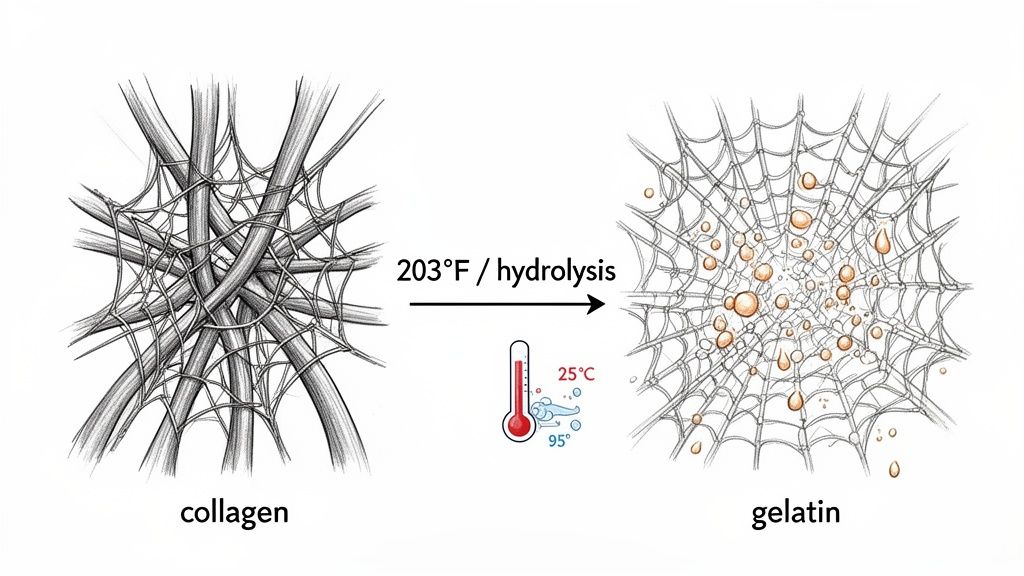
Let's cut right to it. The number you need to remember for incredible, fall-apart pulled pork is 203°F (95°C).
This is the magic number. It's the point where all the tough connective tissue and collagen inside the pork shoulder finally give up, melting into rich, juicy gelatine. That's what gives you meat so tender it shreds with a nudge from a fork. Nailing this temperature isn't just a recommendation—it's the secret to proper barbecue.
Your Roadmap to the Perfect Internal Temperature
Getting that perfect texture is a game of patience and precision. While 203°F is the final destination, the journey involves managing a few key temperature stages along the way. Think of it as a roadmap to BBQ glory, where every number plays a part.
Of course, the whole process begins with building a deep, flavourful foundation. Before the pork even thinks about seeing heat, it needs a generous coat of a quality rub. For a classic, smoky-sweet profile that creates an irresistible bark, try our Smokey Rebel Hickory Hog Pork Rub. It’s packed with authentic flavour and contains no added crap.
Here’s a practical, step-by-step guide to get you started:
- Pat the pork shoulder dry with paper towels.
- Apply a light binder like mustard or olive oil over the entire surface.
- Generously season all sides with the Hickory Hog Pork Rub, pressing it into the meat to ensure a good coating. It’s ready for the smoker in under 5 minutes.
Pulled Pork Temperature Quick Reference Guide
To keep things simple, here's a quick rundown of all the key temperatures you'll encounter on your cook. Getting familiar with these numbers will help you anticipate each stage and cook with confidence.
| Cooking Stage | Target Temperature (°F) | Target Temperature (°C) | Purpose |
|---|---|---|---|
| Smoker/Oven Temp | 225–250°F | 107–121°C | Creates a stable, "low and slow" environment to render fat without drying the meat. |
| The Stall | 150–165°F | 65–74°C | The point where evaporative cooling causes the internal temp to plateau. It's normal! |
| Target Internal Temp | 195–205°F | 90–96°C | The finishing zone where connective tissues break down, making the pork shreddable. |
This table covers the essentials, from setting your cooker to knowing when the pork is ready to pull.
Breaking Down the Key Temperatures
Let’s look a little closer at those three critical temperature zones you’ll need to master.
-
Smoker/Oven Temperature: Keep your cooking environment steady at 225–250°F (107–121°C). This "low and slow" method is absolutely vital. It gently renders the fat and breaks down all that tough connective tissue without sucking the moisture out of your pork.
-
The Stall Temperature: Be ready for "the stall," which usually hits around 150–165°F (65–74°C). At this stage, the meat’s internal temperature can grind to a halt for hours due to evaporative cooling. Don’t panic. It’s a completely normal part of the process, and every pitmaster goes through it.
-
Final Internal Temperature: You're aiming for a final temp between 195–205°F (90–96°C), with 203°F (95°C) being the sweet spot for most cooks. The real test, though, is how it feels. You want it "probe tender," which means your thermometer probe slides in and out with almost zero resistance, like poking into soft butter.
To get this right every single time, it pays to know your gear. If you're unsure about probe placement, have a read through our guide on how to use a meat thermometer correctly.
Get these numbers dialled in, and you’ll be rewarded with succulent, flavour-packed pulled pork every single time.
The Science of Tender Pork: What's Really Happening Inside?
Ever wondered why 203°F (95°C) is the magic number for pulled pork? It's not just a random figure pitmasters came up with. There's some incredible science happening deep inside the meat during that long, slow cook, and understanding it is the key to mastering the game.
Pork shoulder is a seriously tough cut of meat, loaded with dense connective tissue called collagen. You can think of it as a strong, fibrous web holding all the muscle fibres tightly together. If you tried to cook a pork shoulder quickly, like a steak, that web would stay tough and leave you with a chewy, disappointing meal.

From Tough Collagen to Silky Gelatin
This is where the "low and slow" method comes into its own. As the internal temperature climbs past 160°F and starts pushing towards our target of 203°F (95°C), a process called hydrolysis begins to work its magic.
This is the game-changer. That tough, web-like collagen slowly melts and transforms into silky, rich gelatin. It's like a tough sponge gradually turning soft and saturated, able to hold onto incredible amounts of moisture.
This glorious gelatin is what coats every single muscle fibre, giving pulled pork its signature succulent, fall-apart texture. At the same time, the intramuscular fat renders down completely, basting the meat from the inside out. This one-two punch of rendered fat and gelatin is the real secret behind unbelievably moist and flavourful pulled pork.
Why Clean Seasonings Matter
When you’ve spent all that time unlocking those incredible natural flavours, the last thing you want to do is cover them up with artificial fillers or nasty additives. A clean, high-quality rub allows the authentic, rich flavour of the pork—supercharged by the gelatin and rendered fat—to be the real star of the show.
You’re not just throwing flavour at the meat; you're complementing the natural deliciousness unlocked by the science of low and slow cooking. If you want to dive even deeper, check out our pulled pork masterclass for a full breakdown.
Setting Up Your Smoker for Success
Let's get one thing straight: the secret to perfect pulled pork starts way before you even think about internal temperatures. It all comes down to creating a stable, consistent cooking environment. Whether you're firing up a dedicated smoker or just using your oven, a solid setup is non-negotiable if you want that tender, fall-apart result.

Before any meat hits the heat, your gear needs to be ready to go. A clean grill is a happy grill. Simple maintenance, like knowing how to clean stainless steel grill grates, makes a huge difference. You want to taste your pork, not the ghosts of cooks past.
Nailing Your Cooking Temperature
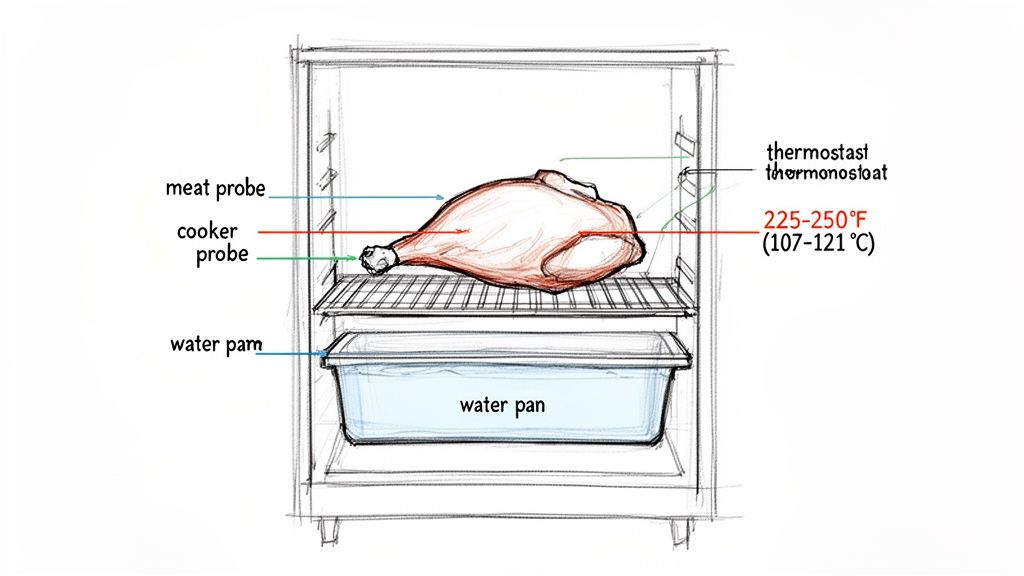
Your one and only goal here is to lock in a steady temperature between 225-250°F (107-121°C). This is the "low and slow" sweet spot. It’s the magic zone where tough connective tissues melt into juicy goodness without turning the meat into a dry, leathery mess.
Always, always preheat your smoker or oven. Throwing a pork shoulder into a cold cooker is a one-way ticket to uneven cooking and a completely messed-up timeline. Give it a good 20-30 minutes to settle in and stabilise before you even think about putting the meat on. If you want a masterclass in managing your smoker, check out our guide on how to use a BBQ smoker effectively.
Creating a Humid Environment
Moisture is your absolute best mate during a long cook. A humid atmosphere helps the pork stay juicy, gives the smoke something to cling to, and is crucial for building that deep, dark bark we all crave.
The easiest trick in the book? A water pan. Just grab a disposable foil tray, fill it with hot water, and stick it in your cooker. The steam it kicks out helps regulate the temperature and keeps the air moist, basically creating a protective shield for your pork over the long haul.
Mastering Your Tools and Fuel
For that authentic smokey flavour, your choice of wood matters. With pork, you can't go wrong with fruit woods like apple or cherry. They produce a milder, slightly sweet smoke that just works beautifully with the meat. Our range of Smokey Rebel Wood Pellets are brilliant for consistent heat and a clean burn every time.
When you're ready, place the pork shoulder fat-cap up, right in the centre of the grate. This lets all that delicious fat render down and baste the meat as it cooks. But the most important tool in your arsenal is a dual-probe thermometer.
- Probe One: Stick this deep into the thickest part of the pork, but make sure you don't hit the bone.
- Probe Two: Clip this one to the grill grate, away from the meat. This tracks the actual air temperature inside your cooker.
This two-probe setup is a game-changer. It lets you monitor everything without constantly opening the lid, which sends your temperature plummeting and adds ages to your cook time. Trust your tools, get your environment right, and let that rub do its thing.
How to Conquer the Stall and the Wrap
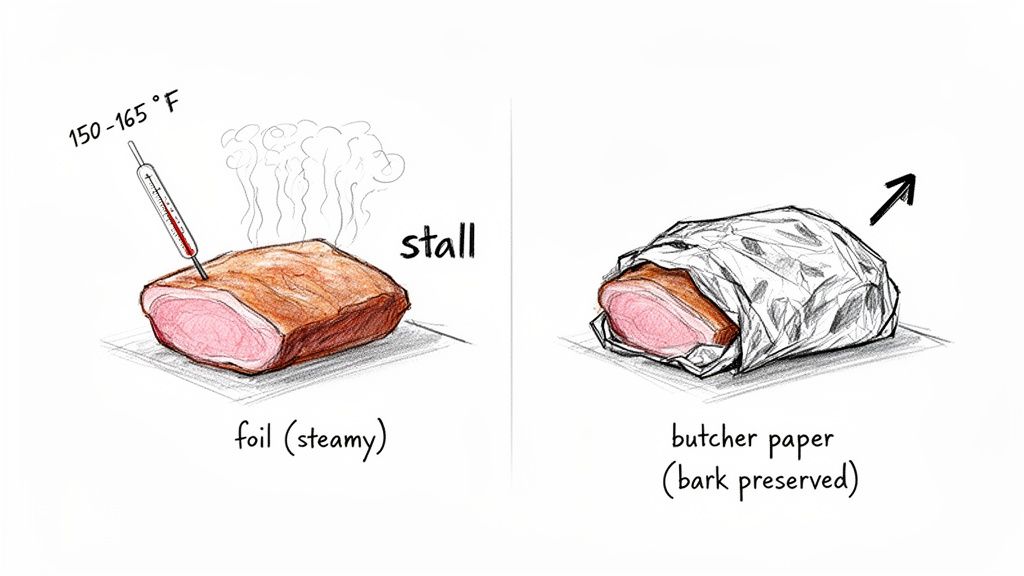
Every pitmaster, from the backyard novice to the seasoned pro, eventually meets "the stall." It’s that frustrating point in the cook when your pork shoulder’s internal temp just hits a wall—usually somewhere between 150-165°F (65-74°C)—and stops climbing. It can sit there for hours, seriously testing your patience.
Don't panic! This is completely normal. It’s a phenomenon called evaporative cooling. As the pork cooks, moisture rises to the surface and evaporates, cooling the meat at the same rate it’s being heated. It’s the exact same principle as your body sweating to cool you down on a hot day.

To Wrap or Not to Wrap
When you hit the stall, you’ve got two choices. You can either wait it out and push through, which often builds a thicker, crunchier bark, or you can wrap the pork to power through it. This popular technique is famously known as the "Texas Crutch."
A robust and well-seasoned bark is your best defence here. Using a rub like the Smokey Rebel SPG Base Blend helps to build a fantastic savoury crust that can stand up to either method, ensuring you don’t sacrifice flavour.
Here’s a breakdown of your two wrapping options:
- Wrapping in Foil: This is the most common method. Foil creates a tight seal around the pork, trapping every bit of steam and moisture. This effectively braises the meat, pushing it through the stall much faster and guaranteeing an exceptionally moist result. The main drawback? This steamy environment can soften the bark you’ve worked so hard to create.
- Wrapping in Butcher Paper: This offers a great middle ground. Pink or peach butcher paper is breathable, which means some steam can escape while still trapping enough heat to speed up the cook. This method helps preserve more of that coveted bark texture while still keeping the pork juicy.
Ultimately, the choice is yours. If you prioritise speed and maximum moisture, foil is your friend. If you can’t bear the thought of sacrificing that perfect bark, give butcher paper a try. Either way, wrapping is a proven technique to conquer the stall and get you to that magic 203°F finish line.
Why Resting Your Pulled Pork Is Not Optional
So you’ve battled through the stall, watched the smoker for hours, and your probe finally hits that magic number. The temptation to shred into it right away is massive, but hold on. The final step isn't pulling it off the heat – it's what you do next.
Resting your pork is non-negotiable. Seriously. Skipping this is the single biggest reason perfectly cooked pork ends up dry and disappointing.
Think about it: during a long cook, the heat makes the muscle fibres tighten up and squeeze out all their moisture. Resting is the crucial cooldown period where those fibres relax and reabsorb all that incredible, rendered-down juice. It's the difference between good and unforgettable.
The Art of the Perfect Rest
You need to let your pork shoulder rest for at least an hour. No exceptions. But if you want to take it to the next level, aim for two to four hours. This longer rest doesn't just make the meat juicier; it allows all those deep, smoky flavours to settle in and become even more complex.
The best way to manage a long rest is with the 'faux cambro' trick. Just wrap your pork butt tightly in foil, bundle it up in a few old towels, and tuck it away inside a clean, empty cooler. It'll stay well above the food-safe temperature of 140°F (60°C) for hours.
This technique is a game-changer. It means that when you finally get your hands in there to shred, every single strand will be loaded with flavour, especially when you’ve used a top-notch rub like our Cherry Force BBQ Rub.
It's this commitment to flavour that's getting a new generation hooked on BBQ. Pulled pork is becoming a huge hit with younger foodies across the UK, who are looking for convenient, flavour-packed meals over more traditional roasts. You can discover more about these UK pork consumption trends right here.
FAQs: Your Pulled Pork Temperature Questions Answered
Even the most experienced cooks run into questions now and then. Here are some straightforward answers to the most common queries we hear about getting that pulled pork temp just right.
What is the lowest safe temperature for pulled pork?
Technically, pork is considered safe to eat at 63°C (145°F). But if you pull it off the heat at that temperature, you'll have a tough, chewy lump of meat that’s impossible to shred. For proper pulled pork, you're not just aiming for 'safe'—you're aiming for tender. That magic happens in the 90-96°C (195-205°F) range. Pushing the temperature this high is the only way to melt all that tough connective tissue and fat into the flavourful, juicy gelatine that makes pork fall apart.
My pulled pork is done but it’s dry. What went wrong?
Ah, the dreaded dry pulled pork. It’s a gutting feeling, but it almost always comes down to one of three culprits. Figure out which one it is, and you'll never have to suffer through it again.
- You Under-cooked It: It might have hit a "safe" temperature, but you likely pulled it off the smoker before the fat and collagen fully rendered. Patience is key.
- You Cooked It Too Hot: Blasting the pork with high heat cooks the outside way too fast. This causes the muscle fibres to tighten up and squeeze out all their moisture long before the inside has a chance to get tender.
- You Skipped the Rest: This is the most common mistake of all. Resting the pork for at least an hour is non-negotiable. It gives the muscle fibres time to relax and reabsorb all those incredible juices you worked so hard to create.
How do I measure the internal temperature correctly?
Guesswork has no place here. A reliable digital instant-read or a leave-in probe thermometer is your best friend for nailing pulled pork. Make sure you slide the probe deep into the thickest part of the pork shoulder, being very careful to avoid hitting the bone. The bone gets hotter than the meat around it and will give you a false reading. The real sign you're there is when the meat is "probe tender"—your thermometer should slide in and out with almost no resistance, like pushing it into a jar of peanut butter.
Does a bigger pork shoulder need a higher final temperature?
Nope. The target internal temp for pulled pork is always 90-96°C (195-205°F), whether you’re cooking a small 2kg joint or a massive 5kg beast. The only thing that changes is the time it takes to get there. A larger shoulder will naturally take much longer, which is exactly why you always cook to temperature, not time. As a rough guide, you can plan for about 1.5 to 2 hours of cooking per pound at 107°C (225°F), but your thermometer is the only thing you should truly trust.
Ready to create some unforgettable pulled pork? The Smokey Rebel Pork Essentials 4-Pack is loaded with bold, clean flavours to take your next cookout to another level.
Join our Mailing List
Sign up and get Smokey Rebel Recipes + weekly recipes straight to your inbox!
Recent articles
Unforgettable Spice Rub Recipes For Chicken You Can Master
Discover bold spice rub recipes for chicken that transform your grilling. From smoky BBQ to zesty citrus, our guide offers...
Read moreYour Guide to the Perfect Temp for Pulled Pork
Master your BBQ with our guide to the perfect temp for pulled pork. Learn the ideal internal temperature, smoker settings,...
Read moreHow to Smoke a Briskt in a Smoker for Perfect Results
Learn how to smoke a brisket in a smoker with our definitive guide. Master trimming, seasoning, temperature control, and slicing...
Read more