How To Use A BBQ Smoker For Perfect Results
Welcome to the world of low-and-slow cooking. This isn't about rushing; it's about patience, technique, and incredible flavour. Learning how to use a BBQ smoker transforms everyday cooking into an art form, built on the simple principle of low temperatures and long cooking times to produce unbelievably tender, juicy results.
This guide will walk you through everything from choosing your first smoker to mastering temperature control, ensuring your first cook is one to remember.
Getting Started Without The Guesswork

There's no denying the rising popularity of home barbecue. The UK BBQ grill market was valued at a whopping USD 146.5 million in 2024 and is on track to hit USD 210.7 million by 2030. That boom shows a real shift towards families investing in proper outdoor cooking equipment.
More people are discovering the pure joy of smoking at home, and honestly, getting started is easier than you might think. To kick off your journey without any of the usual guesswork, you'll want to get kitted out with the right tools. Checking out some Essential BBQ Accessories is a great place to start.
Which Smoker Is Right For You?
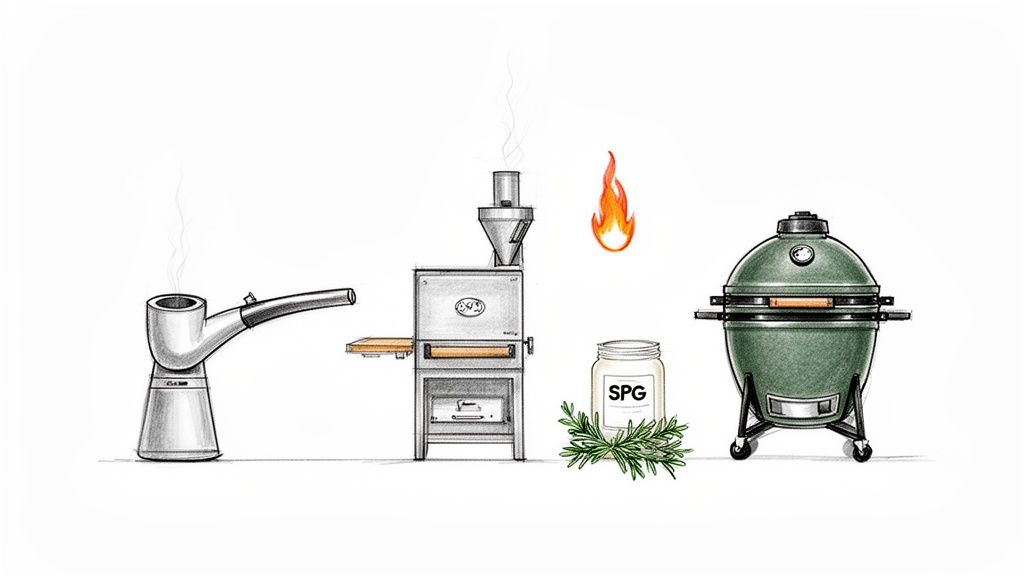
Before you can master your equipment, you need to understand its personality. There are several popular types of smokers out there, and each one has its own quirks, strengths, and ideal use case.
Here’s a quick comparison to help you figure out which one fits your style.
| Smoker Type | Ease of Use | Flavour Profile | Best For |
|---|---|---|---|
| Offset Smokers | More hands-on, requires fire management. | Classic, deep, authentic smoke flavour. | The enthusiast who loves the process of tending a fire. |
| Pellet Grills | "Set it and forget it" convenience. | Clean, consistent, and mild smoke. | Busy cooks who want reliable results with minimal effort. |
| Kamado Grills | Very efficient and holds temps well. | Versatile; can be used for grilling or smoking. | The all-rounder who wants efficiency and versatility. |
Ultimately, the right choice comes down to your lifestyle. If you love the idea of tending a fire and being part of the process, an offset is a fantastic choice. If convenience is king, a pellet grill is unbeatable. And if you want a bit of everything, a kamado offers a brilliant middle ground.
The All-Important First Step: Seasoning Your Smoker
No matter which smoker you bring home, your very first job is to season it. This isn't about adding flavour to the metal; it's about burning off any nasty manufacturing oils, dust, or residues from inside the cooking chamber.
Seasoning also builds up a thin, protective layer of hardened smoke and oil on the interior walls. This patina helps regulate temperature, prevent rust, and creates a clean, non-stick surface that only gets better with every cook.
It's simple. Just run your smoker empty at around 135-150°C (275-300°F) for two to three hours. This one step is the foundation for every great meal you'll cook in it. For more practical advice, check out our guide on BBQ for beginners in the UK.
Building A Foundational Flavour
Once your smoker is seasoned and ready, it's time to think about flavour. While complex, multi-layered rubs definitely have their place, the best way to start is with a solid, reliable foundation. A high-quality, all-purpose seasoning lets the natural flavour of the meat and the kiss of smoke do the talking.
This is where a simple, balanced rub really shines. Our seasonings are crafted with real, cultural flavours and no added crap, perfect for family-focused cooks. A great starting point is the classic Smokey Rebel SPG Base Blend. This timeless combination of salt, pepper, and garlic is the ideal canvas for almost any protein, setting the stage for more adventurous flavour profiles down the line.
Mastering Your Fire And Choosing Flavour Wood

Here's a little secret: the soul of a good barbecue isn't just the meat or the rub—it's the fire. A well-managed fire and the right choice of wood are what separate a decent BBQ from a truly unforgettable one. This is where you turn simple fuel into complex, aromatic flavour.
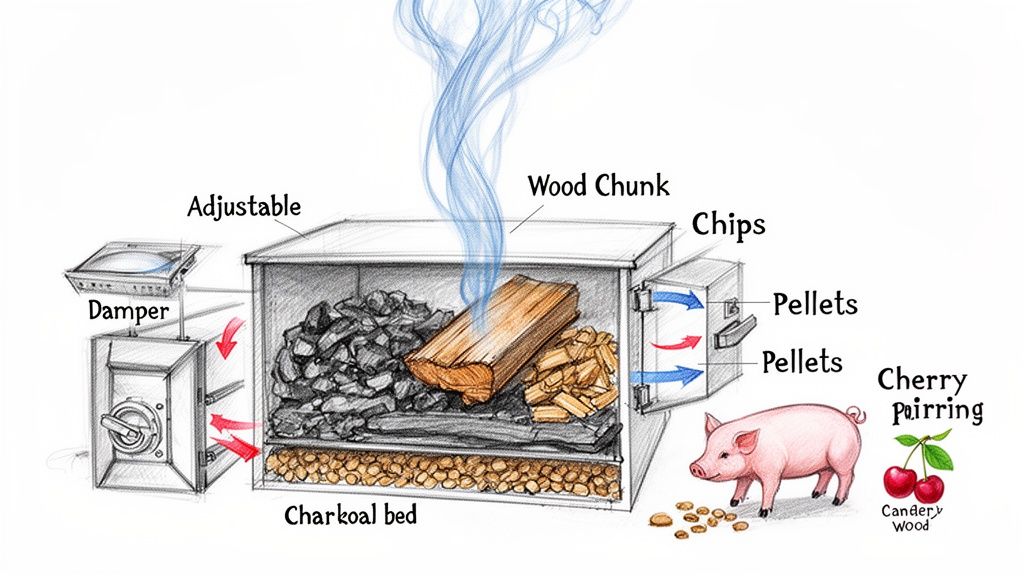
Your number one goal is to achieve the coveted "thin blue smoke." This almost-invisible wisp is the sign of a clean, efficient fire. It’s the kind that imparts a delicate, sweet smokiness instead of that harsh, acrid taste you want to avoid. Thick, billowing white smoke might look impressive, but it's a sign of a struggling fire and will leave your food tasting like an ashtray.
Building The Perfect Fire
Whether you're firing up a traditional charcoal kettle or a modern pellet grill, the principles are pretty much the same. You need a stable heat source to get your main fuel going properly.
For charcoal smokers, a chimney starter is your absolute best friend. Fill it with good quality lumpwood charcoal or briquettes, light a couple of firelighters underneath, and just wait. In about 15-20 minutes, the top coals will be covered in a light grey ash—that’s when you know they’re ready. Carefully pour them into your smoker’s firebox. This method completely avoids that chemical tang that lighter fluid can leave behind.
If you're using a pellet grill, the whole process is automated. Just fill the hopper with quality wood pellets, set your temperature, and the machine does the rest. It's a fantastic, reliable way to get into smoking without the steep learning curve of manual fire management.
Wood Chunks, Chips, or Pellets
The type of wood you use delivers that signature smoky flavour. Whether you use chunks, chips, or pellets really just depends on your smoker and how long you plan to cook.
- Wood Chunks: These are fist-sized pieces of wood, perfect for long cooks in offset or kettle-style smokers. They smoulder for hours, providing a consistent stream of quality smoke. You typically only need to add three or four chunks at the start.
- Wood Chips: Smaller than chunks, chips burn much faster. They're best suited for shorter cooks (like fish or chicken) or for use in electric and gas smokers. Soaking them in water for about 30 minutes before use can help them smoulder a bit longer.
- Wood Pellets: Made from compressed hardwood sawdust, pellets are the essential fuel for pellet grills. They offer incredibly consistent heat and a clean, reliable smoke flavour.
Pro Tip: Never, ever use treated, painted, or softwood (like pine) for smoking. These woods contain resins and chemicals that are harmful and will completely ruin the flavour of your food. Stick to proper hardwoods designed for cooking.
Pairing Wood Flavours With Your Food
Choosing the right wood is a bit like pairing wine with a meal. Certain combinations just work. The trick is to make sure the intensity of the smoke complements the food, not overpowers it.
A great starting point is to match the wood to the protein. For instance, the sweet, mild notes of cherry wood are a classic match for pork, cutting through the richness for a perfectly balanced flavour. This pairing gets even better when you use a rub designed to work with it, like the savoury and slightly sweet Hickory Hog Pork Rub.
For a deeper dive, check out our complete guide on the best smoked wood for BBQ.
Controlling Temperature Like A Pro
Maintaining a steady temperature is probably the most critical skill in smoking. Your smoker's vents, or dampers, are your primary tools for this job. Think of them as the accelerator and brake for your fire.
- The Intake Damper: Usually located near the firebox, this vent controls how much oxygen gets in. More oxygen means a hotter fire. Simple.
- The Exhaust Damper (Chimney): This vent controls how much smoke and heat get out. You want to keep this mostly open to allow for good airflow and prevent stale, bitter smoke from building up.
To raise the temperature, open the intake vent a touch. To lower it, close it down a little. The key here is to make small adjustments and wait 10-15 minutes to see the effect before you fiddle with it again. Chasing the temperature by making big, frantic changes is a classic rookie mistake. Patience and small, deliberate adjustments will get you that stable cook every single time.
Prepping Your Meat For Incredible Flavour

Let’s be honest, amazing barbecue doesn’t just happen. It starts long before the meat hits the smoker. This is where you lay the groundwork for that juicy, flavour-packed result everyone craves. Think of it as setting your meat up for success. A little time spent here pays off big time later.
By trimming, seasoning, and sometimes brining, you're not just adding flavour; you're ensuring the low-and-slow process works its magic to the absolute fullest.
Trimming for Even Cooking and a Perfect Bark
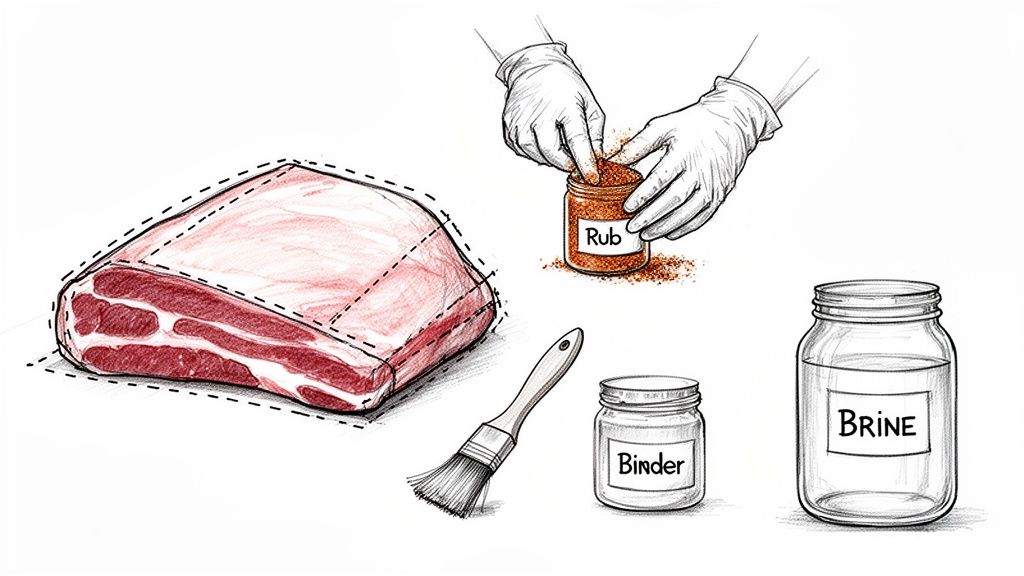
First things first, especially for big cuts like beef brisket or a pork shoulder: the trim. This isn't about being wasteful; it’s about shaping the meat for a better, more consistent cook. You’re aiming for a more uniform, aerodynamic shape that lets heat and smoke wrap around it evenly.
With a brisket, trim the hard, thick fat cap down to about 6mm (¼ inch) thick. This allows the fat to render down beautifully without blocking the smoke from getting to the meat. On a pork shoulder, just focus on removing any dangly bits of fat or meat that are likely to burn during a long cook.
A good trim does two critical things: it stops some parts from overcooking while others are still playing catch-up, and it creates the ideal surface for that legendary dark, crunchy crust we call 'the bark'.
Building Layers of Flavour
With the meat trimmed, it’s time to build flavour. We start with a binder—a thin layer of something to help the dry rub stick. Don't overthink it. A light slather of American mustard, a bit of olive oil, or even hot sauce works a treat.
You won't even taste the binder after a long smoke, but it’s crucial for creating a tacky surface that the seasoning can grip onto. Just apply enough to moisten the surface; you don't want it dripping everywhere.
Now for the rub. Apply it generously. You want a complete, even crust of seasoning. A great pro tip is to sprinkle the rub from about 30cm (12 inches) above the meat. This lets it fall evenly like snow instead of clumping up. Pat it in gently—don’t actually rub it, as this can make it pasty.
Practical Example: How to Season BBQ Pulled Pork in 5 Minutes
Want to get your pork shoulder ready for the smoker fast? Here’s a simple, step-by-step method for perfect seasoning every time.
- Pat the pork shoulder dry with paper towels.
- Apply a binder. Squeeze a thin layer of American mustard all over the pork. Use your hands to spread it evenly.
- Season generously. Sprinkle Hickory Hog Pork Rub over the entire surface from about 30cm above. Make sure you cover the top, bottom, and all sides.
- Pat, don't rub. Gently pat the seasoning into the meat to ensure it sticks.
- Let it rest. Allow the seasoned pork to sit for 15-20 minutes while your smoker gets up to temperature. This helps the rub form a paste and adhere properly.
Matching Your Rub to Your Meat
Choosing the right rub is all about complementing the meat, not overpowering it. You wouldn't throw the same seasoning on a delicate piece of fish as you would on a hefty beef brisket, right? This is where you get to be creative.
To help you get the best out of your cooks, we've put together a quick pairing guide for our Smokey Rebel rubs.
Smokey Rebel Flavour Pairing Guide
| Protein / Vegetable | Recommended Smokey Rebel Rub | Flavour Profile | Link |
|---|---|---|---|
| Beef Brisket & Steaks | Revolution Beef Rub | Bold, peppery, and savoury with a garlic punch. | Buy Revolution Beef Rub |
| Chicken & Turkey | Chipotle Cowboy Chicken Rub | Smoky, with a mild-to-medium chilli warmth. | Buy Chipotle Cowboy Chicken Rub |
| Pork Ribs & Pulled Pork | Cherry Force BBQ Rub | Sweet and fruity with a deep cherry and spice base. | Buy Cherry Force BBQ Rub |
| Lamb, Pork & Veggies | Hickory Hog Pork Rub | Classic smoky hickory with balanced sweet and savoury notes. | Buy Hickory Hog Pork Rub |
| Anything & Everything | SPG (Salt Pepper Garlic) Base Blend | A perfect, coarse blend of Salt, Pepper, and Garlic. | Buy SPG Base Blend |
This table is just a starting point, of course. The best part about barbecue is experimenting, so don't be afraid to mix things up and find your own perfect combinations.
The Power of Brining
For leaner cuts like chicken breasts or pork loin, brining is a total game-changer. A brine is just a simple saltwater solution (sometimes with sugar) that the meat soaks in before cooking.
Through osmosis, the meat absorbs the saltwater, seasoning it from the inside out and, more importantly, helping it lock in moisture during the cook. This simple step can transform a potentially dry cut into something incredibly juicy and succulent. It’s well worth the extra time.
Managing The Cook, Temperature, And The Infamous Stall

Right, this is where the magic happens. All that prep work is about to pay off as you settle in for the long haul. The next few hours are a true lesson in patience, turning tough, gnarly cuts of meat into something genuinely special. The mantra from here on out? Low and slow.
Cooking low and slow means locking your smoker in at a steady temperature, usually somewhere between 110°C and 135°C (225°F to 275°F). This gentle, consistent heat is what breaks down all the tough connective tissues and renders the fat, giving you that incredible melt-in-the-mouth texture we’re all chasing.
Mastering The Two Key Temperatures
For the entire cook, you need to be obsessed with two numbers: the air temperature inside your smoker and the internal temperature of your meat. Think of the smoker temp as your cooking environment, while the meat's internal temp is the only thing that tells you when it’s actually ready.
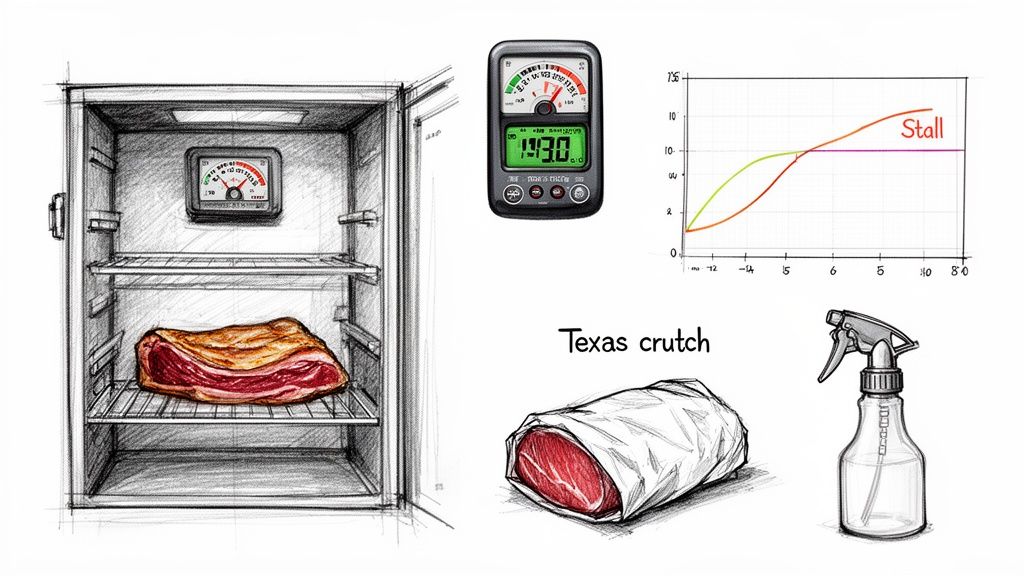
Forget the clock. You cook to temperature, not to time. A good digital, dual-probe thermometer isn't a luxury; it's essential kit. One probe clips onto the grate to measure the ambient heat, and the other gets pushed right into the thickest part of the meat.
A reliable thermometer is your single best friend in BBQ. It takes all the guesswork out of the equation, letting you make tiny vent adjustments and know, with absolute certainty, when your food is perfectly cooked and safe to eat.
If you want to get this part dialled in, we’ve got a full guide on how to properly use a meat thermometer. It’s a simple skill that makes a massive difference to your results.
What To Do When You Hit The Stall
At some point during a long cook—usually when the meat’s internal temperature hits around 65°C to 75°C (150°F to 165°F)—you’ll notice something weird. The temperature just stops climbing. It might even drop a degree or two. This is "the stall," and it can be incredibly frustrating if you don’t know what’s happening.
Don't panic! It's a completely normal part of the process. The stall is caused by evaporative cooling—as the meat cooks, it sweats, and that moisture evaporating from the surface cools it down, fighting against the heat of your smoker. It’s a scientific standoff that can last for hours.
You can just ride it out, but if you haven't got all day, there's a trick to power through it.
Using The Texas Crutch To Power Through
The "Texas crutch" is the go-to technique for beating the stall. It's simple: you wrap the meat tightly in either butcher's paper or foil. This traps moisture, stops the evaporative cooling, and gets the internal temperature climbing again.
- Butcher's Paper: This is what most pros use. It's breathable enough to let some steam escape, which is crucial for protecting the crunchy bark you've spent hours building.
- Foil: Foil creates a much tighter seal. It’ll push you through the stall faster, but be warned—it traps all the steam, which can sometimes soften the bark.
Once it's wrapped, get it back in the smoker and keep cooking until you hit that final target temperature. Not only does this save you time, but it also helps keep the meat incredibly moist.
To Spritz, Or Not To Spritz?
Spritzing is another technique you'll see a lot. It just means lightly spraying the surface of your meat every 45-60 minutes or so with a liquid—apple cider vinegar, apple juice, even plain water works.
This does a few things. It helps smoke stick to the surface, which can give you a better smoke ring and a deeper bark. It also adds a tiny bit more evaporative cooling, which can make the cook a little longer but often results in a better, more complex flavour. Imagine a rack of ribs covered in Cherry Force BBQ Rub, spritzed with apple juice to create a beautiful, sticky glaze. It’s a simple touch that adds a whole new layer to your cook.
The Final Stretch: Resting, Slicing, and Serving
You've spent hours coaxing your masterpiece through the fire and smoke. The alarms are silent, the target temperature is hit, and the air smells like victory. Whatever you do, don't stumble at the finish line. This next hour is just as crucial as the entire cook.
This is the part that separates the good from the truly great barbecue. It’s the difference between a dry, forgettable brisket and one that’s juicy, succulent, and talked about for weeks. A little patience here makes all the difference.
You MUST Rest Your Meat. Here's Why.
When meat gets hot, its muscle fibres tense up and squeeze moisture out towards the surface. If you slice into a pork butt or brisket straight from the smoker, all those precious juices will pour out onto your cutting board, leaving the meat disappointingly dry.
Resting lets those muscle fibres relax, calm down, and reabsorb all that flavourful moisture. It gets distributed back through the meat, guaranteeing a tender, juicy result. Think of it as letting the meat catch its breath after a long, hot workout. It's non-negotiable.
A proper rest can make or break the final texture. For big joints like brisket or pork shoulder, you need at least one hour, but pushing it to two to four hours in a 'faux cambro' (a simple cooler box) is even better. For smaller cuts like ribs or chicken, 30 minutes is usually plenty.
Slicing and Shredding for Perfect Texture
How you cut the meat is just as important as how you cooked it. The goal is to make every bite as tender as humanly possible.
- Brisket: The golden rule here is simple: always slice against the grain. Find the direction the muscle fibres are running and cut perpendicular to them. This shortens the fibres, making the meat incredibly tender and easy to chew. A brisket has two different muscles (the flat and the point) with grains running in different directions, so it's best to separate them first and slice each one correctly.
- Pulled Pork: Step away from the forks. Seriously. Let your pork shoulder rest until it’s cool enough to handle (around 65°C), then get your hands in there (with a pair of cotton and nitrile gloves, of course). This gives you total control to pull the meat into perfect strands and easily pick out any gristly or overly fatty bits. The texture is just on another level.
Serving It Up: The Finishing Touches
With your meat perfectly rested and sliced, it's time for the final flourish. A light sprinkle of the rub you started with can bring the flavour of the bark popping back to life.
Or, for a really memorable finish, throw in a surprising pop of flavour. A bright, zesty seasoning like the Miami Mojo Citrus Blend is brilliant for cutting through the richness of smoked pork or chicken, adding a completely new dimension.
This is where the UK's love for home cooking really comes into its own. We've seen a huge shift to buying BBQ gear online, making it the biggest channel in the country according to this market analysis. This change is all about the convenience of getting quality kit delivered right to your door. For flavour pioneers looking to perfect their craft, this easy access to premium seasonings and equipment is a massive advantage.
Serve your masterpiece on a big platter with all the classic sides—coleslaw, pickles, and some soft rolls. Let everyone build their own perfect plate, and get ready to take a well-deserved bow.
FAQs: Your Smoker Questions Answered
My fire keeps going out. What am I doing wrong?
This is almost always an airflow issue. A fire needs oxygen. Check that your intake and exhaust vents aren't blocked by ash. Also, ensure your fuel (charcoal or pellets) is completely dry. Damp fuel smoulders and produces thick, bitter smoke.
How do I get a better smoke ring?
A good smoke ring comes from a clean, efficient fire (thin blue smoke) and moisture on the meat's surface. Spritzing your meat with water or apple cider vinegar during the first few hours of the cook can help the smoke adhere to the surface, creating a more pronounced ring.
What's the best seasoning for BBQ ribs?
For ribs, you want a balance of sweet and savoury to create a classic glaze. Our Cherry Force BBQ Rub is perfect for this, offering a sweet cherry base with deep spice notes that complement pork beautifully. Apply it generously after removing the membrane from the back of the ribs.
Can I smoke vegetables?
Absolutely! Smoking adds incredible depth to vegetables like bell peppers, onions, courgettes, and even asparagus. Toss them in a little olive oil and season with an all-purpose rub like our SPG (Salt Pepper Garlic) Base Blend. Smoke them at around 110°C (225°F) until tender.
Why is my meat dry even after smoking for hours?
This is often caused by a few key issues: cooking at too high a temperature, not resting the meat long enough after the cook, or choosing a cut that was too lean. Ensure your smoker holds a steady temperature, rest your meat for at least an hour for large cuts, and consider brining leaner meats like chicken or pork loin beforehand.
After the cook comes the clean-up. Keeping your gear in top shape is crucial. A big part of that is knowing how to clean stainless steel grill grates properly to ensure great flavour and longevity.
Ready to inject some authentic, no-nonsense flavour into your cooks? At Smokey Rebel, we craft our rubs and seasonings in small batches right here in the UK, using only high-quality, plant-based ingredients with no added crap. Explore our full range and find your new favourite flavour today.
Why not start with our Best Sellers Seasoning Gift Set and discover what our community of flavour pioneers is all about?
Join our Mailing List
Sign up and get Smokey Rebel Recipes + weekly recipes straight to your inbox!
Recent articles
Barbecue Chicken Whole Your Guide to Juicy, Smoky Perfection
Learn how to barbecue chicken whole with our guide. Master prep, cooking methods, and rubs for a juicy, flavorful bird...
Read moreA Guide to Perfect Baby Back Ribs Every Time
Learn how to smoke, grill, or bake tender baby back ribs. This guide covers pro-level prep, flavourful rubs, and foolproof...
Read moreThe Ultimate Guide to Perfect Pork Belly Tacos
Learn how to make ultimate pork belly tacos! Our guide covers smoking, roasting, and pan-frying pork belly to perfection for...
Read more