What Is BBQ Seasoning and How to Use It Well
BBQ seasoning is a blended dry rub built around sugar, salt, paprika, pepper, garlic, onion and herbs, designed to add sweetness, smokiness, salt, heat and aroma in one application. In the UK, retail blends commonly contain 7 to 14 ingredients, rather than being a single spice.
You're standing in front of a shelf of rubs, holding chicken thighs in one hand and wondering whether “BBQ seasoning” means a spice mix, a sauce or a marinade. The answer matters because each format behaves differently on a hot grill, in an oven, inside an air fryer or during a long smoking session.
A good seasoning should make cooking simpler, not more mysterious. You'll learn what the blend does, how to choose between dry and wet formats, how to control sweetness and heat, and how to season chicken, ribs, pulled pork and vegetables without guesswork. You'll also see how ingredient labels, storage and food safety affect the result.
Introduction to What BBQ Seasoning Really Means
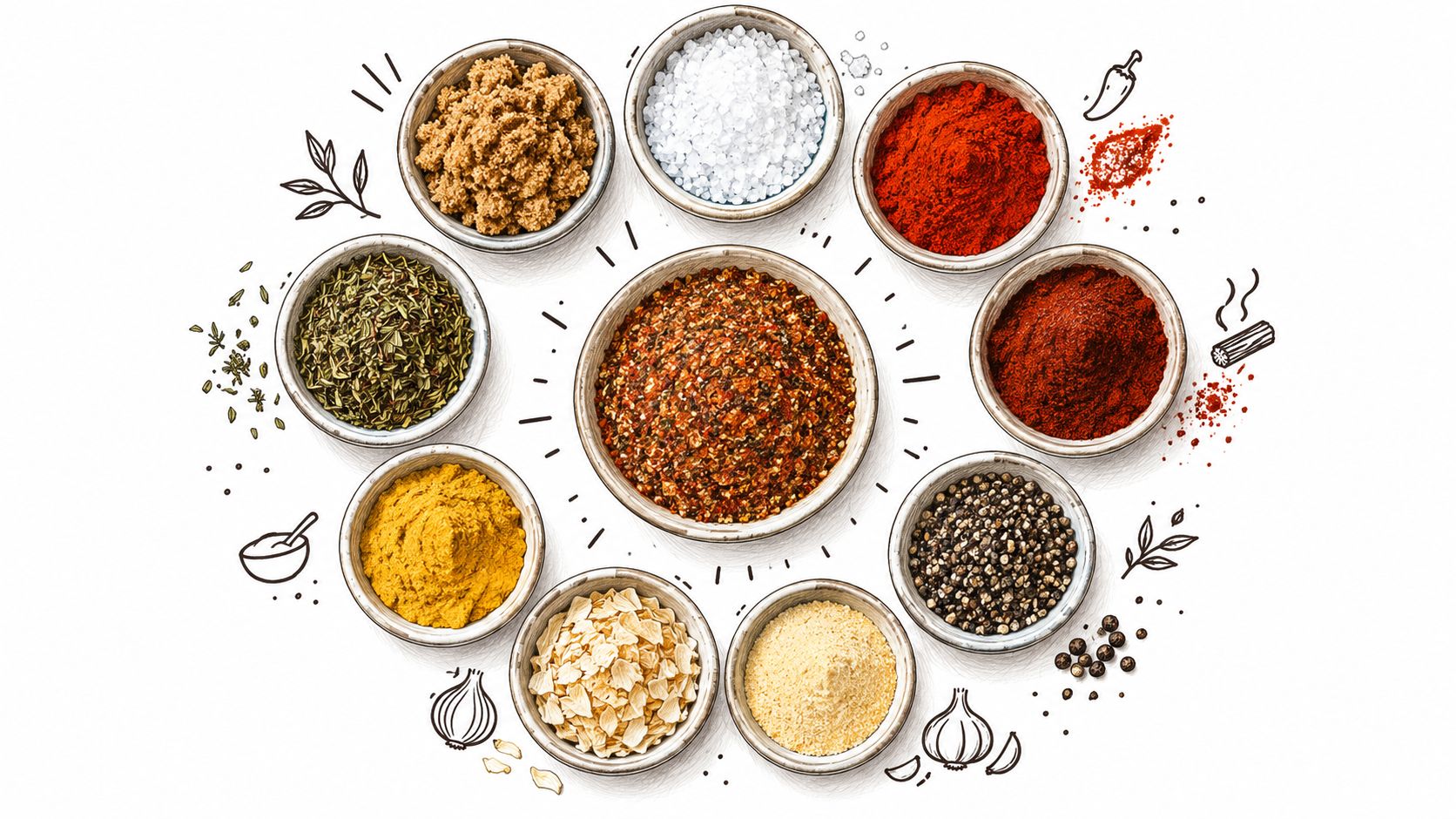
In everyday UK cooking, BBQ seasoning usually means a shelf-stable dry blend. Retail examples commonly combine sugar, salt, paprika, smoked paprika, black pepper, onion, garlic, mustard and herbs. Morrisons and Waitrose list versions built from this kind of mixture, with ingredients such as tomato powder, cinnamon, allspice, marjoram, chilli and thyme included for extra depth, plus an anti-caking agent to keep the powder flowing freely. Waitrose BBQ seasoning provides a useful example of the category.
Think of the blend as a small flavour team. Sugar helps with sweetness and browning, salt brings savouriness, paprika adds colour, garlic and onion supply a familiar savoury base, while pepper, chilli, mustard and herbs add warmth and aroma. No single ingredient creates the whole barbecue character. The balance between them does.
That's why BBQ seasoning differs from a sauce. A sauce is generally wet and is often brushed on during or after cooking. A marinade is a liquid mixture used to flavour food before cooking, sometimes with an acidic ingredient. A dry rub sits directly on the surface, where heat, moisture and contact with the cooking surface help form a seasoned crust.
The UK market reflects this practical role. One industry outlook estimates the UK BBQ seasoning market at USD 511.1 million in 2021 and USD 716.2 million by 2030, with a projected 3.8% CAGR, while another report identifies barbecue rubs as the largest segment with a 57.27% revenue share in 2024. Grand View Research's UK BBQ seasoning outlook gives that market context. Dry rubs fit busy home cooking because they're quick to apply, easy to store and suitable for grilling, roasting, smoking and batch preparation.
The practical question isn't only “what is BBQ seasoning?” It's “what does this blend need to do for tonight's food?” A mild savoury mix can support vegetables or fish, while a sweeter, smokier rub may suit pork. Once you understand the system, choosing a seasoning becomes much easier.
What BBQ Seasoning Is Made Of and How It Works
A chicken wing can leave the oven pale and mild, while the same food becomes smoky, sweet and spicy on a grill. The difference is not only the cooker. BBQ seasoning is a balanced system of sweetness, saltiness, smoke, heat and aroma, and each part reacts to the food and cooking method.
The main ingredients and their jobs
UK retail blends commonly include sugar, salt, paprika, smoked paprika, black pepper, onion, garlic, mustard and herbs. UK guidance also recognises seasonings made with spices, herbs, salt, edible starches, yeast extracts, oils or fats, cereal products, milk products and nutritive sweeteners. UK food composition and labelling guidance shows why “seasoning” describes a mixture rather than one fixed recipe.
- Sugar adds sweetness and helps browning. On a very hot grill, it can scorch, so use a lighter coating or move the food away from direct heat.
- Salt sharpens savoury flavour and helps the blend cling to a slightly moist surface. Too much can overwhelm chicken, fish or vegetables.
- Paprika supplies colour and gentle pepper flavour. Smoked paprika adds smoke aroma when the oven or air fryer produces no real smoke.
- Black pepper and chilli both bring heat, but in different ways. Pepper feels sharp and warming, while chilli gives a more direct burn.
- Garlic and onion build the savoury centre. They make meat, mushrooms, peppers and potatoes taste fuller.
- Mustard and herbs add lift. Thyme and marjoram, for example, keep sweet or smoky notes from becoming heavy.

Why texture matters
Flavour needs predictable coverage. Anti-caking aids such as silicon dioxide help a dry blend remain free-flowing in humid kitchens and packaging. Without that control, lumps make each shake uneven, especially across several trays. An Angus & Oink rub listing shows how a UK rub may list an anti-caking aid alongside its spices.
For a closer look at how individual spices combine in finished blends, explore this guide to meat rub spices. Set the blend to the cooking method: use less sugar over intense grill heat, retain smoky notes for oven or air-fryer cooking, and choose stronger aroma when the protein is mild. Good professional grilling equipment also makes heat control more consistent.
The blend is a system, not a pile of unrelated spices. Change the sugar, salt, smoke or heat, and the whole rub behaves differently.
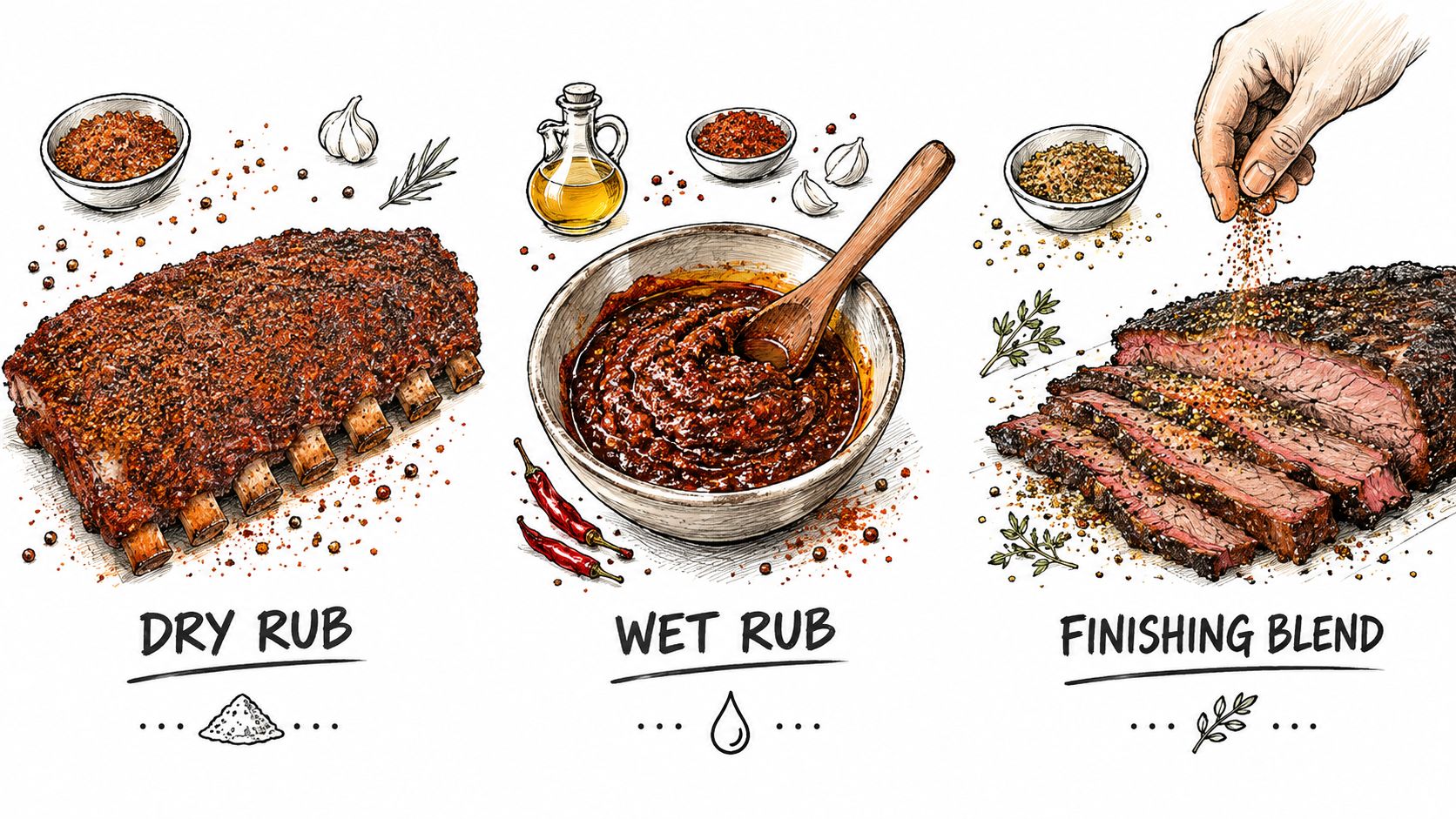
Dry Rubs Wet Rubs and Finishing Blends Explained
A chicken thigh heading for the grill, a tray of vegetables in the oven, and pork in an air fryer need different seasoning support. The choice between a dry rub, wet rub and finishing blend controls how the seasoning clings, browns and releases aroma.
Dry rubs
A dry rub is a powder applied directly to food. Pat the surface dry, spread the blend evenly and press it gently into place. The seasoning then meets the heat without extra moisture, helping form a browned crust or bark as the outside dries.
Dry rubs suit ribs, pork shoulder, chicken pieces and vegetables. They can remain on food during a long cook, making them practical for a smoker or oven. In an air fryer, use a light coating so the surface colours without loose seasoning blowing around. On a hot grill, watch blends with noticeable sweetness because sugar can brown quickly.
For a savoury starting point, SPG Salt Pepper Garlic Base Blend keeps the direction simple. Cherry Force BBQ Rub takes the flavour towards sweetness, while Hickory Hog Pork Rub is suited to pork.
Wet rubs
A wet rub mixes seasoning with a small amount of oil, water or another moist ingredient. The resulting paste helps powder adhere to smooth or lean surfaces, such as chicken, fish and sliced vegetables. Spread it thinly. Oil improves coverage, but it can also speed browning over direct heat.
A wet rub mainly forms a seasoned coating. A marinade surrounds food and may be designed to penetrate or tenderise it. For more guidance on matching application methods to different proteins, see this guide to rubs for meat.
Finishing blends
A finishing blend goes on after cooking or during the final moments. It protects delicate herbs and bright aromas from prolonged heat, adding a fresh savoury lift to grilled vegetables or cooked chicken. A citrus-led option such as Miami Mojo Citrus Blend fits that role.
Use the cooking method as your guide. Choose dry for a crust, wet for extra adhesion, and finish late when aroma and brightness matter most.

Flavour Profiles You Will Taste in Every Good BBQ Rub
A chicken thigh comes off the grill dark and fragrant, while a vegetable skewer needs only a light savoury coating. The difference starts with how the rub balances five flavour levers: sweet, salty, smoky, heat and aroma. Read them like controls on a mixing board. Raise one, and the whole profile shifts.
| Flavour Lever | Typical Ingredients | Effect on Cook |
|---|---|---|
| Sweet | Sugar | Encourages browning and rounds sharp flavours, but can scorch over high heat |
| Salty | Salt | Builds savoury depth and helps the blend cling to the surface |
| Smoky | Smoked paprika | Adds a roasted, wood-fired impression without being a single-source smoke flavour |
| Heat | Black pepper, chilli, mustard | Adds warmth, bite or chilli intensity, depending on the ingredient |
| Aromatic | Garlic, onion, thyme, marjoram and other herbs | Creates fragrance and savoury complexity |
Paprika and smoked paprika play different roles. Ordinary paprika adds colour and a gentle pepper note. Smoked paprika brings a darker, warmer aroma. The final taste still depends on the rest of the blend, because garlic, onion, salt, sugar and chilli can pull it in a sweeter, sharper or more savoury direction.
Black pepper gives beef and pork a dry, warming bite. Chilli arrives faster and can dominate when sweetness and herbs are limited. Garlic and onion form a rounded savoury base, while thyme and marjoram lift richer flavours with a greener fragrance.
Match the flavour to the food
Chicken accepts smoky, spicy and sweet profiles. Pork pairs naturally with fruit, smoke and brown spice. Beef usually needs a firm savoury foundation supported by pepper and garlic. Delicate vegetables benefit from less salt, heat and smoke so their own flavour remains clear.
A global-style blend changes the meal's direction. Al Pastor Taco Seasoning brings chilli and taco character, Chipotle Cowboy Chicken Rub brings smoky heat, and Greek Odyssey Gyros Rub uses an herb-led profile.
Cooking method changes the balance too. In an oven, moderate sweetness can brown steadily without constant attention. On a grill, direct heat can scorch sugar, so keep sweet rubs away from the hottest zone or turn the food before the surface darkens. In an air fryer, moving heat browns quickly, making a moderately sweet blend easier to control.
Low and slow cooking gives sugar more time to develop alongside smoke. Fast cooking rewards restraint and even coverage.
Taste the finished food, not just the dry powder. Heat, moisture and browning change how every lever appears on the plate.
How to Apply BBQ Seasoning for Chicken Ribs Pulled Pork and Vegetables
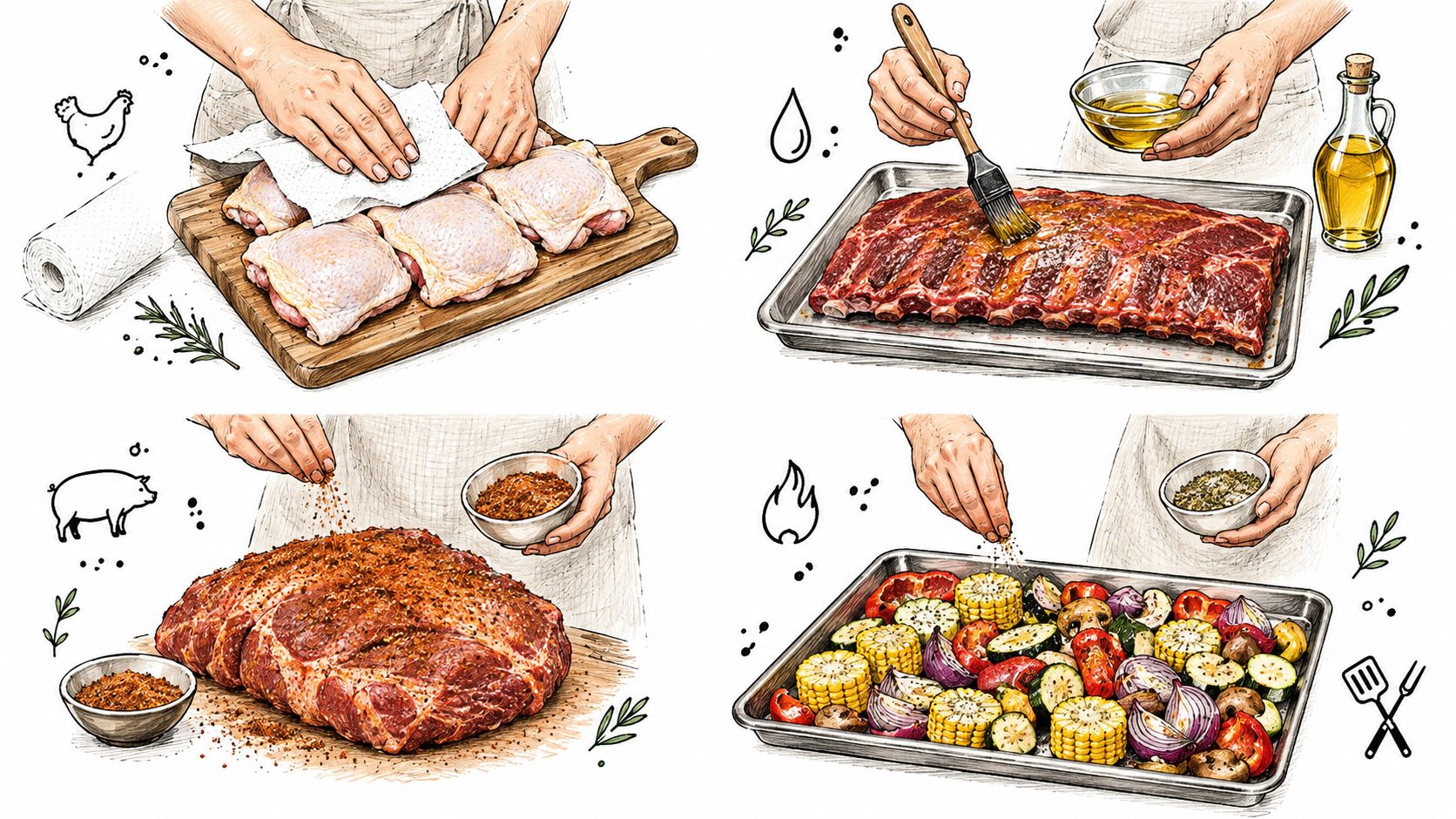
A reliable BBQ seasoning routine starts with a dry surface. Pat dry, add a little oil when needed, season evenly, rest briefly and cook with the heat in mind. The seasoning should form a thin, visible coat, not a thick mound. That keeps the balance of sweet, salty, smoky, hot and aromatic flavours clear.

Chicken thighs in an air fryer
Pat chicken thighs dry, then brush on a thin film of oil if the surface feels very dry. Sprinkle over Wingman Wing Rub, turning the pieces so both sides receive an even coat. Let them rest while the air fryer heats, then arrange them in a single layer.
Moving hot air browns sugar quickly. Avoid crowding, and check the surface before cooking ends. Test the thickest piece with a food thermometer to confirm it is thoroughly cooked. A smoky, chipotle-led blend can follow the same method, with a stronger heat and smoke direction.
Ribs for a low-and-slow cook
Remove excess moisture, then coat every side with dry rub. Press the seasoning onto the ribs instead of massaging it aggressively. This helps the blend stay spread across the surface while the crust develops gradually over steady heat.
For a practical step-by-step routine, use this guide on how to use dry rub on ribs. Watch the colour and aroma during a long cook. Sweetness can darken over time, so a dry-looking surface does not automatically need more seasoning.
Pulled pork shoulder
Dry the pork shoulder and coat it evenly, working seasoning into folds and awkward areas around the exterior. A pork-and-smoke profile suits the long cooking time, while a fruit-led blend can shift the result towards sweetness. Choose the balance according to the flavour you want after shredding, because seasoning becomes part of the meat's juices as it cooks.
Vegetables for the grill
Toss courgette, peppers, onions, mushrooms or cauliflower with a little oil. Add seasoning afterwards, so each piece receives a light, even coating without becoming salty or heavy. A citrus blend can brighten vegetables, while a jalapeño fajita seasoning gives them a more assertive chilli direction through Holy Jalapeño Fajita Seasoning.
The same principle works in an oven or air fryer. Use less seasoning on delicate vegetables, and check early when moving heat or high oven heat is browning the surface quickly.
Food safety remains part of the routine. Keep raw and cooked food separate, wash your hands after handling raw meat, and use clean utensils so meat juices do not reach salads, bread or cooked food. Follow the UK government BBQ food-safety guidance for core precautions when cooking in England, Northern Ireland and Wales.
How to Choose Store and Keep BBQ Seasoning Fresh
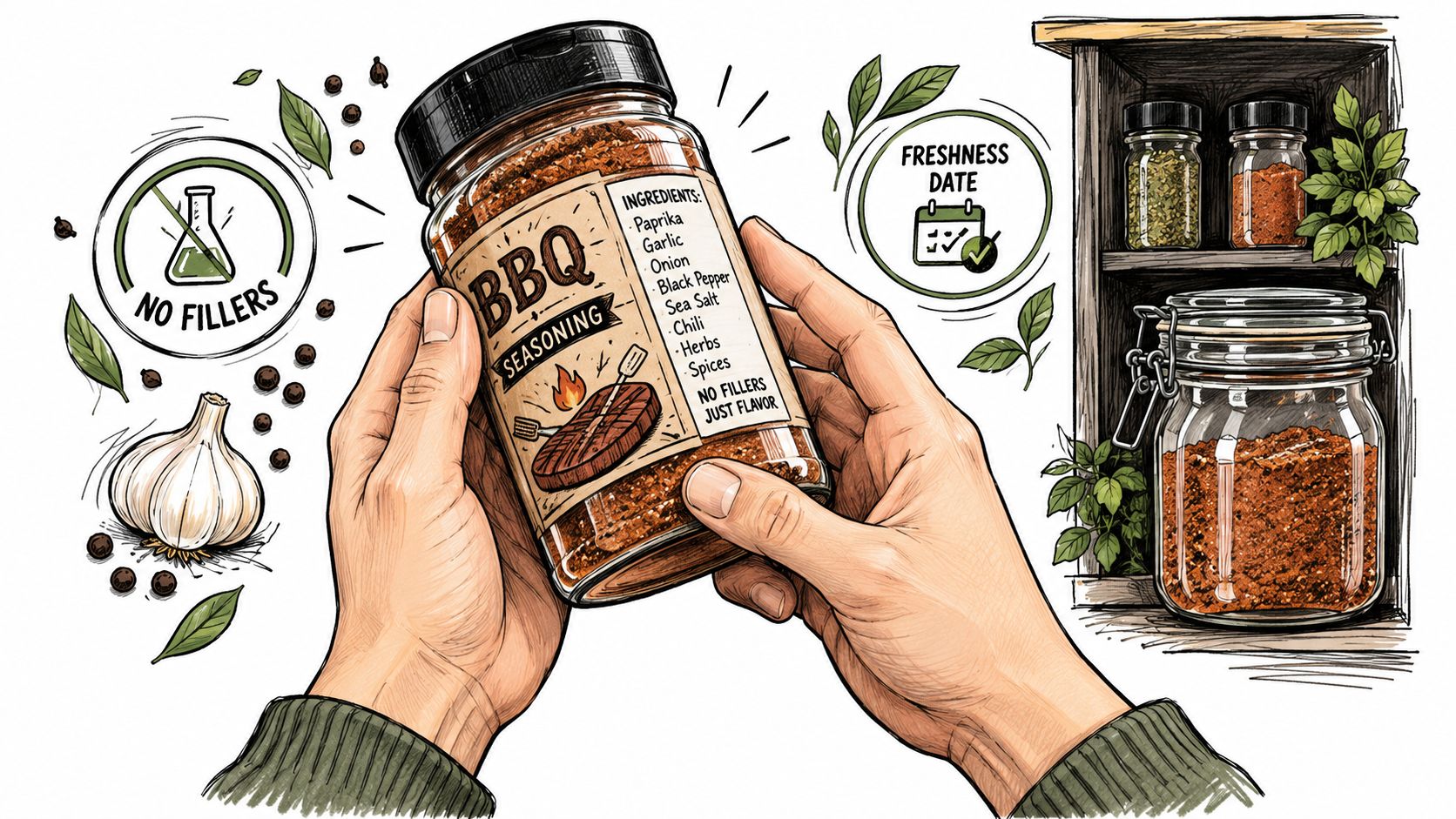
A good choice begins with the ingredient list. Look for recognisable spices, herbs and seasonings, then match the blend's balance of sweet, salty, smoky, heat and aroma to the way you cook. A quick grill can handle a different sugar and chilli balance from a rub intended for slower smoking.
Read salt and sugar in context
UK adults should have no more than 6g of salt a day, around 1 level teaspoon, according to the NHS guidance on salt. Herbs, spices, black pepper, garlic, chilli and lemon juice can add flavour without relying only on salt.
For label checks, food containing more than 1.5g of salt per 100g is high in salt, while 0.3g per 100g or less is low in salt, according to Bristol's salt-reduction guidance. Labels may show sodium instead of salt. The conversion uses 2.5, as set out in The UK salt-reduction targets.
Sugar is not automatically a problem. On a hot grill or in an oven, it can help browning, but too much may darken before the food is cooked. An anti-caking agent can keep the mix free-flowing. Choose a plant-based, filler-free blend with familiar ingredients if that matters to you, or favour easy, consistent measuring when cooking for a group.

Store it like a spice, not like a sauce
Seal the container tightly and keep it in a cool, dry cupboard, away from hob steam and the dishwasher. Moisture causes clumps, which make even coverage harder on meat or vegetables. Avoid shaking the jar directly over steaming food, since steam can enter the container.
A blend may remain usable while its aroma fades. Smell it before cooking. If the fragrance is noticeably weaker, choose a fresher blend or adjust the flavour direction. Smokey Rebel lists options including Texas Red Chili Mix and Spitfire Spice Blend, alongside the Build Your Own Bundle. If you are pairing seasoning with smoke, the wood pellet collection provides fuel options to consider alongside the rub.
Bringing It All Together for Your Next BBQ
BBQ seasoning works like a balanced flavour system. Sweetness supports browning, salt builds savouriness, paprika adds colour, smoke brings depth, chilli and pepper set the warmth, while garlic, onion and herbs shape the aroma.
Match the format to the job. A dry rub forms a seasoned crust, a wet rub clings to the surface, and a finishing blend keeps fresh aromas noticeable. For an oven cook, use an even coating and moderate sweetness so the surface does not darken too quickly. On the grill, pair sweetness with controlled heat. In an air fryer, apply a light, even layer to help the food brown without excess seasoning collecting in the basket.
Start with one protein and one flavour goal. Use Revolution Beef Rub for savoury beef, Greek Odyssey Gyros Rub for herbs, or Al Pastor Taco Seasoning for a globally inspired profile. The Bar-B-Que Heroes Bundle and Flavour Heroes Bundle offer profiles to compare across chicken, pork, beef and vegetables.
Season for the food, then control the heat for the blend.
Smokey Rebel offers small-batch, plant-based BBQ rubs with recyclable craft packaging. Visit Smokey Rebel for oven, grill or air fryer ideas.
Join our Mailing List
Sign up and get Smokey Rebel Recipes + weekly recipes straight to your inbox!
Recent articles
What Is BBQ Seasoning and How to Use It Well
What is BBQ seasoning? Learn ingredients, types, flavour profiles and how to use BBQ rubs for chicken, ribs and veg...
Read morePork Rub Recipe for Ribs That Actually Bark
A UK-friendly pork rub recipe for ribs with clean ingredients, exact ratios, low-and-slow timing, and scaling tips for events.
Read moreHow to Make Crispy Dry Rub Chicken Wings
Master crispy dry rub chicken wings with our step-by-step guide. Learn the best oven, air fryer and BBQ methods using...
Read more