Seafood Seasoning Blend: How to Make and Use One
You've got salmon or a bag of prawns on the counter, and the only jar within reach tastes mostly of salt. You want the fish to taste like itself, just clearer, and you don't want another dry fillet. A seafood seasoning blend is a salt-and-timing decision. The same mix sits happily on oily fish and turns harsh on lean fish if you put it on too early or too heavily. The dose, and the moment you apply it, matter more than a long ingredient list.
What Goes Into a Seafood Seasoning Blend
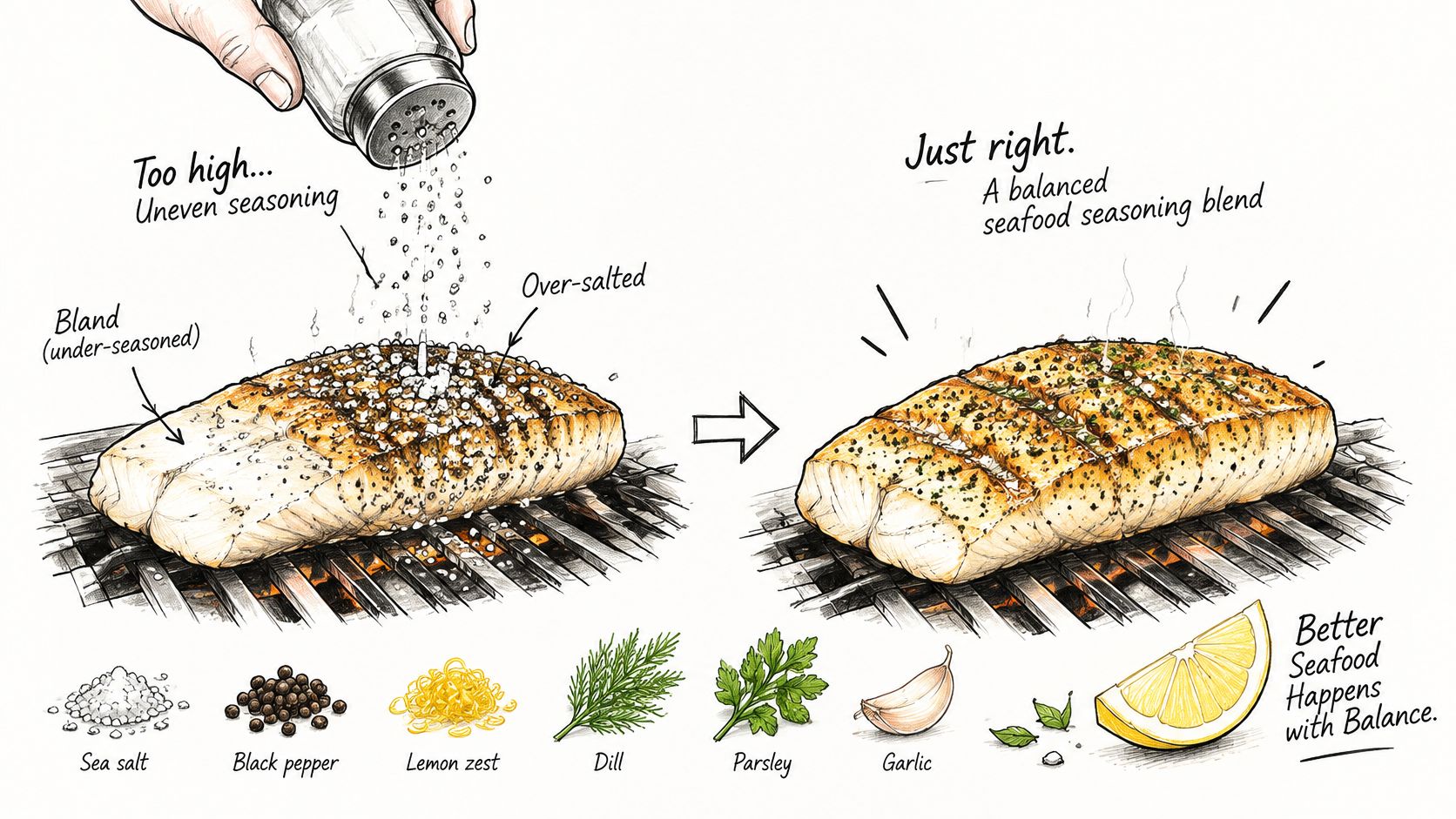
A cod fillet on the grill tells you when the shake went wrong. The edge stays bland because the blend never landed there, and the middle is too salty because you shook from a height and the grains piled up. Salt doesn't spread itself once the fish hits heat.
Salt lifts the flesh and makes the natural flavour easier to taste. A little sugar balances that salt and helps the surface brown instead of steaming pale. Sweet smoked paprika brings colour and a gentle smoke that doesn't fight the fish. Dried dill and dried lemon zest pull out the clean, slightly sweet note that good seafood already has. Garlic and onion sit underneath, savoury rather than loud, and white pepper gives warmth without black specks on a pale fillet.
Households still eat less seafood than the guidance suggests, which is why a jar you trust is useful on a Tuesday. Seafish reported that total seafood consumption in the UK reached 162.98 grams per person per week in 2020, including food eaten at home and out, and that figure stayed below the dietary reference point of approximately 280 grams per person per week, about two portions. An easy blend won't close that gap on its own, but it does make salmon, cod, prawns and mackerel feel worth cooking more often.
The uneven shake is the mistake most home cooks make before the fish even reaches the heat.

The base formula
Parts are by weight, so the ratio stays the same whether you mix a small jar or a family batch. Ten parts fills a small jar. One hundred parts fills a larger one for a busy week. We make our seasonings in the UK from all-natural spices, and this home mix follows the same idea: recognisable ingredients, nothing hiding the fish.
| Ingredient | Parts by weight | Role on seafood | Flavour note |
|---|---|---|---|
| Fine sea salt | 4 | Lifts and seasons the flesh | Clean, neutral base |
| Caster sugar | 1 | Balances salt and helps browning | Soft sweetness |
| Sweet smoked paprika | 2 | Adds colour and smoky warmth | Gentle smoke |
| Garlic granules | 1 | Savoury depth | Mellow garlic |
| Onion powder | 1 | Rounds out the savoury notes | Sweet onion |
| Dried dill | 1 | Classic seafood herb | Fresh, grassy |
| Dried lemon zest | 1 | Brightens oily fish and shellfish | Citrus lift |
| White pepper | 1 | Gentle warmth without black specks | Soft heat |
| Chilli flakes (optional) | 0.5 | Heat for prawns and mackerel | Bright bite |
Leave the chilli flakes out for cod, haddock and a plain salmon supper. Stir them in when you want a brighter bite on prawns or mackerel. If you like that Basque-style warmth and want to taste the pepper on its own first, you can discover Basque flavors in Espelette before you decide how much flake belongs in your jar.
Mixing so it stays even
- Whisk all the ingredients in a bowl for one minute so the salt doesn't sit in pockets.
- Rub the mix through a fine sieve if clumps form, especially around the lemon zest and sugar.
- Spoon it into a labelled jar and write the date on the lid.
Practical rule: Weigh the parts. A heaped spoon of paprika against a level spoon of salt will make the next batch taste like a different blend.
The base suits salmon, cod, prawns and mackerel without a second recipe. For a closer look at how herbs and citrus sit on oily fish, our guide to spices for salmon is a useful next read. If you'd rather buy a clean salt, pepper and garlic starting point than weigh a batch tonight, the SPG (Salt Pepper Garlic) Base Blend is the simple tin to keep beside the hob.
A short look at how a dry rub should sit on the surface, rather than clump in the middle, makes the whisk-and-sieve step obvious.
How Much Blend to Use on Each Seafood
One blend still needs different doses and different clocks. Oily salmon and mackerel hold seasoning in their fat, so the salt has somewhere to go. Lean cod, haddock and mussels don't. Too much blend, or too long a wait, pulls moisture out and the flesh tastes salty, then dry.
Shoppers aren't buying one generic fish either. Seafish retail figures show salmon represented 19.5% of seafood volume in 2025, while warm-water prawns recorded 9% value growth. That's a fatty fillet in one basket and sweet shellfish in the next. Treat them as the same and the delicate one loses.
Dose, timing and method
Start at 1 g of blend per 100 g of seafood. The table changes the clock and the method, not the starting weight. For prawns, weigh them without shells, because shells would inflate the number and you'd under-season the meat.
| Seafood | When to season | Best method |
|---|---|---|
| Salmon fillet | 15 to 20 minutes ahead | Grill, smoke, roast |
| Mackerel | 15 minutes ahead | Grill, pan-fry |
| Cod loin | Just before cooking | Roast, pan-fry |
| Haddock | Just before cooking | Pan-fry, bake |
| Raw prawns (shell-off weight) | 10 minutes before cooking | Grill, skewer |
| Mussels | Stirred into the steaming liquid | Steam |
Salmon can take its full dose 15 to 20 minutes ahead. The surface dries slightly, which helps browning, and the fat keeps the salt from tasting sharp. Cod should be seasoned only moments before it hits the pan. Salt left on a lean loin starts to cure it, and a cured edge turns chalky in a hot oven.
More seasoning isn't better on delicate white fish and shellfish. A modest dose, on at the last moment, beats a heavy rub or a long marinade.
The weighing routine
- Weigh the fish on a kitchen scale. For prawns, weigh the shell-off meat, as the table states.
- Apply 1 g of blend per 100 g as the starting dose, sprinkled from close to the surface so it lands evenly.
- Taste a small piece after cooking and adjust the next batch by one tasting spoon, not a second heavy shake.
A 400 g salmon fillet takes 4 g. A 200 g cod loin takes 2 g, and only once the pan is hot. If the first bite is already salty, the next piece of that species gets less, not a longer rest. Sugar and paprika brown faster than you expect on a thin fillet, so don't pile them on to "make up" for a short cook.
Mussels are the odd one out. Don't rub the meat. Stir the blend into the steaming liquid so the shells take up a seasoned steam instead of a salty crust. A teaspoon in the pot is plenty for a kilo of mussels in their shells. You can always add a pinch at the table.
Step-by-Step Grilling, Smoking and Roasting Seafood
Dry the fish first. Surface water steams the seasoning off and stops browning. Oil goes on after the blend, as a thin coat, so the spices stick and the grates don't tear the flesh. Our notes on how to grill fish cover grate heat in more detail if the barbecue is your usual kit. These blends are built for ovens and pans as well as the barbecue, so the same dose works when the weather turns.
Grilling and smoking salmon
Grilling is the quicker of the two, and it suits a weeknight.
- Pat the fillet dry, rub on the dose from the table and add a light coat of oil.
- Preheat the grill to medium-high and oil the grates.
- Place the salmon skin side down and cook for 4 to 5 minutes until the flesh flakes.
Don't flip a skin-on fillet unless the skin has released on its own. Forcing it tears the seasoned surface you just built. If the edges brown before the centre flakes, move the fillet to a cooler part of the grill rather than turning the heat up.
Smoking asks for patience and a dry surface.
- Season the fillet 20 minutes ahead so a dry surface forms.
- Load the smoker with wood pellets and hold a low, steady heat.
- Smoke until the flesh flakes and reaches a safe internal temperature of 63°C.
A steady low heat matters more than a heavy smoke. Pellets that flare will bitter the sugar in the blend before the centre is done. If the surface looks set but the centre is still translucent, give it time rather than opening the lid every few minutes.
Roasting cod, grilling prawns, steaming mussels
Roasting cod is the lean-fish version of the same idea.
- Season the loin just before cooking, not while the oven heats.
- Roast at 200°C for 10 to 12 minutes until opaque.
A loin thicker than about 3 cm may need a couple of minutes more. Opaque and just beginning to flake is done. Chalky and weeping is over.
Prawns cook so fast that the seasoning has to be on before they meet the heat, but not so early that they weep.
- Season shell-off prawns 10 minutes ahead.
- Thread them onto skewers so they don't drop through the grates.
- Grill for 2 to 3 minutes per side, until they turn pink and firm.
Soak wooden skewers if you're using them, or the tips scorch. Metal skewers don't need a soak, and they cook the centre a little faster, so start checking at 2 minutes.
Mussels take the blend in the liquid, not on the meat.
- Stir the blend into the steaming liquid.
- Cover the pan until the shells open.
- Discard any mussels that stay closed.
A wide pan and a tight lid beat a long boil. Once most shells are open, take the pan off. Extra minutes toughen the meat, and no amount of lemon zest fixes that.
Storing Blends and Buying Clean-Label Options
A good mix turns flat if the jar lives above the hob. Steam, light and heat fade dried dill and lemon zest first, while the salt and paprika linger, so an old jar tastes harsher than the day you mixed it.
Keep the blend in an airtight, opaque jar, away from the hob and from oven steam. Label it with the date you mixed or opened it. For the best aroma, use it within about six months. Before each batch, open the jar and smell it. If the dill and citrus have gone quiet, the salt will dominate, and you're better off mixing a fresh lot than shaking harder.
What clean-label actually means
Clean-label here means a short ingredient list of recognisable spices, with no added fillers, colours or flavour enhancers. Read the ingredients, not the front of the pack. "Natural flavouring" and anti-caking agents are easy to miss in small type.
Our seasonings contain no fillers and no silica dioxide, and they're made from A-grade, plant-based spices. They're 100% plant based, with clear allergen labelling, and they come in signature aluminium cans with a re-sealable lid so the contents stay protected on the shelf. That's the standard to compare a shop blend against. The can matters because a clear pot on a sunny windowsill fades paprika long before the best-before date.
Plant-based shoppers should still check every pack for animal-derived ingredients. Some blends use them as carriers even when the front of the tin looks like a simple spice mix. If the label doesn't state the status, don't guess.
A short label check
- Check that salt is the first ingredient and that sugar sits low in the list, so the blend seasons rather than curing or burning.
- Confirm there are no anti-caking agents or added flavourings if clean-label is what you're after.
- Confirm the plant-based status is stated on the label, not implied by a herb drawing.
A front panel that says "seafood" doesn't tell you the salt level. The ingredient order does.
If you want the reasoning behind filler-free lists in plain terms, the guide to clean-label ingredients walks through what those words should mean on a tin. When you're choosing a set for fish nights rather than guessing one jar, the Build Your Own Bundle lets you pick the blends you'll use on salmon, prawns and the rest of the week.
Store the jar in a cupboard, not beside the kettle. A cool, dark spot keeps the lemon zest useful for those six months. If you bake or fry often, that single move does more for flavour than buying a larger tub.
Seafood Recipes, Pairings and Gift Ideas
Two meals, one base blend. The salmon stays gentle. The prawns take the optional chilli. Both use the dose and the clock you already weighed, so you're not inventing a new mix on a weeknight.
Weeknight salmon
- Dose the salmon from the table, 1 g per 100 g, 15 to 20 minutes ahead.
- Grill for 4 to 5 minutes, skin side down, until the flesh flakes.
- Serve with lemon wedges and a green salad. The lemon on the plate is sharper than the dried zest in the blend, and the two don't clash.
A 150 g fillet is about 1.5 g of blend, a level half-teaspoon if your scale is in the drawer. Oil the skin lightly so it crisps instead of sticking. If you're cooking for two, season each fillet on its own board so one doesn't take the pile meant for both.
Chilli prawn skewers
- Season the prawns 10 minutes ahead with the base blend plus the optional chilli flakes.
- Thread them onto soaked wooden skewers, leaving a small gap so heat reaches the sides.
- Grill for 2 to 3 minutes per side.
Don't add extra salt at the table until you've tasted one. The flakes already carry heat, and a second salty sprinkle is what makes people think they dislike prawns.
What to pair, and what to give
Use the citrus-leaning lemon zest in the base for mackerel. Oily fish needs that lift more than it needs more smoke. Use the smoky paprika side of the same blend for salmon, where the fat can carry a warmer note without tasting bitter. You don't need two jars. You need to know which ingredient you want to taste first.
Gifts are easier when they match how someone cooks. Smokey Rebel's gift sets and bundles cover the three situations that come up most often: a first tin for someone new to blends, a set for a household that cooks on weeknights, and a wider spread for the flavour explorer who will try the same fish three ways. The format does the matching, so you don't have to guess at their favourite fish.
The seasonings come in signature aluminium cans, each one stackable with a re-sealable KeepFresh lid, and the blends contain no fillers. A set someone can reseal and stack is more likely to reach Thursday's haddock than a bulky tub that gets pushed to the back of a cupboard.
Seafood Seasoning Blend FAQs
These are the questions that come up once the jar is mixed and the fish is already out of the packet. The answers stay with the same 1 g per 100 g starting point, and they change the timing or the dose only when the fish itself has changed.
Frozen fillets, salty tins, smoked fish, vegetables
Can I season frozen fish?
Thaw it fully in the fridge, then pat it dry until the surface no longer glistens. Apply the dose and the timing from the table for that species. Ice crystals left on the fillet water down the blend and steam the outside before it browns.
Should I cut the dose when using a bought blend?
Yes. Many ready blends are already salty, salt often leading the ingredient list, so start at 0.8 g per 100 g and adjust after tasting one piece. Your home mix, with four parts salt against the herbs and paprika, is the 1 g baseline. A shop tin may not be.
Does the timing change for smoked fish?
Smoked fish is already salty from the cure, so season lightly and skip the pre-cooking rest. A pinch after cooking, or a little stirred through a dressing, is enough. Giving smoked mackerel the full salmon rest will taste harsh, not smoky.
Can I use the base blend on vegetables?
Yes, on roasted vegetables served alongside the fish, but add the dose gradually because the sugar browns quickly on cut surfaces. Start with less than you'd put on the same weight of salmon, taste, and add. Peppers and courgettes take colour faster than a fillet does, so pull the tray as soon as the edges colour.
If a bite is too salty, the next batch gets less blend or a later sprinkle. If it tastes flat, add a small amount next time, not a second coating halfway through cooking. That's the whole adjustment. Weigh, taste, change one thing.
Smokey Rebel makes small-batch, plant-based BBQ rubs and seasonings in the UK, with short ingredient lists that suit fish as well as the grill. If you want a clean seafood seasoning blend you can dose by weight and keep in a resealable can, have a look at the range on Smokey Rebel. Pick a base tin or a gift set, then cook the next fillet with a scale and a clock rather than a heavy shake.
Join our Mailing List
Sign up and get Smokey Rebel Recipes + weekly recipes straight to your inbox!
Recent articles
Seafood Seasoning Blend: How to Make and Use One
Learn what a seafood seasoning blend contains, how much to use on salmon, prawns and white fish, and how to...
Read moreBBQ Ribs Temperature: Safe Targets and Doneness Tests
Find the right BBQ ribs temperature for UK pork ribs: smoker and grill settings, safe core readings, doneness tests and...
Read moreHot Sauce Gift Sets: How to Choose Well
Choose hot sauce gift sets by the meals they suit, not the hottest bottle. UK sizes, allergens, prices and a...
Read more