How to Grill Fish: Times, Temperatures and Methods
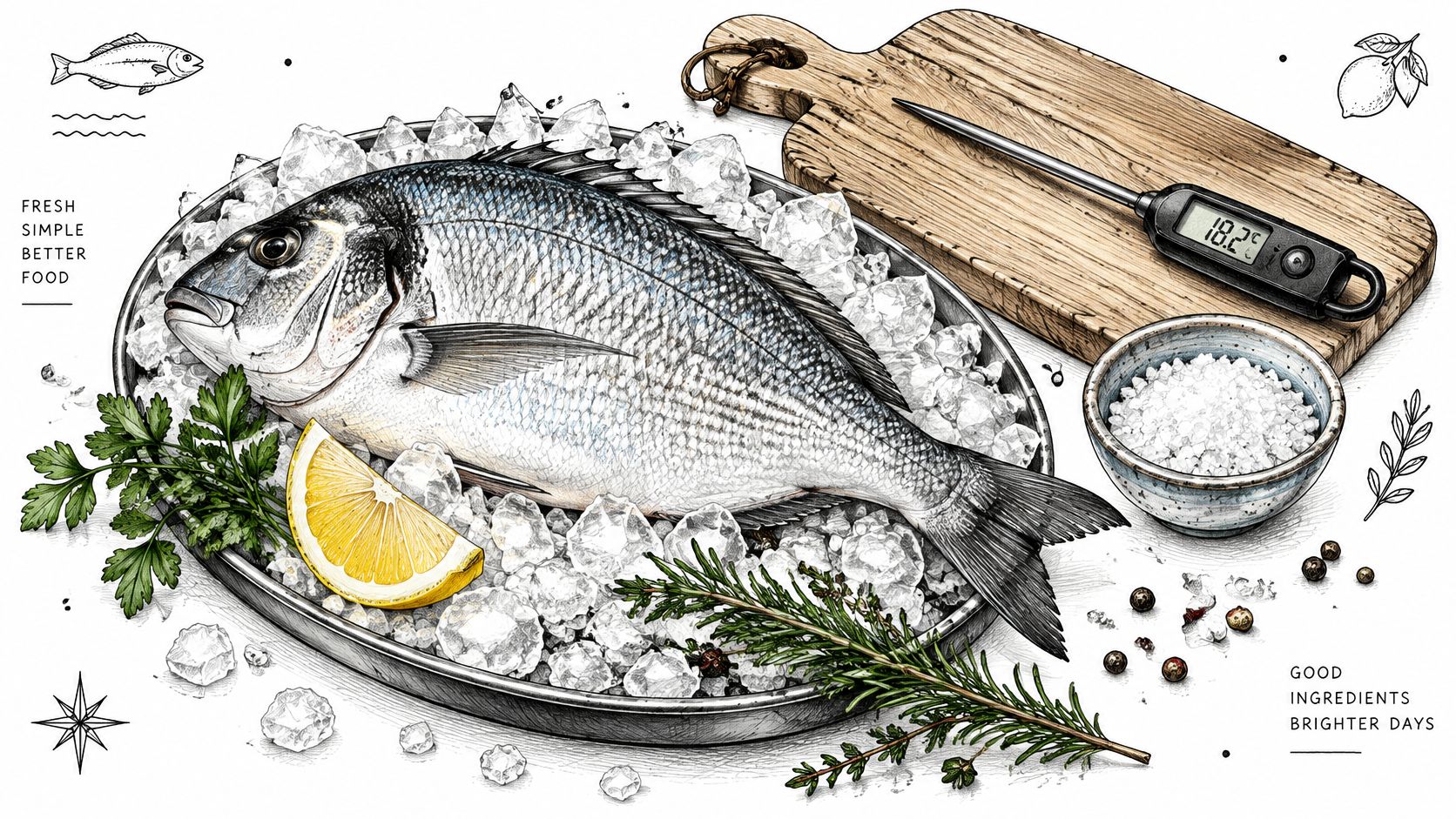
The fish is seasoned, the barbecue is hot, and you're wondering whether the fillet will come off in one piece. Leave it too long and it dries out; reach for the spatula too soon and half the skin stays on the grate.
Learning how to grill fish is mostly about matching the cut to the heat. A thin mackerel fillet needs a different approach from a thick cod loin, but neither needs constant turning or a heavy crust of seasoning.
Grill Times and Temperatures for Common Fish
Use the timings as a guide, then check the fish itself. Most entries assume a cut about 2.5 cm (1 inch) thick and a barbecue preheated to 200-230°C, with the lid closed between checks except during a brief sear.
Grill times and doneness for common fish
| Fish or cut | Heat and setup | Total time | Done when |
|---|---|---|---|
| Salmon fillet, skin on, 2.5 cm | Direct, lightly oiled grate, 200-230°C; start skin down | 8-10 min, flip once | Opaque and flakes with a fork; confirm with a probe |
| Cod loin or cutlet, 2.5 cm | Direct, oiled grate, 200°C | 8-10 min, flip once | Opaque and separates in thick flakes; confirm with a probe |
| Haddock fillet, 2 cm | Direct in foil or basket, 190-200°C | 6-8 min, flip once in a basket; leave a sealed parcel unturned | Opaque and flakes easily; confirm with a probe |
| Mackerel fillets, 1 cm, skin on | Direct, skin side down, 220°C | 3-4 min skin side, 1 min flesh side | Skin crisp and flesh opaque; confirm with a probe |
| Whole mackerel, 300-350 g | Direct, 200°C; turn once | Cook both sides, then finish until the thickest flesh passes the probe check | Opaque to the bone; probe beside, not against, the backbone |
| Whole trout, 300-400 g | Direct in basket or indirect, 180-200°C; turn once if direct | Cook until the thickest shoulder flesh passes the probe check | Opaque; dorsal fin lifts out readily |
| Tuna steak, 2.5 cm | Hot direct grate; sear both broad faces and edges | 1-2 min per side is a sear, not a full-cooking guarantee | Seared outside; a rare centre is only for suitably prepared fish, otherwise cook the centre to 70°C for 2 minutes |
| King prawns, shell on | Direct, skewered, 200°C | 2-3 min per side | Firm and opaque; probe the thickest flesh |
| Fish chunks on skewers, 3 cm | Direct, 200°C | 6-8 min, turn every 2 min | Opaque through the centre; check a thick central chunk with a probe |
Adjust for thickness, not just species
Roughly 10 minutes per inch of thickness is a useful planning rule, while thinner fillets may finish in about half that time. The fish's starting temperature, wind, grill design and cut shape all affect cooking time. Pair the clock with a visual check and a probe in the thickest part.
For fully cooked fish, check for 70°C held for 2 minutes. If the outside is ready before the centre, move the fish to indirect heat so the middle can finish without overcooking the surface.
A browned surface tells you about the surface. It doesn't tell you what's happening in the middle.
Tuna's short timing describes an outside sear, not a fully cooked centre. A less-cooked centre requires suitable freezing, sourcing and handling precautions. Without those, cook the centre thoroughly.
Prawns should be firm and opaque throughout. For people at increased risk of infection, Cambridge University Hospitals advises cooking shellfish and steamed fish for at least seven minutes, and warns that two-to-three-minute restaurant cooking times may not destroy all germs. Treat that as a food-safety warning rather than a universal grill timer. Cook shellfish thoroughly and check the centre, especially in mixed parcels.
Choosing Fish and Cuts That Grill Well
Pick the fish first, then the cut and heat, then the rub. Seafish's seafood supply chain report identifies salmon, tuna, prawns, haddock and cod among the UK's leading consumer species, so they're practical starting points for supermarket shopping.
Grilling suitability by fish
| Fish | Texture and fat | Grill suitability | Seasoning fit |
|---|---|---|---|
| Salmon | Rich, moist, large flakes, high fat | Hot grates; skin protects the flesh | Citrus or bold rubs |
| Cod | Firm, large flakes, mild, low fat | Direct with oil; thick loin holds its shape better | Simple savoury base |
| Haddock | Soft, delicate flakes, mild, low fat | Foil or basket for thinner fillets | Light seasoning and lemon |
| Mackerel | Oily, rich, firm | Strong heat; skin crisps readily | Bold spice and citrus |
| Tuna | Dense, meaty, firm, low fat | Short, hot sear for suitably prepared fish; otherwise finish thoroughly | Robust dry rub |
| Whole trout | Delicate, sweet, moderate fat | Basket or indirect; skin needs a prepared surface | Salt, pepper and garlic |
| Prawns | Sweet, firm when cooked, low fat | Quick cooking on skewers | Citrus or chilli rubs |
Buy a cut you can control
Ask for a loin or centre-cut portion when even cooking matters. A tapered fillet makes you choose between an overcooked tail and an underdone thick end; separate those pieces and remove them individually.
Skin-on salmon and mackerel give you a protective layer against the grate. Lean cod and haddock need a light coating of oil, and thin pieces are usually more reliable in foil than balanced across wide bars.
Whole trout and sea bass suit a basket or indirect cooking. Ask the fishmonger to gut and scale whole fish, and check whether thawed fish has been kept chilled and is suitable for refreezing before planning storage.
- For direct grilling: Choose intact, evenly thick portions without ragged edges.
- For parcels: Softer fillets and uneven cuts are easier to manage.
- For skewers: Buy pieces you can cut into similar-sized chunks.
Sustainability needs a current check, not a permanent favourite. The Joint Nature Conservation Committee reports that 58% of UK quota stocks were within safe biological limits in 2020; that doesn't establish the status of an individual fish on today's counter. Check origin, capture or farming method, and current certification.
Preparing, Seasoning and Handling Fish Before the Grill
A fish portion can be ready for the grill and still be unsafe if it has been left warm. Keep it refrigerated while the barbecue heats, then bring out only what you are preparing. Set out a clean tray, kitchen paper, fish spatula and sanitised probe.

A preparation routine that protects the texture
- Buy from a reputable supplier. Fish should smell clean, not sour or of ammonia, and the flesh should feel firm. These checks can help you reject poor-quality fish, but they cannot prove it is safe.
- Keep it cold. UK food-safety guidance on foods needing extra care recommends storing fresh fish between 0°C and 4°C and keeping frozen fish frozen until needed. Thaw it in the fridge, not on the worktop.
- Take fish out when you are ready to prepare and grill it. Oily fish such as mackerel and tuna need careful handling too. Cooking cannot undo every hazard caused by poor storage.
- Pat both surfaces dry. Use kitchen paper on the flesh and skin, and inside a whole fish. Moisture slows browning and makes crisp skin harder to achieve.
- Score skin that is likely to contract, making shallow cuts about every 2 cm. Cut through the skin without slicing deep into the flesh, so the portion holds together.
- Brush both sides lightly with neutral oil, then season the flesh side. A thin coating helps avoid excess oil dripping onto the grate and feeding flames.
- Salt thick fillets briefly before cooking. A 10-to-15-minute preparation window can help firm the surface. Keep the fish chilled, and if your rub already contains salt, avoid adding a heavy second layer.
- Match seasoning to the fish. Try SPG (Salt Pepper Garlic) Base Blend with cod or haddock, Miami Mojo Citrus Blend with salmon or prawns, and Spitfire Spice Blend with mackerel.
Keep marinades short and purposeful
Citrus marinades left on delicate fish much longer than 30 minutes can make it chalky, depending on their acidity. Add most fresh lemon or lime after cooking for brightness without changing the raw flesh. For salmon, the guide to marinades for salmon offers flavour combinations to consider.
Smokey Rebel's small-batch seasonings are one option alongside plain salt, pepper, herbs and citrus, made with filler-free ingredients and recyclable packaging. Seasoning adds flavour; it does not make fish safe to eat.
For rare tuna, establish with the supplier that it has undergone appropriate freezing and is suitable for that preparation, then sear the exterior fully. If you cannot establish that, cook the centre thoroughly.
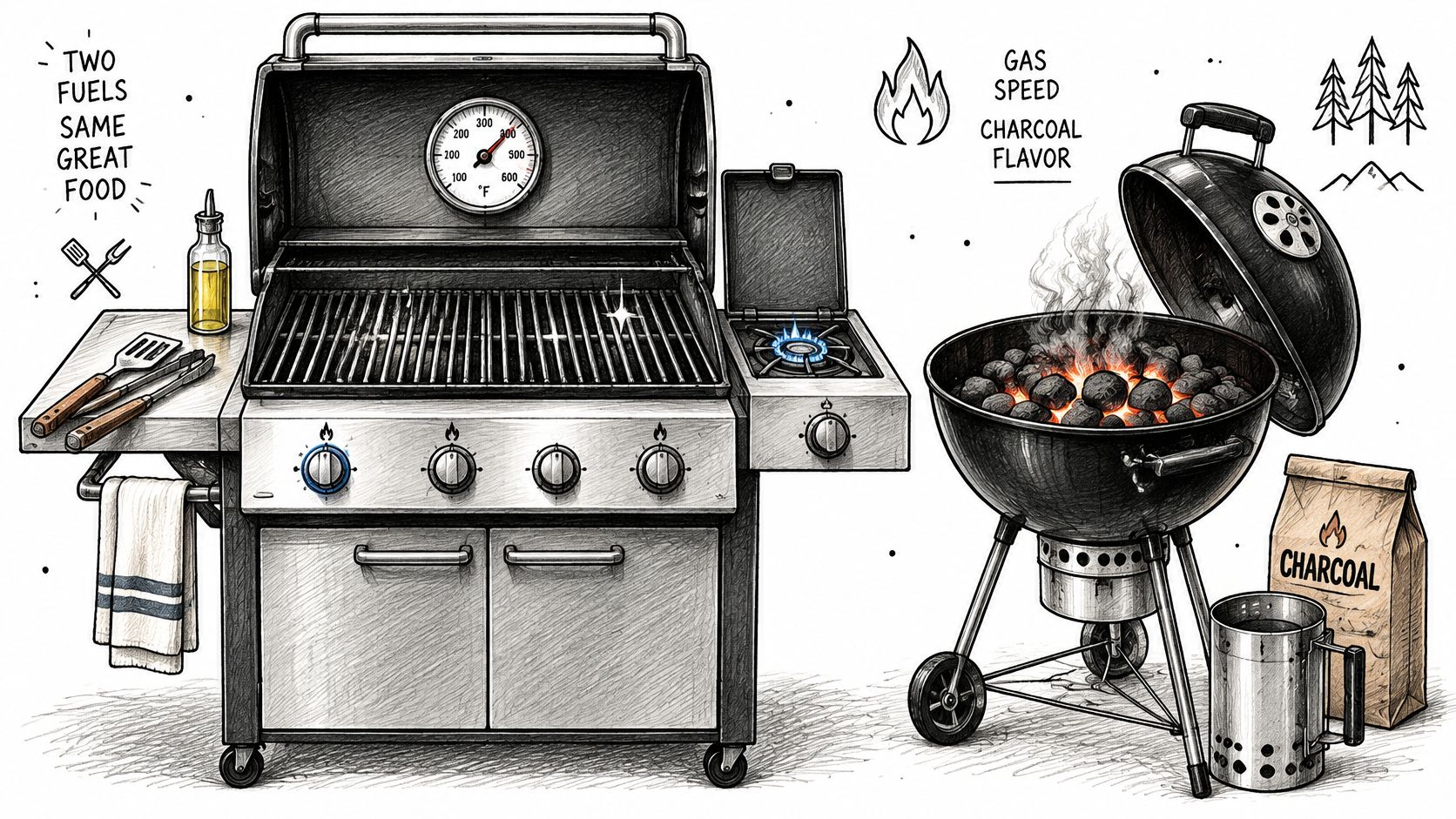
Setting Up Gas and Charcoal for Each Grilling Method
A reliable fish setup has a hot cooking area and a cooler escape route. Arrange both before the fish reaches the grate, because a flare-up isn't the moment to start moving charcoal.
The fuel changes how you build those zones, not why you need them.

Set up the heat before opening the fish
For gas:
- Scrape the grate clean and wipe away loose debris.
- Preheat with the lid closed for 10-15 minutes, aiming for 200-230°C for ordinary direct grilling.
- Turn a burner off or down to create a cooler zone, then wipe a little oil onto the hot grate using kitchen paper held in long tongs.
For charcoal:
- Light a chimney starter and wait until the upper coals are grey, usually around 15-20 minutes.
- Tip the lit charcoal to one side, leaving an area without coals beneath it.
- Fit and heat the grate, clean it, then apply a thin film of oil.
Don't spray oil towards a lit barbecue. Keep the coating light and your hands well clear of the heat.
The lid thermometer measures air near the lid, not the precise temperature where the fish sits. Learn where your grill runs hot, and use the charcoal grilling guide if you need help controlling the fire and vents.
Grilling methods compared
| Method | Heat setup | Best for | Watch for |
|---|---|---|---|
| Direct | Fish above lit burners or coals, roughly 200-230°C | Thick fillets, tuna, prawns, skewers | Flare-ups and sticking |
| Indirect | One zone off, lid closed, 180-200°C | Whole fish, salmon over 3 cm, longer cooks | Longer time, less char |
| Plank | Soak untreated cedar or alder for at least 1 hour; start over direct, then move indirect | Salmon and other soft-flaked fish | Board can catch fire if it dries out |
| Foil parcel | Seal fish with butter and herbs; cook indirectly at 190-200°C | Haddock, cod, delicate trout | No char; fish steams instead |
| Fish basket | Lightly oil hinged mesh; use direct or indirect heat | Whole fish, small fillets, crumbly cuts | Mesh needs thorough cleaning |
Choose protection without expecting char
Foil is forgiving, but it won't produce crisp skin. A basket makes turning easier, although fish can still stick to dirty or un-oiled mesh.
Use only untreated, food-safe cooking planks. Keep the board away from sustained flames, watch the edges, and move it to the cooler zone if it starts burning.
For a smoky indirect cook, the Wood Pellets collection provides another fuel option where your barbecue or approved smoking accessory supports pellets. Use a restrained amount of smoke: delicate fish shouldn't taste like a mouthful of ash.
For another visual reference while organising your barbecue, this video is available.
Sear over direct heat, finish thick or whole fish indirectly, and protect fragile fillets with foil or a basket.
Checking Doneness and Fixing Sticking, Flare-Ups and Dry Fish
The safety line: UK government cooking guidance specifies a centre temperature of 70°C for 2 minutes, with equivalent combinations including 65°C for 10 minutes or 60°C for 45 minutes.
Insert a clean probe sideways into the thickest part of a fillet so the sensing tip reaches the centre. With whole fish, check the thick shoulder flesh without touching the backbone; with a parcel, open carefully because escaping steam can burn.
A reading that briefly touches the target isn't the same as holding it for the required time. Check more than one portion when cuts differ in thickness or sit in different heat zones.
Read the flesh, then verify the centre
Cooked fish should turn opaque and separate easily with a fork. Prawns should become firm and opaque, but these are supporting checks rather than substitutes for temperature control.
Fish continues cooking briefly after removal. Take it off promptly once the validated cooking combination is complete, rather than waiting for every flake to look dry; don't assume an unmeasured rest will make an undercooked centre safe.
Grilling fish problems, causes and fixes
| Symptom | Likely cause | Fix |
|---|---|---|
| Sticks to the grate | Grate cold, or fish moved before it released | Preheat 10-15 min, oil lightly, and allow 2-3 min before gently testing release |
| Flare-ups | Fat or excess oil dripping onto burners or coals | Move fish to the cool zone; close the lid briefly only if safe and consistent with the barbecue's instructions |
| Dry, chalky flesh | Overcooked or grilled too hot | Lower the heat next time and remove promptly once safely cooked and just flaking; rest briefly |
| Raw or glassy centre | Thick cut on high heat; surface browned first | Move to indirect heat, cover and check with a probe |
| Bitter, burnt rub | Sugary seasoning exposed to fierce direct heat | Use a lighter coating or add sugary seasoning later over gentler heat |
| Skin tears away | Wet skin, poor surface preparation or premature turning | Dry and shallow-score the skin, then leave skin-side down until it releases |
Rescue the cook without making it worse
If a spatula meets resistance, stop pushing. Slide a thin fish spatula almost parallel to the bars and test from another edge; stabbing downwards breaks the flesh without freeing the skin.
For a thick portion with good browning and a glassy centre, reduce the heat exposure rather than chasing more crust. Put it in the indirect zone, close the lid and let gentler surrounding heat finish the middle.
- For dry fish already cooked: Flake it into warm potatoes with olive oil, herbs and lemon, or serve with salsa verde. Sauce improves the meal, but it won't reverse overcooking.
- For burnt seasoning: Remove badly blackened patches rather than coating them with more rub.
- For persistent flames: Stop cooking over them. Follow the barbecue manufacturer's fire procedure, and never pour water onto a grease fire.
Sugary rubs need particular care because the coating can blacken before the fish is ready. A thinner layer gives you flavour without building a bitter shell, and no spice crust replaces the probe check.
Recipe Ideas, Serving Suggestions and Swapping Fish
Choose the fish first, then match the seasoning and heat to its thickness and texture. Keep each cook simple so you can watch the surface and check the centre rather than relying on the clock alone.
Three straightforward cooks
- Miami Mojo prawn skewers. Lightly oil shell-on prawns and coat with Miami Mojo Citrus Blend. Marinate briefly in the fridge, then skewer and grill, turning as needed. Cook until the thickest prawn is firm and opaque throughout, and a probe confirms its centre has reached the required safe temperature. Allow longer than a fixed per-side estimate if needed. Serve with charred lime.
- SPG cod parcels. Set a 2.5 cm cod loin on foil with butter, lemon, herbs and SPG (Salt Pepper Garlic) Base Blend. Seal with room for steam and cook indirectly for about 10 minutes. Open cautiously and probe the centre. The fish should separate into moist flakes; this method gives you tenderness rather than grill marks.
- Spitfire mackerel with charred lemon. Dry and shallow-score the fillets, then season with Spitfire Spice Blend. Grill skin-side down for 3-4 minutes, then finish on the flesh side as needed. Check that the centre is safely cooked before serving with lemon halves, charred cut-side down.
Charred greens, new potatoes, salsa verde, flatbreads and green-herb salad all work alongside grilled fish. For a firmer cut with a smoky, tangy accompaniment, try grilled swordfish with smoky tomato salsa.
Swap the fish without rebuilding dinner
A 2025 UK study on under-loved seafood found that recipes, cooking instructions and knowledge of health benefits can encourage people to try unfamiliar species and parts. At the grill, match the replacement by texture and thickness, not just by equal weight. That keeps the method familiar while allowing for different heat needs.
Use trout in place of salmon with the same skin-protecting approach, but check it earlier and go lighter on seasoning. Haddock can take the place of cod in the same foil parcel; add a little butter and check thinner flesh sooner. In either swap, let the visual signs and probe reading guide you.
For a family camping menu alongside the fish, Motor Sportsland's camping BBQ recipe offers another outdoor-cooking option. To assemble seasonings for these recipes, use the Build your own bundle option.
Store Leftovers Safely and Plan Your First Cook
Before serving, put out a clean platter and decide what you'll do with any extra portions. Leaving cooked fish beside a cooling barbecue while everyone finishes eating is an avoidable storage mistake.
Put leftovers away deliberately
- Chill promptly: Keep cooked fish hot for serving or refrigerate it promptly. Divide larger quantities into shallow containers so they cool more readily.
- Seal and label: Store leftovers in a covered container in the fridge and eat within two days. Reheat only the portion you need until it's steaming hot throughout.
- Thaw in the fridge: Keep frozen fish frozen until you're ready to plan its thaw. Use a tray to catch drips and keep it away from ready-to-eat food.
- Separate raw and cooked: Never return grilled fish to its raw-fish plate. Wash boards, utensils and the probe between raw preparation and cooked-food checks.
- Protect vulnerable eaters: Avoid serving cold leftover shellfish to people at increased risk of foodborne infection. Follow any individual clinical food-safety advice they've been given.
Reheating should reach the middle, not just warm the outside. The Food Standards Agency's Food & You survey describes cooking until food is steaming hot and cooked all the way through as a food-safety behaviour.
Make the first cook easy to repeat
Start with a skin-on salmon fillet about 2.5 cm thick, lightly seasoned with SPG (Salt Pepper Garlic) Base Blend. Allow 8-10 minutes over direct heat as a planning estimate, turning once and moving it to the cooler zone if the surface gets ahead of the centre.
Confirm the centre reaches 70°C for 2 minutes rather than pulling it because the timer rings. Record thickness, heat setting, time and the result in a simple cooking log; those details are more useful than remembering that the barbecue was “quite hot”.
Once that cook is reliable, change the seasoning rather than the whole method. The Build your own bundle page lets you choose a range of rubs for that next step.
Frequently Asked Questions
Can I grill frozen fish?
Thaw fish in the fridge before using these grilling methods. A frozen centre makes the timing harder to judge, and the outside can overcook before the middle is ready. Once thawed, use the usual visual and probe checks for that cut.
Should I keep the lid open or closed?
Leave the lid open for a brief sear on thin fillets, especially while watching for flames. Close it for thicker cuts, particularly those over 2.5 cm, and use the indirect zone if the outside is cooking faster than the centre.
What does fish that has gone off smell like?
Discard fish with a sour, ammonia-like or sharply unpleasant smell. Fresh fish should smell mild and clean, but a normal smell alone cannot confirm that it was stored or handled safely.
How do I clean the grill after cooking fish?
Brush the grate while it is warm with a suitable scraper or brush, then check for loose bristles. Wash the basket in hot, soapy water. When the barbecue has cooled, remove oily residue from accessible surfaces according to its instructions.
Is grilled fish good for me?
Fish can fit into a varied diet, and grilling needs little added oil. UK health guidance encourages eating fish regularly, including oily fish. Oily and lean fish offer different nutritional profiles.
Smokey Rebel makes small-batch BBQ rubs and seasonings, including blends suited to prawns, cod and mackerel. Browse Smokey Rebel for a seasoning to suit your fish, then keep the grilling method simple and check the centre with a probe.
Join our Mailing List
Sign up and get Smokey Rebel Recipes + weekly recipes straight to your inbox!
Recent articles
Seasoning for Chicken Wings: A Step-by-Step Guide
Seasoning for chicken wings made simple: rub amounts, resting times and safe temperatures for oven, grill, air fryer and smoker.
Read moreHow to Grill Fish: Times, Temperatures and Methods
Learn how to grill fish with timing charts for salmon, cod, mackerel and prawns, gas and charcoal setup, and simple...
Read moreHow to Season Rice: Timing, Salt and Global Flavours
Learn how to season rice step by step, with water ratios, when to add salt, fat and acid, global spice...
Read more