How to Season Rice: Timing, Salt and Global Flavours
The chicken's nearly ready, the vegetables are coming off the grill, and the rice tastes like something you added just to fill the plate. Another shake of seasoning might help the surface, but it won't give you evenly flavoured grains.
Learning how to season rice starts with the cooking water. Measure it properly, build a deliberate flavour into it, and save the fresh, fragrant ingredients for the finish. A salty BBQ rub changes the calculation, though: it replaces some or all of the salt, rather than sitting on top of your usual allowance.
Rice Types and Water Ratios That Carry Flavour
For absorption rice, the cooking water is the main seasoning stage. Every grain drinks from the same pot, so whatever you dissolve into that water flavours the whole batch evenly. Too much water leaves grains soft and the seasoning diluted. Too little leaves a hard centre before the flavour has spread.
Get the water weight right and your salt level becomes predictable too. That matters when you're setting amounts against UK sodium benchmarks rather than shaking until it tastes right, because a fixed ratio means a fixed dose in every serving.
Use a 250 g dry batch as your test portion. Weigh the water in grams rather than swapping between mugs and measuring cups, and record the result alongside the rice brand and pan you used.
Water and cooking times by rice type
Treat the water column as a starting point to test in your own pan, since brands and lid fit shift it.
| Rice type | Dry weight | Water (approx.) | Simmer time | Rest time |
|---|---|---|---|---|
| Long-grain white (easy-cook) | 250 g | 375-500 ml | 12-15 min | 5-10 min |
| Basmati (soaked 20 min) | 250 g | 300-375 ml | 10-12 min | 5-10 min |
| Jasmine | 250 g | 300-375 ml | 12-15 min | 5-10 min |
| Brown long-grain | 250 g | 500-625 ml | 25-35 min | 10 min |
| Pre-cooked pouch | Per pack | Follow pack | Follow pack | 2 min covered |
| Leftover cooked rice | n/a | None | No simmer, reheat only | Stir after reheating |
I'd start at the lower end of each range and add a splash more on the next batch if the centre stays firm. Slightly wet rice is easier to rescue than grains cooked dry.
Brown rice needs noticeably more water and a longer simmer than white. Its firmer grain stands up to a bold rub, while long-grain white makes a useful neutral base for evenly distributed seasoning. The NHS balanced-diet guide lists brown rice as a wholegrain starchy food, so choose it when that texture fits the plate.
Basmati and jasmine benefit from a 20-minute soak, and soaked rice needs less cooking water. Drain it thoroughly and use the soaked figure in the table, never the full unsoaked allowance.
Pan test: Keep the rice, water weight, lid and heat setting consistent before changing the seasoning.
For home-pan adjustments, the guide to how much water to cook rice covers the variables in more depth. When scaling up, Chef Royale's rice cooker measurements for catering kitchens give a useful reference. Lid fit and heat loss still need testing in the equipment you'll use day to day.
How to Season Rice Step by Step
The cooking water is where seasoning happens. Once the lid goes on, nothing else reaches the centre of each grain, so get the scales, sieve, saucepan and a tight-fitting lid ready before starting, and dissolve the seasoning in the water rather than chasing a salty patch through cooked rice.
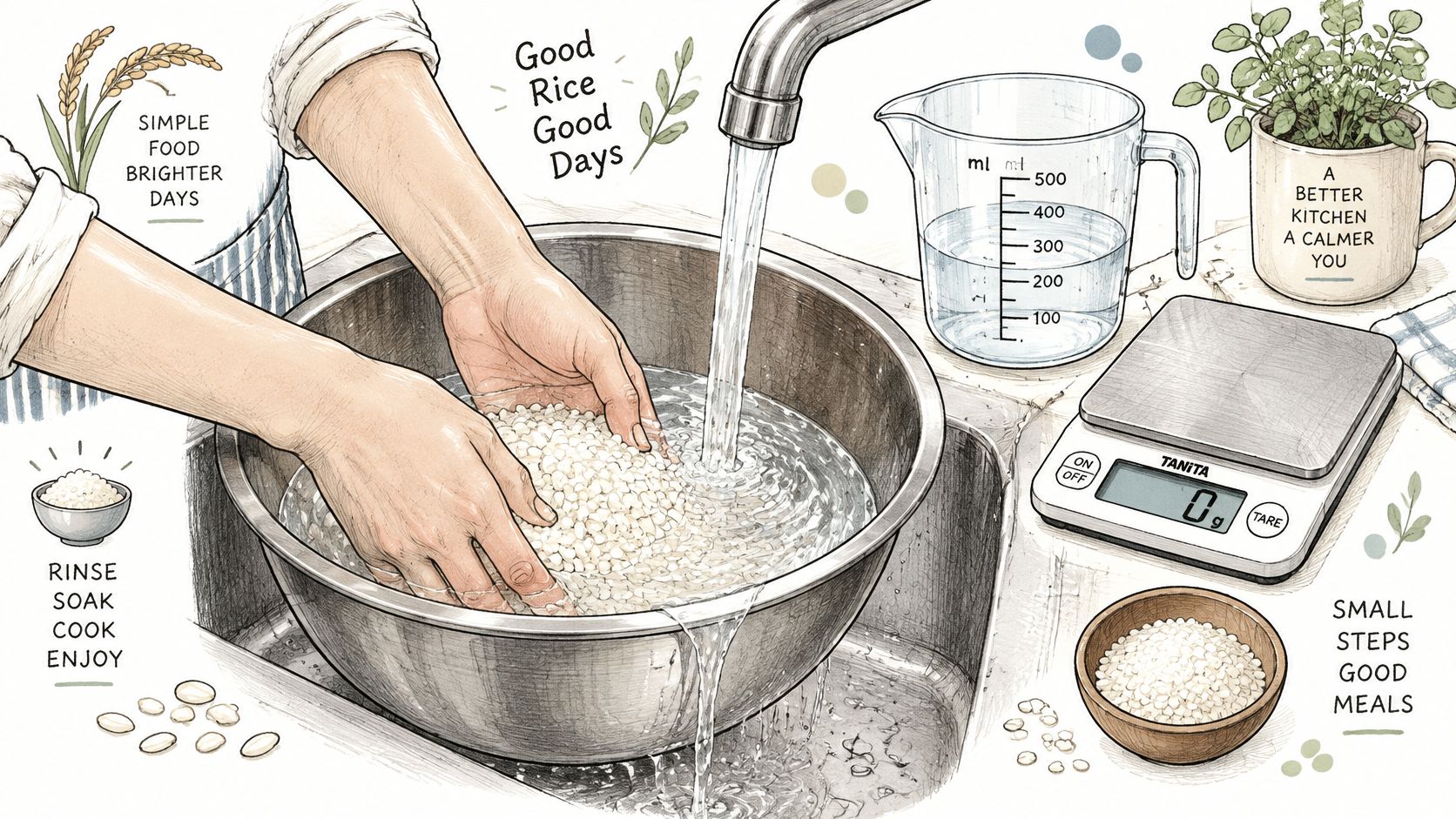
Start with a thorough rinse.

Build the flavour before covering the pan
- Rinse the rice. Wash your 250 g batch in cold water two or three times, until the water runs mostly clear. This removes loose surface starch that can make the finished rice gluey.
- Measure consistently. Weigh the dry rice before rinsing, then drain it well and weigh the cooking water separately. Account for soaking rather than treating wet rice as dry.
- Dissolve the seasoning. Stir your measured salt, stock powder or rub into the water. Taste with a clean spoon: aim for light stock, not brine. The liquid can taste slightly more seasoned than the intended rice, but a sharp salty edge is a warning.
- Bring it to the boil. Add the drained rice and stir once to spread it across the base. Don't keep stirring as it cooks.
- Cover and simmer gently. Fit the lid and lower the heat. Keep it closed so you don't lose the steam needed to finish the grains.
- Rest, then fluff. Take the pan off the heat and leave it covered for 5-10 minutes before separating the grains with a fork. That pause firms the exterior so the grains stay distinct. Add finishing fats, acids and herbs after fluffing.
Plenty of cooks tip salt into the water out of habit. I'd treat it as a measured choice instead: whatever you dissolve is the whole allowance for the pot, so weigh it rather than trusting a shake. Stock powder and salty rubs count toward that total and change the maths, so subtract them from the salt you'd otherwise add. Done this way, the water carries the seasoning and finishing touches do the smaller job.
For a visual cooking reference, watch the preparation before starting your next batch.
Match the rice to the meal
Not every plate needs heavily seasoned rice. With salty grilled meat, a rich sauce or punchy pickles, a restrained rice base can give the meal better balance.
For another perspective on serving rice as part of a complete meal, explore morning food culture with Jasumo. Choose the intensity to suit the accompaniments rather than judging the rice in isolation.
Taste a forkful while it's hot, then again after the rest, before reaching for more salt. Rice often reads flatter through the steam than it does on the plate.
When to Add Salt, Fat and Acid
Salt does its most reliable work in the cooking water, where it seasons each grain as it swells. Fat and acid are finishers: they change aroma and balance after the heat is off, so they cannot rescue water that was never seasoned.
The Government's 2024 salt-reduction targets set a maximum target for unflavoured rice of 60 mg sodium, equivalent to 0.15 g salt, per 100 g as consumed. For flavoured rice, the same document gives an average target of 170 mg sodium (0.43 g salt) and a maximum of 230 mg sodium (0.58 g salt) per 100 g.
Treat those figures as yardsticks for the whole pot. They count sodium from every ingredient, and the document calculates salt equivalent by multiplying sodium by 2.5. If your 250 g dry batch weighs 600 g after cooking, the unflavoured benchmark works out at about 0.9 g salt across the pot. Weigh the finished batch if you want to compare it properly; cooked yield isn't fixed.
Seasoning element, timing and starting amount
These are starting quantities for a test batch, not instructions to add every row together.
| Element | Add when | What it does | Starting amount per 250 g |
|---|---|---|---|
| Fine salt | In the cooking water | Lifts and sharpens every grain | 1/4 tsp (about 1.5 g); use less if stock or a rub is also used |
| Stock powder | In the cooking water, counted as salt | Adds savoury depth | 1/2 tsp, then taste |
| Spice blend | Bloomed in hot fat or dissolved in the water | Builds a backbone of flavour | 1 tsp, then adjust |
| Butter or olive oil | Off the heat, after resting | Rounds the flavour and separates grains | 1 tbsp (15 g) |
| Lemon or lime juice, or rice vinegar | Off the heat, after fluffing | Brightens and cuts richness | 1-2 tsp |
| Fresh herbs | Off the heat, after fluffing | Adds fresh aroma | 2 tbsp chopped |
Salt and stock belong in the measured liquid for even distribution. Before you add plain salt, count what stock powder and any seasoned rub will contribute; that total still sits inside the same pot budget. Citrus and fresh herbs stay at the finish because prolonged cooking dulls their aroma.
A spoonful of rub is also a contribution to the pot's salt total. Read the label before adding plain salt.
Build depth without leaning on salt
For plant-based rice, use unsalted or reduced-salt vegetable stock and skip extra stock powder. Garlic, smoked paprika, toasted cumin, dried mushroom powder and lemon zest provide different kinds of depth; keep fine salt at 1/8 tsp or less as a conservative test, then weigh it against your batch's salt budget. A prescribed low-salt diet takes priority over any recipe.
Bloom whole spices in hot fat for about a minute and ground spices for 20-30 seconds, then add liquid. Longer frying risks a bitter base, particularly with sugary rubs. The same distinction between cooking aromatics and finishing a dish is useful when seasoning a stir-fry.
Global Flavour Styles and Spice Amounts
Five global seasoning styles per 250 g dry rice
Treat these as approachable flavour profiles, not definitive versions of regional dishes. The spices listed don't include an automatic allowance of salt.
| Style | Spices and aromatics | When it goes in |
|---|---|---|
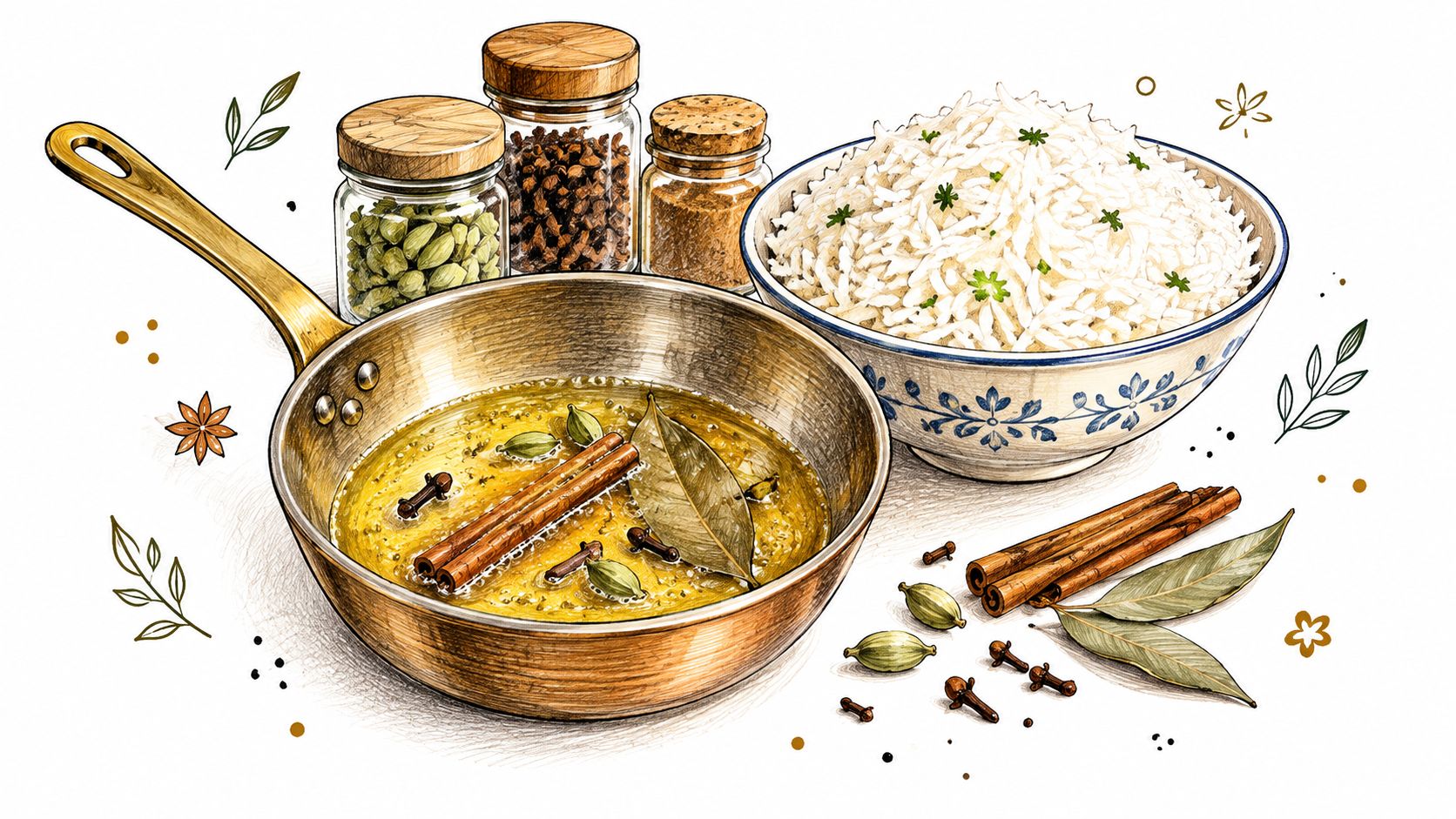
| Pilau-style | 3 lightly crushed cardamom pods, 1 small cinnamon stick, 2 cloves, 1 bay leaf | Bloomed in 1 tbsp ghee with softened onion, then water |
| Greek lemon-oregano | 1 tsp dried oregano, zest of 1 lemon, 2 crushed garlic cloves | Oregano and garlic in the water; zest at the finish |
| Mexican-style | 1 tsp ground cumin, 1 tsp smoked paprika, 1/2 tsp garlic powder | Briefly bloomed in 1 tbsp oil, then water |
| Cajun-style | 1 tsp paprika, 1/2 tsp dried thyme, a pinch of cayenne | Stirred into the water |
| Ginger and star anise | 1 star anise, 2 thin slices ginger, a few drops sesame oil | Simmered in the water; sesame oil at the finish |
Blooming should smell fragrant, not scorched.

Put one flavour profile to work
For pilau-style rice, soften sliced onion in the ghee before adding the whole spices. Let their aroma develop, then carefully pour in the measured water. Remove the cinnamon, cloves, cardamom pods and bay before fluffing.
Greek lemon-oregano rice needs less work at the hob. Put the oregano and garlic into the water, then fold through the zest after cooking so the citrus oil stays bright.
- Mexican-style rice: Bloom the ground spices briefly in oil and add the water promptly. Finish with lime if the accompanying chicken or beans need a brighter side.
- Cajun-style rice: Distribute the paprika, thyme and cayenne through the water so the heat doesn't gather in isolated mouthfuls. For a fuller meal, try the dirty Cajun rice recipe.
- Ginger and star anise rice: Simmer the aromatics with the grains, remove them before fluffing, and finish sparingly with sesame oil.
The Historical Association's exploration of eastern spices provides useful context for Britain's established use of layered spice flavours. In the kitchen, the practical lesson is to choose compatible aromatics rather than reaching for more salt.
Pick one style per batch. The same dry-rice seasoning amounts can be tested across the rice types above, using each variety's appropriate water allowance; brown rice may need a more assertive fresh finish.
Batch Cooking and Leftover Rice Safely
Say you cook a 500 g dry batch on Sunday, hoping it'll cover three weeknight dinners. That needs a different storage plan from putting the entire pot in the fridge and taking scoops throughout the week.
The Food Standards Agency's home food fact checker advises cooling cooked rice as quickly as possible, ideally within one hour, then refrigerating it and consuming it within 24 hours. Rice can contain bacterial spores that multiply at room temperature and produce toxins, so the later dinners need freezing promptly after rapid cooling, not extended fridge storage.
Portion first, then chill
- Finish while hot. Add the butter, herbs or citrus you intend to include before storage. Have the containers ready so finishing doesn't become a reason to leave rice standing.
- Spread it out promptly. Use shallow containers or smaller portions. Don't leave the batch cooling in the cooking pan, steamer or rice cooker.
- Cool quickly. Keep the layer shallow and avoid stacking warm containers tightly together. A deep, dense mound holds heat in its centre.
- Cover and refrigerate. Keep only what you'll eat within the chilled-storage window in the fridge. Freeze the portions intended for later meals promptly after cooling.
Safety rule: Seasoning isn't a preservation method. Reheating won't remove toxins that have already formed.
Spices can also introduce contamination. Buy from reputable suppliers, use clean utensils and don't dip a spoon that has touched raw meat into a seasoning can or cooked batch. The UK rice-handling guidance for catering kitchens reinforces the importance of clean handling.
Reheat only what you'll eat
Reheat rice only once, until steaming hot throughout. Stir during microwave heating to reduce cold spots, and check the centre of the thickest portion with a clean food thermometer where available. Fried rice and rice containing stock, vegetables, meat or sauce need the same care.
Take out only the portion you need and keep the remainder chilled. Don't warm the whole batch merely to loosen a serving.
For lunches away from home, HYDAWAY's guide to storing travel meals offers useful container-planning ideas, but a convenient container doesn't replace temperature control. Pack chilled rice with suitable cold storage rather than carrying it warm.
Label each container with its cooking date, portion size and whether it has already been reheated. That small habit prevents someone else in the household from warming the same rice again.
Fixing Bland, Salty, Sticky and Dry Rice
Bland rice often means the seasoning stayed on the surface or the cooking liquid was too weak. Before changing anything, check the water weight, the salt contribution from every ingredient and whether the lid stayed on.
The common errors are predictable: seasoning only the surface, using too much liquid, and combining salty stock with a salty rub without recalculating the total. Identify which happened before reaching for another spoonful.
Seasoned rice symptoms, causes and fixes
| Symptom | Likely cause | Fix |
|---|---|---|
| Bland, tastes of nothing | Seasoning on the surface only, or under-seasoned water | Fold in a squeeze of lemon or a knob of butter now; next time season the water |
| Too salty | Stock powder plus a salty rub, with no recalculation | Stir in plain cooked rice to dilute; next time count the salt in each ingredient |
| Raw, dusty spice taste | Ground spices added without enough cooking or blooming | Bloom a small fresh portion in fat, then fold through; don't add more raw powder |
| Bitter, burnt base | Ground spice cooked on a dry, hot pan | Transfer unburnt rice without scraping the base; next time lower the heat and add water promptly |
| Sticky or gluey | Stirred during the simmer, or too much water | Spread and fluff gently now; next time rinse thoroughly, stop stirring and reduce water by 10-15% |
| Hard centre, dry grains | Too little water, or the lid lifted during cooking | Add 2-3 tbsp hot water, cover over very low heat briefly, then rest for 5 minutes |
Know which fixes have limits
Lemon can brighten bland rice, but it doesn't remove salt. Adding water to salty cooked rice usually trades a flavour problem for a texture problem; plain cooked rice is the more reliable dilution.
Likewise, don't scrape a scorched base into otherwise usable grains. If the burnt flavour has spread throughout, starting again is more effective than masking it with chilli.
These fixes assume the rice has been handled safely; Torbay Council's rice-handling guidance is a useful safety reference. When a fix needs gentle mixing, use a fork and lift the grains rather than beating them with a spoon.
Pick a Blend and Season Your Next Pot of Rice
A salty rub changes the maths. Every gram of blend that goes into the pot carries its own salt, so count it as part of the cooking liquid or the spice bloom, and add no extra salt until you have checked the label and tasted the batch. I would run an unfamiliar blend through one small pot before committing it to a family-sized one.
Smokey Rebel is one option alongside individual spices and homemade blends. The range uses plant-based ingredients with no fillers, draws on authentic global flavour inspiration, and comes in recyclable packaging. None of that changes the cooking rule. Measure first, because a filler-free blend still contains whatever salt its label lists.
Choose a pairing for the plate
- Chipotle Cowboy Chicken Rub goes into the water for a smoky chicken and rice bowl. Finish with lime.
- Greek Odyssey Gyros Rub pairs with lemon zest for rice alongside gyros.
- Miami Mojo Citrus Blend suits citrus rice served with prawns.
- Holy Jalapeño Fajita Seasoning can be briefly bloomed in oil for fajita-style rice.
- Hickory Hog Pork Rub can be stirred through safely stored leftover rice during cooking for pork fried rice.
- Revolution Beef Rub goes into the water for beef pilaf served with steak.
- Wingman Wing Rub gives rice a matching seasoning direction alongside wings.
- Spitfire Spice Blend is the option to test when you want more heat.
For an everyday batch, SPG (Salt Pepper Garlic) Base Blend is the sensible first buy. Season one 250 g test batch, taste it with the meal, then branch out through the build-your-own bundle once you know which direction suits your table.
Does salt in rubs count towards my daily limit?
Yes. Salt from rubs, stock, sauces and plain salt all counts. Read the salt figure on the label, weigh what goes into the pot, and divide that total across the portions served. That number is what each plate actually delivers.
Does the same water ratio work in a rice cooker?
Not automatically. Rice cookers lose moisture differently from saucepans, so use the appliance's rice-specific measurements and test the seasoning separately.
How does brown rice change the seasoning?
Its nuttier flavour and firmer texture suit stronger aromatics. Adjust its cooking water and time for the grain, then judge whether it needs a brighter finish rather than automatically adding more salt.
Smokey Rebel offers small-batch, plant-based rubs and seasonings for BBQ cooking and everyday meals, including the rice served alongside them. Visit Smokey Rebel to choose a blend for your next measured test batch and build a flavour combination that suits your table.
Join our Mailing List
Sign up and get Smokey Rebel Recipes + weekly recipes straight to your inbox!
Recent articles
How to Grill Fish: Times, Temperatures and Methods
Learn how to grill fish with timing charts for salmon, cod, mackerel and prawns, gas and charcoal setup, and simple...
Read moreHow to Season Rice: Timing, Salt and Global Flavours
Learn how to season rice step by step, with water ratios, when to add salt, fat and acid, global spice...
Read more7 Best Spice for Potatoes Blends, Methods and DIY Rubs
Find the best spice for potatoes for roasting, mashing and frying, with serving ideas, cooking methods and simple DIY rub...
Read more