Urfa Chilli Flakes Guide Flavour Uses and Pairings
You've probably had this moment. Dinner is nearly sorted, the chicken's seasoned, the grill or air fryer is hot, and you want one last thing to make the food taste deeper, darker and more interesting, but you don't want the whole meal shouting with heat.
That's where Urfa chilli flakes make sense.
They look dramatic in the jar and they sound specialist, so plenty of cooks assume they're only for restaurant food or for people with shelves full of obscure spices. They're much easier to use than that. Once you understand what they taste like and how they behave, they become the sort of ingredient you reach for on eggs, roast veg, lamb, chicken thighs, kebabs, beans and slow-cooked BBQ.
At Smokey Rebel, the useful lens is simple. Go for real flavour, skip the filler, and use seasonings in ways that make everyday cooking easier, not fussier. Urfa fits that approach well because it isn't just about heat. It adds a rounded, smoky-sweet savoury note that helps food taste more finished.
Introduction to Urfa Chilli Flakes and Why Cooks Love Them
A lot of cooks first meet Urfa on a menu. It might be scattered over hummus, folded into butter for grilled meat, or dusted over eggs in a café brunch that somehow tastes richer than what you make at home.
Then you spot a jar in a shop and hesitate. Is it hot? Is it like standard chilli flakes? Will it work with BBQ food or only Middle Eastern dishes?

Why it clicks with home cooks
Urfa chilli flakes solve a very common flavour problem. You want depth without making the meal aggressively spicy. That matters on family dinners, on BBQ food where smoke is already doing part of the work, and on weeknight cooking where one extra spoonful needs to earn its place.
It also helps that Urfa has a clear identity. It isn't just a random dark chilli. In UK retail, it's presented as a Turkish origin ingredient with practical pack sizes that people buy for home cooking, including 70g jars and 500g packs (Arabica London product listing).
Kitchen shortcut: Think of Urfa as a finishing spice that behaves more like a smoky seasoning layer than a warning sign.
Why UK cooks keep coming back to it
The flavour sits in a sweet spot. It's smoky, fruity and rounded, so you can use it on toast and eggs one day, then in a lamb rub or chilli pot the next. UK retailers now carry it across specialist and gourmet channels, with pricing that runs from £2.40 to £6.50, and one 500g pack at £12.99, which tells you it's no longer a hidden-aisle ingredient (Ottolenghi pantry listing).
That's part of why cooks love it. It feels distinctive, but it works like an everyday pantry staple once you start using it.
What Urfa Chilli Flakes Are and Where They Come From
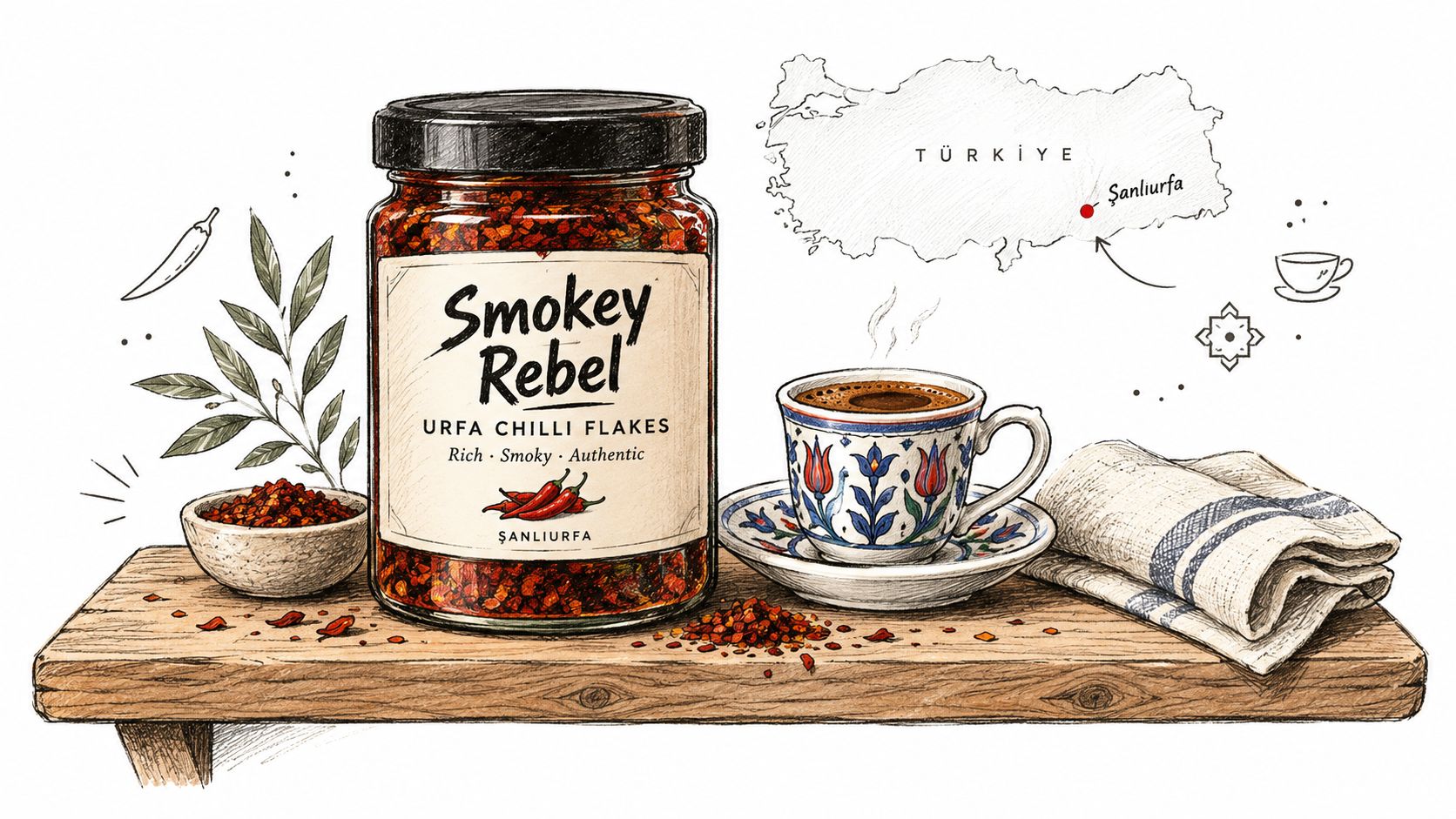
Urfa chilli flakes are also called Urfa biber or isot. They're the signature dried chile of south-eastern Turkey, tied to the Şanlıurfa region and made from a dark-fruited landrace of Capsicum annuum grown around that area (TasteLab ingredient reference).
That regional link matters. It means Urfa isn't best understood as generic chilli flakes in a darker colour. It's a regional specialty with a distinct raw material and a distinct method.

The day and night process
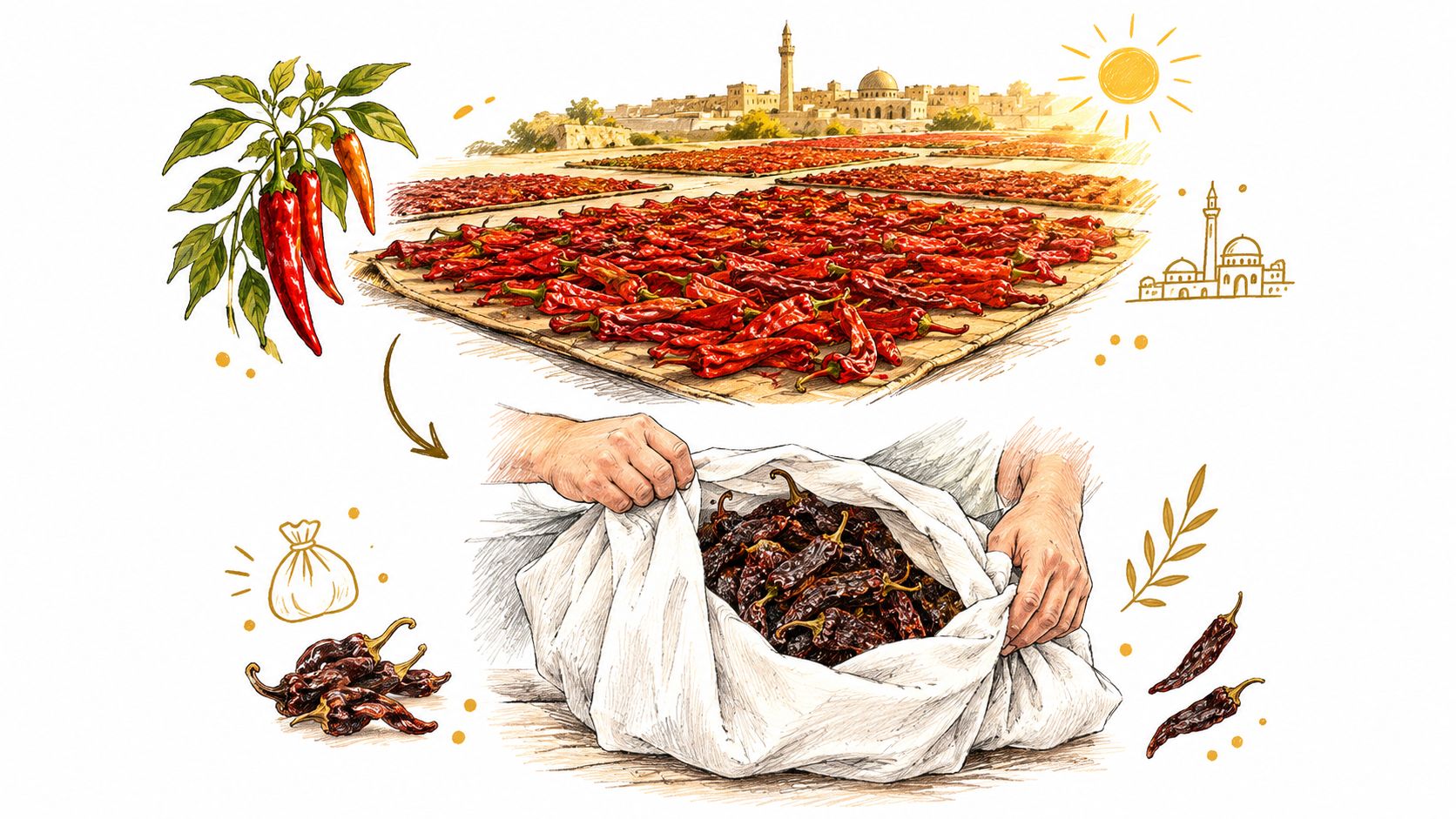
The traditional method is the part people remember because it explains so much of the final flavour. The peppers are harvested when fully ripe, then sun-dried during the day and wrapped overnight so they sweat. That repeated drying and sweating process shapes the spice's deep maroon-to-black colour, soft oily feel and layered flavour (Spice Station Silver Lake explanation).
A simple way to think about it is this. Fresh red chilli flakes are like fresh fruit turned dry. Urfa is closer to fruit that has been cured and concentrated. Not sweet like raisins, but developed in that same darkened, richer direction.
Why it feels different in the jar
Most standard chilli flakes are dry, brittle and sharp. Urfa is usually softer and slightly oily. That texture can surprise people the first time they pinch some between their fingers, but it's one of the clues that you've got something made through a more involved process.
Three details help you explain Urfa in one sentence:
- Origin matters: It comes from the Şanlıurfa region rather than from an unspecified chilli blend.
- Process matters: It's dried by day and wrapped at night to sweat.
- Result matters: The colour, aroma and texture come from that method, not from added smoke flavour.
It's less like “chilli flakes, but darker” and more like a pepper that has been carefully cured into a seasoning with its own personality.
For UK cooks, that identity isn't hidden away in trade circles. Urfa is sold in home-friendly formats and appears in mainstream culinary settings, including London shops associated with Yotam Ottolenghi's pantry style, which is one reason many British home cooks now recognise it as a normal ingredient rather than a curiosity.
Flavour Profile Heat Level and How It Differs From Other Flakes
Open a jar of Urfa chilli flakes and the first surprise is usually the colour. They tend to be dark burgundy through to near black, not bright red. The second surprise is the smell. Instead of an upfront sharp chilli hit, you get something smoky, sweet and rounded.
UK suppliers often describe the flavour as smoky, sweet, rounded and only mildly hot, which is why cooks use it to layer flavour rather than to deliver the main punch of heat (Sous Chef Urfa chilli flakes description).
What it tastes like in plain language
If flavour notes ever feel too airy, use this test. Ask what the spice does to food.
Urfa tends to make food taste:
- Darker: especially on aubergine, beef, lamb and mushrooms
- Sweeter: not sugary, but fuller and more mature
- Smokier: in a gentle way that supports grilling, roasting and char
- Warmer: with a delayed heat rather than a sharp jab
That's why it works so well on food that already has some richness. Egg yolks, yoghurt, chicken skin, beef fat and olive oil all carry those flavours well.
How hot is it really
One UK spice retailer gives Urfa a low-to-medium heat level of about 7,500 Scoville Heat Units (The Spice Cupboard listing). You may also see broader published estimates. One source describes a range of roughly 30,000 to 50,000 SHU, which shows that heat claims vary depending on source and interpretation (Sapor World ingredient page).
The practical takeaway is more useful than arguing over the exact number. Most cooks experience Urfa as manageable and generous. You can season with it more freely than with standard crushed chilli flakes.
Practical rule: Use Urfa for flavour first, heat second.
Urfa compared with other flakes
Here's where people often get muddled. They hear “Turkish chilli” and assume it sits close to any other red pepper flake. It doesn't.
- Standard red pepper flakes are usually brighter, drier and harsher.
- Aleppo pepper is fruitier and brighter, with less of Urfa's dark, smoky depth. If you want a closer sense of that family difference, this Aleppo red pepper flakes guide is a useful side-by-side reference.
- Pul biber can overlap stylistically, but Urfa usually tastes moodier and more cured.
- Smoked paprika brings smoke and sweetness, but not the same texture or delayed warmth.
That's why Urfa works almost like a flavour amplifier. You can add a pinch at the end and make a dish taste more complete without making it dramatically hotter.
How to Use Urfa Chilli Flakes in Everyday and BBQ Cooking
The easiest way to start with Urfa is not in a complicated recipe. Start where a finishing spice can make an obvious difference.
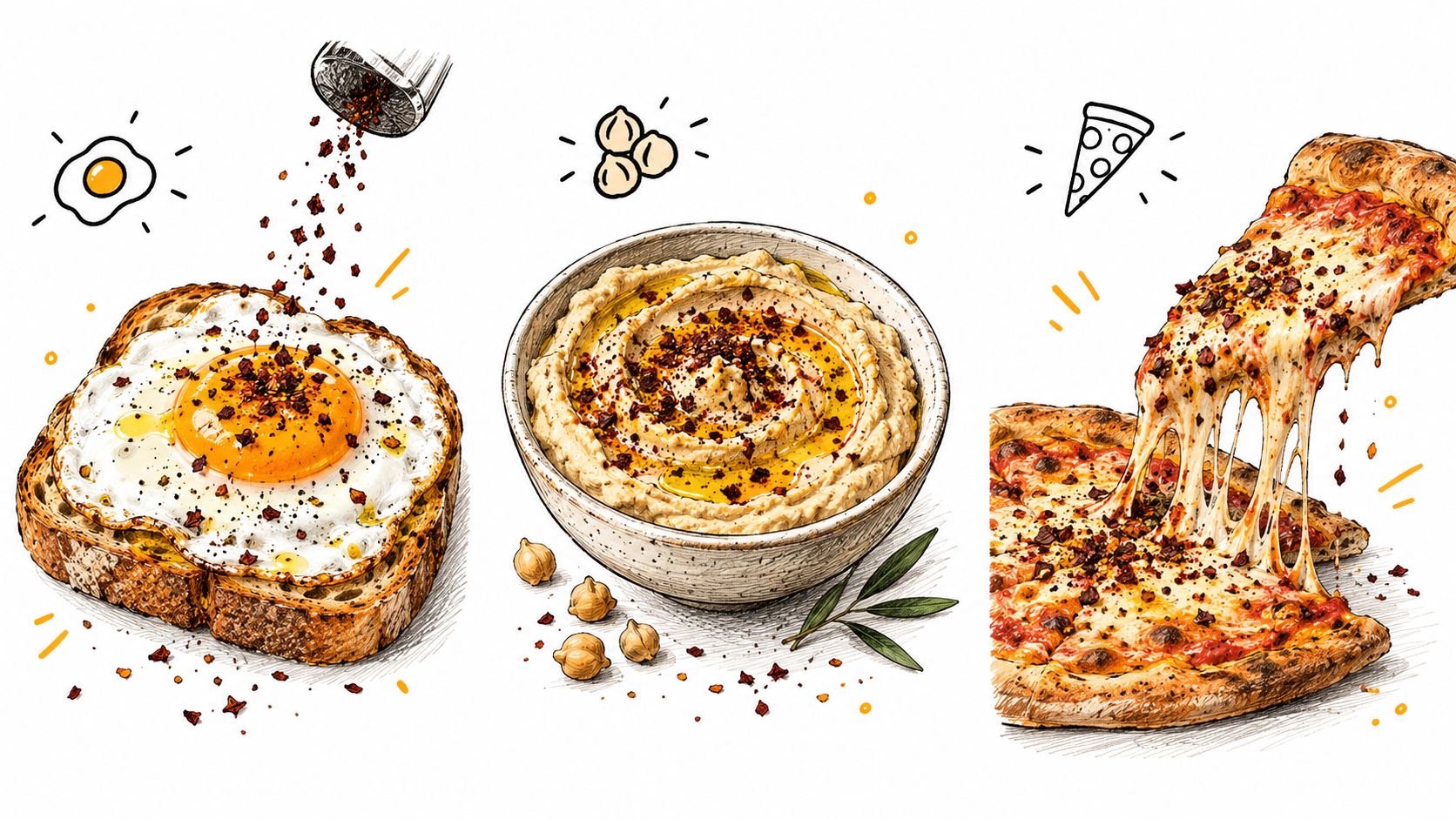
Scatter it over fried eggs on toast. Stir it through olive oil for hummus. Dust it over roasted carrots or wedges just before serving. Add it to pizza after baking instead of using ordinary chilli flakes.

Fast everyday uses
These are the low-effort wins that help you learn the spice quickly.
- Eggs on toast Fry or poach your eggs. Butter the toast. Finish with a pinch of Urfa and a little flaky salt. The yolk softens the spice and carries its smoky sweetness.
- Hummus or Greek yoghurt Spoon over olive oil, then add Urfa just before serving. It gives the dip a more savoury edge than standard chilli flakes.
- Roast veg Roast cauliflower, carrots, squash or potatoes as usual. Toss with Urfa at the end, not at the start, if you want the flavour to stay clear and vivid.
- Butter or oil Warm butter or olive oil gently, stir in Urfa, then spoon it over grilled corn, beans or fish. This is one of the easiest ways to bloom its flavour.
Three practical BBQ pairings
Urfa shines when it supports other seasonings instead of replacing them. That's where thoughtful pairing matters.
- Steak with SPG and Urfa Season steaks with SPG (Salt Pepper Garlic) Base Blend, then add a light dusting of Urfa just before cooking or straight after slicing. SPG gives you the classic savoury backbone. Urfa adds a dark, smoky finish without dragging the steak away from its beefy flavour.
- Air fryer chicken thighs with Cherry Force and Urfa Coat chicken thighs with a little oil and Cherry Force BBQ Rub, then add a pinch of Urfa over the skin side. Air fry until browned and cooked through. The fruit-led sweetness of the rub and the darker chilli note work well together, especially on sticky or lacquered chicken.
- Chilli pot with Texas Red and Urfa Build your chilli as usual, then stir in Texas Red Chili Mix for the main seasoning. Add Urfa near the end for a deeper background note. It's especially useful when the pot tastes flat rather than under-salted.
If you enjoy sweet heat in snack form, the flavour logic is similar to what's discussed in this sweet chili chips guide. The balance comes from sweetness, savoury depth and controlled heat, not from making everything aggressively spicy.
A simple method for BBQ cooks
Use Urfa in one of three roles:
- As a finisher: pinch over sliced meat, grilled veg or flatbreads
- In a rub blend: mix into your base seasoning when you want more depth
- In fat: bloom in butter or oil, then brush over food late in the cook
For cooks who already use pepper-led seasoning and smoked chilli powders, a guide to smoked Spanish paprika helps explain where Urfa overlaps and where it does something different.
A quick visual demo helps if you want to see how a dark chilli seasoning behaves in real food.
One two-minute weeknight move
Mix softened butter with Urfa and a squeeze of lemon, then spread it on hot chicken, salmon, mushrooms or corn. If a dinner tastes nearly there but not quite finished, this usually fixes it fast.
Smart Substitutions and Pairings When You Do Not Have Urfa
Sometimes you don't need the perfect substitute. You need the least wrong one.
The key is deciding what job Urfa was meant to do in the dish. Was it there for smokiness, for gentle heat, for dark fruit notes, or for that soft oily texture? Once you know that, swapping gets easier.
What to reach for instead
If the dish needs dark sweetness and mild warmth, ancho is often a better direction than standard chilli flakes. If it needs smoke more than texture, smoked paprika plus a smaller amount of chilli can get you close enough. If the dish wants a brighter pepper profile, Aleppo usually makes more sense.
For readers comparing dried chillies in more detail, this guide to ancho chili powder helps frame the difference between dark, sweet chilli styles.
Urfa Chilli Flakes Substitutes and Smokey Rebel Pairings
| Option | Flavour vs Urfa | Heat Guidance | Best Use With Smokey Rebel |
|---|---|---|---|
| Aleppo pepper | Brighter, fruitier, less dark and less smoky | Usually use a similar amount, then taste | Greek Odyssey Gyros Rub on chicken, lamb or grilled flatbreads |
| Ancho chilli | Earthier and sweeter, less oily in texture | Start modestly and build | Hickory Hog Pork Rub for pulled pork, ribs or pork shoulder |
| Chipotle flakes | Smokier and usually more assertive | Use less than you would with Urfa | Chipotle Cowboy Chicken Rub on thighs, drumsticks or traybake chicken |
| Smoked paprika plus chilli | Gives smoke and colour, but misses Urfa's cured depth | Keep the chilli light at first | Miami Mojo Citrus Blend when you want brightness with a smoky edge |
| Standard chilli flakes | Hotter, sharper, less rounded | Use carefully and add in small pinches | Holy Jalapeño Fajita Seasoning for fajitas, peppers and onions where clean heat works well |
If Urfa was meant to sit quietly in the background, chipotle can push too hard and standard chilli flakes can sound too sharp.
When not to substitute
Some dishes rely on Urfa's specific dark, soft flavour. Yoghurt sauces, egg dishes and finishing butters are the obvious examples. In those cases, a substitute may still taste good, but it won't do the same job.
For BBQ food, the safer approach is often to shift the recipe slightly rather than force a poor swap. If your rub already has smoke and sweetness, use a gentler chilli. If your rub is clean and savoury, choose a sweeter dried chilli to round it out.
Storage Freshness and How Much to Use
Urfa chilli flakes usually feel a little softer and oilier than standard chilli flakes, so storage matters. Keep them in an airtight container away from direct light and heat. A cool cupboard is usually enough for most kitchens.
If the flakes start to lose their rich dark colour, smell flatter, or feel noticeably drier, they're losing the qualities people buy Urfa for in the first place. It's still usable, but it won't give the same rounded finish.
How much to use
The easiest way to avoid overthinking dosage is to separate finishing use from cooking use.
- For finishing: start with a pinch over one portion, then add more if needed
- For rubs and marinades: use enough to notice, but let the main seasoning still lead
- For butter or oil: warm the fat gently, stir the Urfa in, then taste before brushing or spooning
A few practical habits
- Bloom it gently: Urfa opens up well in warm butter or olive oil.
- Add late when possible: that keeps the flavour more distinct.
- Buy to match your cooking: a smaller jar suits occasional use, while frequent grillers and caterers may prefer larger pantry formats sold in the market.
Craft can style packaging is useful here because spices keep better when light, air and kitchen steam stay out. If you cook often and like to mix flavour profiles across chicken, pork and chilli pots, it can also make sense to organise your cupboard around a few repeat-use blends rather than buying random one-offs.
Bringing It All Together With Smokey Rebel Flavour
Urfa chilli flakes earn their place because they do something specific. They bring smoky sweetness, gentle warmth and a dark savoury note that's hard to fake with ordinary chilli flakes. For UK cooks, they're no longer difficult to find, and they fit naturally into BBQ, air fryer and weeknight cooking.
That makes them less of a special-occasion spice and more of a quiet upgrade. A pinch over eggs. A spoonful in butter. A dusting over chicken thighs before they hit the grill. Small move, bigger flavour.

If you like building flavour in layers, it helps to pair a spice like Urfa with dependable base seasonings, then branch out. You can build your own bundle for everyday mixing and matching, or look at the Chilli Heroes Bundle and Flavour Heroes Bundle if you want a ready-made route into deeper, more varied seasoning. For low-and-slow cooks, wood pellets make sense alongside that same flavour-first approach.
The win is confidence. Once you know what Urfa is doing, you stop treating it like a mystery ingredient and start using it like salt, pepper or smoked paprika. Not on everything. Just on the foods that benefit from a darker, softer, more rounded edge.
Smokey Rebel makes small-batch BBQ rubs and seasonings built around authentic global flavour, no added crap, and practical everyday use for grills, smokers, ovens and air fryers. If Urfa's smoky-sweet style sounds like your kind of cooking, visit Smokey Rebel to explore rubs, bundles and fuel that help you layer bold flavour with less guesswork.
Join our Mailing List
Sign up and get Smokey Rebel Recipes + weekly recipes straight to your inbox!
Recent articles
Urfa Chilli Flakes Guide Flavour Uses and Pairings
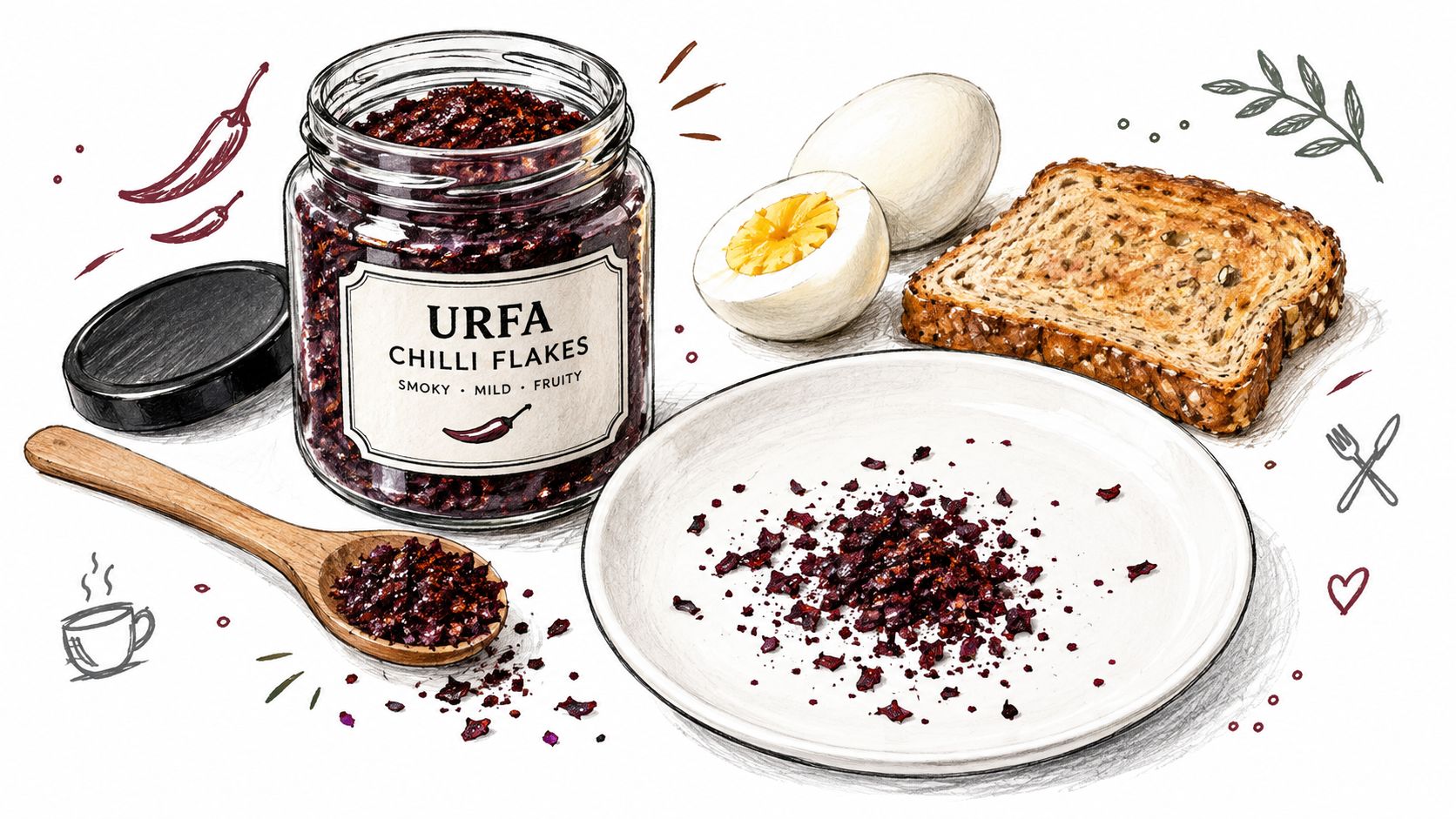
Discover urfa chilli flakes - smoky Turkish isot flavour, heat level, uses, swaps, storage and easy Smokey Rebel recipes for...
Read morePork Belly Strips BBQ: How to Smoke & Grill Them Perfectly
Master pork belly strips BBQ with a two-stage method for crispy edges and tender meat. Learn rubs, temps, and timing...
Read moreBest BBQ Gift Ideas for Every Pitmaster in 2026
Discover the best BBQ gift ideas for 2026, from rubs and pellets to thermometers and bundles. Practical picks for every...
Read more