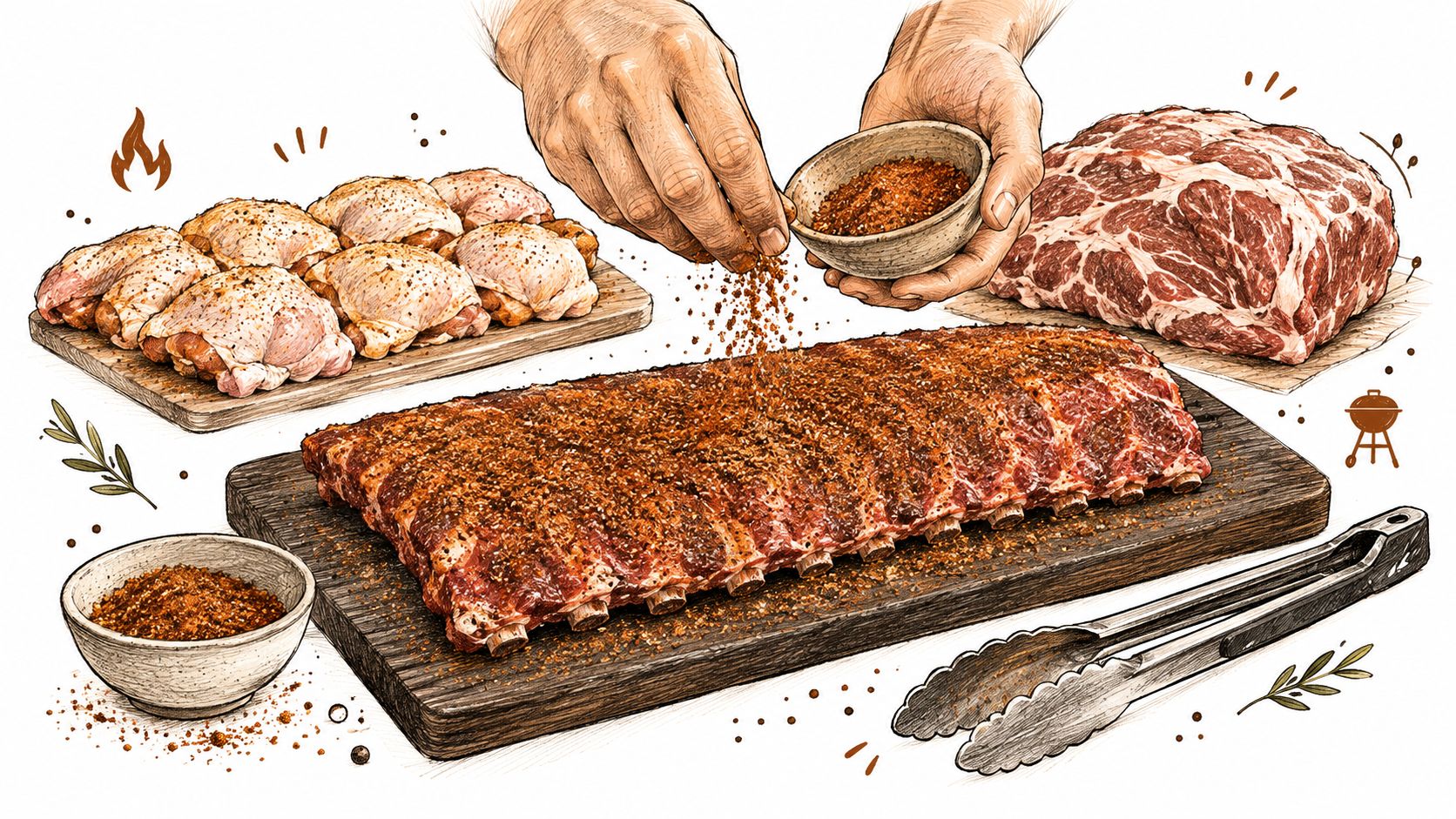
Smoker Dry Rub Guide: Ingredients, Ratios and Use
You've got the smoker running, the wood smells right, and the meat looks the part. Then the rack comes off and you realise the actual question wasn't the smoke at all, it was the seasoning that went on before the lid closed. A good smoker dry rub is the quiet decision that can turn a decent cook into one people remember.

What a Smoker Dry Rub Does Before the Heat Arrives
A smoker dry rub does its work before the smoke has even had a chance to settle in. It seasons the surface, helps form bark, carries flavour into the first bite, and gives the cook a clear identity that smoke alone can't provide. On a brisket, ribs, pork shoulder or chicken, that first layer is doing more than making the meat look seasoned.
The moment the rub starts working
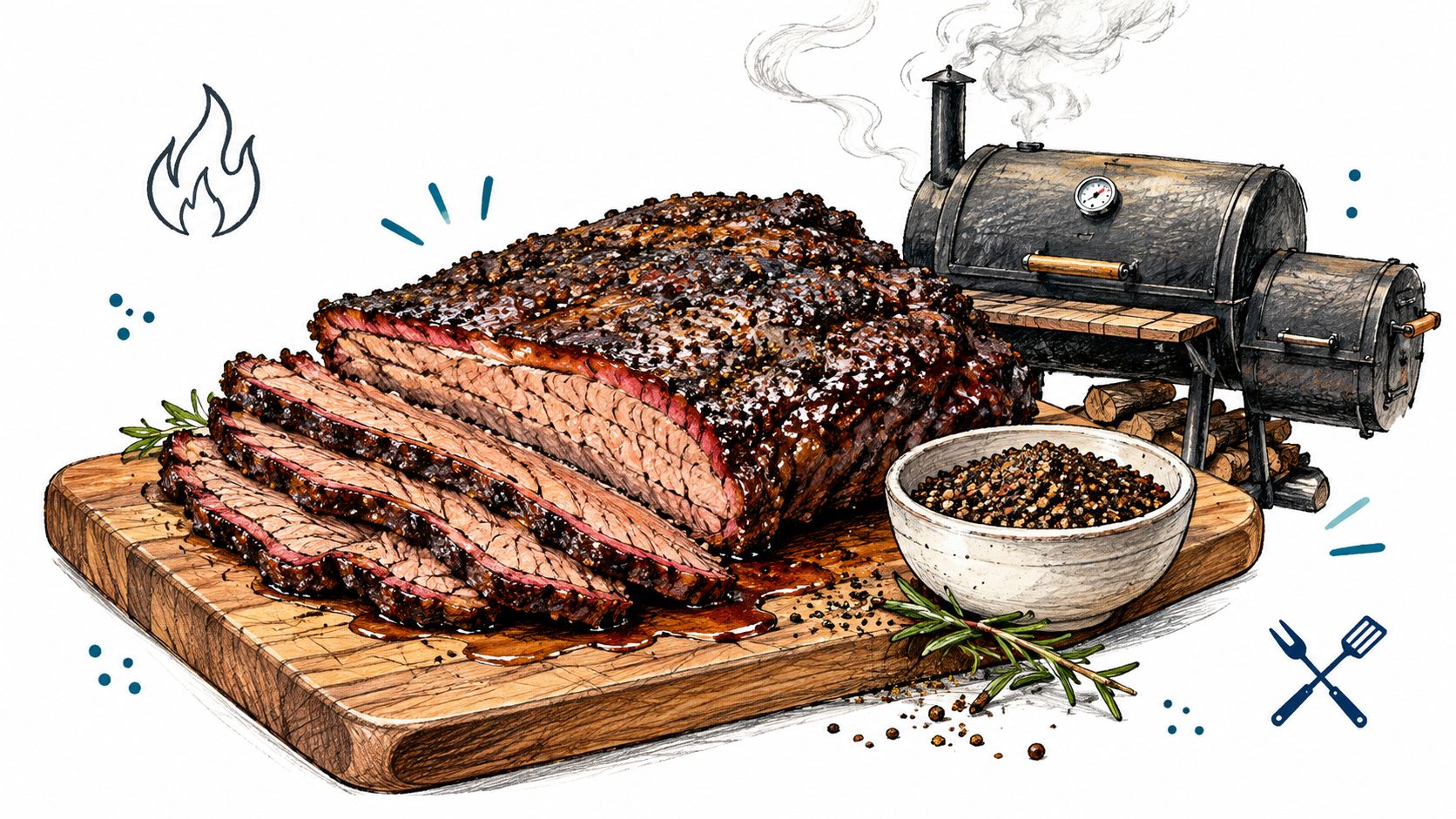
Think about the first slice of brisket on a wooden board. If the bark tastes flat, the whole cook can feel forgettable even if the meat is tender. If the bark is balanced, peppery and fragrant, the smoke feels integrated rather than just layered on top.
That's why a rub belongs in the cooking system, not as an afterthought. It sits on the meat, settles in with time, and gives the smoker something to build around. For UK cooks, that also means the rub needs to fit alongside salt targets, safe cooking temperatures and the way people really cook at home, not just the way recipes look on a screen.
Practical rule: if the seasoning matters, it goes on before the heat, not after the slice.
What it really is
For the rest of this guide, a smoker dry rub means a dry seasoning blend applied to meat, poultry or vegetables before smoking or indirect grilling. It can be coarse or fine, sweet or savoury, mild or fiery, but it should always be deliberate. The point is to create a surface that seasons evenly and cooks with the meat instead of disappearing into sauce.
That also explains why small-batch blends often outperform supermarket tubs. A tighter ingredient list gives you cleaner flavour and more control over salt, smoke and sweetness. If you want to build your own blends with that kind of clarity, the process is worth studying in a structured way, starting with how to blend spices.
Dry Rub vs Marinade vs Glaze in Plain English
A dry rub, a marinade and a glaze all season food, but they do it in very different ways. A rub sits on the surface and helps create bark. A marinade is wet, so it clings, soaks and can soften the texture around the outside. A glaze goes on near the end, when you want shine, stickiness and a final hit of flavour.
Which one belongs where
For brisket, a rub is the workhorse. Brisket needs a dry exterior that can take hours of smoke without turning muddy. For ribs and pulled pork, the rub gives you that seasoned crust people expect from barbecue. Chicken thighs and wings also benefit from a rub because the skin and surface fat hold flavour well.
Marinades make more sense when you want moisture and a softer surface, especially with thinner cuts or vegetables that need extra help carrying flavour. Glazes suit the finishing stage, because sugars and sticky sauces can darken quickly under heat. If you apply them too early, they can blacken before the centre of the meat is ready.
A simple way to remember it
Use this rule at the grill. Dry rub for the cook, marinade for the soak, glaze for the finish. That doesn't mean one method is always better than another, but it does mean each one has a job.
A rub survives long cooks because it's built to sit on the surface and cook with the bark.
For home cooks in the UK, that distinction matters on busy weekends as much as it does for caterers cooking in volume. It also gives small-batch brands a clean way to explain product use on pack, because the customer can see whether the blend is designed for a long smoke, a short sear or a last-minute finish.
The Four Families That Build Any Smoker Dry Rub
A good smoker rub starts with four ingredient families, even though the balance shifts by meat and cook style. Salt seasons the surface and helps the meat taste fuller. Sugar supports browning and softens sharp heat. Heat brings chilli or mustard bite. Aromatics carry the character, which is where pepper, paprika, garlic, onion, herbs and citrus peel do the heavy lifting.
A ratio you can remember
A practical house starting point is 2 parts salt, 2 parts sugar, 1 part heat and 4 parts aromatics. Read that as a 9-part blend, with aromatics taking the biggest share and salt, sugar and heat each playing a smaller, measured role. That gives you room to build flavour without turning the rub into salt paste or dessert seasoning.
| Family | Role in the Rub | Typical Share of the Blend | Easy Adjustments |
|---|---|---|---|
| Salt | Seasons the meat and helps the surface taste fuller | 2 parts of a 9-part blend | Reduce for salty meats, increase only if the dish needs it |
| Sugar | Supports browning and rounds out spice | 2 parts of a 9-part blend | Use less for high-heat cooks, more for pork |
| Heat | Adds chilli or mustard lift | 1 part of a 9-part blend | Push higher for wings, lower for family cooking |
| Aromatics | Build the main flavour signature | 4 parts of a 9-part blend | Change paprika, pepper, garlic, onion or herbs to change the profile |
How to read a bland rub
If a rub tastes flat, it usually needs more aromatic detail, not more salt. If it tastes harsh, the heat may be too high or the sugar too low. If it browns too fast, the sugar is probably doing too much work for the cook temperature.
That matters for product design too. A clean-label blend does not need filler to feel complete, it needs the right balance of aromatics and a salt level that supports, rather than dominates, the profile. For readers who want to build that kind of balance, this guide to blending spices shows the basic method behind a repeatable rub. A beef-focused option such as Revolution Beef Rub shows how a blend can be built for smoker use without drowning the meat in salt.
A Base DIY Rub Recipe and Three Easy Variations
Start with a 100g master recipe and you can move it in three different directions without losing balance. Weighing the blend matters because spooning by eye makes salt and spice drift from batch to batch. A written master formula also helps a small-batch maker keep flavour consistent when they scale from kitchen testing to repeat production.
Base recipe at 100g
- 18g sea salt
- 16g soft brown sugar
- 20g black pepper
- 20g paprika
- 12g garlic granules
- 10g onion granules
- 4g cayenne
That gives you a rub that is savoury first, with enough sweetness to help bark and enough heat to keep the finish lively. If you want to scale it to 500g or 1kg, keep the same proportions and multiply each ingredient cleanly. The recipe should still smell like pepper, paprika and garlic, not just salt.
Three useful directions
Sweet pork blend. Raise the sugar a little, lean into smoked paprika, and keep the pepper present but softer. That works well on pulled pork and ribs because the surface has time to pick up colour over a long cook.
Pepper-forward beef blend. Increase coarse black pepper, keep sugar restrained, and add a touch of mustard for lift. This style suits brisket and beef cuts where you want the bark to read savoury and direct.
Chicken blend. Lighten the salt, add citrus peel and oregano, and keep the heat cleaner rather than aggressive. That gives chicken thighs and wings a fresher profile that still survives smoking.
If a rub has to do one job well, let the aromatics lead and use salt as support.
Whole spices can make a real difference here. Toasting peppercorns or coriander lightly before grinding brings more aroma, and buying ingredients that suit UK kitchens keeps the blend easy to repeat. Once you've settled on a base, document it as the master version so future test batches don't drift every time you restock or scale.
Applying the Rub to Brisket, Ribs, Pork, Chicken and Vegetables
A brisket, a rack of ribs and a tray of cauliflower all ask for different handling. If you treat them the same, the bark, colour and seasoning depth will drift. Once you match the rub to the cut, seasoning becomes part of the cook, not decoration at the end.

A practical application guide
- Brisket. Use a pepper-led rub and coat the surface evenly, then let it rest before the smoker takes over. For a simple baseline, SPG Salt Pepper Garlic Seasoning works well when you want the meat to stay savoury and direct.
- Ribs. Aim for a full but even coat, especially along the meat side and edges. If you want a closer walk-through, keep how to use dry rub on ribs close by while you set up your first rack.
- Pulled pork shoulder. Give the rub a generous coat and let the meat sit long enough for the surface to dry slightly before cooking.
- Chicken thighs and wings. A lighter coat works better, because skin picks up flavour quickly and too much salt can take over.
- Whole cauliflower and aubergine. Use a lighter hand and pair the rub with oil so the surface does not finish looking dusty.
Binder or no binder
Mustard, oil, water or nothing can all work. The right choice depends on the protein and the cook length. A thin binder helps the rub cling, but the rub still needs time on the surface to act like seasoning, not a cosmetic layer.
For pairings outside the smoker, a curated McLaren Vale wine guide is a useful aside when a strong beef cook needs a red that can keep pace with smoke.
Season, rest, then cook. That order gives the rub time to settle on the surface. For chicken and vegetables, a short rest is usually enough. For pork shoulder or brisket, more time helps the seasoning bond and the bark set cleanly.
First-time checklist
- Weigh the rub. Stop guessing once the cook gets larger.
- Cover the surface evenly. Patchy seasoning gives patchy bark.
- Rest before cooking. Let the rub bond with the meat.
- Use the right blend for the protein. Beef, pork and chicken do not want the same profile.
- Keep raw and cooked tools separate. Clean hands, clean trays, clean tongs.
Salt, Safety and Cross-Contamination on a UK Smoker
Salt belongs in the recipe, but it still has to fit the way people eat. UK adults are advised not to exceed 6g of salt a day, and many smoked meals already bring salt to the table before the rub is added. Sausages, bacon, halloumi and commercial plant-based products can all push the total higher, so the rub should be measured, not guessed.
Design salt as a variable
A practical approach is to calculate the rub by portion rather than by instinct. If the meat is already salty, lower the salt share in the blend and let paprika, pepper, garlic, onion, chilli and herbs do more of the work. That suits clean-label blends too, because the flavour still reads boldly without relying on sodium alone.
The Food Standards Agency advises that poultry, pork, burgers, sausages and other minced products should be cooked thoroughly, with a target of at least 75°C at the thickest point and no pink meat or clear juices. It also recognises the equivalent 70°C for 2 minutes schedule used by many cooks. A dark bark can look finished before the centre is safe, so a probe tells you more than colour.
Practical rule: the smoker chamber temperature is not the same thing as the meat's internal temperature.
Cross-contamination on mixed cooks
Raw meat still needs separate handling even when it has been heavily rubbed. Keep seasoned raw meat covered, keep it apart from ready-to-eat food, and use separate utensils, trays and boards for meat and vegetables. If you're cooking for mixed diets, seasonings can still contain allergens such as mustard, milk, gluten, sesame and soya. For label checks, see our gluten-free BBQ guide.
The same rule applies to shakers and scoops. A “clean” blend can still cause problems if the process transfers residues from meat to vegetables or from one allergen to another. For mixed smokers, a dedicated plant-based blend such as Greek Odyssey Gyros Rub can help keep flavour distinct, but the handling process still matters more than the label on the jar.
A worked adjustment
If a blend tastes too salty, reduce the salt in the recipe by about a third and replace the missing impact with more black pepper, garlic and paprika. On the smoker, choose clean wood smoke and indirect heat rather than trying to force flavour with heavy salting. The bark will still build, and the final bite often tastes more complete because the seasoning has room to breathe.
Storage, Shelf Life and Pairing for Small-Batch UK Brands
A dry rub only stays useful if it stays dry. Keep it in a sealed, light-proof container and the flavour holds far better than a blend with fresh garlic, fresh herbs or other high-moisture ingredients. Once moisture gets in, clumping starts and aroma fades faster.

Store for repeat use
Bulk rub should be labelled clearly, portioned into smaller jars or shakers with dry tools, and kept away from steam and direct sunlight. That keeps aroma intact and helps a cook use the same seasoning profile across several sessions instead of getting different results every time they dip a spoon in the tub.
Pairing matters too. A pork-led blend should sit comfortably next to a chicken rub without tasting identical, and a spicy option should have a clear reason to exist alongside a milder base. Bundles such as the Pork Essentials 4-Pack, the Flavour Heroes Bundle or the Magnificent Seven Gift Set make more sense when each rub fills a different job.
Smoke should tell the same story
Cherry, hickory and oak each push a different direction in the smoker, so the rub should match the wood rather than fight it. Cherry suits sweeter, rounder profiles. Hickory can hold a deeper savoury blend. Oak often gives you a straightforward smoke that leaves the seasoning to do more of the talking.
For a small-batch owner, the design checklist is simple. Keep moisture out, keep the ingredient list clean, keep the salt controlled and keep each blend distinct enough that the customer knows why they're reaching for it. If you cook at home, that same checklist helps you choose jars that do different jobs instead of filling the shelf with duplicates.
Frequently Asked Questions About Smoker Dry Rubs
How far in advance can you apply a rub? For most meats, a short rest works, and longer rests make more sense on larger cuts. If the surface is very wet, pat it dry first so the seasoning sticks instead of sliding off.
Do rubs need salt? Usually, yes, but not in a heavy-handed way. Salt seasons the meat, while the rest of the blend builds the character, and the total salt should stay sensible if the food is already naturally salty.
Can rubbed raw meat go in the fridge overnight? Yes, as long as it's covered and kept separate from ready-to-eat food. That separation is part of safe raw-meat handling, not just neat storage.
If you only buy one or two blends, what should you choose first? Start with a versatile base and one protein-specific rub. Then build out from there once you know whether you cook more beef, pork, chicken or vegetables.
For more guidance, check the related Smokey Rebel rub guides and the Build Your Own Bundle page when you want to match your smoker habits to the blends you use.
Smokey Rebel makes small-batch BBQ rubs and seasonings for cooks who want clear flavour, clean ingredients and repeatable results on the smoker. If you're ready to move from guessing to weighing, visit Smokey Rebel and build a seasoning line-up that fits your brisket, ribs, chicken and vegetables properly.
Join our Mailing List
Sign up and get Smokey Rebel Recipes + weekly recipes straight to your inbox!
Recent articles
Seafood Seasoning Blend: How to Make and Use One
Learn what a seafood seasoning blend contains, how much to use on salmon, prawns and white fish, and how to...
Read moreBBQ Ribs Temperature: Safe Targets and Doneness Tests
Find the right BBQ ribs temperature for UK pork ribs: smoker and grill settings, safe core readings, doneness tests and...
Read moreHot Sauce Gift Sets: How to Choose Well
Choose hot sauce gift sets by the meals they suit, not the hottest bottle. UK sizes, allergens, prices and a...
Read more