How to Blend Spices for BBQ Rubs: A Smokey Rebel Guide
You've got the smoker running, the meat rested and the table ready, but the first bite tastes strangely flat. The rub looked generous on the outside, yet it delivered salt in one moment, heat in the next, and very little aroma in between. That usually isn't a cooking problem. It's a blending problem.
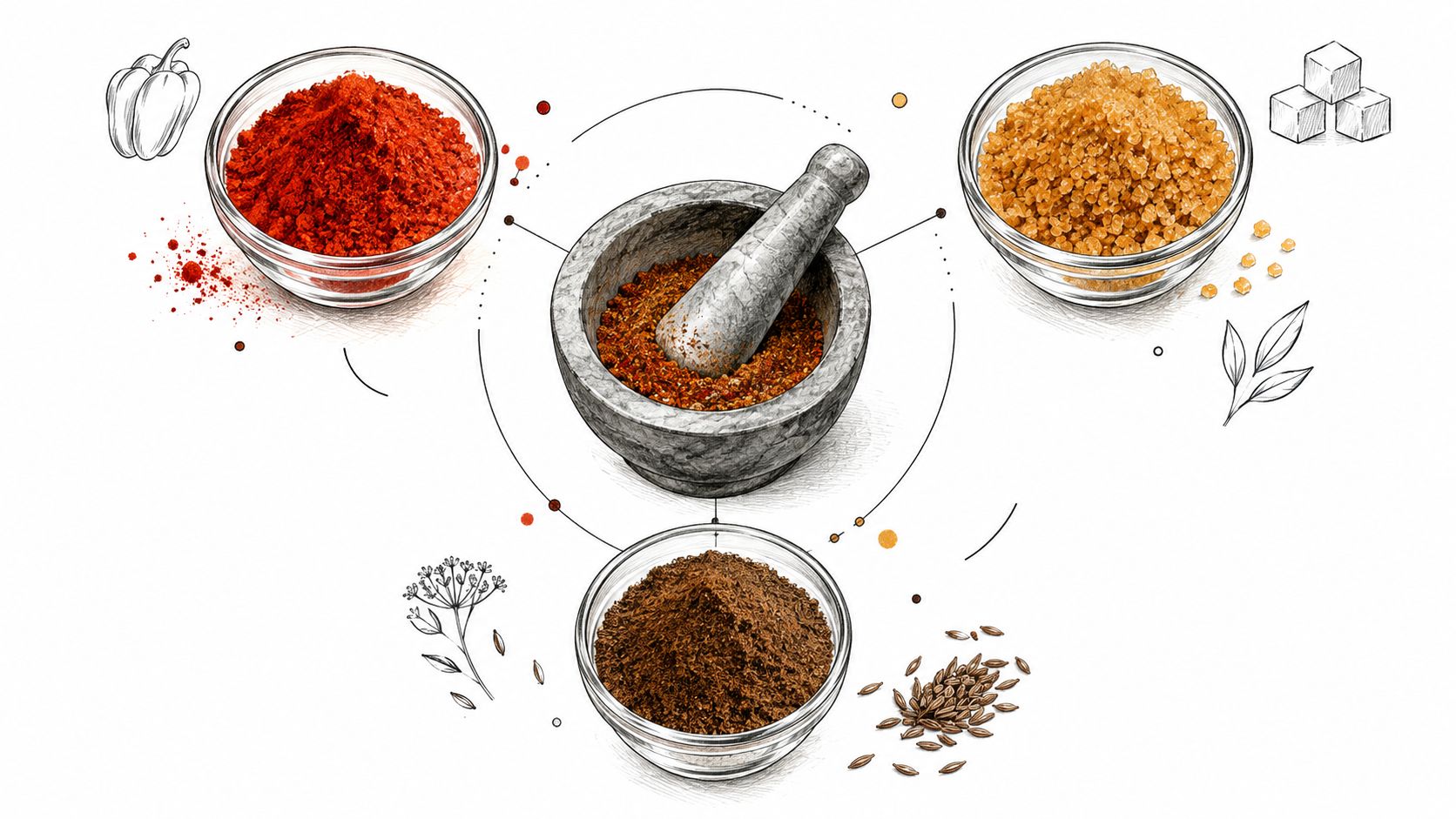
Learning how to blend spices gives you control over balance, freshness and the way a seasoning behaves in the heat. You can build a rub for pork belly that leans sweet and smoky, a beef mix with pepper at the front, or a family-friendly chicken seasoning with citrus and herbs rather than overwhelming chilli. You can also use ingredients already sitting in the cupboard, which matters in Britain, where half of the herbs and spices bought by UK households are left untouched, representing roughly £240 million of unused spices according to Lovefood's UK consumer research.
The trick is to work in small, deliberate batches. Toast whole spices carefully, combine them evenly, store them away from heat and moisture, then taste the blend in the food it was designed to season. That approach gives you the bold, clean flavour associated with small-batch BBQ without filling the cupboard with jars you never finish.
Why Blending Spices Transforms Your BBQ
A rack of ribs can carry a dark, attractive bark and still taste one-dimensional. The usual culprit is an over-reliance on a single dominant note, often salt, sugar or chilli. A blended rub works differently. Salt sharpens flavour, sweet ingredients soften bitterness and help colour the surface, while aromatics such as cumin, coriander, garlic and pepper create depth that develops as the meat cooks.
Britain has a long history of this kind of layering. The East India Company was chartered in 1600, and a London example from 1620 records the purchase of 250,000 lb, or 113,000 kg, of pepper in Southeast Asia for £26,041, followed by resale in London for £208,041, a profit of nearly 800%, as documented by BBC Radio 4's history of the spice trade. That flow of imported spice made blended seasoning more available to English cooks, moving beyond the medieval pattern in which one dish might combine cinnamon, ginger, cloves, nutmeg, pepper and saffron.

Early modern British recipe books repeatedly used combinations of pepper, cinnamon, ginger, nutmeg, mace and cloves. That history offers a useful lesson for the pitmaster: good blending is about balance, not maximum intensity. You're aiming for several notes to arrive together, rather than forcing one ingredient to dominate every bite.
Fresh aromatics make a noticeable difference
Whole cumin and coriander are particularly useful starting points because gentle toasting brings out a deeper, nuttier aroma. Pre-ground spices remain convenient, but they've already lost some of the volatile oils released when a whole seed is warmed and ground immediately before blending. The difference shows up most clearly on food prepared with minimal cooking, such as chicken thighs, pork chops or roasted vegetables.
A blend also lets you build around the food instead of reaching for the same seasoning every time. For a guide to how smoke interacts with herbs, wood and aromatics, see Smokey Rebel's guide to smoke flavour ingredients. If you enjoy exploring how flavour, food and place work together, visit events can provide a useful source of inspiration beyond the barbecue itself.
The practical result is simple. Blending lets you use fewer ingredients with more intention, revive spices before they become cupboard waste and create a seasoning that suits your family, your cooker and the cut in front of you.
Essential Tools and the Toasting Method
You don't need a commercial kitchen to make a serious BBQ rub. A dry frying pan, spice grinder or mortar and pestle, digital scales, mixing bowl and airtight jar are enough for most home batches. A fine sieve is useful when you want a uniform texture, especially for rubs going into a shaker.
Start with whole cumin or coriander where possible. Put the seeds into a dry pan over low to medium heat, then move the pan constantly. You're looking for fragrance, not colour. The moment the kitchen smells warm, nutty and aromatic, remove the pan.
Practical rule: If the spice smells burnt, it has gone too far. More heat doesn't create more flavour. It destroys the delicate aromatics you're trying to release.
UK market guidance recommends gently warming spices until fragrant, while warning that excessive heat can flatten their aroma. Borough Market's guide to making spice blends also highlights the way cumin and coriander work together after roasting. Keep the temperature controlled, because seeds can move from fragrant to bitter quickly.
A reliable working sequence
- Toast whole spices separately or in compatible groups. Cumin and coriander can share a pan, but don't add delicate dried herbs at this stage. They can scorch before the seeds are ready.
- Cool everything completely. Warm spices trapped in a jar can create condensation, which encourages clumping and dulls the blend.
- Grind to the texture you need. A mortar and pestle gives you control and a slightly irregular rub. A grinder produces a finer, more consistent powder, but pulse it briefly so the spices don't heat up.
- Combine dry ingredients in a wide bowl. Break up any lumps before transferring the mix to storage.
- Label the jar. Write the ingredients, date and intended use. A pork rub and a chicken rub can look similar while behaving very differently on the grill.
For broader preparation ideas, Pep Tea's blending guide is a useful reminder that careful measuring, controlled combination and repeatable handling matter across different types of blends. You can also check Smokey Rebel's BBQ supplies guide before choosing extra equipment for your grill or smoker.
Mastering the Core Ratios and Flavour Building
A workable BBQ rub needs a structure before it needs personality. Start by thinking in three parts: savoury foundation, sweet or mellow balance, and aromatic lift. The proportions in the plan below are a starting framework, not a law. Different salts, peppers, sugars and chillies vary in strength, so the finished food remains the final test.

Build the base before chasing heat
A useful starting point is a base of salt and black pepper making up about half the blend. This gives meat enough seasoning and creates the foundation for bark. Keep the salt type consistent while you test, because coarse sea salt, table salt and flaky salt occupy different volumes even when the spoon looks full.
Sweetness can make up roughly a third, using brown sugar, sweet paprika or fruit-led notes. Sugar supports browning, but too much can darken quickly over a hot grill. For vegetables, use less sweetener than you might use on ribs, particularly on onions, peppers or carrots that already bring their own sweetness.
The remaining roughly quarter is where the blend gets its identity. Garlic, onion, cumin, coriander, chilli, dried herbs and citrus peel all belong here, but they shouldn't compete equally. Choose one or two lead aromatics, then use the others as supporting notes.
The most useful blend is the one you can recognise after cooking, not the one with the longest ingredient list.
For a fruit-led direction, build around the balance found in Cherry Force BBQ Rub, using salt and pepper as the backbone, sweetness to round the fruit character and enough heat to prevent the result becoming sugary. For a straightforward savoury profile, SPG Salt Pepper Garlic Base Blend demonstrates why a short ingredient list can remain versatile.
Test the blend in food
Don't judge a rub by licking a spoonful. Salt, chilli and bitter aromatics taste harsher when dry. Instead, season a small piece of chicken, a potato wedge or a mushroom, cook it using the method you'll normally use, then adjust the batch.
If the food tastes flat, add salt or a supporting aromatic before adding more chilli. If it tastes hot but not full, the blend probably needs sweetness, garlic, cumin or paprika rather than extra heat. For a more detailed look at choosing seasonings for live fire, use Smokey Rebel's spices for grilling guide.
The same framework works for BBQ rubs for vegetables. Coat cauliflower, aubergine or sweetcorn lightly with oil, apply the rub evenly and cook until the surface colours. Vegetables don't need a heavy crust, so a strongly aromatic mix often works better than a heavily salted one.
Customising Rubs for Pork, Beef, and Poultry
The right blend depends on the protein's fat, texture and cooking time. Pork can absorb assertive sweet and smoky notes. Beef usually benefits from a cleaner savoury profile. Poultry is leaner and more easily overwhelmed, so herbs, citrus and moderate heat often make more sense than a dense, dark rub.
| Protein | Flavour direction | What to increase | What to control |
|---|---|---|---|
| Pork | Sweet, smoky and savoury | Paprika, garlic, brown sugar, pepper | Excess sugar on hot grills |
| Beef | Peppery, savoury and earthy | Black pepper, garlic, cumin | Heavy sweetness |
| Poultry | Herbal, citrus-led and gently warm | Citrus, herbs, paprika, garlic | Aggressive chilli and salt |
Pork needs a rub that can stand up to fat
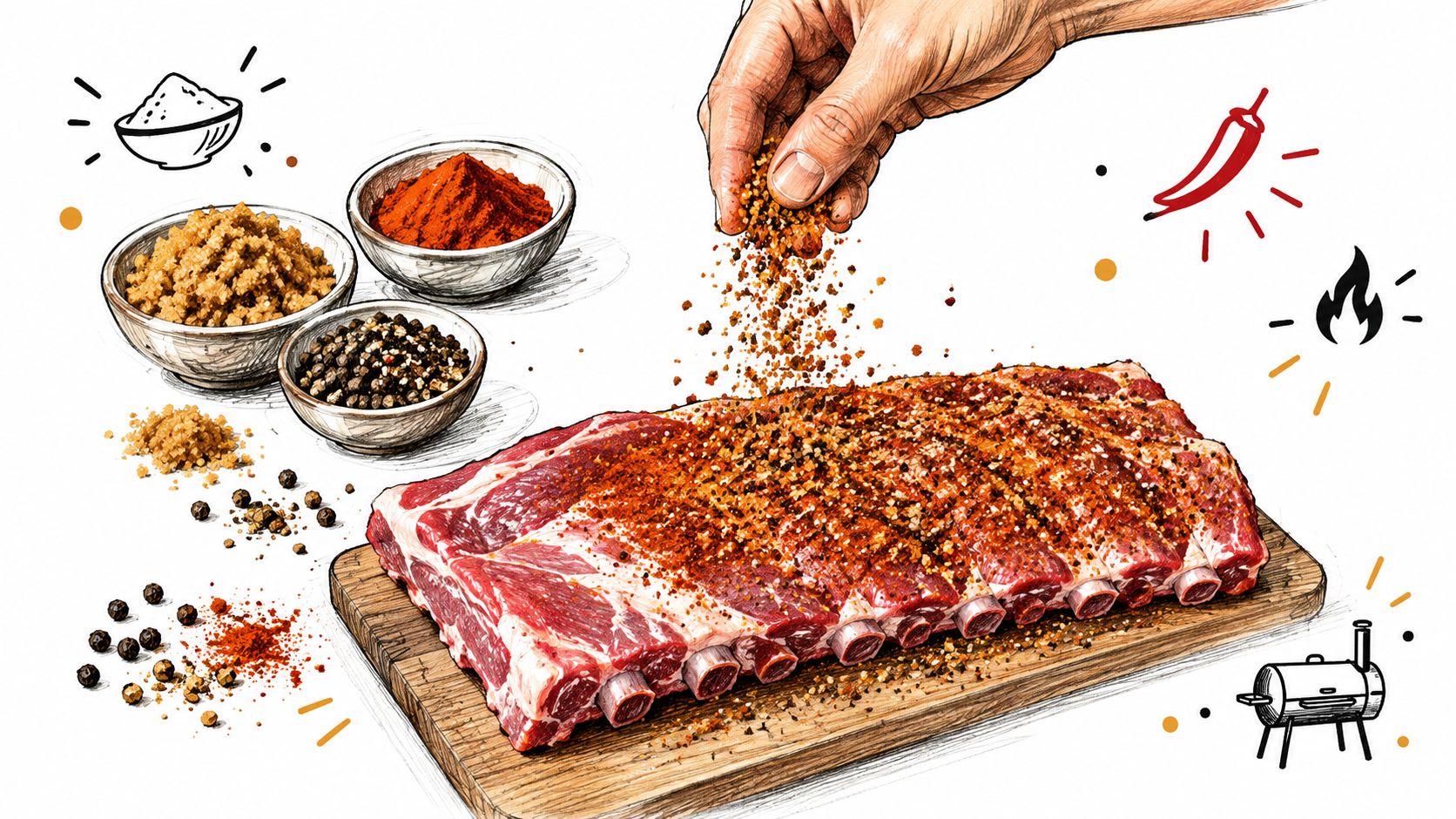
For ribs, shoulder or belly, start with paprika, garlic, black pepper and a measured sweet element. Fat softens sharp spice, while long cooking gives the aromatics time to integrate into the bark. Hickory Hog Pork Rub is a ready-made example of a savoury, smoky direction for pork.
For homemade seasonings for BBQ pulled pork, apply the rub evenly over the surface, leave the meat long enough for the exterior to become tacky, then cook low and steady. If the shoulder is going into a covered phase later, avoid making the rub excessively sweet at the start, because trapped steam can make the bark taste heavy.
Beef rewards restraint
Beef doesn't need much disguising. A brisket or steak often works best with black pepper, garlic and enough salt to bring out the meat. Cumin can add earthiness, but use it as a supporting note unless you're deliberately moving towards a chilli-style profile. Revolution Beef Rub follows that more savoury approach.
For poultry, use a lighter application and focus on even coverage. Wingman Wing Rub suits the focused, snackable character needed for wings, while Chipotle Cowboy Chicken Rub takes chicken towards a smokier chilli profile. For a quick air-fryer method, pat chicken thighs dry, toss them with a small amount of oil, coat with rub, then cook in a single layer until fully cooked. The seasoning needs to be distributed, not piled into patches.
Batch Blending and Storage Secrets
Once you've found a blend that works, make enough for several cooks. Batch blending saves time, but it also exposes weak technique quickly. Heavy salt settles, fine chilli clings to the sides and dried herbs can remain in pockets unless you mix the ingredients properly.
Use a clean, completely dry jar with some empty space above the spices. Add the measured ingredients, seal the lid and shake firmly. UK blending guidance recommends using a sealed container with headroom so the ingredients can move freely and combine evenly.
Shake, check and label
- Add the largest-volume ingredients first. This gives the smaller amounts somewhere to disperse rather than sticking to the bottom.
- Shake the sealed jar vigorously. Turn it upside down, roll it between your hands and shake again. Open the jar only after the powders have settled.
- Inspect the texture. If you see pale salt collecting at the bottom or dark chilli gathered around the sides, pour the blend into a bowl and whisk it before returning it to the jar.
- Record the batch. Note the date, ingredient quantities and any change you made after tasting.
Keep the jar in a cool, dark cupboard away from the hob, dishwasher steam and direct sunlight. Light, air, heat and moisture all reduce aromatic quality, so an opaque airtight container is preferable to a clear shaker left beside the cooker.
Freshly toasted and ground blends are at their most expressive early on. For best flavour, plan to use a homemade batch within six to eight weeks rather than treating it as a permanent cupboard product. If you're making seasoning for a family barbecue, prepare a modest batch and make a fresh one when the aroma starts to fade.
Sourcing Clean Ingredients and Troubleshooting
Blending at home gives you a clear view of what enters the jar. You can choose whole spices, dried herbs and clean-label ingredients without relying on fillers or unnecessary anti-caking agents. That matters for cooks who want a simple ingredient list, and it also helps small-batch makers understand the difference between a flavour problem and a handling problem.
The UK market is being shaped by interest in multicultural food, premium ingredients, provenance, ethical sourcing and organic certification, according to IndexBox's UK spices market analysis. The same source reports that UK spice imports have risen by around 20% over the past five years and places the condiment and seasoning manufacturing sector at about £2.9bn in 2025. Those figures underline why sourcing and storage deserve as much attention as the recipe itself.

Fix the common failures
Clumping usually means moisture has entered the mix. Dry every ingredient thoroughly, especially citrus peel, before grinding. Don't add fresh zest directly to a shelf-stable rub. If your storage area is humid, a food-safe desiccant solution can help, but the better fix is keeping moisture out from the beginning.
Uneven heat often comes from poor mixing rather than an overly hot chilli. Break up compacted powders, use a wide bowl and shake the finished blend in a jar with enough room for movement. Taste the seasoning on cooked food, not straight from the container.
A flat rub may need salt or aromatic depth, not more heat. The NHS advises avoiding too many sauces high in salt, including soy sauce, gravy granules, ketchup, mustard, mayonnaise and brown sauce, so a well-built dry blend can help add flavour without automatically reaching for another salty condiment. See the NHS guidance on salt in your diet when adapting BBQ food for regular family meals.
For small-batch brands, packaging becomes part of the formulation decision. UK rules require packaging to use the minimum weight and volume necessary to keep food safe and hygienic, and packaging must be designed so it can be reused or recovered. The government's packaging waste designer responsibilities also refer to the RAM methodology, which assesses recyclability as red, amber or green.
If you sell blends, the recordkeeping matters too. Under the 2024 Producer Responsibility Obligations regulations, large producers must register annually, report packaging data every six months, buy the required PRNs or PERNs, submit an annual compliance certificate and retain relevant data for seven years, as set out by SEPA's packaging waste regulations information. Plastic film packaging and plastic bags are due to be collected with plastic recycling from 31 March 2027, according to England's simpler recycling guidance. Compact recyclable packaging is therefore a practical product decision, not just a label claim.
If you want the convenience of a tested blend while still exploring different flavour directions, Smokey Rebel offers small-batch, plant-based BBQ seasonings with no fillers, including options for pork, beef, chicken, wings and global-inspired cooking. Choose a single rub to learn its profile, or build a mixed selection for weeknight meals, smoker sessions and family barbecues.
Join our Mailing List
Sign up and get Smokey Rebel Recipes + weekly recipes straight to your inbox!
Recent articles
How to Blend Spices for BBQ Rubs: A Smokey Rebel Guide
Learn how to blend spices for perfect BBQ rubs. Master ratios, toast techniques, and storage secrets with practical recipes and...
Read morePulled Pork Rub UK: The Complete Buyer's Guide
Pulled Pork Rub UK. Find the best pulled pork rub in the UK. Compare flavour profiles, clean-label ingredients, cooking methods,...
Read moreTandoori Spice Rub: A Simple Guide for UK Cooks
Master tandoori spice rub with these tried-and-tested methods for homemade blends and store-bought shortcuts. Elevate every BBQ dish today.
Read more