How to Smoke Chicken Thighs the Right Way
Rain is tapping against the kettle lid, the charcoal is sulking, and the chicken thighs you planned for dinner are still sitting in their packaging. That's a familiar British barbecue problem. Smoked chicken thighs look simple, but the difference between juicy dark meat and a browned, undercooked centre comes down to preparation, steady heat and a reliable probe.
This guide covers how to smoke chicken thighs on the smokers UK cooks use, from a compact kettle to a pellet grill or ceramic kamado. You'll get a practical seasoning plan, wood pairings, a smoking timeline, temperature checks and fixes for rubbery skin, pale bark and tight texture.
The Night Before, the Rub and the Smoke Setup
The best smoked chicken thighs usually begin before the smoker is lit. If tomorrow's weather looks changeable, buy bone-in, skin-on thighs where possible. The bone helps the meat cook more steadily, while the skin protects the surface during the longer smoke.
Take the thighs from their packaging, pat them thoroughly dry and trim only loose skin, hanging fat and ragged edges. Don't strip away the whole skin cap. It renders into the meat and gives the rub somewhere to cling. If the thighs are frozen, defrost them fully in the fridge before seasoning.
A wet brine, a salt rest and a dry cure each produce a slightly different result:
- Wet brine: Use a measured salt-and-sugar solution when moisture retention matters most.
- Salt rest: Choose this when you want firmer skin and a more concentrated chicken flavour.
- Dry cure: Use a longer, organised preparation when you want the seasoning to work deeper into the meat.
For a dependable starting point, season the trimmed thighs the evening before, then place them uncovered on a rack in the fridge. This dries the skin and gives the salt time to move beyond the surface. You can find a useful companion guide to BBQ rubs for chicken if you're building a wider chicken-seasoning routine.
Build the rub station before bed
Set out a tray with the chicken, binder, seasoning, gloves, a rack and a clean tray for the seasoned pieces. A salt-forward profile such as SPG Base Blend keeps the smoke prominent. For fruitier colour, Cherry Force BBQ Rub suits dark meat. Chipotle Cowboy Chicken Rub brings a warmer smoky heat, while Greek Odyssey Gyros Rub takes the cook in a herb-led direction.
Apply a thin, even coating rather than burying each thigh in powder. You want the meat covered, not a thick layer that falls off when the fat starts moving. Keep a separate tray for raw poultry and check the smoker's water pan, drip tray and fuel before you go to bed.
Pit check: In British wind and drizzle, a sheltered smoker position matters almost as much as the recipe. Keep an instant-read probe ready, protect fuel from rain and have an indoor oven available for a controlled finish if the weather turns properly foul.
Brining, Injecting and Building the Bark
Moisture management starts with choosing the right treatment for the cut. Bone-in, skin-on thighs can handle a simple salt rest, while thick boneless thighs benefit from help in the centre because they have less skin and bone to protect them.
For a wet brine, dissolve 60g sea salt and 40g dark brown sugar per litre of water, then chill it fully before adding the chicken. Brine the thighs for 4 hours, remove them and pat them completely dry. The sugar adds a rounded note, but it can darken quickly over live fire, so use a lighter hand with any sweet rub afterwards.
A dry cure suits cooks who care about bark and skin texture. Salt the thighs and leave them uncovered in the fridge for 2 hours, then wipe away any wet patches before applying the binder. The method is less messy than a wet brine and keeps the chicken's flavour more direct. This dry chicken brine guide is useful when you're seasoning several cuts at once.
Use injection only where it earns its place
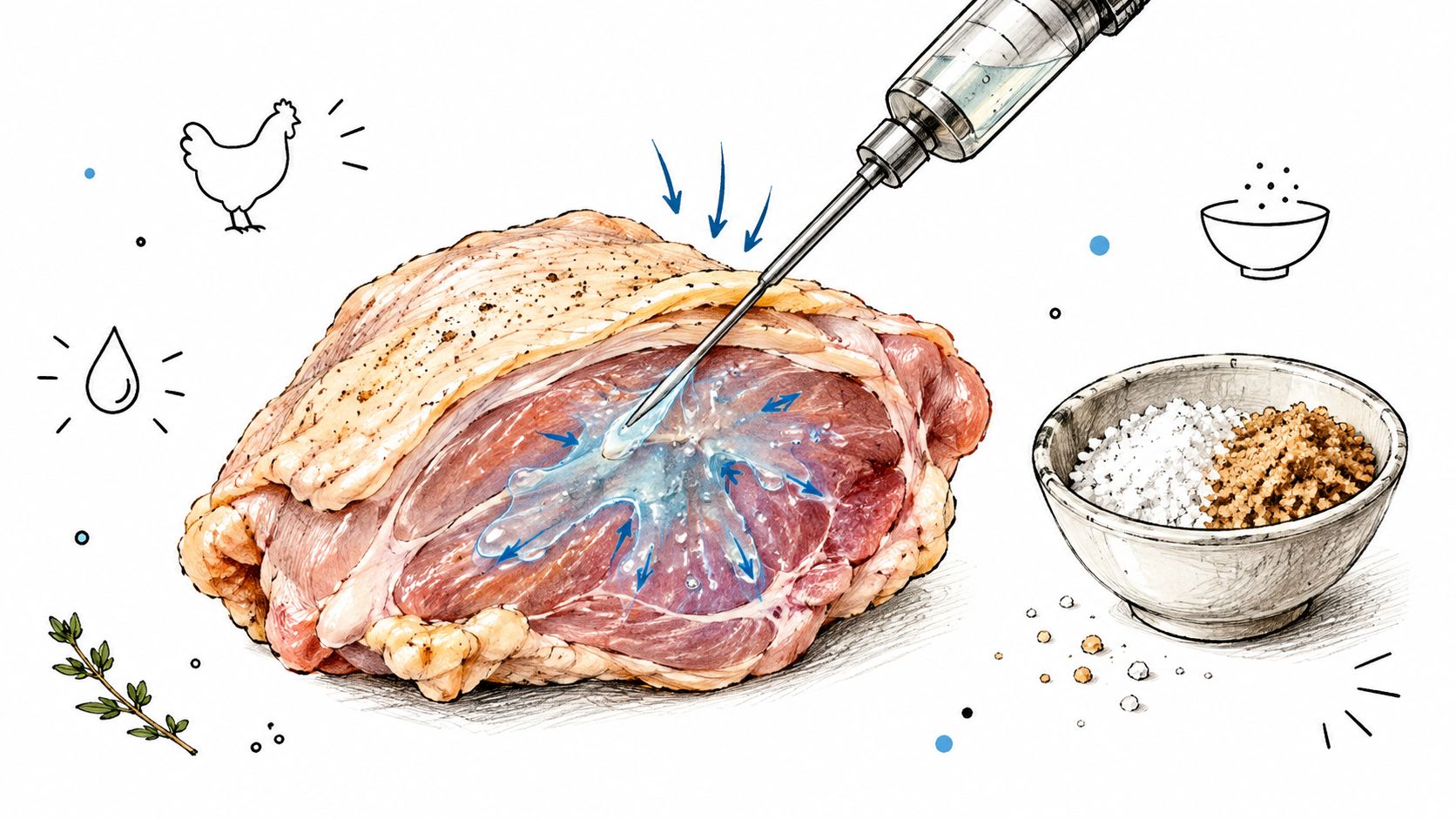
For a thick boneless thigh, combine softened butter with a small amount of warm chicken broth and inject sparingly into the thickest sections. Work with clean equipment, keep the mixture warm enough to flow but not hot, and cook the chicken soon after injecting. Injection gives the centre a richer mouthfeel, but it also creates more handling and more opportunities for leaks, so it isn't my default for bone-in pieces.

Keep the bark thin and tacky
Pat the chicken dry, then apply a very thin layer of mustard or mayonnaise as a binder. Neither should dominate the finished flavour. They help the seasoning stay put while the surface dries and sets.
For a brighter, more colourful crust, add a light sprinkle of golden caster sugar to a savoury blend. Skip sugar when you want clean wood smoke, or when your smoker runs aggressively near the meat. Wingman Wing Rub works for a straightforward chicken profile, while Miami Mojo Citrus Blend adds a sharper citrus direction.
Leave the seasoned thighs uncovered in the fridge for 30 minutes before they go into the smoker. That short rest firms the skin and stops the rub becoming a wet paste. If you prefer a non-smoking route for the same cut, this guide to juicy slow cooker chicken thighs offers a useful comparison.
Choosing Your Smoker and the Right Wood
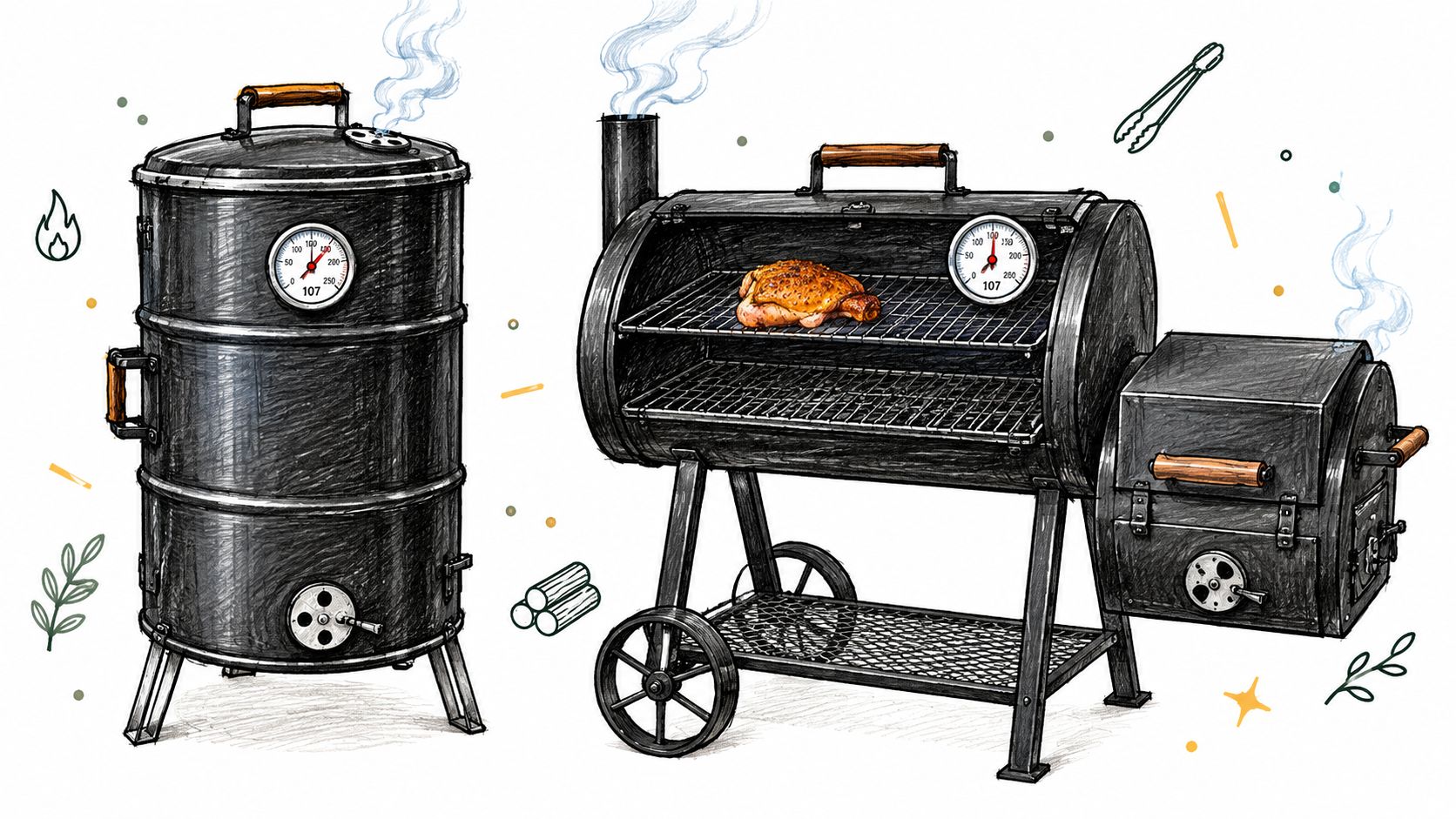
Different smokers make the same chicken behave differently. A kettle gives you direct control over charcoal and vents, a pellet grill offers convenience, and a kamado holds heat exceptionally well once settled. A cabinet or bullet smoker gives you vertical space, while a gas grill with a smoke box can produce good results when charcoal isn't practical.
| Smoker type | Grate temp control | Smoke character | Best wood pairing | Notes for UK cooks |
|---|---|---|---|---|
| Charcoal kettle | Responsive, but wind-sensitive | Clean and lively | Apple, cherry or oak | Use a deflector or indirect zone and shield it from gusts |
| Cabinet or bullet | Steady once loaded | Concentrated and traditional | Beech, oak or apple | Watch water-pan levels and vertical hot spots |
| Pellet grill | Precise and convenient | Mild, even smoke | Oak, cherry or pecan pellets | Covered designs handle drizzle well, but wind still affects heat loss |
| Propane gas with smoke box | Stable cooking heat | Lighter smoke | Oak or a small amount of hickory | Useful for controlled cooks, but wood quantity needs restraint |
| Kamado ceramic | Very stable after settling | Dense, clean smoke | Cherry, apple or oak | Slow to change temperature, so adjust gradually |
UK smoking guides commonly place chicken in a 120°C to 150°C smoker range, with 120°C often treated as an ideal starting point, while one guide recommends chicken thighs reaching 77°C internally before serving. That guidance supports a moderate cooking temperature paired with a measured centre temperature rather than a visual guess.
Match wood strength to the seasoning
Apple and cherry give chicken a clean sweetness. Oak and beech supply a firmer backbone without overwhelming a salt-and-pepper blend. Hickory and mesquite can work with dark meat, but use them sparingly because their stronger smoke can flatten delicate herb or citrus notes. Pecan sits between fruit wood and heavier hardwood.
Kiln-dried British oak or beech chunks are practical choices for a UK cook. Avoid resinous softwoods, painted timber and unidentified scraps. If you're using pellets, the Smokey Rebel wood pellet range gives you a dedicated fuel option rather than relying on random garden wood.
The EU smoke-flavouring rules scheduled to take effect on 1 July 2026 affect Northern Ireland and UK exporters to the EU, according to the cited UK-focused discussion of the change. The distinction between real wood smoke and artificial smoke flavour matters at home too. Wood chunks create smoke through combustion. A liquid smoke additive only adds a flavour note, which isn't the same cooking process.
For a punchy rub, choose a restrained wood. For a simple SPG profile, oak or beech can carry more weight.
The Smoke Run Step by Step
Start with a 15-minute preheat and bring the grate to 107°C to 110°C. Don't put chicken into a smoker that's still producing thick white billows. Wait for a cleaner, thinner smoke and a stable cooking environment.
Set the thighs skin-side up, directly on the grate or on a foil tray if you need easier cleaning. Leave 2cm to 3cm between pieces so air and smoke can move around them. A crowded grate traps moisture and softens the bark.

Follow the heat, not the clock
Hold the smoker close to 110°C for the first hour. This lets the seasoning set and gives the surface time to develop colour. Increase gradually to 120°C for the remaining cook rather than making a sudden leap that can scorch sugar or dry exposed skin.
At the 45-minute mark, spritz with a mixture of apple cider vinegar and water. Repeat every 30 minutes only if the surface looks dry. Spritzing is not a ritual. If the bark is already tacky and the smoker is humid, leave the lid shut.
Every lid opening costs heat. In some smokers, a single unnecessary peek can drop the chamber temperature by 10°C to 15°C, making the cook longer and less predictable. The smoker guide how to use a BBQ smoker is worth keeping nearby when you're still learning how your vents, fuel and weather interact.
Around 65°C internal, fattier thighs may slow briefly. Leave the vents alone and let the cooker recover naturally. Keep the probe in the thickest part of the thigh, away from the bone, and start checking in more than one piece as they approach doneness.
The full run commonly lands between 2 and 3 hours, depending on wind, rain, fuel and thickness. Time is only a planning estimate. The thermometer decides when the chicken is ready.
If you want to see the difference between vertical and offset layouts before your next cook, this visual walkthrough gives both styles a quick look.
Doneness, Resting and Food Safety in the UK
Chicken can look ready long before the centre is safe. Smoke darkens the skin, rub colours the surface and bone-in thighs heat unevenly, so colour, firmness and cooking time can't replace a probe.
UK government guidance states that poultry should reach a minimum internal temperature of 75°C, measured at the thickest part while avoiding the bone. Properly cooked poultry should also be steaming hot throughout, with clear juices and no visible pink meat, as set out in UK government cooking guidance.
For businesses, UK food hygiene guidance gives 70°C for 2 minutes as a standard safe cooking combination, with equivalent time-temperature options including 75°C for 30 seconds. The official business guidance is particularly relevant if you're cooking for customers, events or a catering team.
| Cut | Pull temperature | Rest time | Safe finish |
|---|---|---|---|
| Boneless chicken thigh | 73°C | 10 minutes | At least 75°C after resting |
| Bone-in chicken thigh | 73°C | 12 to 15 minutes | At least 75°C after resting |
| Mixed-size thigh batch | Check the coolest piece | 10 to 15 minutes | Verify the thickest areas individually |
The table uses a practical pitmaster pull point, but the food-safety target remains the important finish. A thigh can rise during resting, yet you should still verify the meat rather than assuming carryover will solve an undercooked centre.
Probe placement matters
Insert the probe into the thickest muscle near, but not touching, the femur. Check two spots because bone-in thighs can have a safe outer section and a cooler pocket close to the bone. A jiggly texture isn't proof of doneness, especially in collagen-rich dark meat.
A loose foil tent is enough for the rest. If dinner is delayed, an 80°C warm oven can hold the chicken without the aggressive heat of a re-cook. Keep raw and cooked poultry equipment separate, wash hands between tasks and clean probes before and after use. For commercial kitchens, this resource on effective disinfection for chefs adds useful context around hygienic preparation and cleaning routines.
Troubleshooting, Variations and Flavour Twists
Most disappointing smoked thighs aren't ruined by a mysterious smoker problem. They're usually rushed onto an unstable cooker, interrupted by constant lid lifting or left cooking too long because the cook is chasing a darker crust.
Pale skin isn't automatically a failure. A mahogany, tacky bark with springy, juicy meat is a better result than blackened skin wrapped around a dry centre.
Texture check: If a thigh feels tight or chewy after resting, it may need more time for connective tissue to soften. Check the temperature, then continue cooking carefully rather than relying on colour.
Dry meat often points to overcooking, especially when a cook keeps the chicken on past 80°C internal. Tough meat can also mean the thigh hasn't rendered enough, so a careful push towards 77°C may improve texture when the meat is still tight. These are texture decisions made after checking safety, not substitutes for the UK poultry threshold.
Change one variable at a time
For a sweeter cook, swap apple for cherry in a kamado and keep the rub moderate. For heat, add a teaspoon of dried chipotle to a standard BBQ blend, or use Spitfire Spice Blend when you want a more assertive finish. Holy Jalapeño Fajita Seasoning gives boneless thighs a lively fajita direction.
Boneless thighs are useful for a weeknight smoke and can finish in roughly 90 minutes, depending on thickness and cooker stability. For a larger family cook, split a whole chicken into thighs and legs so one fuel load handles several portions.
Finish during the last 15 minutes with a thin layer of hot honey, Alabama white sauce or a mustard-and-vinegar mop. Apply sparingly. Too much wet sauce softens the bark you worked to build.
Quick Recap and Reader FAQs
A reliable smoke starts with preparation, stable heat and a probe you trust:
- Trim the skin edge: Remove loose skin and ragged fat, keeping the main skin layer intact.
- Choose the treatment: Brine for 4 hours, or use a shorter salt rest for firmer skin.
- Dry the surface: Pat the thighs dry and leave them uncovered in the fridge.
- Season ahead: Apply the rub 30 minutes before smoking.
- Preheat properly: Bring the grate to 107°C and wait for clean smoke.
- Pick the wood: Oak or apple gives chicken a balanced smoke profile.
- Cook steadily: Smoke for roughly 2 to 3 hours in total, checking the probe from about 90 minutes onward.
- Spritz lightly: Spritz around 60°C internal only if the surface needs moisture.
- Check doneness: Pull at 75°C, or use the controlled pull-and-rest method described earlier.
- Rest covered: Rest for 10 minutes, then slice against the grain where practical.
FAQs for UK cooks
Can I defrost bone-in, skin-on thighs in cold water?
Yes. Keep the chicken sealed, use cold water and change it regularly. Avoid microwaving poultry if you want even smoking, as the edges can start cooking before the centre defrosts.
Why does the temperature rise after resting?
The meat continues cooking briefly after leaving the smoker. The internal temperature can rise by 3°C to 5°C during rest, so check the final result with a clean probe.
Can I smoke chicken in British drizzle?
Yes. A hooded kettle, kamado or covered pellet grill will handle light rain. Shield the cooker from direct wind and allow longer heat recovery. Raise the grate temperature slightly if needed, while continuing to check the meat.
Choose a flavour profile from the Smokey Rebel range, then use the Build Your Own Bundle or the Ultimate Chicken 4-Pack for a weekend cook.
Visit Smokey Rebel to explore small-batch, filler-free rubs for chicken, vegetables and barbecue cooking. Cherry, chipotle, herb and heat-led seasonings all suit smoked thighs when paired with measured temperatures.
Join our Mailing List
Sign up and get Smokey Rebel Recipes + weekly recipes straight to your inbox!
Recent articles
How to Smoke Chicken Thighs the Right Way
Learn how to smoke chicken thighs with step-by-step guidance on prep, rubs, wood, temperature, timing and resting for juicy UK...
Read moreBest Chicken Rubs for Flavour-Packed UK Cooks
Discover the best chicken rubs for grilling, roasting and smoking. Compare flavour profiles, ingredients and uses to find the perfect...
Read moreBBQ Lover Gifts: A Practical Buying Guide for 2026
Find the perfect BBQ lover gifts with our practical 2026 buying guide. Discover how to match gifts to skill level,...
Read more