Eco Friendly Choices for Home Cooks and BBQ Fans

It's Saturday afternoon, the charcoal's lit too early, and someone's already asking when the burgers will be ready. You've got chicken thighs on the board, corn still in its husks, and a row of rubs lined up like you planned this properly. That's exactly where eco friendly choices stop being abstract. They happen in what you buy, what you burn, what you bin, and what survives until Monday's lunch.
What Eco Friendly Choices Actually Mean at the Grill
That Saturday cookout tells you more than any label does. You bought chicken thighs instead of a mountain of mixed grill packs, because you know they'll all get eaten. You lit just enough fuel for two zones, hot for searing and cooler for finishing, instead of filling the whole grate out of habit. You kept a tray for cooked food separate from raw, so nothing gets binned over a silly cross-contamination worry.
None of that feels heroic. That's the point.

For home cooks, eco friendly choices mean four practical things. You source with a plan, you cook what you'll eat, you choose fuel and kit you won't replace next summer, and you dispose of packaging correctly. If a product shouts green but doesn't help with any of those, treat it as marketing.
A Quick Greenwash Test
Ask three questions before you buy. Will you finish it before it loses flavour or goes stale? Can you reuse, refill, or recycle every part without a council guessing game? Would you buy it again weekly, not just once for the photo? If the answer's no twice, leave it.
Buy for repeat cooking, not for a one-weekend clearout. A rub, tool, or fuel you use fifty times beats a novelty swap you use twice.
Your garden setup works the same way. If you're sorting the patio for the season, sustainable landscaping ideas from Premier Gardens are a useful reminder that durable surfaces, planting, and water sense beat replacing cheap outdoor kit every year.
Small doesn't mean trivial. A family that grills twice a week through summer makes hundreds of tiny calls about portions, fuel, and leftovers. Get those right and you've done more than one big, expensive gesture you'll abandon by August. Don't chase perfection. Build habits that survive a busy Tuesday, a wet Sunday, and a last-minute extra guest.
Why Most Eco Decisions Start in the Kitchen
Look at what UK households already do without a lecture. In Summer 2024, 86% said they recycled household waste, 78% avoided or minimised throwing away food, and 79% minimised energy use at home, according to DESNZ public attitudes data for Summer 2024. Those aren't fringe behaviours. They're normal kitchen and home routines.
Compare that with actions that need money or infrastructure. Only 31% selected using public transport instead of a car among actions they viewed as effective for tackling climate change, while 40% selected walking or cycling rather than driving and 42% selected installing a low-carbon heating system, from that same research. I'm not knocking any of those. I'm saying you control tonight's dinner more directly than you control a heating retrofit.
The Easy Gains Have Plateaued
Recycling shows why behaviour now matters. Across the UK, the household waste recycling rate was 44.5% in 2024, compared with 44.6% in 2023, and England generated 21.9 million tonnes of household waste in 2024 with 9.6 million tonnes sent for recycling, according to UK statistics on waste. Wales reached 58.6%, Northern Ireland 50.1%, England 43.8%, and Scotland 42.7% in those figures.
That spread matters. Where you live changes what happens to the same can, tray, or jar.
- Convenience wins: Recycling, food waste cuts, and switching lights or appliances off fit around work and school runs.
- Visible waste motivates: You can see a full food caddy. You can't see most other household impacts.
- Local rules decide outcomes: A package that's fine in one council area may be residual waste in another.
Confidence is wobbling, too. 72% agreed in Summer 2024 that they could make changes to help mitigate climate change, down from 76% in Summer 2022, yet 84% agreed collective action could reduce climate change effects in the DESNZ survey. My read is simple. People haven't stopped caring. They're tired of vague advice. Give a cook a clear swap at the chopping board and they'll do it tonight.
Smarter Sourcing and Plant-Based Swaps on the Grill
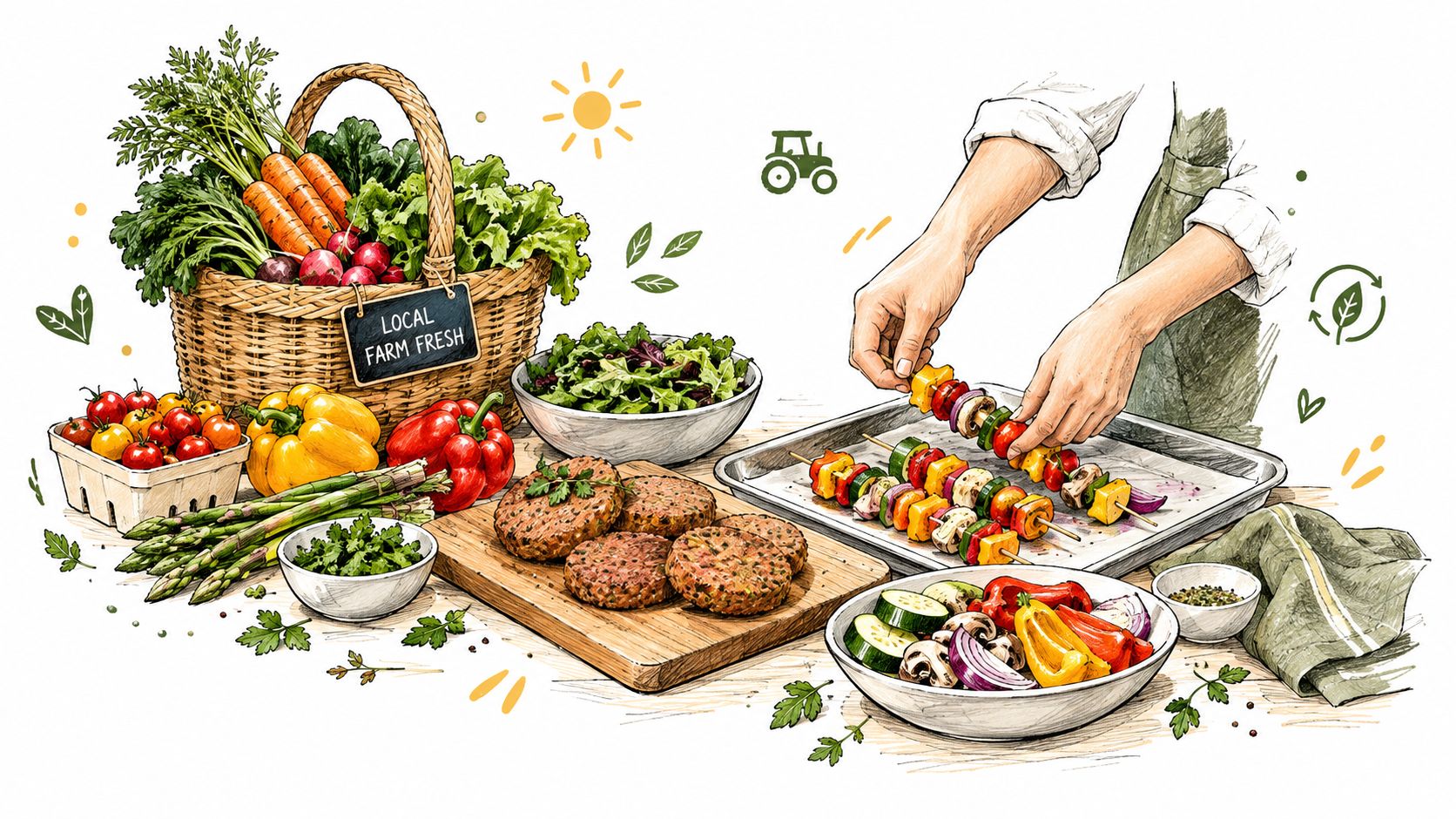
Start before you light anything. Buy seasonal UK produce when it's good, choose British-reared meat when you're cooking meat, and build at least one main that doesn't need meat to carry the plate. That's not a ban on brisket. It's better menu maths.
Portion meat as the flavour hit, not the filler. A smaller amount of well-seasoned pork or chicken with big grilled vegetables, flatbreads, and salads feeds people properly and leaves less sad, half-eaten meat for the bin.

Plant-Forward Mains That Actually Work
Mushroom shawarma is my first pick. Slice portobello and oyster mushrooms thick, oil lightly, coat with Greek Odyssey Gyros Rub, and grill hot until the edges char. Pile into warm pittas with pickled onion and yoghurt or a plant-based alternative.
Cauliflower steaks need confidence, not apology. Cut thick slabs, brush with oil and pineapple juice, season with Al Pastor Taco Seasoning, and grill until tender with blackened corners. Serve in tacos with salsa and shredded cabbage.
For tempeh, steam it briefly first so it takes seasoning better, then coat with Chipotle Cowboy Chicken Rub and grill in a basket so you don't lose pieces through the grate. It gives you smoky, savoury strips for wraps the next day.
Grilled citrus salad sounds fancy and takes minutes. Halve oranges and lemons, grill cut side down, squeeze over charred courgette and fennel, then finish with Miami Mojo Citrus Blend. If you want more structures like this, work through plant-based BBQ menu ideas and steal the combinations that fit your household.
Read the Rub Label
Choose filler-free seasonings with no added crap. You want spices doing the work, not anti-caking filler, hidden sugar, or shortcuts that mute flavour after a month in the cupboard. Authentic cultural flavours help here because a proper gyros, al pastor, or mojo profile makes vegetables taste intentional, not like a substitute.
- Season chicken thighs fast: Pat dry, oil lightly, rub under and over the skin where possible, then air fry or grill until the skin renders and crisps.
- Use one rub three ways: The same blend can season the main, the grilled veg, and tomorrow's rice.
- Buy flavours you'll finish: A half-used novelty jar is waste with better branding.
Sustainable Fuels, Tools and Cookware for Real Grillers
Don't buy a new grill to save the planet. Use the one you've got better, then upgrade the consumables. Fuel is the recurring decision, so that's where your money talks every cook.
Compare pellet size and dryness before you buy: consistent pellets burn cleaner and waste less food.

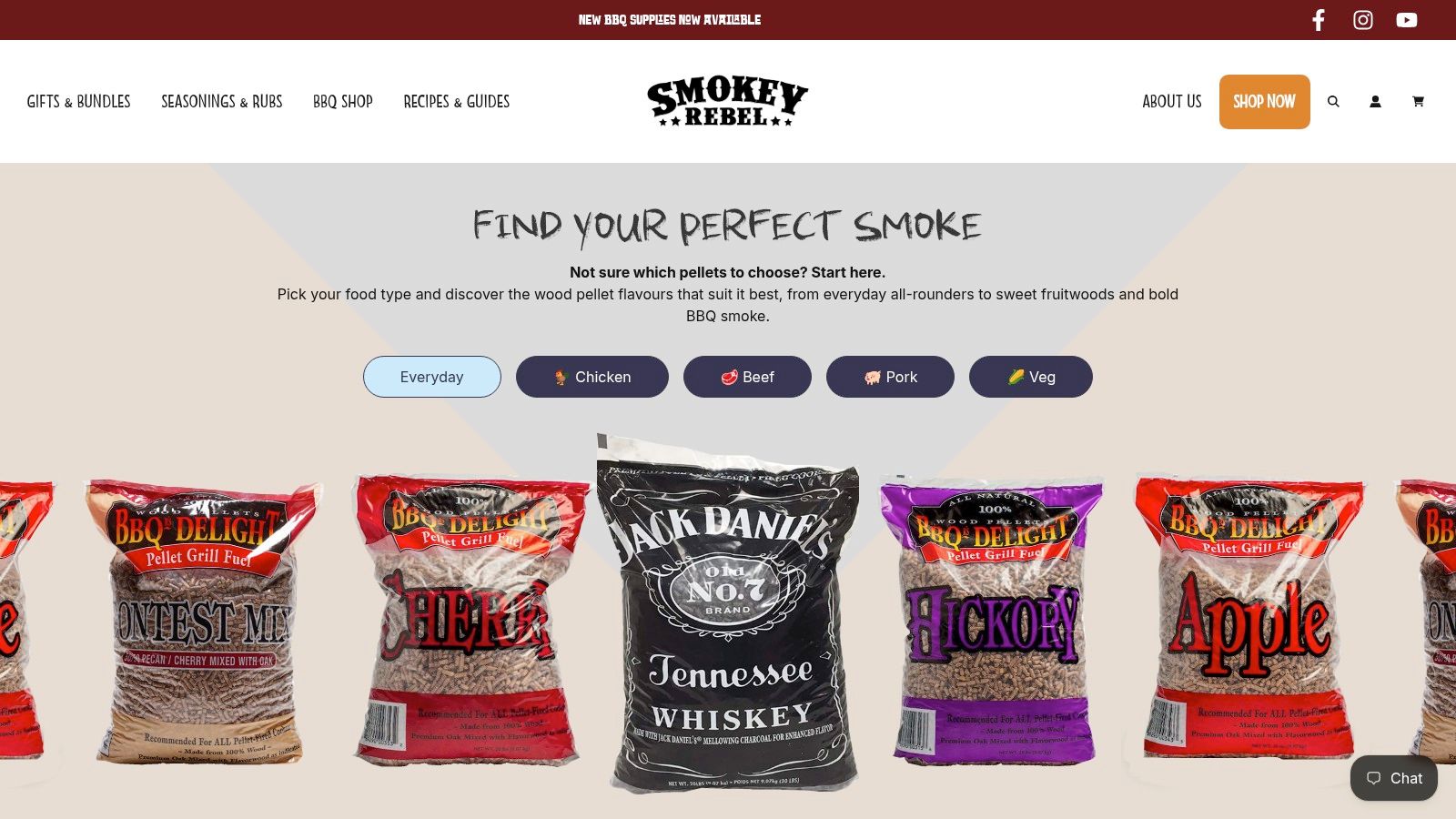
Smokey Rebel's pellet collection is the obvious place to compare wood pellets if you run a pellet grill, because steady size and dry storage mean cleaner combustion and fewer failed cooks. Wet or dusty fuel wastes food as surely as bad seasoning does. Store pellets indoors, sealed, and off a damp garage floor.
Pick Fuel for Your Setup
Lumpwood charcoal lights hot and suits steaks and skewers, but quality varies and cheap bags can spark, crumble, and burn out before the second batch. Briquettes burn longer and steadier for ribs or pork shoulder. Either way, buy responsibly sourced fuel, light only what the cook needs, and shut vents after cooking so usable charcoal can be reused next time where your grill design allows it.
Gas gives control and less ash, but you trade away smoke flavour. Electric suits small patios and quick weeknight cooks. None is morally pure. The wasteful option is overheating a half-empty grill for two sausages, whatever you burn.
If wood species and smoke character matter to you, read up on Jamaican pimento wood and its traditional use before you chase exotic fuel you don't understand. Knowledge stops impulse buys.
Watch this before your next fuel order, especially if you're guessing at quantities.
Buy Tools Once
Cast iron grates, stainless tongs, a sturdy spatula, a refillable propane tank, and silicone brushes outlast disposable trays and flimsy tool sets. Season cast iron after cleaning by wiping it with a thin film of oil, heating it until it just smokes, then cooling it in the grill. Keep your base seasoning simple in the cupboard as well. SPG (Salt Pepper Garlic) Base Blend covers eggs, veg, chicken skin, and steak trimmings, so you aren't opening five blends for one meal.
Practical rule: If a tool needs replacing every summer, you rented it from the bin.
Packaging That Actually Gets Recycled
Recyclable on the label doesn't mean recycled in your street. That's the uncomfortable bit most eco content skips.
Across England, only about 48% of people check packaging labels when unsure whether an item can be recycled, and UK households miss an average of 2.5 recyclable items per bin, according to Ipsos research on recycling, waste and plastics pollution in England. More than 80% usually recycle common materials such as bottles, cans, paper and cardboard in that research, yet mixed and small items still confuse people. The gap isn't apathy. It's unclear instructions.

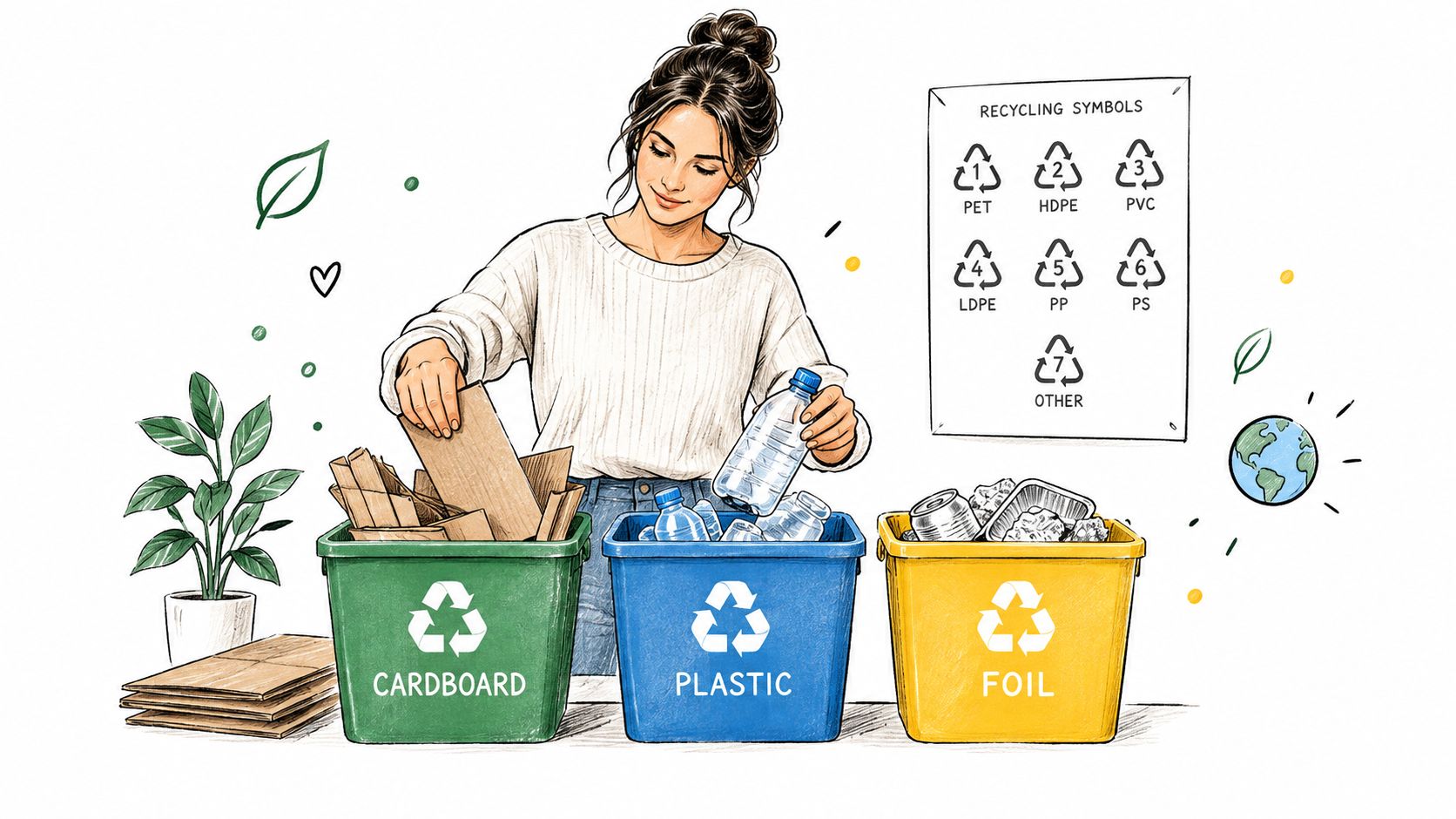
What Goes Where
Treat every seasoning pack as components, not one object. Empty it first. Food residue turns good material into contamination.
- Metal craft cans: Remove loose labels if your council asks, rinse if sticky, and put the can in dry recycling. Smokey Rebel's craft cans are a useful model here because straightforward, single-material formats are easier for households to sort than layered pouches.
- Plastic lids and caps: Check size and local rules. Small caps often fall through sorting kit, so don't assume.
- Paper labels and cardboard sleeves: Keep them dry and separate where required.
- Shrink wrap and film: Don't wishcycle it in kerbside recycling unless your council explicitly accepts it. Use supermarket film collection where available.
England's wider picture shows why sorting matters. Of 21.9 million tonnes of household waste treated in 2024, 56.2% was residual waste, 25.2% was dry recycling, 16.2% was other organics, and 2.4% was separately collected food waste, according to local authority collected waste results for 2024 to 2025. Separately collected food waste rose to 535,000 tonnes in 2024 in those results, but it still needs households to use the caddy.
If you're posting a food gift and need protective wrap, Biodegradable Bubble Wrap is worth considering as an alternative to standard plastic wrap, provided you still reuse boxes and padding you already have first. Reuse beats substitution.
Do a one-minute audit tonight. Open the spice cupboard, pick five packs, and decide the exact route for the container, lid, label, and film. Write it on the inside of the cupboard door. That tiny note will do more than buying another product with a leaf on it.
Cutting Kitchen Waste from Plan to Leftovers
Wasting less food is the most underrated move in this whole guide. UK households account for around 60% of total food waste in the country, roughly 6.4 million tonnes, costing households about £17 billion a year, according to WRAP's UK household food management survey. That's your money in the caddy.
Plan portions by mouths, appetite, and what else is on the table. Four adults with flatbreads, slaw, corn, and salad don't need the same meat volume as four adults eating meat and nothing else. Cook extra only when you've named its second meal.
One Cook, Three Plates
A Sunday pork shoulder with Hickory Hog Pork Rub should be Monday tacos and Wednesday fried rice by design. Chill it fast in shallow containers, label the date, and freeze portions you won't use within your normal safe window. For bbq pulled pork, shred while warm, keep some cooking juices back, and reheat gently so leftovers stay moist.
Wings work the same way. A tray seasoned with Wingman Wing Rub becomes wraps, chopped salad topping, or loaded fries. Strip leftover meat off the bone before you wash up, while you're still in kitchen mode.
Use Build Your Own Bundle to buy only flavours your household will finish, rather than collecting novelty rubs that sit open and stale. That links directly to the habits in practical ways to reduce food waste at home, especially planning, storage, and buying quantities you will consume.
Batch seasoning helps, too. Season a double tray of chicken thighs for the air fryer in two minutes, cook half tonight, and cook the rest fresh tomorrow for better texture. Don't batch-cook everything if reheated skin makes your family leave it.
Water belongs in this conversation as well. If you're reviewing kitchen consumables, recycled plastic water filters show another route for turning recovered material into a household product, but fix leaks and don't run the tap while you scrub the grill first. Order matters.
Leftovers aren't a failure of planning when you planned them. They're tomorrow's cheapest, lowest-waste meal.
Gifting Sustainably Without the Guilt Trip
A sustainable gift isn't the one with the most brown cardboard. It's the one still being used in three months. Novelty gadgets, branded merch, and giant hampers full of things nobody chose are clutter with a ribbon on it.
Give consumables people will cook with, in formats they'll finish. Seasonings work because they're small, useful, and repeatable across grills, ovens, air fryers, and stovetops.
Match the Set to the Cook
For a friend getting into BBQ, the Best Sellers Seasoning Gift Set is the safe, useful start. A serious griller will get more mileage from the Ultimate BBQ Seasoning Gift Set or the Magnificent Seven Gift Set, because range invites weekly use.
Festive hosts suit the 12 Flavours of Christmas Mini Set or the Christmas Feast BBQ Rub Gift Set. Mini formats reduce the risk of one big, unloved flavour taking up shelf space.
Flavour explorers are better with the Flavour Heroes Bundle, Chilli Heroes Bundle, or Bar-B-Que Heroes Bundle. For match-day hosts, pick the Game Day Party BBQ Rub Gift Set. Busy families will use the Weeknight Wonders 5-Pack or Hot n Smokin Heatwave 5-Pack long after a novelty apron is forgotten.
Cost matters here. 81% of consumers said the cost-of-living crisis was affecting demand for sustainable products, and 60% said they'd continue buying sustainable goods only if they cost the same as alternatives, according to reporting on UK demand for sustainable products. So don't pay a premium for virtue packaging. Pay for flavour, longevity, and cost per cook. A smaller set used weekly beats a showy hamper eaten once and binned by Boxing Day.
Your First Two Eco Friendly Choices This Week
Pick two swaps and do them properly. My order is blunt. First, cut avoidable food waste. Second, sort packaging by component and local rule. Those beat buying a new gadget or changing every brand in your cupboard.
| Eco Choice | Real-World Payoff | UK-Specific Friction |
|---|---|---|
| Plan portions and second meals | Less food and money binned, faster weeknight dinners | Appetites vary, so label and freeze proper portions |
| Sort cans, lids, labels and film separately | More material reaches the right stream | Council rules differ by postcode and nation |
| Light only the fuel you need | Lower fuel spend and fewer half-burnt bags | Wind and grill size still affect consumption |
| Buy versatile rubs you'll finish | Fewer stale jars and better cost per cook | You must resist novelty flavours nobody eats |
| Choose durable tools once | Less replacement waste over several seasons | Higher upfront cost than disposable kit |
This week, write the menu before you shop. Season in batches with versatile blends like Revolution Beef Rub for beef, mushrooms, and roast potatoes, or Spitfire Spice Blend for chicken, cauliflower, and wedges. Store leftovers in clear, labelled containers at eye level, not buried behind sauces.
Tonight, audit one cupboard shelf. Separate what you'll finish, what needs using first, and what packaging route each item needs. Two consistent habits will beat five resolutions you've forgotten by next month.
Smokey Rebel makes small-batch, filler-free BBQ rubs and seasonings in recyclable craft cans, from everyday bases to gift-ready bundles for chicken, pork, beef, veg, and proper bbq seasonings for chicken nights. Put your first two swaps into practice with flavours you'll finish and packaging you can sort with confidence by visiting Smokey Rebel.
Join our Mailing List
Sign up and get Smokey Rebel Recipes + weekly recipes straight to your inbox!
Recent articles
Seasoning for Chicken Burgers That Actually Taste Bold
Master seasoning for chicken burgers with practical ratios, flavour builds, and cook tips for juicy, well-seasoned patties every time on...
Read moreEco Friendly Choices for Home Cooks and BBQ Fans
Practical eco friendly choices for home cooks and BBQ fans — covers sourcing, plant-based swaps, fuels, waste reduction, packaging, gifting...
Read moreKorean BBQ Seasoning: Flavour, Uses and DIY Blends
Korean BBQ seasoning explained — what it is, the core flavour profile, how to use it on grills, ovens and...
Read more