Korean BBQ Seasoning: Flavour, Uses and DIY Blends
You're standing over the grill on a Saturday, tongs in hand, and the chicken smells fantastic. It's sweet, savoury, a little smoky, with sesame in the background. Then someone asks if that's Korean BBQ seasoning or a marinade, and you're not quite sure. You're not alone. The name gets used for dry rubs, wet pastes and bottled sauces, and that confusion is exactly where good cooking either clicks or goes sideways.
What Korean BBQ Seasoning Actually Means
The short ribs hit the hot grate and sizzle straight away. Sugar starts to darken, sesame toasts, garlic lifts into the smoke. You seasoned them ten minutes ago from a single jar, and now you're wondering whether that jar alone is doing all the work, or whether you were meant to add soy sauce, oil or something else first.
That moment sums up the category. Korean BBQ seasoning isn't one fixed recipe. Think of it as a flavour toolkit you can use four ways depending on the job.
Four Jobs for One Blend
- Dry rub: You coat meat or tofu directly and cook it. The surface stays fairly dry, so you get browning and a light crust.
- Marinade base: You stir the seasoning into oil, water, soy sauce or a little fruit juice. Now it soaks in rather than sitting on top.
- Glaze builder: You mix it with honey, maple syrup or a splash of cooking juices and brush it on near the end.
- Finishing sprinkle: You shake a little over cooked rice bowls, chips or grilled vegetables at the table.
It's also worth separating it from its close relatives. Gochujang is a fermented chilli paste. It's thick, wet and concentrated, and you usually thin it into sauces and marinades. A bulgogi style marinade is usually soy based and liquid from the start. A bottled BBQ sauce is ready to brush on. A dry seasoning is different because you decide whether it stays dry or becomes wet.
That's why the format suits British home cooking so well. You don't need a tabletop grill or a specialist shop run. You can use the same thinking on a traybake, in an air fryer, or on skewers for the oven. If you want the saucy version for brushing and dipping, our guide to Korean BBQ sauce shows how that liquid format differs in practice.
A dry blend gives you control. You choose the moisture, the timing and the heat, rather than letting a bottle decide for you.
Core Flavour Profile of a Korean-Style Rub
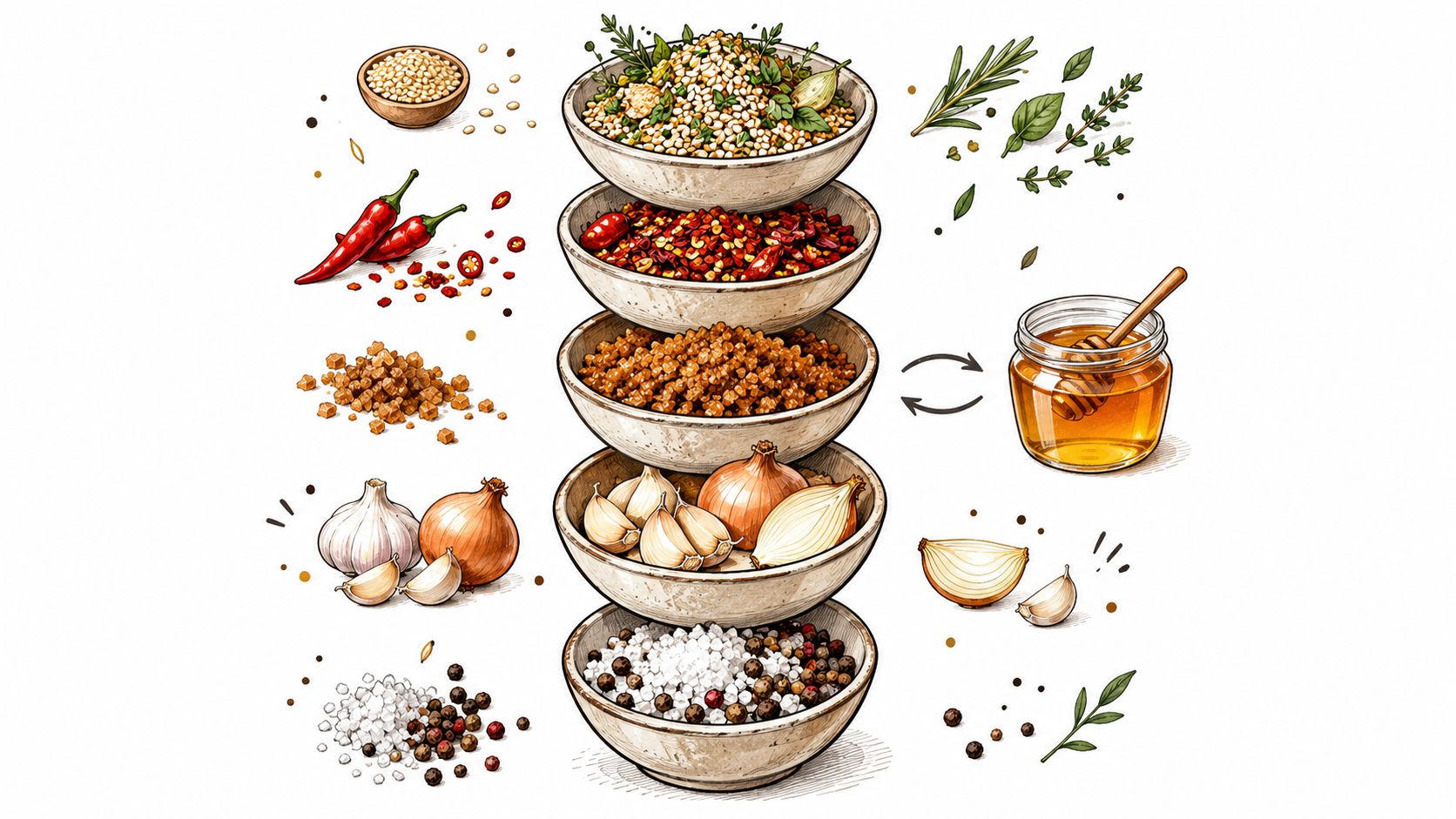
Think of building a track from separate instruments. No single layer is the whole song. Salt and garlic lay down the rhythm, ginger and pepper add movement, sesame gives warmth, sugar rounds the edges, and chilli decides how loud the finish gets. If one layer dominates, you'll notice straight away.
The Five Layers in Plain Language
Start with the savoury base. Salt, garlic and onion make food taste more like itself. Salt also suppresses bitterness and lifts savouriness, which is why a bland chicken thigh suddenly tastes complete with only a light coating.
Next come the warm aromatics. Ginger brings a fresh, slightly citrus heat. Black pepper is sharper and woody, while white pepper feels rounder and more earthy. You don't need both every time, but knowing the difference helps you steer a blend.
Toasted sesame and soy notes add the nutty, fermented depth people associate with Korean grilling. Sesame seeds toast quickly on a hot surface, faster than the rest of a rub, so they can turn bitter if you leave them over fierce direct heat for too long. Dried soy style ingredients, mushroom powder or yeast based savoury powders can suggest that depth in a dry format.
Controlled sweetness does two jobs. It balances salt and chilli, and it promotes browning as food grills. That browning is welcome, but it's also the risk. Sugar darkens before thick meat cooks through, so colour alone can't tell you when dinner's ready.
Finally, chilli heat is optional and adjustable. Gochugaru style flakes tend to give warmth and colour rather than a sharp burn, while standard chilli powder can push hotter. If you're cooking for mixed tastes, keep heat moderate in the rub and offer extra at the table.
| Flavour layer | What it brings | UK pantry swap |
|---|---|---|
| Savoury base | Saltiness, garlic depth, rounded savouriness | Fine sea salt, garlic granules, onion powder |
| Warm aromatics | Fresh heat and gentle spice | Ground ginger, black pepper |
| Sesame and umami | Nutty, toasted, fermented depth | Toasted sesame seeds, mushroom powder |
| Sweetness | Balance and browning | Light brown sugar, muscovado |
| Chilli | Warmth, colour, lingering heat | Mild chilli flakes, smoked paprika plus a pinch of cayenne |
If you enjoy comparing how different cuisines balance heat, earthiness and aromatics, this Middle Eastern spice guide is a useful companion for spotting how blends are built layer by layer rather than ingredient by ingredient.
Where Korean BBQ Seasoning Comes From
The flavour starts with communal grilling. Thinly sliced meat cooks quickly over heat at the table, then gets wrapped, dipped and eaten with rice and pickled sides. That context explains the seasoning logic. Food cooks fast, so flavour has to land quickly through salt, garlic, sesame, sweetness and fermented savoury notes.
This short clip shows the quick, hands on rhythm of that style of cooking before we get into how it travelled.
South Korea launched its government backed Global Hansik campaign in 2009 to promote Korean food internationally through restaurant promotion, chef training and overseas marketing. That push helped dishes and flavours move well beyond Korean communities, carrying gochugaru chilli, fermented soy, garlic, sesame and sweet savoury marinades into much wider circulation.
You can see the result in UK shopping and search habits. A UK focused food market analysis reported that Google searches for Korean food increased by 83% between 2019 and 2021, placing Korean cuisine among the ten most popular cuisines in the country and third in London. The same background shows why this isn't only a London restaurant story. Home cooks, BBQ fans and plant based shoppers have all picked up the flavour.
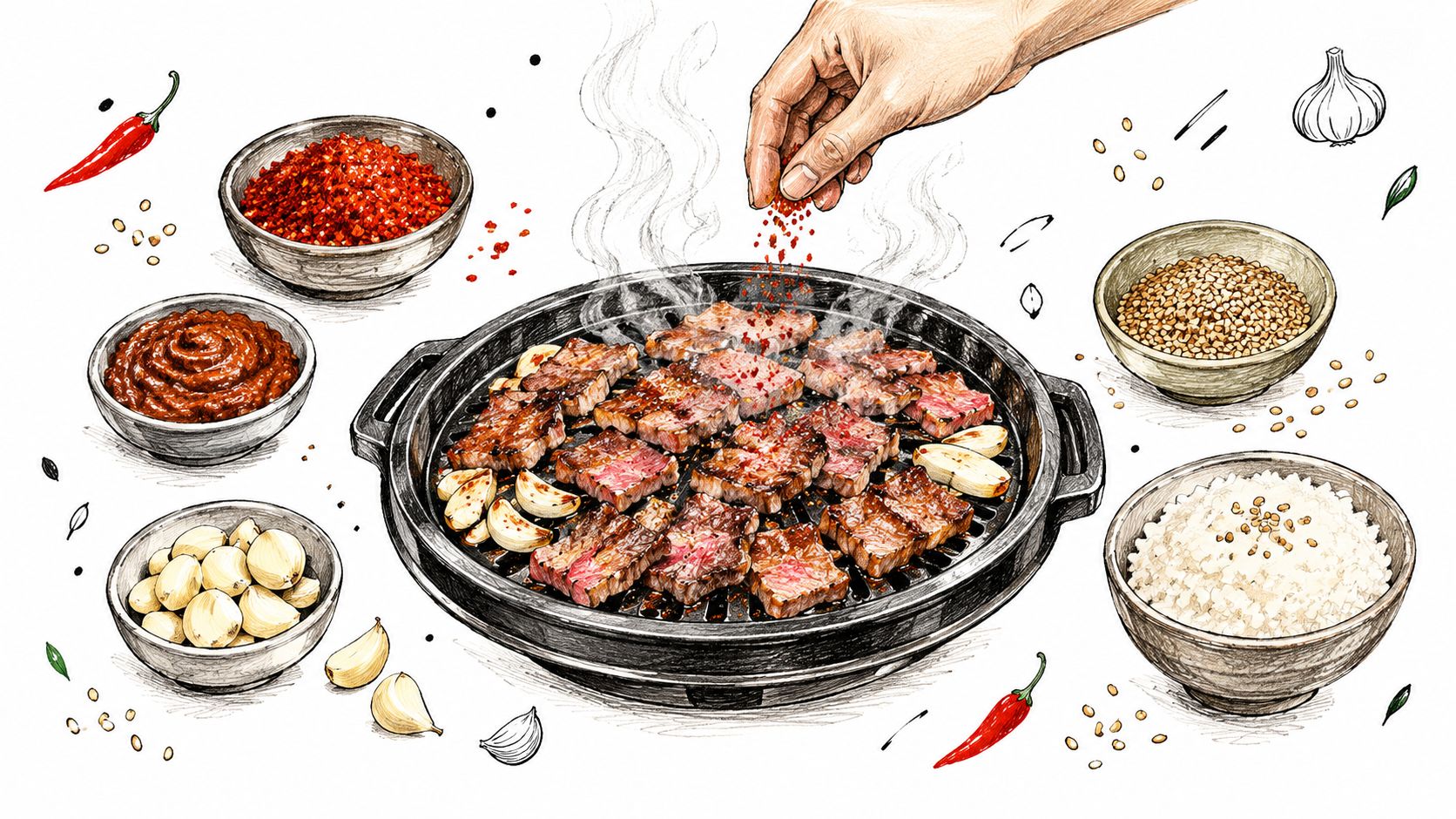
The image below captures that direct, cook and eat style, where seasoning, smoke and quick grilling work together rather than relying on a long marinade.

For British kitchens, a versatile seasoning makes more sense than a rigid recipe. Most of us aren't recreating a restaurant service at home. We're grilling chicken thighs, roasting mushrooms, or building rice bowls on a Tuesday. A flexible blend respects the roots of the flavour while fitting the equipment and time we've got.
How to Use It Across Beef, Chicken, Pork, Tofu and Vegetables
The biggest mistake is treating every food the same. Beef can take a confident coating and high heat. Tofu needs drying first or the seasoning slides off. Vegetables need oil so the spices stick and toast instead of scorching in dry patches.
UK shoppers are already cooking this way at home. In February 2025, Waitrose reported that sales of gochujang paste increased by 71% year on year, with searches for Korean BBQ up 246%, gochujang up 572%, and Korean chicken up 454%. That mix of buying and searching tells you people want recipes they can repeat, not a one off novelty.
Four Application Methods
Dry rub works best when the surface is dry. Pat meat or tofu with kitchen paper, season evenly, and rest it briefly so the salt starts to draw in. Use this for steaks, chops, wings and firm tofu.
For a wet marinade, stir seasoning into oil plus a little water, soy sauce or citrus juice until it coats like a thin paste. This suits chicken thighs, pork shoulder steaks and mushrooms, which all drink up flavour. Keep raw meat separate from ready to eat food, wash hands after handling it, and never reuse marinade from raw poultry on cooked food. Reserve a clean portion for serving instead.
A glaze goes on late. Brush it over during the final minutes so sugars shine rather than burn. A finishing sprinkle goes on after cooking, which is ideal for chips, sweetcorn, rice and grilled courgette where you want fresh sesame and chilli to stay bright.
Practical rule: If your blend contains sugar, judge doneness by internal temperature and proper cooking time, not by how charred the outside looks.
| Protein or food | Rub per 500g | Marinate time | Heat setting |
|---|---|---|---|
| Beef steak or short ribs | 1 to 1.5 tbsp | 30 minutes to overnight | Hot grill, sear then rest |
| Chicken thighs or wings | 1.5 tbsp | 30 minutes to 4 hours | Medium grill, oven or air fryer |
| Pork chops or belly slices | 1.5 tbsp | 1 to 4 hours | Medium grill or low smoker, finish hot |
| Firm tofu | 1 tbsp plus oil | 20 to 30 minutes | Medium hot pan, oven or air fryer |
| Mushrooms and vegetables | 2 to 3 tsp plus oil | 10 to 20 minutes | Hot grill or roast until edges crisp |
For bbq seasonings for chicken, skin on thighs are forgiving. Season under and over the skin, cook skin side down first over medium heat, then turn and glaze lightly. For seasonings for bbq ribs and seasonings for bbq pulled pork, go lower and slower. Apply a base layer first on tougher cuts, then your Korean style blend, and wrap if the surface darkens too fast.
Plant based cooking deserves the same care. Press tofu, tear mushrooms into rough pieces for more edges, and keep a dedicated spoon and small jar for plant based batches if cross contact matters in your household. Our practical guide on how to season tofu walks through drying, coating and crisping in detail. For bbq rubs for vegetables, oil first, season second, and don't crowd the tray or they'll steam.
DIY Recipe Variations You Can Build at Home
You don't need a fixed formula. Build in five layers, base, aromatic, sweet, heat, finish, and change one layer at a time. That way you learn what each change does, instead of guessing why a batch tasted different.

A Balanced Starting Blend
Mix 2 tbsp light brown sugar, 1 tbsp fine sea salt, 1 tbsp garlic granules, 2 tsp onion powder, 2 tsp mild chilli flakes, 1 tsp ground ginger, 1 tsp black pepper and 1 tbsp toasted sesame seeds added at the end. Taste a pinch on a slice of cucumber. You should get salt first, then warmth, then a sweet, nutty finish.
For a bulgogi style beef rub, increase the sugar slightly, add extra black pepper and onion, and keep chilli low. It suits thin beef, steak rice bowls and stir fried strips where sweetness and savouriness lead.
For a yangnyeom style chicken rub, push the chilli and garlic a little higher and add a touch more sugar for a sticky finish. It's built for wings and thighs, especially if you'll glaze them at the end with honey thinned with water.
For a tofu and mushroom blend, keep everything plant based, swap part of the salt for mushroom powder if you have it, and add sesame only after cooking so it stays fragrant. Dried mandarin peel, finely ground, gives a bright yuja leaning twist without making the blend wet. If you're new to balancing ratios, how to blend spices covers weighing, grinding and adjusting in small steps.
- Swap the sweet layer: Muscovado gives deeper caramel notes, white sugar stays cleaner, honey works only in wet marinades and glazes.
- Swap the heat layer: Smoked paprika plus cayenne mimics colour and warmth if you don't have Korean chilli flakes.
- Swap the finish: Sesame seeds, finely chopped spring onion greens dried at home, or citrus zest added fresh all change the final bite.
Store homemade blends in a small, clean, dry jar away from steam and sunlight. Make small batches you'll use while the aromatics still smell lively. Sesame and ground ginger fade first, so a month long tub often tastes flat by the end even if it's still safe to use. Label the jar with the date and what you changed. Future you will be grateful.
Reading UK Labels for Salt, Allergens and Plant-Based Diets
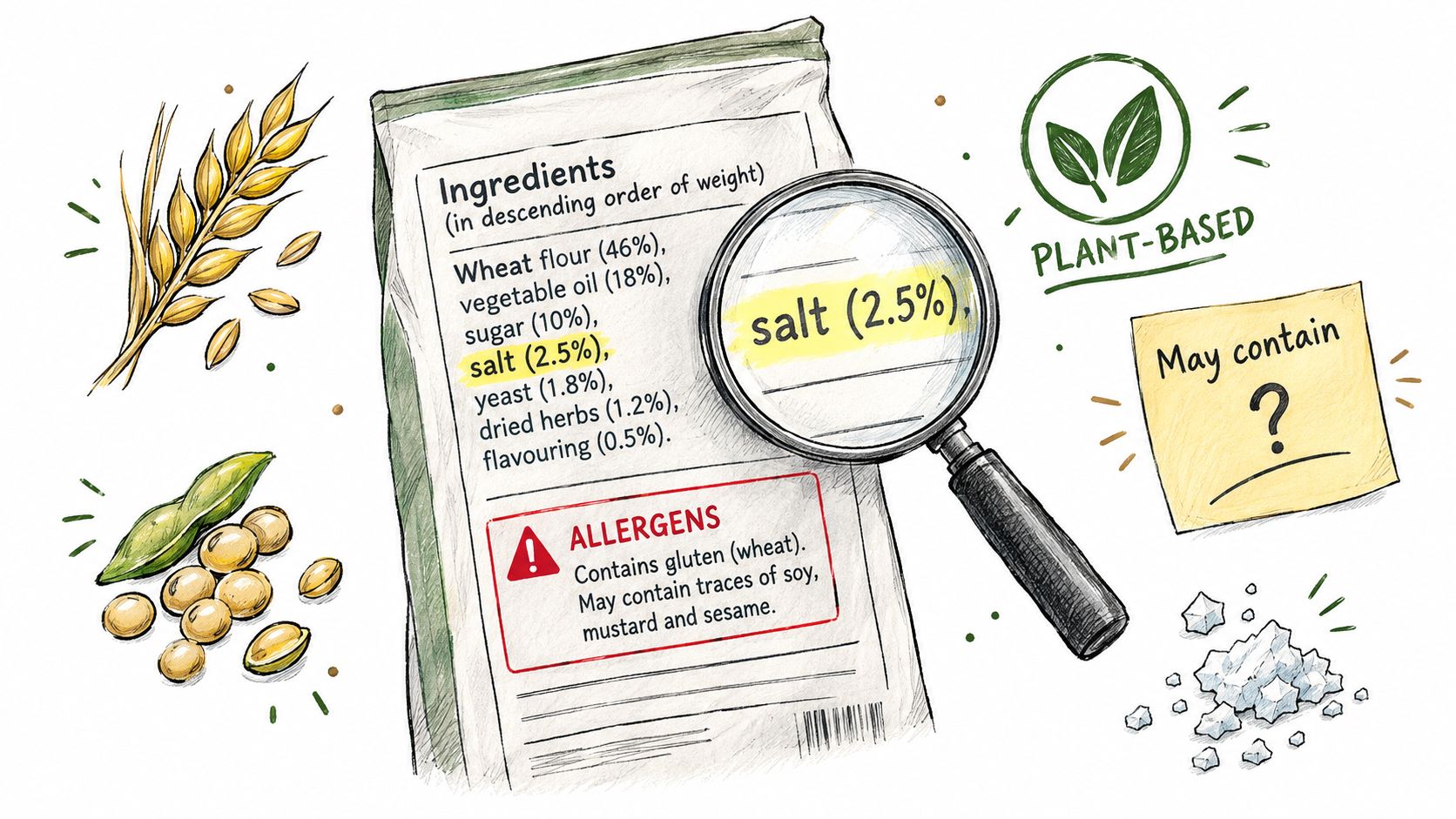
Flavour gets all the attention, but the label tells you whether a blend fits your household. Start with the ingredients list. In the UK, ingredients are listed in descending order by weight, so if salt or sugar appears first, that prominence is right there in black and white. Prepacked labels must also give energy plus fat, saturates, carbohydrate, sugars, protein and salt.

Salt in Real Servings
The NHS classifies food as high in salt when it contains more than 1.5g per 100g and low at 0.3g or less per 100g, with UK guidance recommending adults consume no more than 6g of salt per day. Seasonings look extreme per 100g because nobody eats 100g of rub. Do the serving maths instead.
If a jar lists 20g salt per 100g and you use 5g of seasoning on a portion, that's 1g salt from the rub before soy sauce, kimchi or dipping sauces join the plate. That wider meal matters. A clean label blend with a short ingredient list can still be salty, and a lower salt blend can still taste flat if you then add salty sauces without thinking. Measure the rub, taste before adding more salt, and let garlic, herbs and spices do more work.
Allergens and Plant Based Checks
UK guidance requires any of the 14 major allergens to be declared and emphasised in ingredients lists. In Korean style profiles, watch especially for soya, sesame, cereals containing gluten and mustard. They can appear in flavourings, soy powders, marinade bases or shared production lines.
A may contain statement is about cross contact risk during making or packing, not a recipe ingredient. Treat it seriously if you cook for someone with an allergy, and contact the maker if the wording is unclear.
- Check the order: Salt or sugar first means the blend is built around them.
- Check emphasised allergens: Look for bold soya, sesame, gluten containing cereals and mustard.
- Check plant based wording: Vegan ingredients are different from a recipe that happens to be meat free.
- Check the serving: Convert salt per 100g into the spoonful you'll use.
Pairing It With Smokey Rebel Rubs and Bundles
You don't need a Korean labelled jar to cook Korean inspired food well. You need a reliable base, a rub with sweetness for glazing, and something bright for vegetables and tofu. That's where layering Smokey Rebel blends becomes practical rather than a sales exercise.
Social interest keeps feeding that experimentation. Speciality Food Magazine reported that Korean food focused TikTok posts by UK users increased from 10,000 in 2023 to more than 17,000 in 2025, while searches for Korean BBQ rose by more than 60% year on year. Home cooks are clearly remixing formats, not following one script.

Use SPG (Salt Pepper Garlic) Base Blend as your canvas. A light base layer seasons the meat itself, then your Korean style DIY blend or glaze brings sesame, sweetness and chilli on top. For wings, Cherry Force BBQ Rub and Wingman Wing Rub give you fruit forward and classic wing directions that both welcome a sesame and chilli finish.
For steak and rice bowls, Revolution Beef Rub handles the deep savoury side while you add ginger, sesame and a sweet glaze. Pork ribs and pulled pork suit Hickory Hog Pork Rub as a first layer before a Korean inspired sprinkle after slicing. Tofu and mushroom skewers brighten up with Miami Mojo Citrus Blend, where citrus keeps the plate fresh against richer sauces.
Smokey Rebel blends are plant based, filler free and packed in recyclable craft cans, with no added crap hiding in the ingredient list. That matters when you're reading labels carefully and layering more than one rub.
If you're choosing a gift or stocking up, Build Your Own Bundle suits a curious first timer who wants a base plus two personalities. A committed griller who is also comparing grills and kit might look at Hans Grill bundle deals for hardware, then pick Best Sellers Seasoning Gift Set or Ultimate BBQ Seasoning Gift Set for flavour range.
Quick Wins and Common Questions
Small habits make the biggest difference with this flavour. You don't need new equipment. You need dry surfaces, measured seasoning and a bit of patience at the end.
Quick Wins Checklist
- Toast sesame separately: Add seeds at the finish so they stay nutty, not bitter.
- Control the sugar: Cook over medium heat first, glaze late, and move food if it darkens too fast.
- Season chicken ahead: Give thighs and wings at least 30 minutes so salt and aromatics settle in.
- Oil vegetables first: A thin coat helps seasoning stick evenly and crisp at the edges.
- Rest before slicing: Let grilled meat sit briefly so juices redistribute instead of running onto the board.
Common Questions
How long does a homemade blend keep? Keep it in a sealed jar away from heat and steam, and make small batches you'll use while it still smells aromatic. Ground spices and sesame lose punch over time, so freshness matters more than hoarding a large tub. If it smells flat, refresh it with a little newly toasted sesame and chilli rather than adding more salt.
Does Korean BBQ seasoning work in an air fryer? Yes, and it's one of the easiest weeknight options. Pat chicken, tofu or vegetables dry, oil lightly, season evenly and cook in a single layer so air can circulate. Hold back any sugary glaze until the final minutes, then brush it on and cook briefly until glossy.
What if a shop bought blend tastes too salty? Use less of it and build volume with unsalted garlic granules, onion powder, ginger, sesame and chilli. Skip extra soy sauce in the marinade, or swap part of it for water and citrus juice. Serve with plain rice, lettuce wraps and unsalted sides so the seasoning isn't competing with more salt.
What should I serve alongside for a complete meal? Build around contrast. Plain rice or noodles catch the juices, something pickled cuts richness, and a fresh element like lettuce, cucumber or spring onions keeps each bite lively. Grilled sweetcorn, mushrooms and courgette seasoned the same way make the main protein stretch further for families.
Ready to build your own Korean inspired layers with a clean, reliable base? Explore small batch, plant based rubs in recyclable craft cans, from everyday SPG to beef, pork and wing blends, and put together a set that fits how you cook at Smokey Rebel.
Join our Mailing List
Sign up and get Smokey Rebel Recipes + weekly recipes straight to your inbox!
Recent articles
Seasoning for Chicken Burgers That Actually Taste Bold
Master seasoning for chicken burgers with practical ratios, flavour builds, and cook tips for juicy, well-seasoned patties every time on...
Read moreEco Friendly Choices for Home Cooks and BBQ Fans
Practical eco friendly choices for home cooks and BBQ fans — covers sourcing, plant-based swaps, fuels, waste reduction, packaging, gifting...
Read moreKorean BBQ Seasoning: Flavour, Uses and DIY Blends
Korean BBQ seasoning explained — what it is, the core flavour profile, how to use it on grills, ovens and...
Read more