How to Dry Rub Lamb by Cut and Cook Method
You've got lamb in the fridge, a can of rub in your hand, and no clear answer to the only question that matters right now. How much do you put on, and how long do you leave it?
That's where most dry rub lamb goes wrong. A heavy coat left overnight suits a fatty shoulder. Put the same coat on thin chops and you'll get salty, wet meat with a crust that burns before the centre warms through.
Match the Dry Rub to the Lamb Cut
A lamb chop and a lamb shoulder come from the same animal, but they are two different jobs. The chop is thin, lean and cooked in minutes over direct heat. The shoulder is thick, fatty and needs hours before it turns tender. The coat and the waiting time that suit one will spoil the other, so the cut on the board decides the seasoning, not the other way round.
Use about 12 to 15 g of rub per kilogram on chops and steaks. Go to 18 to 22 g on a rack, 20 to 25 g on a butterflied leg, neck fillet or boneless breast, and 25 to 30 g on shoulder. Weighed rates turn seasoning into a repeatable method instead of a hopeful scatter.
Timing follows thickness. Season chops and steaks 20 to 40 minutes ahead. Give a rack or neck fillet 1 to 4 hours, a butterflied leg 2 to 6 hours, and shoulder or breast 4 to 12 hours, covered in the fridge. A short wait flavours the surface of a chop without drawing out moisture. A long wait lets salt work right into a thick, fatty joint.
Dry rub amounts and cook targets by lamb cut
| Cut | Rub per kg | Apply ahead | Heat | Pull at |
|---|---|---|---|---|
| Lamb chops | 12 to 15 g | 20 to 40 minutes | Hot direct grill or pan, then rest | 55°C medium-rare after a full sear |
| Lamb steaks | 12 to 15 g | 20 to 40 minutes | Hot grill or heavy pan | 55 to 60°C after a full sear |
| Rack of lamb | 18 to 22 g | 1 to 4 hours | Hot roast or two-zone grill | 55 to 60°C |
| Butterflied leg | 20 to 25 g | 2 to 6 hours | Two-zone grill or 200°C oven | 60°C medium |
| Boned or whole shoulder | 25 to 30 g | 4 to 12 hours | Low indirect heat, oven or smoker | 90 to 95°C to pull, 72°C to slice |
| Neck fillet | 20 to 25 g | 1 to 4 hours | Sear, then slow cooker or gentle oven | Tender and cooked through |
| Boneless breast | 20 to 25 g | 4 to 12 hours | Low oven or smoker | Tender and cooked through |
| Mince, burgers and kebabs | 15 to 20 g | Just before cooking | Direct high heat | 70°C for 2 minutes |
Read the table from left to right when you plan tonight's cook. The rub weight sets how much you measure out, the lead time sets when you season, and the pull temperature stops you treating a neck fillet like a steak.
Buy the cut that fits the job
Price is part of the choice, not an afterthought. In the 12 weeks ending 2 November 2025, AHDB retail performance data showed lamb volumes fell 9.4% year on year while average prices rose 3.5%, and lamb-steak volumes rose 29.2%. That is why steaks, chops and shoulder anchor this table rather than a whole leg. Smaller, quicker portions and slower, economical joints both suit regular cooking better than saving lamb for a premium Sunday roast.
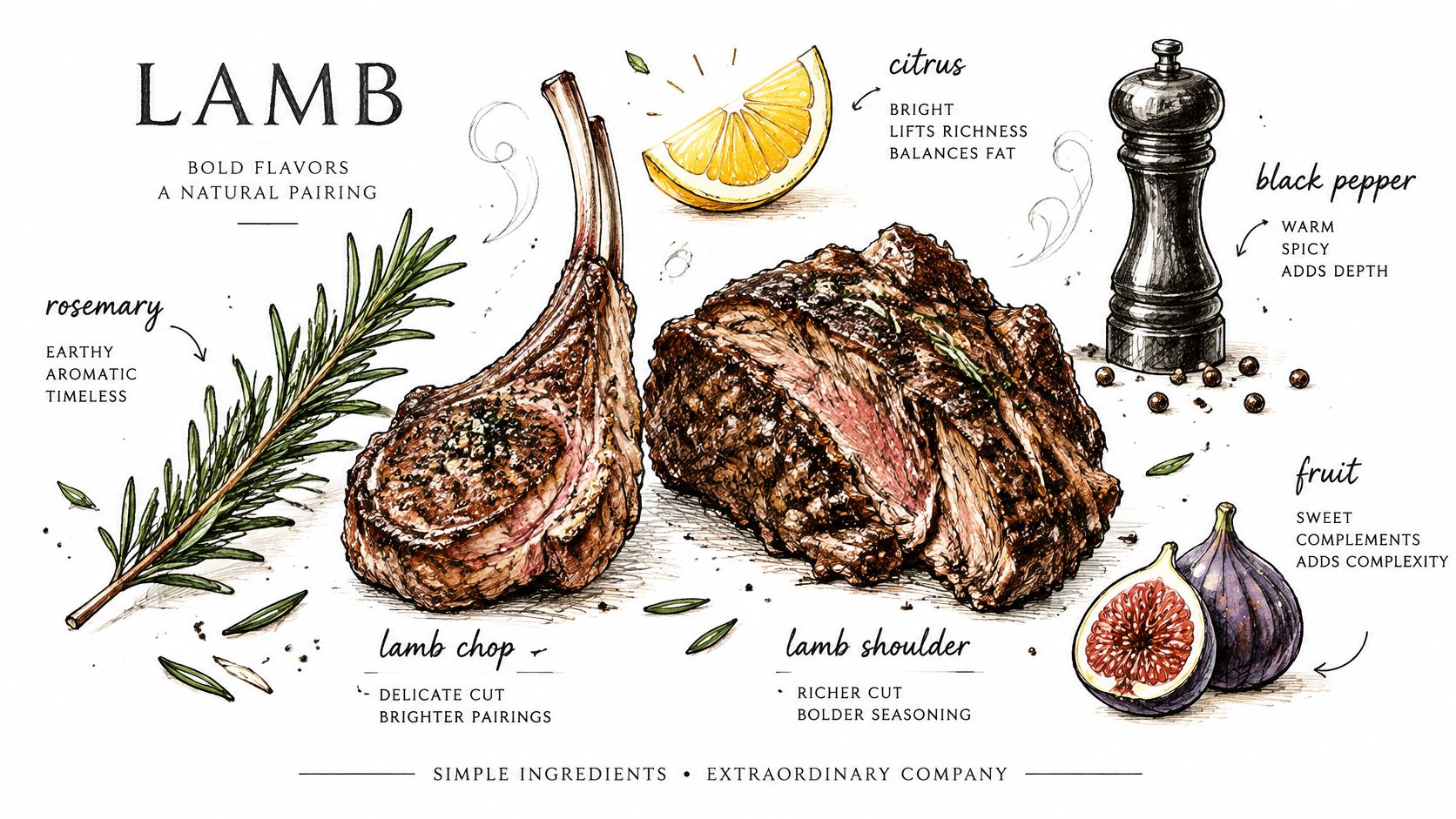
The same thinking applies inside the can. Chops and steaks cook fast and taste mild, so a heavy, smoky blend tends to bury the meat. They do better with a lighter coat of a sharper, herb or citrus-led rub. Shoulder is the opposite case: its fat and long cook can carry stronger chilli, cumin and smoke while the lamb flavour still comes through. Delicate cut, sharper blend. Rich cut, bolder blend.
If chops are tonight's cut, use this focused guide on how to season lamb chops alongside the gram rate above. Keep the coat thin enough that you can still see meat through it.
Practical rule: Weigh the rub for the cut you have bought, not for the joint you wish you had bought.
The pull temperatures rest on one safety distinction. Intact chops and steaks may be served medium-rare once every outside face is seared. Mince, rolled joints and kebabs are different, because surface meat has been worked through the product and must be cooked through.
That line still holds when two items share a grill. A chop can come off pink in the centre after a proper sear. A kebab beside it cannot.
How to Apply a Dry Rub to Lamb
Good application is boring in the best way. You dry the surface, weigh the seasoning, press it on, and give it the right amount of fridge time for that cut.
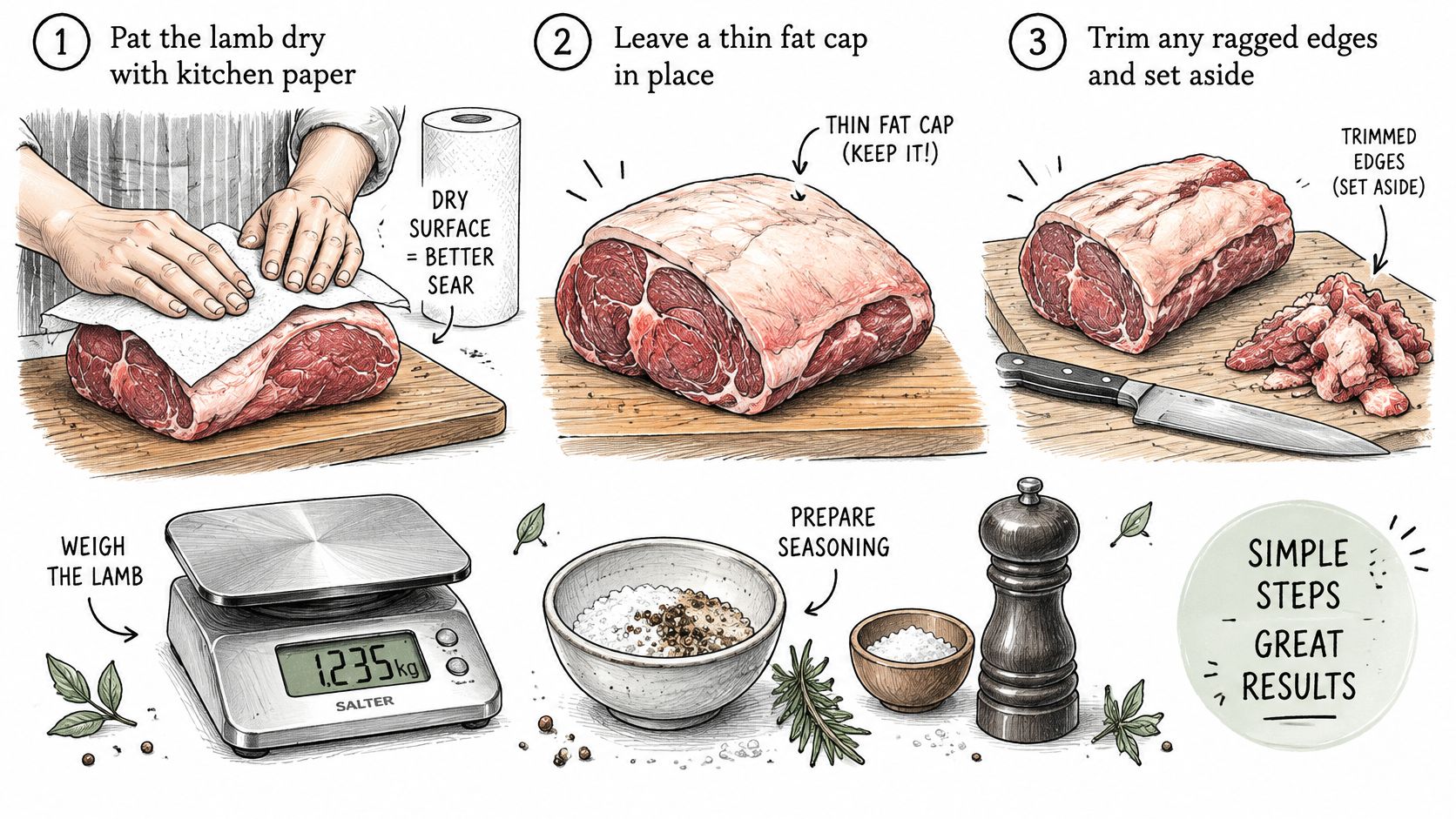
The short sequence below shows the surface prep before any heat is involved.

The eight steps in order
- Pat every surface dry: Use kitchen paper on the top, underside, cut ends and fat. A dry surface lets rub grip instead of clumping in wet patches, and it browns faster once heat hits it.
- Trim only what will scorch: Leave a thin, even fat cap because it bastes the meat and carries flavour. Cut away ragged flaps and hard, waxy lumps that won't render in the cook time.
- Weigh the rub: Use the gram rate for your cut rather than shaking from the can until the meat disappears. Put the measured rub in a small bowl first, so a hand that has touched raw lamb never goes back into the main container.
- Break up clumps: Rub any lumps between your fingers so salt and fine spice spread evenly. Add about a teaspoon of oil per kilogram only when the surface is so lean the rub won't cling. On fatty shoulder or chops with a fat cap, you usually don't need a binder at all.
- Press, don't scrub: Scatter the seasoning over every exposed face, then press it gently with clean hands. Include cut ends, bone edges and the inside faces of a butterflied leg. Scrubbing just pushes spice into piles and tears soft fat.
- Chill in two stages: Leave the lamb uncovered in the fridge for about 20 minutes so the surface dries slightly and the coat sets. Then cover it for the rest of the lead time for that cut. Thin chops stop at 20 to 40 minutes in total. Shoulder and breast can stay for several hours.
- Take thick meat out briefly: For anything thicker than a chop, take it out of the fridge 20 to 30 minutes before cooking so the outside isn't stone cold when it meets the heat. Don't leave raw lamb on the counter for hours.
- Keep raw and cooked apart: Use a separate board and tongs for raw meat. Never baste cooked lamb with juices, loose rub or marinade that touched the raw joint, and put cooked meat on a clean plate.
That order matches the workflow in the UK government cooking guidance, which sets a core temperature of 70°C for 2 minutes as its standard safety benchmark, with validated equivalents including 75°C for 30 seconds and 80°C for 6 seconds. The same guidance is clear that a cleaned probe in the thickest section beats colour or crust appearance.
What good coverage looks like
On a chop, you should still see meat through the coat. It's seasoning, not armour. On shoulder, a fuller coat makes sense because you're flavouring a thick joint that'll cook for hours and may be pulled and mixed through its own juices.
Butterflied leg sits in the middle. Coat both faces evenly, paying attention to the thinner edges. They'll cook faster than the thick centre, so a heavy pile of spice there will darken first.
For mince and kebabs, season just before cooking and mix gently. Salting minced lamb far ahead and working it hard gives you a dense, sausage-like texture. Shape loosely, season, and cook.
A dark spice crust is colour, not proof the centre is cooked.
That trap catches people because paprika, sugar and garlic can look browned while the middle is still cool. Trust the later probe reading, not the shade of the rub at application stage.
One last check before the fridge. Turn the meat over. The underside is the face most cooks forget, and it's often the face that hits the grate first.
Cook Dry Rubbed Lamb by Method
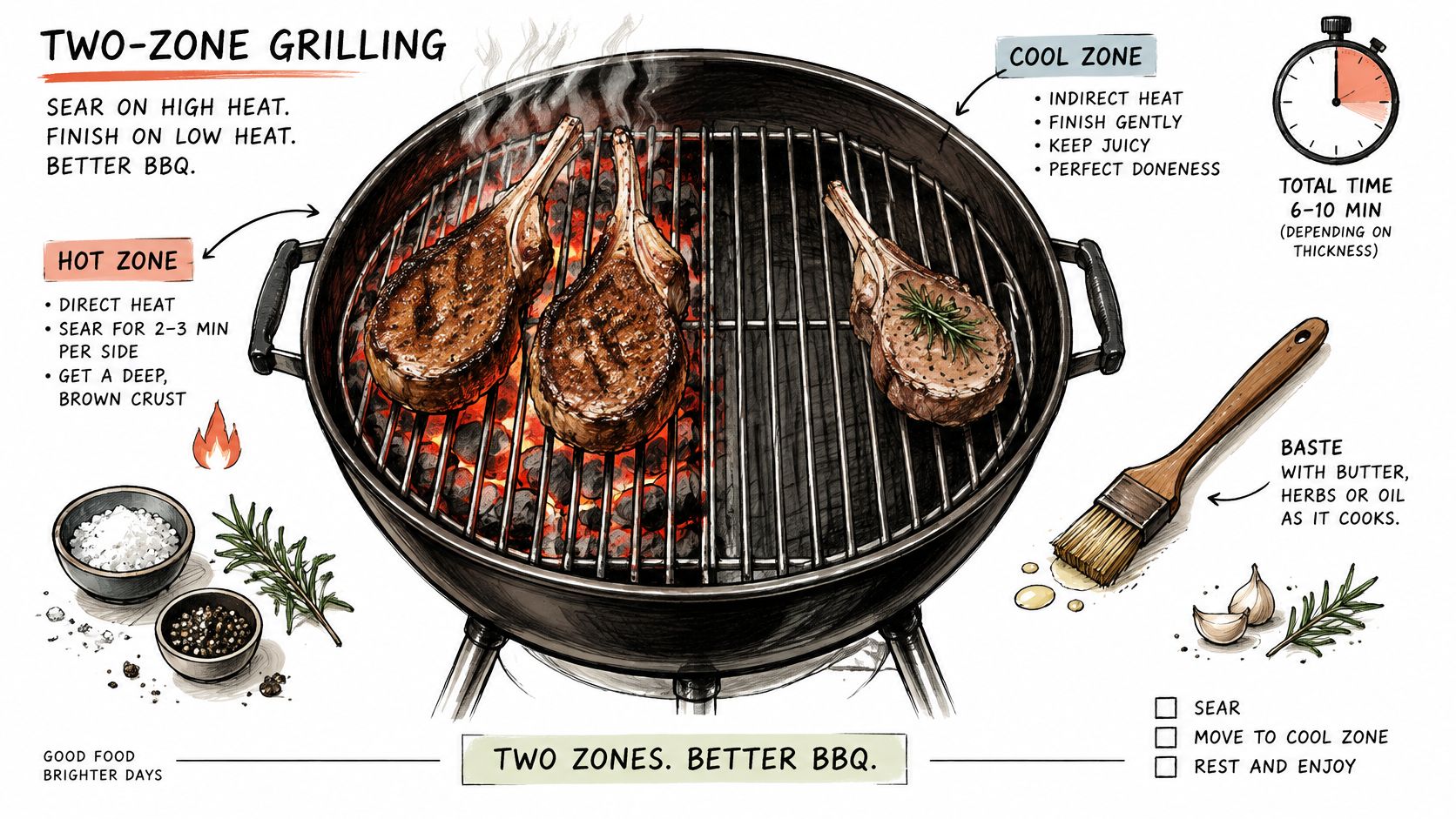
Start with a two-zone barbecue, because that's where most rubs burn. One side runs hot for browning. The other runs cooler, with no direct coals or burners underneath, so you can finish the centre without scorching the outside.
This layout shows the hot and cooler zones you'll move lamb between as the crust colours.

Grill, oven and pan
Sear chops and steaks over the hot side until each face is deep brown. If the crust colours before the probe moves, shift them to the cooler side with the lid down. You're buying time for heat to reach the centre without adding more direct flame to the spice.
For a butterflied leg, brown both faces first, then finish indirect with the lid down, turning once. Probe the thickest part away from bone. Thin edges will always read higher, so don't judge the whole piece by an edge.
In the oven, BBC Good Food's lamb cooking guide uses 200°C, or 180°C fan/Gas Mark 6, with approximate times of 1 hour 40 minutes for rare, 2 hours for medium and 2 hours 30 minutes for well done for its example roast. Treat those times as a planning guide only. Thickness, bone and your oven beat the clock.
For intact whole cuts, the same guide lists 50°C for very rare, 55°C for medium rare, 60°C for medium, 65°C for medium well and 72°C for well done. Pick your target before the meat goes on, then probe early enough that you don't overshoot it while chasing a darker crust.
A heavy pan works the same way as the hot zone. Preheat it properly, lay chops away from you, and don't crowd the pan. Crowding drops the temperature and steams the rub into a soft paste.
If you want the broader method behind these targets, this guide on how to cook lamb is the natural companion to the probe bands above.
Low and slow, smoker and air fryer
Shoulder, breast and neck need a different promise from you. Their connective tissue needs time at gentle heat to soften. Cook shoulder low toward 90 to 95°C if you want it to pull. If you'd rather slice it, hold it at 72°C and accept a firmer, roast-like texture.
The video below is useful for watching how heat placement changes the cook before you commit a joint to the grate.
On a smoker, keep sugar-heavy rubs away from a ripping grate and use a mild wood. Lamb already has a distinct flavour, and heavy smoke plus a sweet rub can turn bitter. Let the fat render slowly and check tenderness as well as temperature. A probe should slide in with little resistance when shoulder is ready to pull.
Air-fryer chops need space. Cook them in a single layer on high heat in short bursts, turning once and checking early. The fan browns fine spice quickly, so a chop that looks perfect at the first check can blacken by the second.
Slow cookers suit neck fillet and diced shoulder after a quick sear. The rub won't form a dry bark in that moist heat. It'll season the cooking liquid instead, which is fine if you're serving the meat in its sauce or piling it into flatbreads.
Rest chops for about 5 minutes and joints for 15 to 20 minutes. Resting lets juices settle and gives you a cleaner slice, but don't wrap a crisp crust so tightly that trapped steam softens it.
Mince, rolled joints and kebab meat still need 70°C for 2 minutes, even if a chop beside them is being served medium-rare. Different structure, different rule.
Flavour Pairings That Suit Lamb
Rosemary and garlic work on lamb. They're just not the whole map. Lamb can take herbs, citrus, black pepper, warm spice or a little fruit and smoke, as long as the strength matches the cut.
A delicate chop is easily masked. Fatty shoulder can carry more chilli and sweetness because the fat softens both. Keep that trade-off in mind before you reach for the boldest can.
The pairing guide below sets out the main flavour families to choose from before you season.

Match one blend to one job
- Kebabs, neck and shawarma-style slices: Use Greek Odyssey Gyros Rub when you want an aromatic, Mediterranean direction that suits sliced shoulder and skewers. Serve with flatbread, yoghurt, herbs and a sharp salad.
- Chops, rack and leg: Use Revolution Beef Rub for pepper and savoury depth. The name says beef, but the job here is a firm, savoury crust on intact lamb cuts cooked hot. Peas and mint keep the plate familiar without adding more spice.
- A clean base under either: Use SPG (Salt Pepper Garlic) Base Blend when salt, pepper and garlic are enough, or as a measured base when you want to control the salt before adding another flavour. Don't stack two salty blends at full rate. Split the total gram weight between them.
- Thin steaks that need lift: Use Miami Mojo Citrus Blend in a lighter coat. Citrus-led seasoning suits quick cooking and a crisp salad because it sharpens lamb fat instead of burying it.
- Fatty shoulder with fruit and smoke: Use Cherry Force BBQ Rub with a lighter hand than the top of the shoulder range. Fruit sits well in rendered fat, and pulled shoulder in soft rolls gives the sweetness somewhere to go.
Keep sugar-heavy and fine chilli blends for fatty meat and indirect heat. On a hot grate they scorch fast, and a thin steak will still be raw in the middle when the outside turns bitter. If you want heat on a chop, add it at the table with a sauce or fresh chilli rather than loading the rub.
That wider view fits where lamb is already going out of home. AHDB foodservice performance data recorded lamb volumes in Asian dishes rising 57.4% year on year in the 52 weeks ending 28 December 2025. So one rub can season skewers, sliced shoulder or a savoury filling rather than only a roast with rosemary.
For a fuller shortlist by flavour direction, see this guide to the best seasoning for lamb. Use it to pick a direction, then come back to the gram rate for your cut.
Build the plate around the rub
Season one plant-led side with the same blend so the lamb isn't the only flavoured thing on the plate. Mushrooms take a peppery rub well in a hot pan. Cauliflower florets roast nicely with a gyros-style blend and can share the flatbread with sliced shoulder.
Keep the side's salt lower than the meat's. Vegetables give up water as they cook, and a full meat rate can taste harsh once they shrink. Start light, roast hot, then add a pinch at the end if they need it.
Wine gives you another way to balance a rich plate without changing the rub. If you enjoy planning bottles around food, you can join the B.R. Cohn Winery club and keep a structured red on hand for peppered chops or slow shoulder nights.
The simplest test is the first bite. You should taste lamb first, then seasoning. If all you get is smoke, sugar or chilli, the coat was too heavy for that cut.
Fix Burnt Crusts and Uneven Lamb
A black crust with a cold centre usually means the rub and the cut were mismatched, not that the grill was cursed. A sweet, heavy coat that suits a long shoulder cook can scorch on chops before the middle has warmed.
Fine sugar and garlic brown long before a thick lamb joint is done. More time over the same flame will not save it. The fix is a cooler zone, earlier, and a coat that matches the cooking time.
Dry rub lamb problems and fixes
| What you see | Likely cause | Fix next time |
|---|---|---|
| Black crust, cold centre | Sugar or garlic over direct high heat | Sear briefly, then finish on indirect heat |
| Wet, overly salty chops | Too much salt for too long on a thin cut | 20 to 40 minutes only, and keep to about 12 g per kilogram |
| Pale coat that falls off | Surface was wet or the pan was cool | Pat dry and preheat until the grate is properly hot |
| Done outside, raw in a roll or kebab | Treated altered meat like an intact steak | Cook through to 70°C for 2 minutes |
| Bitter smoke taste | Rub burnt or wood was too heavy | Milder wood, lower grate heat, less sweet rub |
| Tough shoulder | Stopped at a steak temperature | Continue low until 90 to 95°C and probe tender |
Use the table as a diagnosis list, not a list of excuses. Each row points to one change for the next cook.
Salty, wet chops usually sat too long in too much salt. Salt draws moisture to the surface at first, and a thin chop does not need hours for that moisture to be reabsorbed and seasoned through. Shorten the lead time and drop toward 12 g per kilogram. If the surface still looks wet at cooking time, pat it dry again and accept a slightly lighter coat.
A pale, soft crust points the other way. The meat probably went on wet, or the grill or pan never got properly hot. Dry the surface, preheat fully, and sear before any indirect finish. Do not press chops down hard with a spatula to force colour. You will squeeze out juice and tear the coat you are trying to set.
Price matters here too. A bold rub earns its keep on shoulder, breast and neck because long heat softens its edges. On quick chops and steaks, use a lighter, sharper coat so the lamb stays in front and the sugar does not burn before the centre is ready.
When rare is the wrong target
A joint that is done at the edges and raw in a rolled centre is not a resting problem. It is a structure problem. Intact lamb with the whole exterior fully seared can be served medium-rare. Minced, rolled or otherwise altered lamb needs to be cooked through to 70°C for 2 minutes, because surface contamination can be mixed into the middle. Offal sits outside this rare guidance and needs extra care.
Notebook habit: Write down the cut, weight, rub mass and final probe reading once, and the next cook becomes an adjustment rather than a guess.
Caterers log batches for consistency, and the same habit helps at home. Compare like with like: chop to chop, shoulder to shoulder. If one cook tasted flat, check the gram rate before blaming the blend. If the bark turned bitter, check the wood, grate heat and sugar level first.
Do not rescue a burnt crust by scraping and re-rubbing halfway through. That adds raw spice to a hot surface and gives a dusty, uneven finish. Move the meat indirect, finish to temperature, rest it, and slice away only the worst black edges at serving.
Choose Tonight's Cut and Seasoning
Pick one path based on what's already in your fridge. Don't buy a leg because a recipe told you to if steaks or shoulder are sitting there waiting.
Two cook-tonight paths
If you've got chops or steaks, season lightly at 12 to 15 g per kilogram, wait 20 to 40 minutes, then grill or pan-sear hot. Pull intact meat at 55 to 60°C after the outside is properly browned, rest for 5 minutes, and serve with something fresh. Citrus steaks with a crisp salad, or peppered chops with peas and mint, both work without another sauce to make.
If you've got shoulder, breast or neck, use the heavier rate, chill it for several hours, and cook low until tender. Slice shoulder for flatbreads or pull it for soft rolls. Neck can go from a hot sear into a slow cooker, and breast rewards patience in a low oven.
Three blends cover most of those jobs. Greek Odyssey Gyros Rub suits kebabs and sliced shoulder. Revolution Beef Rub suits chops and leg when you want pepper and savoury depth. SPG (Salt Pepper Garlic) Base Blend keeps the lamb in front when you don't want a themed flavour.
Smokey Rebel seasonings use all-natural ingredients and come in cans, and they're built for ovens, pans, air fryers and slow cookers as well as the BBQ. A midweek chop doesn't need a smoker to earn a proper crust.
If you are smoking shoulder, browse the wood pellets collection and choose a milder fuel than you'd use for beef. If you want a lamb blend plus a second rub for mushrooms, cauliflower or chicken later in the week, use the build your own bundle page to put that pair together in one order.
Quick answers before you cook
- Do I need a wet binder? No. If the meat is patted dry and the rub is pressed on, it'll cling. Use a teaspoon of oil per kilogram only on very lean surfaces.
- Can I leave the rub on overnight? For fatty joints such as shoulder and breast, yes, within the 4 to 12 hour window. For thin chops and steaks, no. Keep them to 20 to 40 minutes or they'll turn wet and salty.
- Can a beef or gyros rub work on lamb? Yes, when the salt level matches the cut. Judge it by gram rate and flavour strength, not by the animal printed on the can.
Tonight's plate can be simple. Lightly rubbed steaks, hot pan, 55 to 60°C, rest, salad. Or gyros-style shoulder slices in warm flatbread with yoghurt and herbs. Pick the one your fridge already supports.
Pick your cut, weigh the rub, and let the probe call doneness tonight. At Smokey Rebel you'll find Greek, pepper-led and clean salt, pepper and garlic blends in cans for lamb chops, steaks and slow shoulder, plus pellets and bundles if tonight turns into a longer smoke.
Join our Mailing List
Sign up and get Smokey Rebel Recipes + weekly recipes straight to your inbox!
Recent articles
Rubs for Pork Cuts, Timings and Flavours
See which rubs for pork suit shoulder, ribs, belly and chops, plus amounts, timings and safe UK cooking checks.
Read moreHow to Dry Rub Lamb by Cut and Cook Method
How to dry rub lamb by cut, with grams per kilo, rest times, grill and oven heat, and safe internal...
Read moreSpices for Smoking: Pairings, Blends and Smoke Tips
Learn which spices for smoking work on beef, pork, chicken, fish and vegetables, when to add them, and how to...
Read more