Spices for Smoking: Pairings, Blends and Smoke Tips
You've got the ribs trimmed, the smoker holding steady and a cupboard full of jars, and now you're staring at them wondering which ones can take four hours of smoke and which will turn bitter by hour two. That's the question behind spices for smoking. It's not just what tastes good in the jar, it's what survives heat, time and smoke, and what belongs on the food only after it comes off.
Get the timing wrong and you'll get a harsh, blackened crust that hides the meat. Get it right and smoke becomes another seasoning, one you control like salt or pepper.
Spice Pairings for Meat, Fish and Vegetables
Scan the table first, then use the rule underneath it to judge any spice that isn't listed.
| Spice or Blend | Best With | Wood Pairing | When to Add |
|---|---|---|---|
| Coarse black pepper | Beef brisket, short ribs | Oak, post oak | Before smoking |
| Smoked paprika | Pork shoulder, chicken thighs, potatoes | Hickory, applewood | Before smoking |
| Garlic powder | Chicken, pork, mushrooms | Applewood, cherry | Before smoking |
| Cumin | Lamb, pork, aubergine, courgette | Hickory, oak | Before smoking |
| Fennel seed, crushed | Pork belly, sausages | Apple, cherry | Before smoking |
| Chilli flakes | Beef, sausages, peppers | Hickory, pecan | Before smoking or sprinkle after |
| Coriander seed, crushed | Chicken, salmon | Alder, cherry | Before smoking |
| Dried oregano | Vegetables, lamb, fish | Alder, cherry | After smoking |
| Dried thyme | Chicken, mushrooms, fish | Alder | After smoking |
| Lemon zest and dill | Salmon, mackerel | Alder | After smoking |
Robust, dry spices go on before the cook. Delicate herbs and fresh aromatics go on after.
Black pepper, cumin, smoked paprika and garlic powder hold their flavour through a long smoke. They're dry, they're concentrated, and smoke rounds them rather than stripping them. Oregano, thyme, dill and lemon zest behave differently. Their aroma is volatile, so hours of heat leaves them flat or bitter.
Meat That Can Take Bold Spice
Beef brisket and short ribs want coarse black pepper and smoked paprika over oak or hickory. The fat and long cook can handle that weight, and coarse pepper builds bark without turning dusty. Pork shoulder and belly suit fennel seed and a light touch of brown sugar over applewood or cherry, because pork takes sweetness well but scorches if you pile sugar on.
Chicken thighs and wings sit in the middle. Garlic, paprika and a little chilli over applewood or cherry gives you colour and savoury depth without overwhelming paler meat. That's why good bbq seasonings for chicken usually lead with paprika and garlic, not herbs.
Fish and Vegetables Need a Lighter Hand
Salmon and mackerel take crushed coriander seed before smoking over alder, then dill and lemon zest afterwards. The seed gives a warm base that survives, and the fresh finish stays bright because it never sat in the heat. Aubergine, courgette, peppers and mushrooms pair well with cumin and garlic before smoking, with oregano scattered over at serving.
If you don't want to build these combinations from single jars, use a rub that's already balanced for the protein. Smokey Rebel blends those same building blocks into cans for pork, beef and chicken, made in the UK from all-natural, 100% plant based ingredients. Whichever route you choose, check the temperature guidance below before you put a sugary blend into a hot smoker.
Matching Each Spice to Smoker Temperature
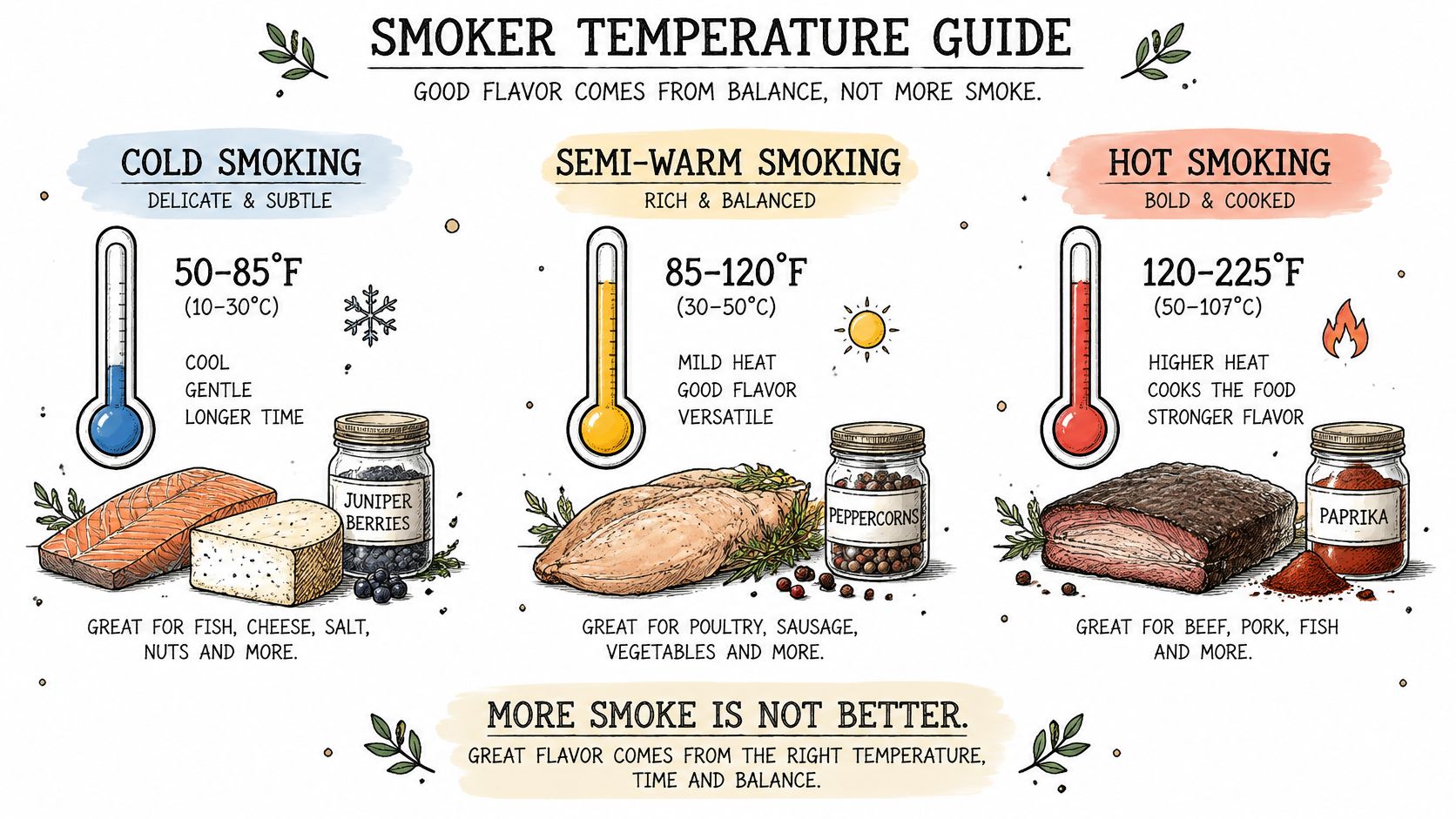
More smoke isn't better. Dense, grey smoke for hours doesn't add depth, it adds harshness and pushes delicate spices past the point where they taste good.
Use this visual guide to match your method to the right band before you season anything.

The UK government code of practice for reducing food contamination sets out cold smoking at approximately 18 to 25°C, semi-warm smoking at approximately 30 to 40°C, and warm or hot smoking at approximately 70 to 90°C. It also explains that smoke is produced through fuel pyrolysis at roughly 300 to 450°C, while the smoke reaching the food is controlled separately.
That same guidance warns that polycyclic aromatic hydrocarbon formation generally increases as temperature rises. It recommends controlling airflow, avoiding excessive smoke-generation temperatures, preferring indirect smoking where possible, and keeping smoking time as short as possible while still meeting microbiological safety and quality requirements.
What Each Band Does to Spice
In cold smoking, there's no cooking heat to damage flavour, so fine powders and dry rubs work well and herbs stay comparatively gentle. You're flavouring, not cooking, so you can be precise. In semi-warm smoking, keep sugar low. Even moderate heat over time darkens sugar early, and delicate herbs are still better added afterwards.
Hot smoking is where most home cooks get caught out. Sugar darkens and can burn before the meat is cooked, leaving a bitter crust and hiding whether the bark underneath is ready. Whole and coarse spices cope better here because they release flavour slowly, while fine, sugary dustings scorch.
If you're choosing fuel to match, our guide to smoking wood chips and how they behave will help you pair wood intensity with the band you're running.
A Three Question Check for Any Rub
Before a rub goes on, ask three things. Does it contain sugar that could burn at this temperature? Is it fine or coarse, and will a fine grind scorch or fall through the grate? Will it stay on for the whole cook, or should part of it go on late? Answer those and you'll avoid most bitter results.
Smoking Blend Ideas You Can Mix at Home
Volume measures suit everyday blends: use the same spoon and change one ingredient at a time. For salt on a large cut, kitchen scales make it easier to control how much you apply.
| Blend | Ingredients in Order | Ratio by Volume | Best For |
|---|---|---|---|
| Salt, pepper and garlic base | Salt, black pepper, garlic powder | 1:1:1 | Any protein as a first layer |
| Sweet smoke rub | Brown sugar, smoked paprika, garlic powder, black pepper | 2:2:1:1 | Pork ribs and belly, indirect heat only |
| Smoky chilli rub | Smoked paprika, cumin, chilli flakes | 3:2:1 | Beef, sausages, peppers |
| Herb vegetable rub | Garlic powder, lemon zest | 1:1 | Courgette, mushrooms, aubergine; zest after smoking |
| Citrus fish blend | Coriander seed, black pepper, dried dill, lemon zest | 2:1:1:1 | Salmon and mackerel; add zest after smoking |
Start with the salt, pepper and garlic base at 1:1:1. It gives pork, chicken, brisket or mushrooms a straightforward savoury layer without letting one flavour dominate. For a ready-mixed option, the Smokey Rebel SPG Base Blend uses the same combination.
How to Use the Other Four
The sweet smoke rub at 2:2:1:1 suits ribs and pork belly over indirect heat. Brown sugar can catch over direct flame before the fat has rendered, leaving a bitter crust. The smoky chilli rub at 3:2:1 gets its depth from paprika and cumin. Add oregano after smoking to preserve its aroma.
For vegetables, combine garlic powder and lemon zest in the herb vegetable rub at 1:1. Keep the zest out of the smoker and add it at the table. For the citrus fish blend, use the coriander seed, black pepper and dill before smoking, then finish with lemon zest.
For more detail on grinding and combining ingredients, see this guide to blending spices at home.
Measure the Salt, Don't Guess It
A heaped spoon holds more salt than a level one. The NHS guidance on salt in your diet says adults should consume no more than 6g of salt per day, approximately one level teaspoon, including salt already in food and salt added during or after cooking.
That daily limit includes the rub, meat, sauces, marinades and sides. The NHS recommends herbs, spices, black pepper, garlic, chilli and lemon juice to add flavour instead of relying on more salt. For a large cut, weigh the salt, taste a small cooked piece, then adjust the remaining seasoning accordingly.
Sourcing and Labels for Clean, Safe Smoke
A dry rub and a smoke flavouring are different products. Check the ingredients: a label that lists smoke flavouring identifies a regulated flavouring, while herbs and spices used in a smoker fall under general food-safety, traceability and hygiene duties.
The UK smoke flavourings authorisation guidance explains that smoke flavourings must be authorised, listed on the official register and used within specified conditions or maximum levels. Those rules concern added flavourings, not the smoke produced by burning fuel during cooking.
A Short Label Check
Spice blends can carry contamination risks, including pathogens, undeclared allergens and additives. Read the declaration on every pack, even when the ingredient list looks simple.
- Check for smoke flavouring: If it appears in the ingredients, the product contains a flavouring rather than only herbs and spices.
- Read the allergen declaration: Check for allergens relevant to you before using the blend.
- Review colours, sulphites and anti-caking agents: Decide whether you want them in a rub you use regularly.
Natural ingredients do not automatically mean risk-free. A plant-based blend still needs clear ingredient and allergen information.
For traceability, buy food-grade spices with batch details and keep the packaging or record the batch before transferring them to jars. Use untreated wood and clean fuel; treated offcuts or dirty fuel can compromise the smoke.
Our guide to clean-label ingredients and what to look for explains how to read ingredient lists. Smokey Rebel seasonings are made in the UK with all-natural, A-grade plant-based spices, with no fillers or silicon dioxide.
Questions to Ask Before a Bulk Order
Ask the supplier where the spices were grown, whether contaminant test results are available, which allergens are handled on site and how each batch is traced. If you buy whole spices in larger bags, keep the batch details with the storage jar. If the supplier cannot explain its traceability or allergen controls, choose another source.
How to Apply Spice Rubs Before Smoking
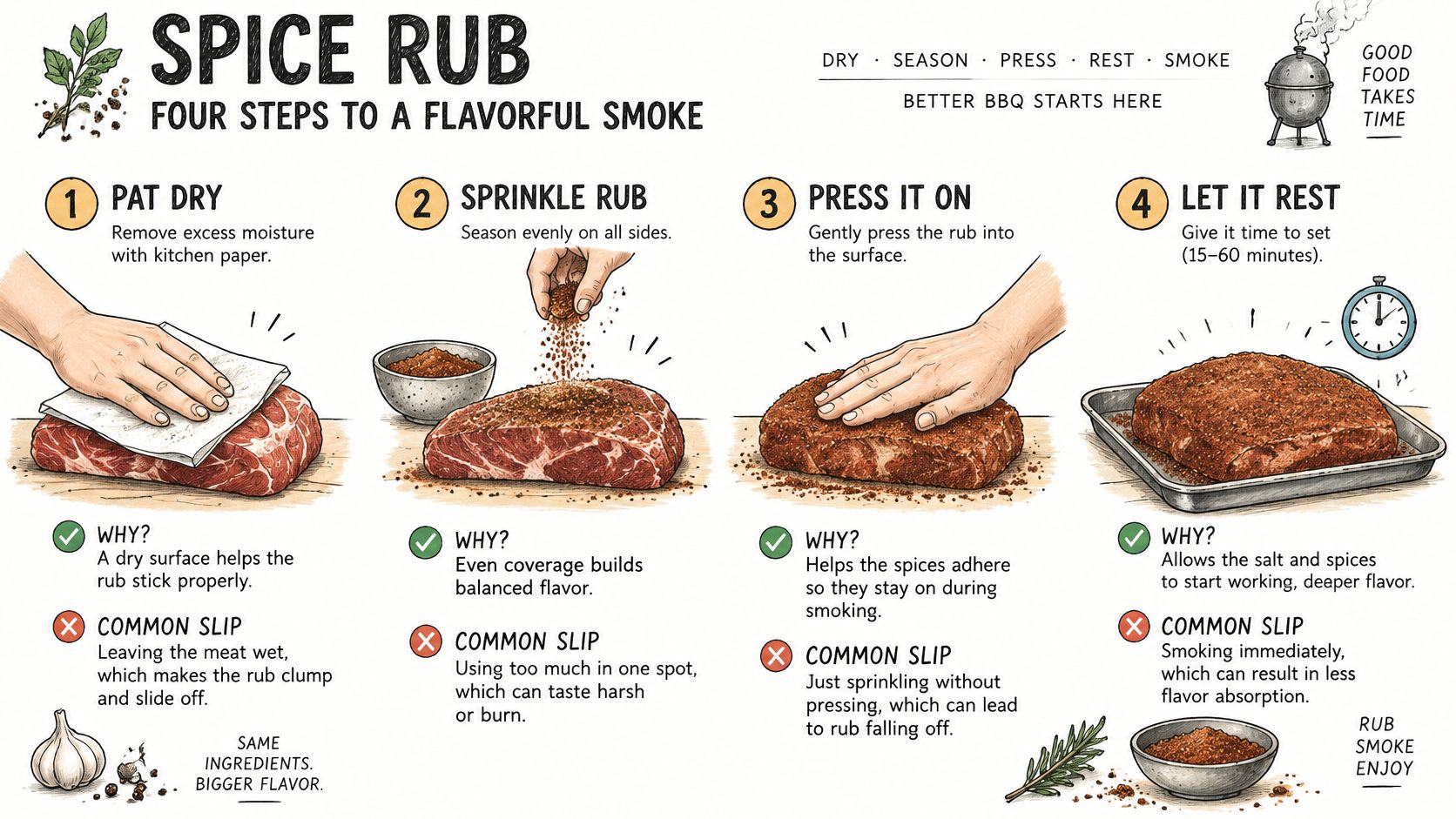
Good application looks boring. It's dry surfaces, thin binders and even coverage, repeated the same way every time.
This four step visual shows the sequence before you work through the detail.

- Pat the surface dry: Use kitchen paper on meat, fish or vegetables so the rub sticks. Seasoning a wet surface clumps and slides off in patches.
- Add a thin binder: Brush on neutral oil or mustard, just enough to help spices adhere. A thick layer makes the rub pasty.
- Season from height: Sprinkle evenly from about 30 centimetres above the board. Shaking close to the meat dumps heavy patches that later fall into the firebox.
- Rest it so the rub sets: Give a thick cut 30 to 60 minutes in the fridge, or about 15 minutes for chicken thighs and fish. A set rub stays put when you lift the food onto the grate.
- Use indirect heat: Set the smoker to your chosen band and keep rub coated food away from direct flame. A sugary blend over flame is the fastest route to a bitter crust.
- Keep loose rub off the heat: Shake off excess before cooking so it doesn't land on coals, burners or drip trays and burn.
- Finish fresh: Add herbs and citrus zest in the last ten minutes or after the cook, when they can't scorch.
- Watch the smoke: You want thin, light smoke, not dense grey clouds, and you want to avoid flare-ups.
Watch the technique in motion here, paying attention to hand height and coverage.
The UK guidance on polycyclic aromatic hydrocarbons identifies PAHs as contaminants produced by burning carbon-based materials, notes that smoked foods and certain dried foods including spices can be susceptible when drying isn't properly controlled, and applies an ALARA principle, levels should be kept as low as reasonably achievable.
A good result is easy to recognise. You'll see an even bark, smell clean smoke rather than acrid burning, and find no black, bitter edges when you slice. If the edges taste harsh, your rub burned or your smoke was dirty.
Storing Spices and Smoked Food Safely
Smoke flavour doesn't preserve food. A rub that tastes smoky can make leftovers seem cured when they're not, and that's a risky assumption to cook by.
The GOV.UK consumer advice for food preservation at home states that cold smoking adds smoky flavour but does not fully preserve food, so products usually need curing first and still require refrigeration unless they are properly dried. It also explains that hot smoking uses heat and smoke to kill bacteria and reduce moisture, although long-term storage often still combines hot smoking with curing.
Food must reach the correct temperature for the correct time, depending on food type, acidity, container size and container type. A spice rub is never a substitute for validated curing, refrigeration or cooking controls.
| Spice Form | Storage | Good for About |
|---|---|---|
| Whole spices | Airtight jar, cool, dark cupboard | 2–4 years |
| Ground spices | Airtight jar, cool, dark cupboard | 2–3 years |
| Pre-mixed rub, once opened | Sealed can, away from heat and steam | 12 months |
| Smoked spice blend, once opened | Airtight, away from the smoker and humidity | 6–12 months |
Keep Jars Away From the Smoker
The shelf beside your smoker is the worst place for spices. Heat and damp reduce potency quickly, and ground paprika that's sat through a summer of cooks will taste tired. Keep your main stock in a cool cupboard and decant a small working jar for cook days.
Label each jar with the date you opened it. Grind whole seeds only as you need them, because whole spices keep their aroma far longer than ground ones. If a blend smells flat when you open it, don't compensate by using twice as much, you'll only add dustiness and salt.
For leftovers, refrigerate smoked meat promptly in a sealed container. Reheat it thoroughly to the temperature your food requires before serving, rather than judging by steam or appearance alone.
Pick Your Smoking Rub for the Next Cook
Don't try to master five blends in one weekend. Pick the rub that matches the cook you've already planned, run it once, and change one variable next time.
For pulled pork and sticky ribs, choose Hickory Hog Pork Rub. For brisket and steak, choose Revolution Beef Rub. For wings, Wingman Wing Rub is built for that job, and SPG Base Blend works as the everyday first layer under any of them.
Our seasonings contain no fillers and no silica dioxide (sand), and they're made from A-grade, plant-based spices in craft cans with no added crap. If you want to compare a few side by side, use the build your own bundle option to mix a set, and match it with fuel from our wood pellets range so the wood suits the spice. Smokey Rebel currently offers 20% off all seasonings and gift sets.
Run one small test first. Season a single chop, thigh or mushroom cap, cook it on indirect heat, note the smoke band and the colour at the end, and write down what you'd change. That note is worth more than another new jar.
Frequently Asked Questions
Is Smoking With Spices the Same as Using Smoke Flavouring
Smoke flavourings are separately authorised in Great Britain. Spices added to food before smoking are subject to general food-safety, traceability and hygiene requirements. Check the ingredients list to see what a product contains.
Why Does My Rub Taste Bitter
Sugar and fine herbs can burn over direct flame or during a high-heat cook. Use indirect heat, reduce the sugar, choose coarser spices for longer smoking, and add delicate herbs later. The timing matters as much as the blend.
Does Smoking Preserve Meat
Cold smoking adds flavour; it does not make meat safe to store. Meat still needs appropriate curing and refrigeration unless it has been properly dried. Hot smoking also does not, by itself, guarantee safe long-term storage.
How Much Salt Can an Adult Have Per Day
The recommended maximum is 6g for the whole day, about one level teaspoon. Count salt from the meat, rubs, sauces and sides together.
How Long Do Ground Spices Keep
Ground spices can keep their aroma for a few years in an airtight container stored in a cool, dark cupboard. Smell an older spice before using it; a faded aroma usually means less flavour in the finished cook.
Does a Natural Blend Mean It Is Risk Free
No. Natural ingredients do not remove the need to check allergen declarations and buy food-grade spices from a traceable source. Flavour advice is not a food-safety guarantee.
Choose a rub for the cook, then adjust when it goes on: sugar and fine herbs can take on bitterness if they spend too long over strong heat. Smokey Rebel's UK-made, all-natural seasonings come in cans, with ranges for chicken, pork, beef, and taco and fajita. Visit Smokey Rebel to choose a blend and build a bundle for the cook ahead.
Join our Mailing List
Sign up and get Smokey Rebel Recipes + weekly recipes straight to your inbox!
Recent articles
Rubs for Pork Cuts, Timings and Flavours
See which rubs for pork suit shoulder, ribs, belly and chops, plus amounts, timings and safe UK cooking checks.
Read moreHow to Dry Rub Lamb by Cut and Cook Method
How to dry rub lamb by cut, with grams per kilo, rest times, grill and oven heat, and safe internal...
Read moreSpices for Smoking: Pairings, Blends and Smoke Tips
Learn which spices for smoking work on beef, pork, chicken, fish and vegetables, when to add them, and how to...
Read more