Rubs for Pork Cuts, Timings and Flavours
Pork barbecue occasions rose 15% year on year, ahead of chicken and beef at 8% each, while 93% of barbecues were household-only events, according to Kantar Worldpanel figures reported by Food Manufacture. That makes rubs for pork as relevant to a family tray of chops as a smoker full of ribs. The useful question isn't how much seasoning you can pile on, but which flavour and measured coat will make the cut you've bought worth looking forward to.
Why a Dry Rub Changes Pork
Say there's a pork shoulder in the fridge and sandwiches planned for tomorrow. You don't need a dearer joint to make dinner feel special. You need a seasoning that suits the meat, an even coat and enough cooking time to turn a firm cut into something you can pull apart.
A dry rub is a mixture of salt, sugar, herbs, spices and sometimes chilli, applied without added liquid. Individual blends vary, and not every rub contains every ingredient. Unlike a sauce, the seasoning sits directly against the pork rather than surrounding it.
Think of it as a jacket. It dresses the outside, gives each bite a recognisable flavour and helps form the browned crust barbecue cooks call bark. It doesn't carry garlic, paprika and chilli deep into a thick shoulder just because you leave it overnight.
Surface flavour with a purpose
That surface work matters. When you pull shoulder, chop belly or slice a rib, the seasoned exterior meets the less-seasoned interior on the plate. A balanced coat gives you contrast without making every mouthful taste mainly of salt.
Our Smokey Rebel blends are clean-ingredient, craft-can seasonings made with plant-based ingredients and no fillers. The approach is straightforward: authentic cultural flavours, with the flavour coming from the ingredients rather than added crap.
Practical rule: Season for the way you'll serve the pork, not just for how dramatic it looks before cooking.
A joint destined for sandwiches can carry a more assertive crust than a thin chop served whole. Likewise, rich belly can handle sweetness that might overwhelm a lean loin steak.
The useful starting point is therefore the meat itself. Name the cut in your fridge before choosing a tin: shoulder, ribs, belly, chops, kebabs or mince. Its fat, thickness and cooking method should lead the decision.
The Right Rub Profile for Each Pork Cut
Pork cuts, flavour profiles and suggested blends
| Cut | Flavour profile | Suggested blend | Apply ahead | Heat style |
|---|---|---|---|---|
| Pork shoulder or collar for pulling | Savoury-sweet smoke and bark | Hickory Hog Pork Rub | 4 to 12 hours, or overnight in the fridge | Low and slow, indirect |
| Spare ribs or baby back ribs | Sticky sweet smoke | Hickory Hog or Cherry Force BBQ Rub | 1 to 2 hours | Indirect, then a short glaze if wanted |
| Pork belly or burnt ends | Sweet bark on rich fat | Cherry Force BBQ Rub | 2 to 12 hours | Low indirect until tender |
| Chops, steaks or loin | Clean salt, pepper and garlic, or bright citrus | SPG Base Blend or Miami Mojo Citrus Blend | 20 to 40 minutes | Hot pan, grill or air fryer |
| Kebabs or thin shoulder strips | Chilli, pineapple-style al pastor or citrus | Al Pastor Taco Seasoning or Miami Mojo | 30 minutes to 2 hours | Direct, turned often |
| Mince, sausage meat or pork chilli | Herb-garlic or chilli-savoury mixed through | Greek Odyssey Gyros Rub or Texas Red Chili Mix | Mixed in before cooking | Pan, oven or slow cooker |
Match the rub to fat, thickness and heat, rather than using the same heavy coat on every tray. These application windows are practical starting points, not deadlines that determine whether dinner succeeds. Keep longer rests refrigerated.
Shoulder and collar have enough richness to support a savoury-sweet exterior. Their long cooking method also gives the coat time to settle into a crust. Ribs suit a similar direction, but their greater exposed surface means an enthusiastic application can dominate more easily.
Choose for the bite you'll eat
Belly offers a different balance: rich fat alongside a relatively small amount of lean meat. Sweetness can provide contrast, particularly when you serve burnt ends in small portions with something sharp or fresh. Don't assume that means every surface needs a thick sugary covering.
Lean chops and loin benefit from restraint. You want to taste the pork beneath the seasoning, especially when serving a whole chop rather than shredding it into a larger batch. The shorter application window is convenient for weeknight cooking; it isn't a universal rule that longer salting automatically ruins lean meat.
Kebabs have plenty of exposed edges, so the flavour reaches each bite without needing a bark-building coat. For mince, the task changes completely: distribute seasoning through the mixture instead of pressing it onto the outside. Fry a small sample before shaping the rest so you can judge the balance.
A sweet rub on a fiercely hot direct grill can darken before a thick piece of pork is ready. Give sweet coatings indirect heat and control the final colouring separately.
Pick the row that matches the pack you've bought. Then measure the seasoning rather than treating the table as permission to bury the meat.
How Much Rub to Use and When
Start with 8 to 10 grams per kilogram for chops, loin and kebabs, or 15 to 20 grams per kilogram for bark on shoulder, ribs and belly. These are suggested starting coats, not fixed product specifications: the blend's salt level and your preference still matter.
A measured coat is a useful economy. AHDB's pork market summary records retail pork prices rising 2.2% in 2025 compared with 2024, a good reason to get more satisfaction from the cut you've chosen rather than automatically buying a dearer one.
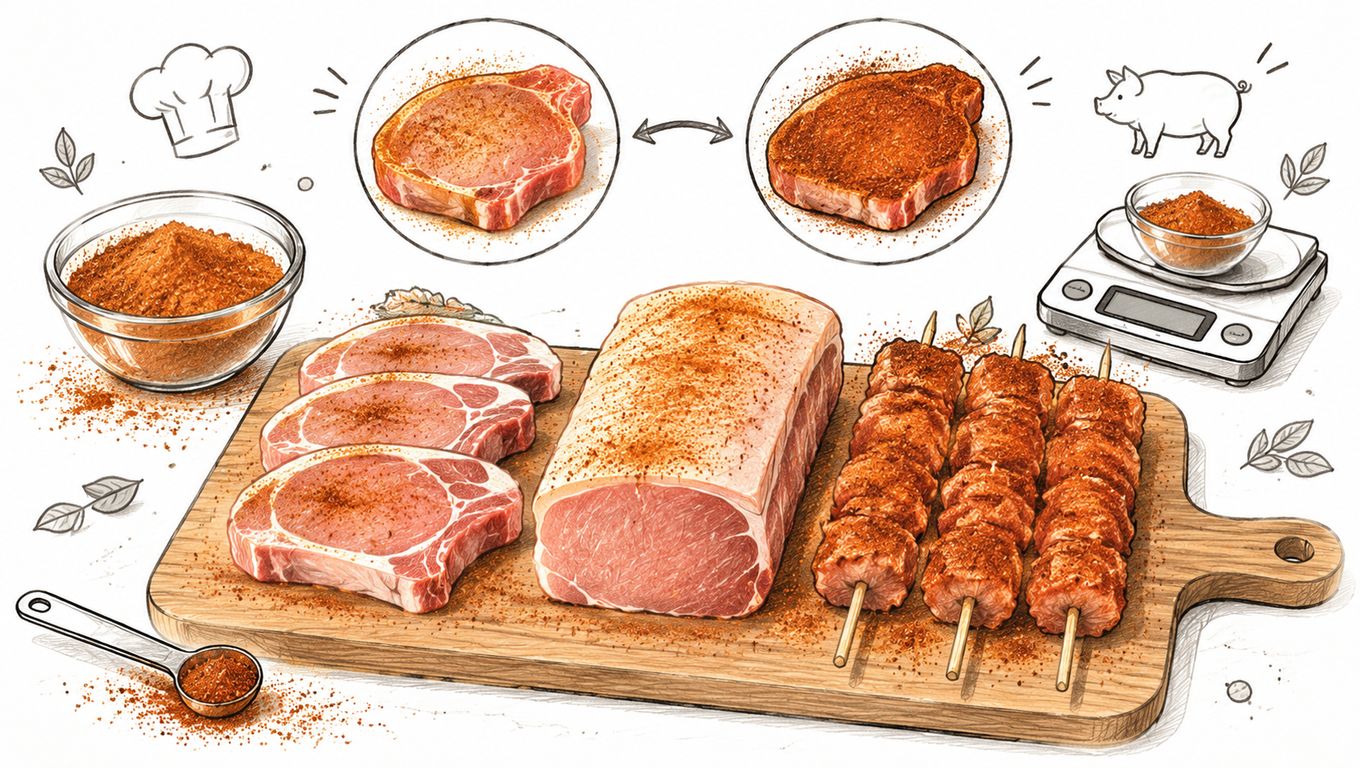
Use the visual below as a reminder to prepare the meat and seasoning together before handling raw pork.

Rub weight and rest time by pork cut
| Cut | Grams per kilogram | Spoon measure per 500 g | Rest before cooking |
|---|---|---|---|
| Chops or loin | 8 to 10 | About 1 level tablespoon | 20 to 40 minutes during preparation |
| Kebabs | 8 to 10 | About 1 level tablespoon | 30 minutes to 2 hours, refrigerated for the longer rest |
| Spare ribs | 15 to 20 | About 1½ to 2 tablespoons | 1 to 2 hours in the fridge |
| Shoulder or belly | 15 to 20 | About 1½ to 2 tablespoons | 4 to 12 hours wrapped in the fridge |
Trust the scales over the spoon. Spoon weights change with grind, density and how tightly you fill them, so the spoon measures are rough kitchen guides, not reliable conversions.
Apply an even coat
- Weigh both ingredients. Record the meat weight and rub weight so you can repeat or adjust the next batch.
- Pat the pork dry with kitchen paper. Remove surface moisture rather than trying to dry the meat itself.
- Use a binder only if needed. For bark cuts, brush on a thin smear of yellow mustard or a mist of oil. Skip it on chops.
- Sprinkle evenly, then press gently over the top, sides and loose flaps. Stop when the meat is seasoned, not buried.
- Rest appropriately. Use the table as a preparation guide, but keep pork refrigerated whenever you're not actively preparing it, particularly in a warm kitchen.
- Have the cooker ready before taking shoulder or belly out. A brief preparation period is enough; there's no need to bring a large joint to room temperature.
- Remove loose piles. Knock off excess seasoning that would fall into the fire or scorch in the pan.
Salt initially draws moisture towards the surface, so a freshly seasoned chop may look wet at the edges. Don't mistake that stage for proof you've ruined it, and don't add more rub just to cover the damp patches.
For another practical seasoning demonstration, use the video below alongside your measured preparation.
The same weighing method scales from a family tray to a catering batch. Record the result after eating, especially whether you'd prefer less salt, more heat or a lighter coat.
How Sweet Smoke Heat and Citrus Behave
The rub is the soundtrack; smoke is the room you hear it in. You can choose a bold seasoning and still lose its detail beneath an unnecessarily heavy smoke flavour. Equally, a mild coat won't become balanced just because you add more wood.
Salt makes pork taste more distinctly savoury and brings rich fat into balance. Before adding a separate salt layer, check whether the rub already supplies it. Combining a salty base, a salty rub and a salty finishing sauce makes adjustment difficult once dinner's cooked.
Sweetness and savoury structure
Sugar and fruit notes, such as those associated with Cherry Force, suit a rounded, sticky finish. On indirect heat, you can develop colour gradually and decide whether the meat needs a glaze. Over fierce direct heat, the same coat needs much closer attention.
Paprika contributes colour as well as flavour. That red-brown appearance can be attractive without telling you anything useful about the centre of the pork.
Black pepper and garlic in SPG provide a more direct savoury backbone. This is useful when you want the crust to complement a chop rather than taste like a separate sweet layer.
If the cut is lean or the grill is hot, choose less sugar and less time over direct heat. If the cut is fatty and the cook is low, sweetness and smoke have more room.
Chilli citrus and herbs
Chilli-led seasonings such as Al Pastor bring a different kind of contrast to fatty pork. Resting helps the coating hydrate and adhere, but it doesn't provide a predictable heat dial. For a family meal, start with a lighter application and offer extra heat at the table.
A dry citrus blend such as Miami Mojo adds brightness without behaving like a bowl of citrus juice. It isn't a tenderising bath, and a citrus flavour description doesn't mean a thick joint will soften during its seasoning rest.
Herb-garlic profiles such as Greek Odyssey suit preparations where aroma matters more than a dark crust. Think pork mince shaped into patties or a tray bake with onions and potatoes.
For fuel, apple or cherry from the wood pellet range can accompany fruit-sweet seasoning, while hickory suits a more assertive savoury-smoky direction. Keep smoke restrained on quickly cooked chops. The guide to the best wood for smoking pork ribs helps you choose a wood profile without treating stronger smoke as automatically better.
Check the Centre Not the Colour of the Bark
A mahogany crust can give you false confidence. A smoke ring, dry-looking coating or glossy glaze describes the surface, not whether the centre has received enough heat.
Pork needs thorough cooking because harmful bacteria may be present throughout the meat, not only on its exterior. UK government cooking guidance gives 70°C for 2 minutes as a safe centre-temperature combination, with equivalents of 60°C for 45 minutes, 65°C for 10 minutes, 75°C for 30 seconds or 80°C for 6 seconds.
Those are internal temperatures and holding times, not smoker settings. A low pit temperature alone doesn't establish safety, and touching a target briefly doesn't satisfy a schedule that requires a longer hold.
Probe the part that heats last
Use a clean food thermometer in the thickest central part, avoiding bone. On a chop, inserting from the side can make it easier to position the sensing tip in the centre rather than just beneath the hot surface.
For uneven cuts or a crowded barbecue, check more than the easiest piece to reach. Rolled joints need particular care because the middle isn't visible, while ribs require careful probe positioning between bones.
- Check the equipment. Know where your thermometer senses temperature and follow its cleaning instructions.
- Check the meat. Measure the centre, not a pocket of fat or the cooking tray.
- Check the hold. Allow the selected time-temperature combination to finish before serving.
If you're assembling a practical kit, MODERN LYFE's guide to grilling gear for flavor and safety offers a useful equipment overview. A dependable probe belongs alongside the tools you use to turn and lift the pork.
Safety and tenderness are different checks
The NHS guidance on meat says pork should be cooked all the way through, steaming hot throughout, with clear juices and no pink or red meat remaining inside. Don't serve pork rare or use its browned seasoning as your doneness test.
A shoulder can meet a safe cooking endpoint yet remain too firm to pull. Continue cooking for the texture you want, checking tenderness separately from safety.
Before lighting the barbecue: Write your chosen centre-temperature check beside the rub weight. Appearance shouldn't make that decision for you.
Resting after cooking helps with carving and serving. It isn't permission to remove undercooked pork and hope an unmeasured rest makes it safe.
Shoulder Ribs Belly and Chops in Practice
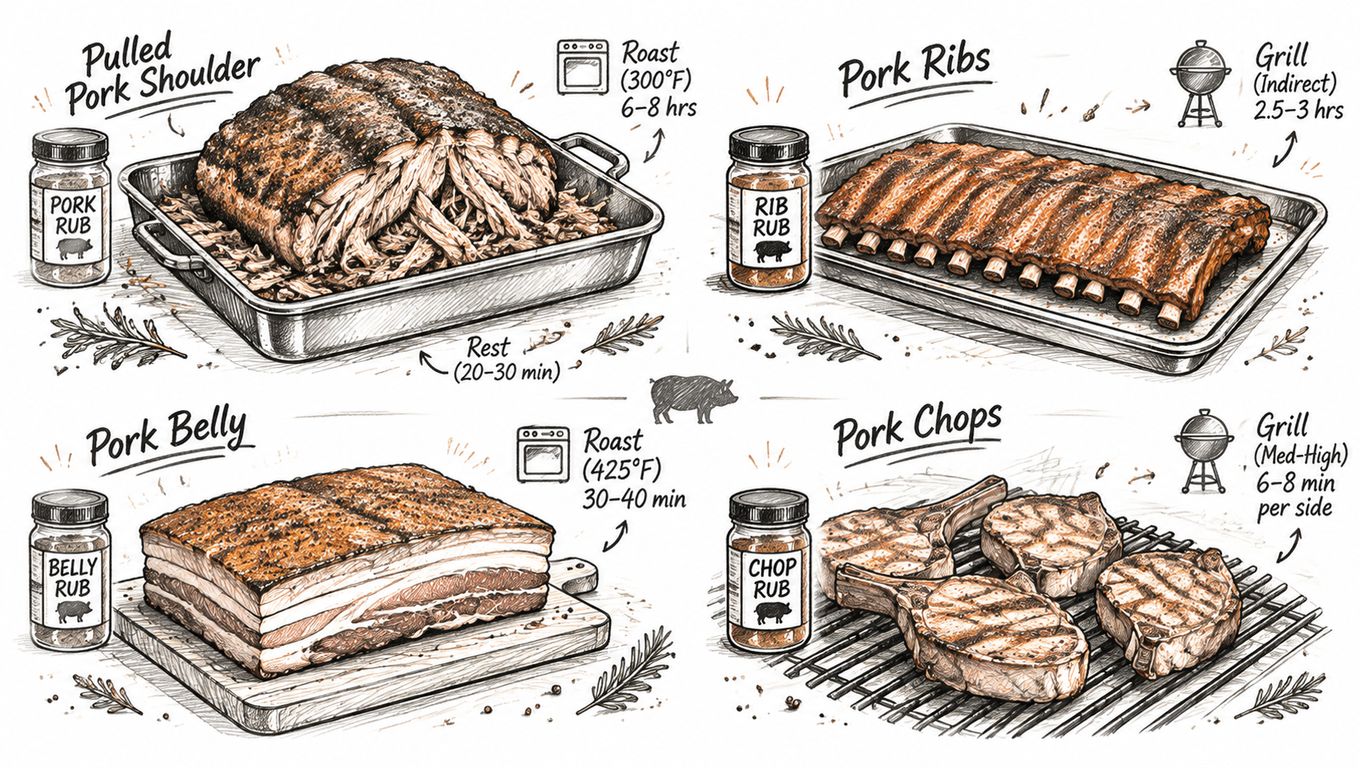
These cooks use the same preparation principles but finish differently. Shoulder should pull, ribs should yield without becoming mushy, belly should soften through its rich layers, and chops should remain enjoyable to slice.
Use this cut guide to organise your cooking method before starting.

Long cooks for shoulder and ribs
-
Pulled shoulder for sandwiches.
For a worked example, coat a 2 kilogram shoulder with Hickory Hog Pork Rub at the heavier bark rate and refrigerate overnight. Set up indirect heat at about 120 to 135°C, with a drip tray beneath the meat.Allow a generous cooking window, perhaps 6 to 8 hours for planning, but don't treat that estimate as a finish signal. Cook until you've verified safety and a skewer slides into the meat with little resistance, then rest for around 30 minutes, pull and fold the collected juices through. The pork shoulder on the barbecue guide gives more help with managing this cook.
-
Sticky ribs with a controlled glaze.
Lift the membrane from the bone side with kitchen paper if it's still attached. Apply your chosen rib seasoning evenly and refrigerate during the preparation rest.Cook indirectly until the meat yields when probed between the bones and the rack bends readily when lifted, while also verifying the safe centre check. If the exterior is ready but the meat remains firm, wrapping can help protect the coating while cooking continues. Brush on glaze near the end, then let it become tacky rather than repeatedly coating the ribs throughout the cook.
Rich belly and quick chops
-
Belly burnt ends with crisp-edged richness.
Cut belly into similar-sized cubes so they cook at a comparable pace. Coat with Cherry Force BBQ Rub, arrange with space between the pieces and smoke or roast over low indirect heat.Once safe and tender, transfer the cubes to a tray and toss with a little rendered fat. Return them uncovered until the edges have the colour and texture you want. Spoon away surplus fat rather than serving the cubes swimming in it.
-
Weeknight chops without a heavy crust.
Pat dry, apply the lighter seasoning rate and give the coat its short preparation rest. Cook in a hot pan, on the grill or in an air fryer, turning as needed and checking the thickest centre.If the outside colours too quickly, lower the heat or move the chops away from direct heat. Finish by temperature, then serve rather than leaving lean meat cooking while you wait for the sides.
For rough meal planning, 2 kilograms of cooked pulled shoulder might serve eight, a rack of ribs might serve two to three, and two chops can serve two. These are menu examples, not guaranteed yields: bone, appetite, trimming and side dishes change the answer.
Rain doesn't cancel the meal. The same seasonings work in the oven, and shoulder can be cooked in a slow cooker, although a moist covered method won't produce the same dry bark.
Choose a Clean Pork Rub and Cook This Week
A measured coat of the right rub can make economical pork feel like a meal for a special occasion, without burying the meat or buying a dearer cut. Smokey Rebel's pork rubs are designed for pulled pork, sticky ribs, pork belly burnt ends and midweek chops, so one seasoning can suit different cuts and cooking methods.
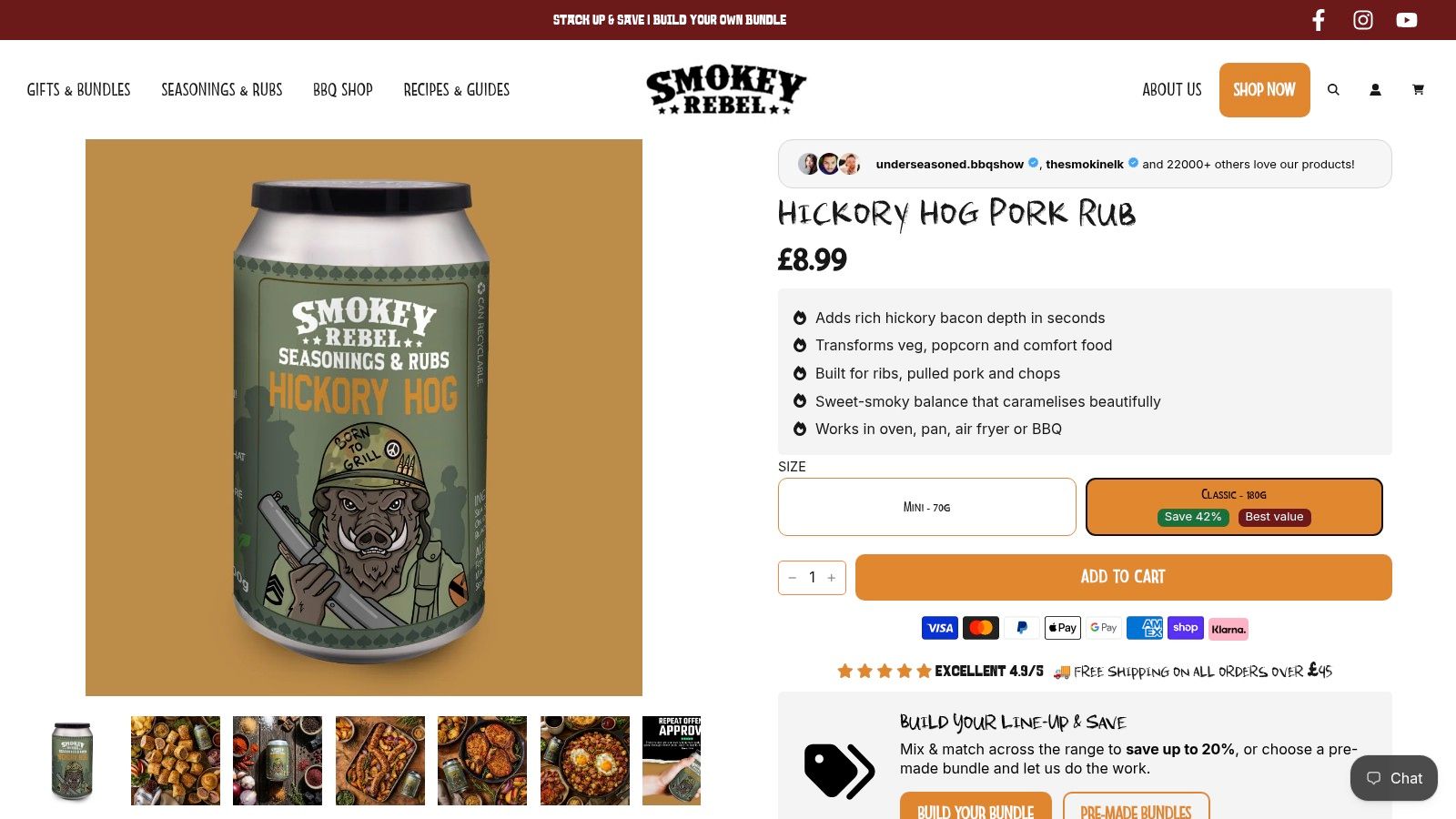
The can below is a starting point for pork-focused cooking.

Buy for your usual dinner
- Pulled pork and ribs: Start with Hickory Hog, or choose Cherry Force for a fruitier flavour.
- Chops and loin: Use SPG Base Blend for savoury simplicity, or Miami Mojo Citrus Blend for a brighter profile.
- Kebab nights: Al Pastor Taco Seasoning offers a different flavour direction.
- Several cooking styles: Build a bundle around the meals your household enjoys.
A single can lets you try a flavour before choosing more. Smokey Rebel's 30-Day Money-Back Promise covers its branded rubs and seasonings bought directly from its website.
The seasonings work in ovens, pans, air fryers and slow cookers as well as on the barbecue. Choose a rub to match the cut, apply a measured coat, and plan to check the centre as it cooks.
Pork Rub Questions Answered
Does a rub replace a marinade?
No. A rub gives you a dry seasoning layer, while a marinade is a wet preparation with its own purpose and refrigerated resting time. You can use either, but combining them needs care because a salty marinade plus a salty rub can overwhelm the pork.
Can pork rubs go on vegetables or chicken?
Yes. Try a light coating on roast potatoes, cauliflower or chicken thighs rather than assuming a pork-labelled tin has only one use. Keep seasoning reserved for vegetables separate from anything that's touched raw meat, and cook chicken according to its own safety requirements.
What if the blend clumps?
Break the lumps with a clean, dry fork before measuring. Filler-free blends can cake in humidity; once loosened, they can still be distributed evenly. Keep the can away from steam and avoid shaking it directly over a boiling pan.
Does dark bark mean the pork is cooked?
No. Use a clean probe in the thickest centre and verify a suitable temperature-and-time combination before serving. For pulling cuts, check tenderness too: a safe shoulder isn't necessarily a pullable shoulder.
Smokey Rebel offers small-batch, filler-free seasonings in craft cans for pulled shoulder, sticky ribs, belly and everyday chops. Visit Smokey Rebel, choose a flavour for the cut you're cooking, and put a measured coat to work on your next pork dinner.
Join our Mailing List
Sign up and get Smokey Rebel Recipes + weekly recipes straight to your inbox!
Recent articles
Rubs for Pork Cuts, Timings and Flavours
See which rubs for pork suit shoulder, ribs, belly and chops, plus amounts, timings and safe UK cooking checks.
Read moreHow to Dry Rub Lamb by Cut and Cook Method
How to dry rub lamb by cut, with grams per kilo, rest times, grill and oven heat, and safe internal...
Read moreSpices for Smoking: Pairings, Blends and Smoke Tips
Learn which spices for smoking work on beef, pork, chicken, fish and vegetables, when to add them, and how to...
Read more