How to Cook Lamb Perfectly Every Time
Nailing the perfect bit of lamb really comes down to just a few things: choosing the right cut, getting the seasoning spot on, and mastering your heat. Get those basics right, and you'll wave goodbye to any worries about dry, tough meat. Instead, you'll be turning out succulent, flavour-packed lamb every single time.
Your Journey to Perfect Lamb Starts Here
Let’s be honest, cooking lamb can feel a bit daunting. We’ve all been there—faced with a disappointing, overcooked leg or some chewy chops that make you hesitant to try again. This guide is here to change that for good.
We’re going to walk you through the whole process, step-by-step. Think of it as your roadmap to juicy, memorable lamb, whether you’re planning a classic Sunday roast, a quick weeknight grill, or a proper showstopper BBQ for your mates.
This isn’t just another recipe you’ll forget about. It’s full of real-world tips that actually work. We’ll cover everything from picking the best cut at the butcher’s to the all-important final rest. And it seems like more and more people are getting on board; lamb has seen a huge 5-6% year-on-year jump in consumption here in the UK, making it the fastest-growing red meat out there. You can dig into the trend and see how tastes are changing.
Your success in the kitchen comes down to two things: a solid technique and exceptional flavours. One without the other just won’t cut it.
Along the way, we'll be using some of our authentic, craft seasonings from Smokey Rebel. They're blended to bring out the natural richness of the lamb, not mask it. Our rubs are made with no added crap—just pure, high-quality ingredients that do the hard work for you. Forget what you thought you knew; your journey to cooking incredible lamb starts right now.
How to Choose the Right Cut of Lamb
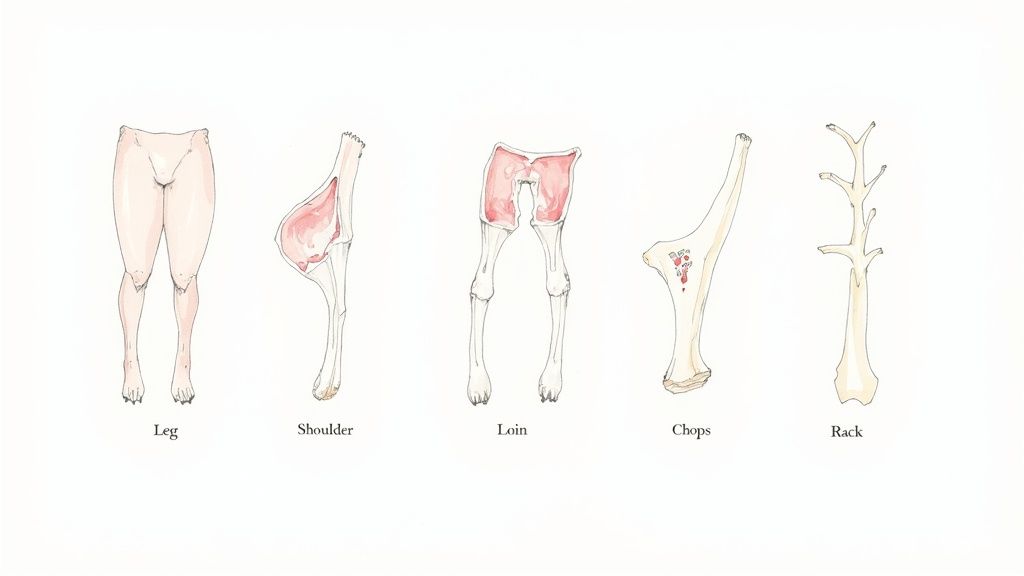
The secret to an incredible lamb dish starts long before you fire up the grill. It begins at the butcher's counter. Picking the right cut is half the battle, and understanding the difference between a hardworking shoulder and a tender loin is your first step to lamb perfection.

Each cut brings its own unique texture and flavour to the table, making some better for a slow roast and others perfect for a quick sear. It's not about which cut is "best"—it's about what's best for the meal you're planning. With UK sheep meat production expected to hit around 272,000 tonnes, there's no shortage of fantastic British lamb. You can discover more insights about the future of British lamb and its production trends.
For a Classic Sunday Roast
When you think of a classic Sunday roast, you’re probably picturing a leg of lamb. It’s the quintessential choice for slow-roasting, giving you that tender, easy-to-carve meat everyone loves. You can get it bone-in or boneless, but I always say keep the bone in. It adds a ton of flavour and helps the joint cook more evenly.
Alternatively, a shoulder of lamb is where you find the real depth of flavour. It’s a tougher cut packed with connective tissue, which means it was born for low-and-slow cooking. Give it a few hours in the oven, and it becomes so tender it just falls apart. This makes it perfect for pulled lamb to stuff into pitas or pile next to roasties. A simple coating of Smokey Rebel SPG (Salt Pepper Garlic) Base Blend is all it needs to build a magnificent, savoury crust.
For a Quick and Flavourful Grill
Short on time? The grill is your best friend. For this, you want smaller, more tender cuts that can handle high heat and cook in minutes.
- Loin Chops: Think of these as miniature T-bone steaks. They’re incredibly tender and cook in just a few minutes per side, making them a winner for a weeknight BBQ.
- Cutlets (or Rib Chops): Taken from the rack, these are the fanciest chops. They’re elegant, tender, and get a beautiful sear on the grill or in a screaming-hot pan.
- Barnsley Chops: This is a hefty double loin chop that looks a bit like a butterfly. It’s a substantial cut that’s fantastic for one hungry person and grills up a treat.
The biggest mistake people make is treating all cuts the same. A leg of lamb needs time and gentle heat. A delicate loin chop needs just a few minutes of intense heat. Matching the cut to the cooking method isn't just a suggestion—it's essential.
Bone-In vs Boneless
The choice between bone-in and boneless usually comes down to convenience versus flavour.
- Bone-In: Cuts with the bone left in, like a leg or shoulder, almost always have a richer, deeper flavour. The bone acts as an insulator, helping the meat cook evenly while keeping it moist. Carving is a bit more of a faff, but the flavour payoff is huge.
- Boneless: A boneless leg or shoulder is a dream to carve—quick and simple. It’s a great option if you’re pressed for time, but you will sacrifice a little of that deep, roasted flavour.
Matching Lamb Cuts with Cooking Methods
To make it even simpler, here's a quick guide to help you match the perfect cut with the right cooking method and seasoning.
| Lamb Cut | Best For | Flavour Profile | Recommended Smokey Rebel Rub |
|---|---|---|---|
| Leg of Lamb | Slow Roasting | Rich & Meaty | SPG (Salt Pepper Garlic) Base Blend |
| Shoulder | Slow Cooking, Braising | Deep & Intense | Revolution Beef Rub |
| Loin Chops | Grilling, Pan-Searing | Tender & Delicate | Greek Odyssey Gyros Rub |
| Rack of Lamb | Roasting, Grilling | Mild & Succulent | SPG (Salt Pepper Garlic) Base Blend |
| Lamb Shank | Braising, Slow Cooking | Hearty & Gelatinous | Hickory Hog Pork Rub |
This table should give you a solid starting point for your next lamb cook. Don't be afraid to experiment, though—that's where the real fun starts.
Choosing the right cut isn't rocket science. Just think about how much time you have and what kind of meal you're after. Get that right, and you're well on your way to a memorable dish.
Unlocking Incredible Flavour with the Right Seasoning
Choosing a quality cut of lamb is half the battle, but this next part is where you turn a good piece of meat into something genuinely unforgettable. It's time to move beyond just salt and pepper and see how a proper, well-crafted seasoning can build incredible layers of flavour that work with the lamb, not against it.
Seasoning isn’t just a last-minute sprinkle; it’s a core technique that sets the whole tone for your dish. Authentic blends made with no added rubbish are designed to enhance, not overpower, making sure every single bite is balanced and memorable.
The Foundation: Dry Rubs and Marinades
Before you even think about cooking, you’ve got to decide how you're going to get that flavour onto the meat. The two main paths are a dry rub or a wet marinade, and they each do a very different job.
- Dry Rubs for a Perfect Crust: A dry rub is exactly what it sounds like—a blend of spices and herbs applied straight to the surface of the meat. Its mission is to create a savoury, textured crust as the lamb cooks. This is exactly what you want for roasting or grilling, where the high heat caramelises the spices and seals in the flavour.
- Wet Marinades for Tenderness and Flavour: A marinade brings liquid into the mix, usually combining spices with something acidic like citrus juice or yoghurt, plus a bit of oil. The acid gets to work tenderising tougher cuts, while the liquid helps carry the flavours deep into the meat itself.
A classic rookie error is marinating tender cuts for too long. For delicate lamb chops or loin, 30 minutes to an hour is more than enough. If you’ve got a big, robust shoulder, though, you can let it soak up all that goodness overnight.
Practical Examples for Amazing Lamb
Right, let’s get practical. Knowing how to pair a seasoning with a specific cut and cooking method is the secret to unlocking its full potential.
Think about a classic Sunday roast leg of lamb. A generous coating of the robust and perfectly balanced Smokey Rebel SPG (Salt Pepper Garlic) Base Blend is honestly all it needs. Just pat the lamb dry, rub it with a touch of olive oil, and then apply the SPG liberally. As it roasts, it forms this magnificent, savoury crust that keeps all the juices locked inside.
Now, imagine lamb chops sizzling away on the grill. For those, you need something that can stand up to the smoke and flame. Our Revolution Beef Rub is a surprisingly brilliant match for lamb, bringing a smoky depth and complexity that’s hard to beat. A light coating about 20 minutes before they hit the heat is all it takes.
Exploring Global Flavours with Lamb
Lamb is a fantastic canvas for flavours from all over the world, so don't be afraid to experiment with profiles that take your taste buds on a trip. If you want to get a bit more technical with it, check out our expert guide on using meat rub spices for more tips.
Here are a couple of ideas to get you started:
- Mediterranean Lamb Kebabs: For a proper taste of the Greek islands, marinate cubes of lamb shoulder in the authentic herbs of our Greek Odyssey Gyros Rub mixed with olive oil, lemon juice, and a big dollop of yoghurt. Thread them onto skewers and grill for a meal that’ll transport you straight to a taverna by the sea.
- Zesty Grilled Chops: Give your lamb a vibrant, citrusy kick with the Miami Mojo Citrus Blend. This bright, punchy rub is incredible on cutlets or loin chops, providing a beautiful, sharp contrast to the natural richness of the meat.
The right seasoning doesn’t just add flavour—it transforms the entire cooking experience. By understanding the role of rubs and marinades and pairing them thoughtfully with your chosen cut, you can easily create lamb dishes that are packed with personality and depth.
Time to Cook: Mastering Your Method
Right, the lamb is seasoned and ready to go. Now for the fun part: applying some heat. This is where your skill really comes into play, transforming a great cut of meat into a truly memorable meal.
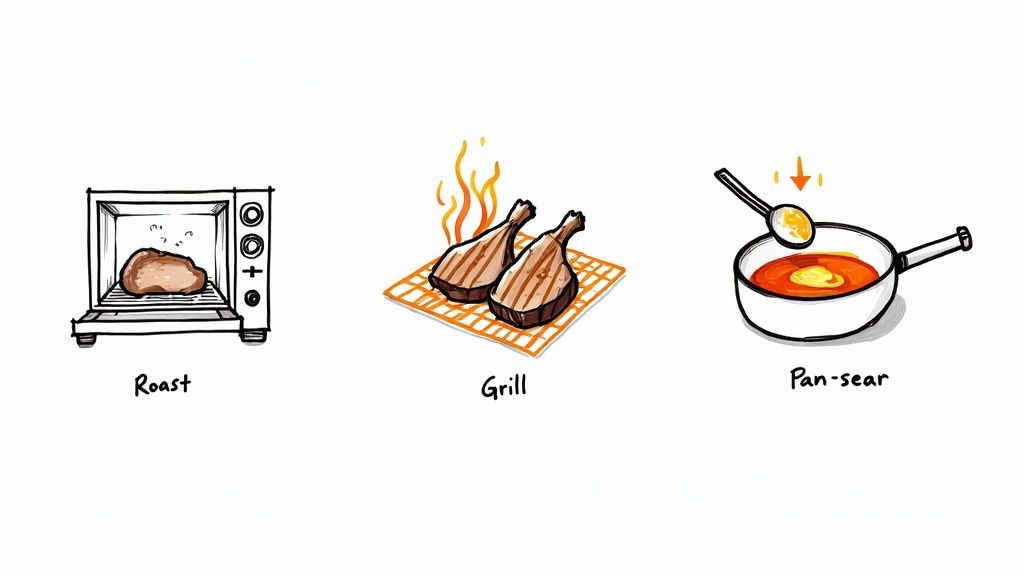
Whether you're a fan of a slow roast in the oven, the smoky char of the grill, or a fast and furious sear in a hot pan, getting the technique right is everything. Each method brings out different characteristics in the lamb, and knowing how to control the heat is your secret weapon.

The Art of Roasting Lamb
Roasting is a timeless classic, absolutely perfect for larger joints like a leg or shoulder. It’s a method steeped in tradition, especially for big family gatherings like Easter or Christmas where a proper roast is the main event. The key to success here is all about temperature control.
To get that perfect balance of a crispy, flavour-packed crust and a tender, juicy middle, you need to manage your oven temperature and timings like a pro.
A brilliant approach for a joint around 2kg is the high-then-low method. Crank your oven up to a blistering 220°C (200°C fan) and give the lamb an initial blast for the first 20-30 minutes. This kick-starts the fat rendering and starts building that incredible crust.
After that, drop the temperature down to around 180°C (160°C fan) to finish the cook. As a rough guide for timing:
- Medium-rare: 20-25 minutes per 500g
- Medium: 25-30 minutes per 500g
If you want to add a deep, smoky flavour that really complements a slow-roasted joint, a rub like our Hickory Hog Pork Rub is fantastic. Its rich, smoky profile creates a bark on a lamb shoulder that is just packed with character.
Getting Perfect Results on the Grill
Grilling is all about speed and fire, making it ideal for smaller cuts like loin chops, cutlets, or lamb kebabs. The mission is simple: get a beautiful char on the outside while keeping the inside perfectly pink and juicy. To nail this, you need to master your heat zones.
Set up your grill with two distinct zones: a direct, high-heat area for getting that initial sear, and an indirect, cooler zone for finishing the cook. This gives you complete control.
Sear the chops over the high heat for 2-4 minutes per side until you’ve got those perfect grill marks. Then, slide them over to the cooler side of the grill to finish cooking without incinerating the outside. This gentle, indirect heat lets the centre come up to temperature without burning.
A digital meat thermometer is your best friend here—it’s the only way to be certain your lamb is done exactly how you like it. For a deeper dive into controlling smoke and flavour on your grill, have a look at our guide on exploring different types of smoked wood for BBQ.
The Quick Sear for Maximum Crust
For a rapid-fire cook that delivers a massive flavour punch, you can’t beat pan-searing. This technique is spot-on for individual cutlets, medallions, or butterflied leg steaks. You need a screaming-hot, heavy-bottomed pan. Cast iron is king here, but good quality stainless steel will also do the job. If you're serious about your cooking, checking out a cookware materials comparison guide is a great way to understand what pan works best for what job.
Get your pan properly hot before you even think about adding a splash of high-smoke-point oil. And make sure your lamb is patted completely dry—moisture is the ultimate enemy of a good crust.
Lay the lamb in the hot pan and listen for that glorious sizzle. Now, leave it alone for a few minutes. Let that crust form. For a 2cm thick chop, 3-4 minutes per side is usually spot on for a beautiful medium-rare.
Pro Tip for Pan-Searing: In the final minute of cooking, toss a knob of butter, a crushed garlic clove, and a sprig of rosemary into the pan. Tilt the pan and use a spoon to baste the lamb continuously with that foaming, aromatic butter. It's a simple step that adds a stunning layer of flavour and keeps the meat incredibly moist.
Understanding Internal Temperatures
Whatever method you choose, the single most important tool in your arsenal is a digital meat thermometer. Forget about guessing from the colour. Sticking a probe into the thickest part of the meat (away from the bone) is the only foolproof way to guarantee perfect results, every single time.
Here are the temperatures to aim for. Remember to take the lamb off the heat a few degrees before it hits your target, as the internal temperature will keep rising while it rests.
| Doneness | Description | Pull Temperature | Final Temperature |
|---|---|---|---|
| Rare | Deep red centre, very soft | 48-50°C | 52°C (125°F) |
| Medium-Rare | Bright pink centre, slightly firm | 52-54°C | 57°C (135°F) |
| Medium | Light pink centre, firm | 58-60°C | 63°C (145°F) |
| Well-Done | Very little to no pink, very firm | 64-66°C | 68°C (155°F) |
By matching the right method to your cut and keeping a close eye on that internal temp, you're setting yourself up for a win. Whether it’s a slow-roasted leg or a fast-seared chop, these techniques will help you deliver delicious, consistent results every time.
The Final Steps: Resting and Carving Your Lamb
You've navigated the butcher's counter, seasoned your lamb to perfection, and mastered the heat. But don't crack open a beer just yet—the final, crucial steps of resting and carving will make or break your masterpiece.
Skipping the rest is probably the single most common mistake people make, but it's completely non-negotiable if you want that tender, juicy result you’ve worked so hard for.

Why You Absolutely Must Rest Your Lamb
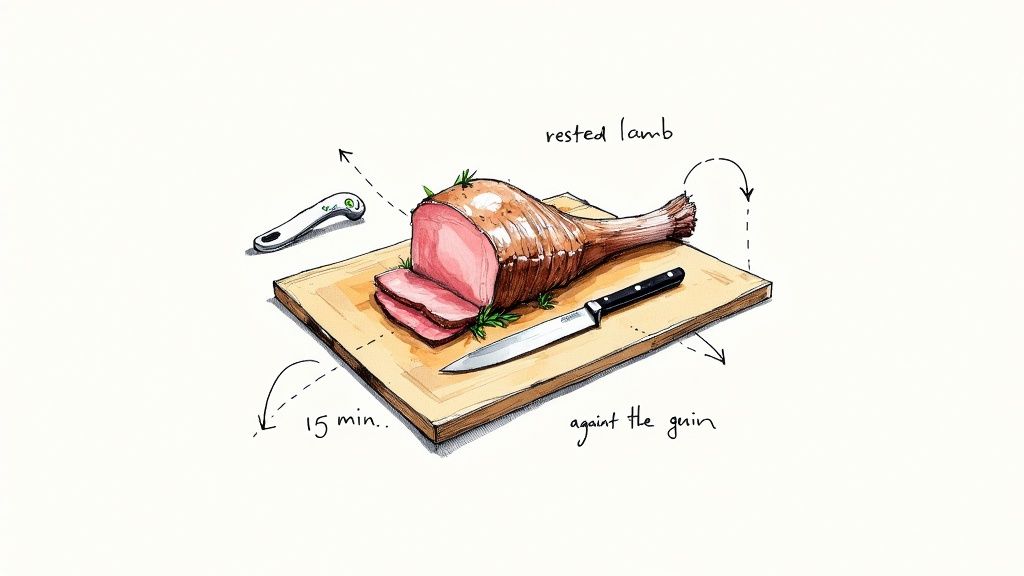
When you cook meat, the intense heat makes its muscle fibres tense up and squeeze all their delicious juices toward the centre. Slice into it straight away, and those juices will flood out onto your cutting board, leaving you with dry, disappointing meat. No one wants that.
Resting gives the lamb time to chill out, literally. The muscle fibres relax and reabsorb all that flavourful moisture, guaranteeing every single slice is as succulent as it should be.
Think of it like this: resting is the final stage of the cooking process. The internal temperature will actually keep rising by a few degrees—a phenomenon known as carryover cooking—while the juices settle back evenly throughout the cut.
So, how long is long enough? A solid rule of thumb is 10-20 minutes for every kilogram of meat.
- Small Cuts (Chops, Cutlets): These only need a short rest of 5-7 minutes. Just enough time to plate up your sides.
- Larger Roasts (Leg, Shoulder): These need a proper rest, at least 15-20 minutes, and I'd even go up to 30 for a massive joint.
To keep it warm, just move the lamb to a warm plate or cutting board and tent it loosely with a bit of foil. Don't wrap it up tight, as this will trap steam and make that beautiful crust you built go soggy.
How to Carve Lamb Like a Pro
Once your lamb has had a proper rest, it's time to carve. The golden rule here is simple but vital: always slice against the grain.
The "grain" just refers to the direction the muscle fibres run. By slicing across these fibres, you shorten them, making the meat incredibly tender and much easier to chew.
Carving a Leg of Lamb
- Get a Grip: Pop the leg on a large cutting board, preferably one with a trench to catch any juices. Use a carving fork to hold it steady.
- Find the Bone: Have a feel for where the main bone runs. You’ll be carving parallel to it.
- Slice It Up: Make your first cut on the meatiest side, slicing downwards until your knife hits the bone. Keep making parallel slices to your preferred thickness.
- Release the Slices: Once one side is sliced, run your knife horizontally along the bone at the bottom. This will release all the slices in one clean go.
- Flip and Repeat: Turn the leg over and do the exact same thing on the other side of the bone.
Carving a Rack of Lamb
This one's a walk in the park. Stand the rack on its end so the bones are pointing up. They make a perfect guide—simply slice down between each rib to separate them into individual cutlets. A sharp knife is your best friend here for getting those clean, elegant cuts.
Follow these final steps, and you'll guarantee that every slice of your expertly cooked lamb is as perfect as the last.
Perfect Pairings and Serving Ideas
Right, you've cooked your lamb to perfection. The hard work is done, but now it's time to build a plate that makes it sing. The right sides don't just fill the space—they take a great piece of meat and turn it into a truly memorable meal.
Classic Comforts for a Timeless Meal
For a proper Sunday roast, some things are just non-negotiable. You absolutely need crispy, fluffy roast potatoes and a deep, savoury gravy made from the pan juices. A bit of green on the plate from steamed green beans or tender-stem broccoli adds a fresh, welcome contrast.
And of course, no traditional lamb dinner is complete without the right sauce:
- Mint Sauce: That sharp, fresh tang is a classic for a reason. It cuts right through the richness of the lamb.
- Redcurrant Jelly: If you prefer something a bit sweeter, the fruity kick of redcurrant jelly works brilliantly.
Modern Twists for the Flavour Pioneer
If you're looking to step away from the traditional, lamb is the perfect canvas for more adventurous flavours. It’s all about building a plate that tells a story with flavour and texture.
Think about those lamb chops you seasoned with our versatile Smokey Rebel SPG (Salt Pepper Garlic) Base Blend. Instead of spuds, try serving them alongside a colourful medley of roasted Mediterranean veg—courgettes, peppers, and aubergines all tossed in olive oil and herbs.
A truly great plate is all about balance. The richness of the lamb needs a counterpoint—something fresh, acidic, or textural to cut through and keep every bite interesting.
Or what about that shoulder you slow-cooked with our Greek Odyssey Gyros Rub? Shred that tender meat and stuff it into warm, fluffy pitta breads with a creamy, homemade tzatziki, crisp lettuce, and juicy tomatoes. To complete this vibrant Mediterranean feast, a fresh side is essential; our recipe for a Greek Watermelon & Feta Salad provides the perfect sweet and salty contrast. To complement your lamb dish, you could also explore various gourmet pasta options.
Wine Pairings to Complete the Picture
The right wine can take your lamb dish from delicious to sublime. Lamb has a robust flavour, so you need a wine with enough body and character to stand up to it.
For a classic roast, a bold Cabernet Sauvignon is a timeless choice. Its dark fruit notes and firm tannins are a perfect match for the rich meat. If you've gone for a more rustic, herby preparation, a smooth Spanish Rioja is a fantastic partner.
Frequently Asked Questions About Cooking Lamb
Even the most seasoned cooks have questions when it comes to getting lamb just right. Let's tackle some of the most common ones we hear, so you can head to the kitchen with total confidence.
What’s the Perfect Internal Temperature for Lamb?
This is the big one. For incredible flavour and a juicy texture, medium-rare is the sweet spot, which you’ll hit at 57°C (135°F).
If you like it a bit more pink, aim for 52°C (125°F) for rare. For medium, you’re looking at 63°C (145°F), and for a fully cooked, well-done joint, push it to 68°C (155°F). Don't guess – a digital meat thermometer is your best friend here. Just make sure you insert it into the thickest part of the meat, avoiding any bone.
How Can I Make Lamb Taste Less 'Gamey'?
That distinctive, sometimes powerful flavour you get with lamb comes from its fat. The easiest fix? Trim off any large, hard pieces of visible fat before you even think about cooking.
Another great trick is to use a marinade. Something with a bit of acid, like lemon juice or yoghurt, works wonders to cut through the richness and mellow out the flavour. Add some bold herbs and spices, and you’ll beautifully balance the natural taste of the meat.
A good marinade is your secret weapon for balancing flavour. The authentic herbs in the Smokey Rebel Greek Odyssey Gyros Rub mixed into some plain yoghurt is a classic combo that tames and complements lamb perfectly.
Can I Just Cook Lamb Straight from the Freezer?
Honestly, it's a bad idea. We strongly recommend thawing lamb completely before cooking it, especially for bigger cuts like a leg or a shoulder.
Cooking from frozen is a recipe for disaster—you'll end up with a burnt, overcooked outside and a raw, stone-cold centre. For the best (and safest) results, always give it time to thaw properly in the fridge, usually overnight.
Which Smokey Rebel Rub Is the Best All-Rounder for Lamb?
While so many of our rubs work brilliantly with lamb, if you need one that never fails, grab the SPG (Salt Pepper Garlic) Base Blend.
It’s the ultimate all-rounder. It lays down a simple, savoury foundation that enhances the meat's flavour without overpowering it, making it perfect for any cut or cooking method you can think of.
Ready to find your signature flavour? Smokey Rebel has the perfect partner for your next lamb dish.
Build Your Own Smokey Rebel Bundle and create your ideal seasoning collection today.
Join our Mailing List
Sign up and get Smokey Rebel Recipes + weekly recipes straight to your inbox!
Recent articles
10 Flavour-Packed Recipes for Healthy Eating in 2025
Discover 10 delicious and easy recipes for healthy eating. Transform your meals with bold, clean flavours perfect for a balanced...
Read more12 Unforgettable Christmas Day Meals to Make Your 2025 Feast Legendary
Discover christmas day meals with 12 tasty options for a memorable 2025 feast, from classic turkey to modern twists, plus...
Read moreHow to Cook Lamb Perfectly Every Time
Master how to cook lamb with our definitive guide. Learn how to choose the right cut, season it perfectly, and...
Read more