
Best BBQ Seasoning: A Practical UK Buyer's Guide
You've got the chicken thawing, the burgers are ready, and the charcoal is either roaring or refusing to light because the British weather has changed its mind again. The obvious question is, “What's the best BBQ seasoning?” The useful question is more specific: which blend suits this food, this cooker and this crowd?
A seasoning for a quick batch of burgers isn't automatically right for pork shoulder, vegetables, chicken wings or a long brisket cook. This guide matches flavour, heat management, label transparency and cooking style to the way people barbecue in the UK.
Why the Best BBQ Seasoning Is a Use-Case Question
Serve burgers on gas, wings over charcoal and a pork shoulder from the smoker, and the same seasoning quickly shows its limits. A weeknight cook needs fast application and predictable flavour. A long cook needs a blend that stays on the meat for hours without scorching or turning bitter. A family barbecue also needs a heat level that does not exclude half the table.
The best BBQ seasoning is therefore a use-case decision, not a universal title. Match the blend to the cooker, the food, the cooking time and the people eating it. A caterer has another requirement: clear ingredient wording, repeatable dosing and allergen information that can be checked before food reaches a guest.
Check the label for more than the headline flavours. Look for named allergens, statements about shared manufacturing equipment and vague terms such as “flavouring” or “spices”. Confirm whether the blend contains sugar, milk, mustard, celery, gluten or other ingredients relevant to your guests. That checklist matters at a busy family cook and becomes required practice for catering.
A 2016 UK barbecue survey found that households which barbecued used their barbecue an average of 10 times a year, while 14% barbecued only once or twice. It also reported charcoal ownership at 57% and gas equipment use at 33%. Charcoal brings stronger smoke and intense searing. Gas offers steadier heat, making it easier to control a quick burger cook or protect a sweet rub.
| Cooking situation | What matters most | Sensible seasoning direction |
|---|---|---|
| Weeknight burgers on gas | Quick application and balanced savouriness | SPG Base Blend |
| Wings or thighs over charcoal | Adhesion, colour and controlled sweetness | Wingman Wing Rub |
| Low-and-slow pork | Deep savoury flavour that holds through a long cook | Hickory Hog Pork Rub |
| Beef on a smoker | Pepper, savoury depth and bark potential | Revolution Beef Rub |
| Mixed family grill | Flexibility across meat and vegetables | Cherry Force BBQ Rub |
| Chilli-focused cooking | Heat as the main feature | Texas Red Chili Mix |
The season affects value, too. Only 26% of UK respondents in the same survey reported barbecuing during winter, so a seasoning should earn its place in the kitchen when the grill is stored away. Burgers and sausages were among the UK's favourite barbecue foods, which supports choosing an adaptable everyday blend before a specialist rub.
Practical rule: Choose the best BBQ seasoning for the food, cooker, cooking time and diners. Then read the allergen label before you buy.
What Actually Goes Into a Great BBQ Rub
A great rub earns its place by doing several jobs at once. Salt seasons the food and sharpens the other ingredients. Sugar encourages browning, but it can scorch over fierce direct heat. Paprika adds colour and body, while pepper and garlic bring savoury bite. Herbs add aromatic lift, and chilli can either sit behind the main flavour or dominate the finish.
The balance should match the cook. A burger on gas needs a fine, even blend that clings quickly and will not leave harsh burnt patches. Beef on charcoal or a smoker can handle coarser pepper and a more pronounced savoury profile. For longer pork cooks, choose a full-bodied savoury flavour that holds up as the surface develops.
Grind size matters more than the packet suggests. Fine particles cling readily to oiled chicken and burgers. Coarse pepper and larger herbs add texture to beef and pork, but they can fall through the grates or catch aggressively over direct heat. Choose the grind for the food and cooker, not for how impressive the jar looks.
For a practical introduction, this guide to what BBQ seasoning is explains the basics clearly. Keep blends organised so you can compare jars and use older ingredients first. A Simply Hospitality spice storage unit keeps the right blend within reach while you cook.
Core components of a quality BBQ rub
| Component | Role in the rub | What to check on the label |
|---|---|---|
| Salt | Seasons the food and supports other flavours | Whether it dominates the ingredient list |
| Sugar | Encourages browning and adds sweetness | Whether it may scorch during direct cooking |
| Paprika | Adds colour and peppery body | Whether the profile suits your protein |
| Black pepper | Delivers aroma, heat and surface texture | Grind size and strength |
| Garlic and onion | Provide savoury depth | Whether they're clearly identified |
| Dried herbs | Add aromatic complexity | Particle size and freshness |
| Chilli | Controls heat and lengthens the finish | The type of chilli, not just a heat claim |
Read the whole label
UK food law recognises 14 regulated allergens: celery, cereals containing gluten, crustaceans, eggs, fish, lupin, milk, molluscs, mustard, peanuts, sesame, soya beans, sulphur dioxide or sulphites, and tree nuts. The UK Government allergen guidance states that sulphur dioxide and sulphites must be declared above 10 milligrams per kilogram or per litre.
A seasoning can look straightforward on the front and still require close checking. Celery salt, mustard powder, wheat-derived carriers, sesame and soya can affect different diners. “Plant-based” does not automatically mean suitable for every allergy or intolerance.
“Clean label” describes a marketing position, not a guaranteed recipe. It often points to a short, recognisable ingredient list, but read every ingredient. “No MSG” says only that MSG is absent. It does not rule out sugar, allergens or anti-caking agents such as silicon dioxide, sometimes listed as E551. Transparency is the useful test.
For pre-packed seasoning, the UK labelling guidance for food manufacturers requires regulated allergens to be emphasised each time they appear in the ingredients list. Look for bold type, contrasting text or another clear visual treatment. Check the label whenever you buy, since recipes and manufacturing conditions can change.
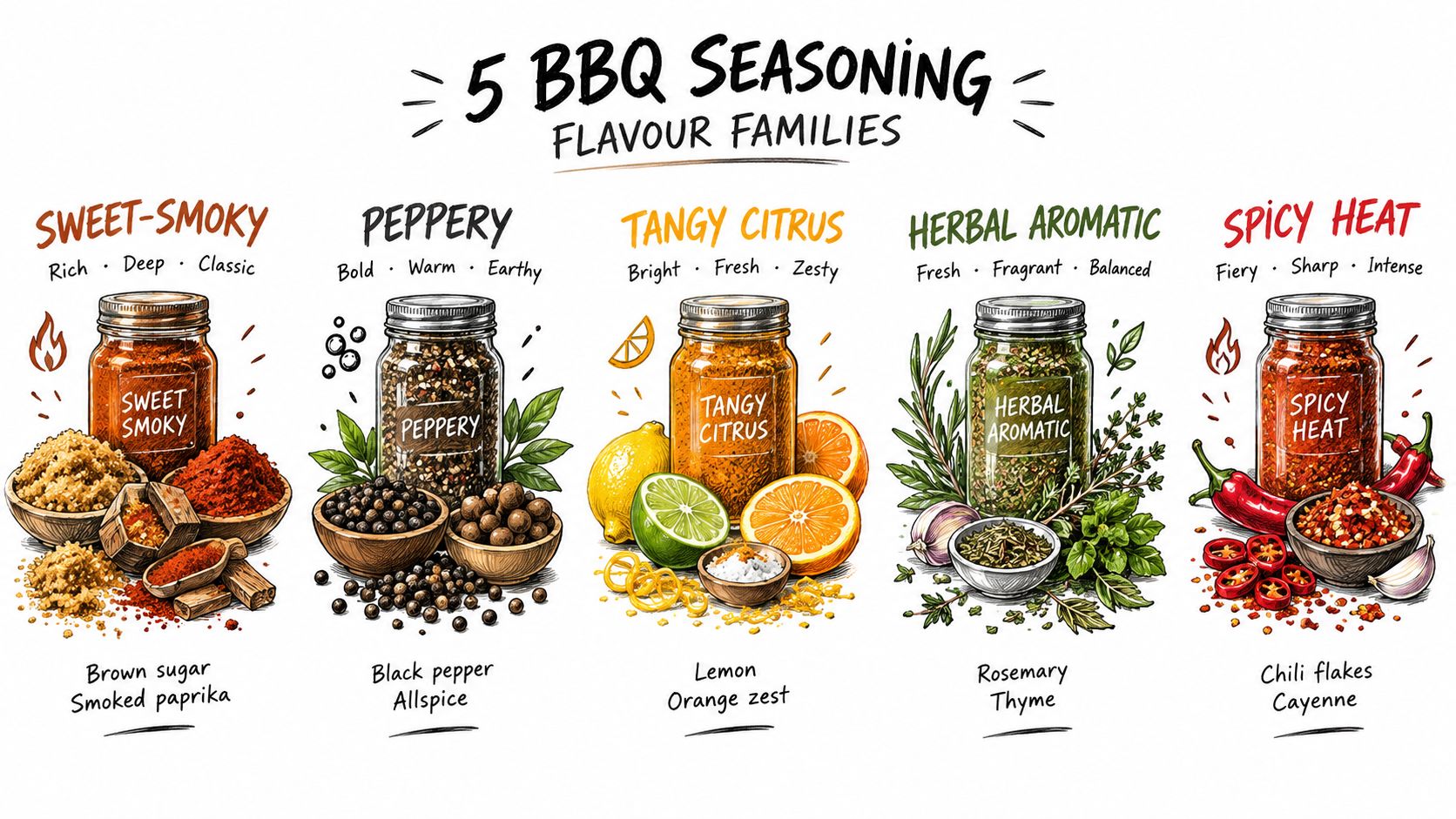
Understanding Flavour Families in UK BBQ
A Saturday cook on a UK barbecue rarely needs one universal seasoning. Charcoal gives food smoke and fierce bursts of heat, while gas rewards control. Burgers need a clear crust, brisket needs a seasoning that can stand up to a long cook, and a family spread needs flavours that work across meat and vegetables. Choose the flavour family for the food and setup first, then compare products.

Sweet-smoky
Warming spice, smoke and rounded sweetness create the familiar barbecue profile. It suits chicken thighs, pork belly and burgers over charcoal, particularly on a kettle barbecue. Cherry Force BBQ Rub is a strong Smokey Rebel choice when you want a clear BBQ character without mixing a separate marinade.
Use a thin, even coating. Sugar can darken quickly over direct flames, so cook the food indirectly until nearly ready, then move it over the coals for colour and crisp edges.
Peppery base
Salt, black pepper and garlic keep beef at the centre of the plate. This family works on brisket-style beef, steaks, burgers, pork and grilled vegetables, with no sauce required. SPG Base Blend is the straightforward Smokey Rebel option for a savoury crust.
It also suits a gas barbecue. Apply it shortly before cooking, set a controlled heat and let the surface brown without chasing flare-ups.
Herb-led
Rosemary, thyme and oregano take the meal towards the Mediterranean. Greek Odyssey Gyros Rub fits lamb, chicken, halloumi, courgettes and peppers, especially when flatbreads, yoghurt, salad or grilled vegetables are on the table.
Choose this family for a mixed gathering where the food needs character without every item tasting like a smokehouse dish. It is particularly effective when vegetables share the grill with meat.
Chilli-heat
Cayenne, chipotle and hotter chillies give wings, ribs, fajitas and corn a more forceful profile. Holy Jalapeño Fajita Seasoning suits a lively family taco night. Spitfire Spice Blend belongs with diners who specifically want a stronger hit of heat.
Use a lighter coating on delicate vegetables and a fuller one on chicken wings or pork. The chilli should sharpen the food, not bury its flavour.
Citrus
Lemon, lime and orange notes bring brightness to chicken, fish, prawns and vegetables. Miami Mojo Citrus Blend changes the direction of a meal when a sweet, smoky rub would feel too heavy. Its fresh character also works well near the end of cooking, since prolonged high heat can dull citrus notes.
Use this guide to spices for grilling to build a cupboard that includes these families without forcing every dish into the same barbecue style. Always match the blend to the cooker, the main ingredient and the people eating.
Rubs vs Finishing Blends and When to Use Them
A smoky Saturday on a charcoal kettle needs a different seasoning plan from burgers cooked quickly on a gas grill. Use a rub to build flavour during cooking. Use a finishing blend to sharpen the dish after the heat has done its work. Treating both products the same leaves food flat, harsh or overly salty.
A rub should cling to a damp surface and tolerate heat. Apply it before cooking, allow it to adhere, then let the grill develop its flavour. On a pork shoulder or beef joint, it becomes part of the browned outer layer. On chicken, it supplies the main seasoning rather than a last-minute garnish. This suits a family cook who wants one reliable coating, and a caterer who needs flavour to hold through a longer service.
A finishing blend belongs near the plate. Add it to grilled vegetables, flatbreads, halloumi or sliced meat after the sear, when fresh aromas and finer textures will not be buried by smoke or direct heat. It also gives you better control when different guests want different salt or heat levels.
Rubs vs finishing blends at a glance
| Attribute | Rub | Finishing blend |
|---|---|---|
| Main purpose | Seasoning during cooking | Aroma and texture at the end |
| Application | Before heat, often after oil or a binder | After cooking or during the final moments |
| Best use | Food that needs a cooked-in crust | Food that benefits from a fresh surface note |
| Salt approach | Often more prominent | Easier to control at the table |
| Heat risk | Sugar and fine spices can scorch | Lower risk when added after the sear |
| Texture | Forms a coating or bark | Remains noticeable on the surface |
Gas grills make temperature control easier, while charcoal creates stronger smoke and more intense flare-ups. Sugar-heavy rubs need particular care over direct charcoal above 200°C, as the surface can darken or burn before the centre is ready. The Food Standards Agency review of PAH formation explains that formation generally increases as smoking temperature rises, so adjust smoke and heat conditions rather than letting the coating burn.
Keep the sear short, move food away from flare-ups and add delicate seasoning after the flames have settled.
Measure the rub, cook the food, then taste before adding anything else. Al Pastor Taco Seasoning works as a finishing direction for tacos or grilled pork, while Chipotle Cowboy Chicken Rub belongs on chicken before it reaches the grill. Check every label for salt, sugar, mustard, celery, milk, gluten and other declared allergens, including statements about shared production equipment. The ingredient list, not the product name, decides whether a blend fits your guests.
Matching Seasonings to Chicken, Pork, Beef and Vegetables
The best BBQ seasoning depends on the food, the grill and the people eating it. Chicken wings need a blend that grips the skin, pork shoulder needs flavour that survives a long cook, and vegetables need aroma without excessive salt. A family tray also calls for a different approach from catering, where clear allergen checks and repeatable results matter.
Chicken
For air-fryer thighs, pat the chicken dry, coat it lightly with oil, then apply Chipotle Cowboy Chicken Rub. Cook skin-side up until the skin is browned and the centre is safe. The preparation takes about two minutes, but time alone cannot confirm doneness.
Wings need firmer coverage. Toss them with a measured amount of Wingman Wing Rub, leave the surface tacky, then cook indirectly before a short direct finish. On a milder family tray, Cherry Force BBQ Rub gives a rounder flavour.
Pork
Pork ribs, shoulder and sausages suit Hickory Hog Pork Rub, particularly when the seasoning should support the meat instead of relying on sauce. For pulled pork, trim loose fat, pat the surface dry, apply an even coating and refrigerate it before cooking. Keep the heat indirect, protect the bark from flare-ups and judge the cook by tenderness and internal temperature, not colour alone.
Beef
Beef can handle assertive seasoning on burgers, steaks and short ribs. Choose Revolution Beef Rub for a bolder profile, or SPG Base Blend when the beef and smoke should remain prominent.
Apply a thin layer to steak shortly before grilling. For a longer beef cook, give the seasoning time to cling, keep the heat indirect and finish with a sear. Gas suits a controlled family cook, while charcoal rewards restraint when a sugar-heavy blend is involved.
Vegetables and plant-based foods
Toss mushrooms, peppers, aubergine and courgettes with oil, then use a light coating of Greek Odyssey Gyros Rub before grilling until tender. Halloumi needs only a restrained sprinkle after cooking because the cheese already brings salt.
For corn, tofu or grilled peppers, Miami Mojo Citrus Blend brings a brighter direction. Holy Jalapeño Fajita Seasoning suits onions and peppers on a fajita tray better than delicate fish. Seafood needs a lighter hand, indirect cooking where possible and a small finishing sprinkle instead of a thick, sugar-heavy coating.
Before serving chicken, pork, burgers, sausages or minced products, follow UK Government cooking guidance. It advises a core temperature of 70°C for 2 minutes, or 75°C for 30 seconds. Separate barbecue advice says these foods should be cooked thoroughly, with a thermometer reading at least 75°C at the thickest point.
Check each label for salt, sugar, mustard, celery, milk, gluten and other declared allergens. Read warnings about shared production equipment too. The ingredient list decides whether a blend suits your guests, not the product name.
How to Judge a Rub on a UK Grill
A rub can smell impressive in the packet and disappoint on the plate. Test it on the cooker and food you use, then judge the result at eating temperature.
Start with one plain chicken thigh and a gas grill. Pat the thigh dry, weigh the seasoning, apply the same measured coating each time, and cook with indirect heat followed by a short sear. Record five points:
- Dry aroma: Is it savoury, sweet, smoky, herbal or aggressively salty?
- Coverage: Does it cling evenly after a light coating of oil?
- Colour: Does the surface brown attractively, or blacken before the centre is ready?
- Balance: Can you still taste the chicken after resting, or does the rub dominate?
- Salt level: Does the first bite make you want another, or reach for water?
Repeat the trial over charcoal. Lump charcoal gives a fiercer, drier cook, while briquettes and gas provide steadier heat. A blend that works on gas may scorch over an exposed charcoal flame. A smoky seasoning may taste restrained on gas, then become fuller when charcoal adds its own flavour.
Use the test before a full cook
Do not judge a rub by its packet aroma. Cook a small portion, let it rest, and taste it at the temperature you would serve it. Strong dry aromas can fade during cooking, while restrained blends can develop as heat and fat release their aromatic ingredients.
For a kamado or smoker, repeatability matters even more because the longer cook gives the rub more time on the surface. Keep the food weight, seasoning amount and resting time consistent. If you are comparing a Smokey Rebel regional blend with a plainer base seasoning, run both on the same cut rather than judging them from their flavour names.
The best BBQ seasoning remains recognisable after cooking while letting the food lead. That is the standard to apply whether you are feeding family on a kettle or preparing several portions on a smoker.
Do not treat charred colour as proof that food is ready. Check doneness with a thermometer and follow safe cooking practice. The Food Standards Agency guidance on smoke conditions supports reducing excessive smoking and avoiding unnecessary exposure to intense heat. Reward controlled browning and flavour retention, not a blackened surface.
Choosing the Best BBQ Seasoning for Your Setup
You are cooking burgers on a gas barbecue after work, while another cook is running charcoal for wings and a long brisket. Those meals need different seasoning choices because fuel, heat control and cooking time change how a rub performs. For a deeper comparison of heat control, see this charcoal vs gas BBQ guide.
| Setup | Best use | Smokey Rebel recommendation |
|---|---|---|
| Charcoal kettle | Burgers, wings and mixed family cooks | Wingman Wing Rub |
| Gas barbecue | Quick burgers, sausages and chicken | SPG Base Blend |
| Smoker or kamado | Pork shoulder, ribs and longer beef cooks | Hickory Hog Pork Rub |
| Beef-focused cooking | Steaks, burgers and beef joints | Revolution Beef Rub |
| Pizza oven or flatbreads | Finishing vegetables, chicken and cheese | Miami Mojo Citrus Blend |
| Chilli-led menus | Fajitas, tacos and hot wings | Texas Red Chili Mix |
My starter trio
For a household buying three blends, choose SPG Base Blend, Hickory Hog Pork Rub and Chipotle Cowboy Chicken Rub. The linked Chipotle Cowboy Chicken Rub completes a practical set for burgers, steaks, sausages, pork, chicken and grilled vegetables. These three cover familiar weeknight cooking without making every meal taste smoky or hot.
Add Al Pastor Taco Seasoning or Greek Odyssey Gyros Rub when guests are coming over. Both give ordinary supermarket ingredients a clear regional direction, which is more useful than filling the cupboard with several similar barbecue blends.
Gifts and larger selections
A new griller will use a mixed selection more often than a highly specialised rub. The Best Sellers Seasoning Gift Set is a straightforward introduction. The Ultimate Chicken 4 Pack suits anyone who regularly cooks wings, thighs or drumsticks.
For a broader present, choose the Flavour Heroes Bundle, Bar-B-Que Heroes Bundle or Rebel Roast Grill 7 Pack. A caterer or committed home cook has more reason to choose the Ultimate BBQ Seasoning Gift Set, while the Chilli Heroes Bundle gives heat-focused menus a clear starting point.
For a customised cupboard, use the Build Your Own Bundle. Start with a savoury base, add one rub for the protein you cook most, then choose a citrus or chilli blend for variety. That buying plan works better than trying to identify one universal winner.
Caterers need a written ingredient and allergen record for every seasoning. Check the full label, record the regulated allergens, and make the information available before purchase. This local authority guidance based on Food Standards Agency requirements covers the requirements for non-prepacked food, including takeaway and event service. A blend that suits meat, vegetables and plant-based food can simplify a menu, but it does not replace accurate communication.
Frequently asked questions
What is the best BBQ seasoning for chicken?
Use Chipotle Cowboy Chicken Rub for thighs and drumsticks, or Wingman Wing Rub for wings. Coat the chicken evenly, cook it indirectly first, then finish briefly over direct heat for colour.
Which seasoning works for pulled pork?
Hickory Hog Pork Rub suits pork shoulder and ribs. Keep the meat away from flare-ups during the long cook, and judge readiness by doneness rather than bark colour alone.
Can BBQ seasoning be used on vegetables?
Yes. Apply a lighter coating to mushrooms, peppers, courgettes, corn, tofu and aubergine. Greek Odyssey Gyros Rub brings an herb-led profile, while Miami Mojo Citrus Blend gives grilled produce a brighter finish.
How do I check whether a BBQ rub is allergy-aware?
Read the complete ingredients list and check the legally emphasised regulated allergens. Words such as “natural”, “plant-based” and “free from” do not replace label checks. For loose or catered food, request allergen information before ordering.
Should I season burgers before or after grilling?
Apply a measured, even coating before grilling so the surface develops flavour and browning. SPG Base Blend is a dependable peppery option when the beef should remain the main flavour.
Is a strong chilli rub always better?
No. Heavy heat can dominate chicken, vegetables and mixed family meals. Holy Jalapeño Fajita Seasoning suits a lively, focused profile, while Spitfire Spice Blend is for diners who specifically want more heat.
The right BBQ seasoning matches the food, fuel and occasion. Smokey Rebel offers small-batch blends, curated gift sets and a build-your-own option, so choose by the meal on your grill rather than by a generic ranking. Visit Smokey Rebel to select a blend for your next cook.
Join our Mailing List
Sign up and get Smokey Rebel Recipes + weekly recipes straight to your inbox!
Recent articles
Best BBQ Seasoning: A Practical UK Buyer's Guide
Find the best BBQ seasoning for UK grilling. Learn what to look for in rubs and finishing blends, flavour profiles,...
Read moreHow to Dry Rub Chicken Breast for Juicy Results Every Time
Learn how to dry rub chicken breast for bold flavour and juicy results. Covers rub application, rest times, cooking methods,...
Read moreHow to Make the Best Sausage & Apple Traybake
A practical guide to making a better sausage and apple traybake, from choosing the sausages and apples to seasoning, roasting...
Read more