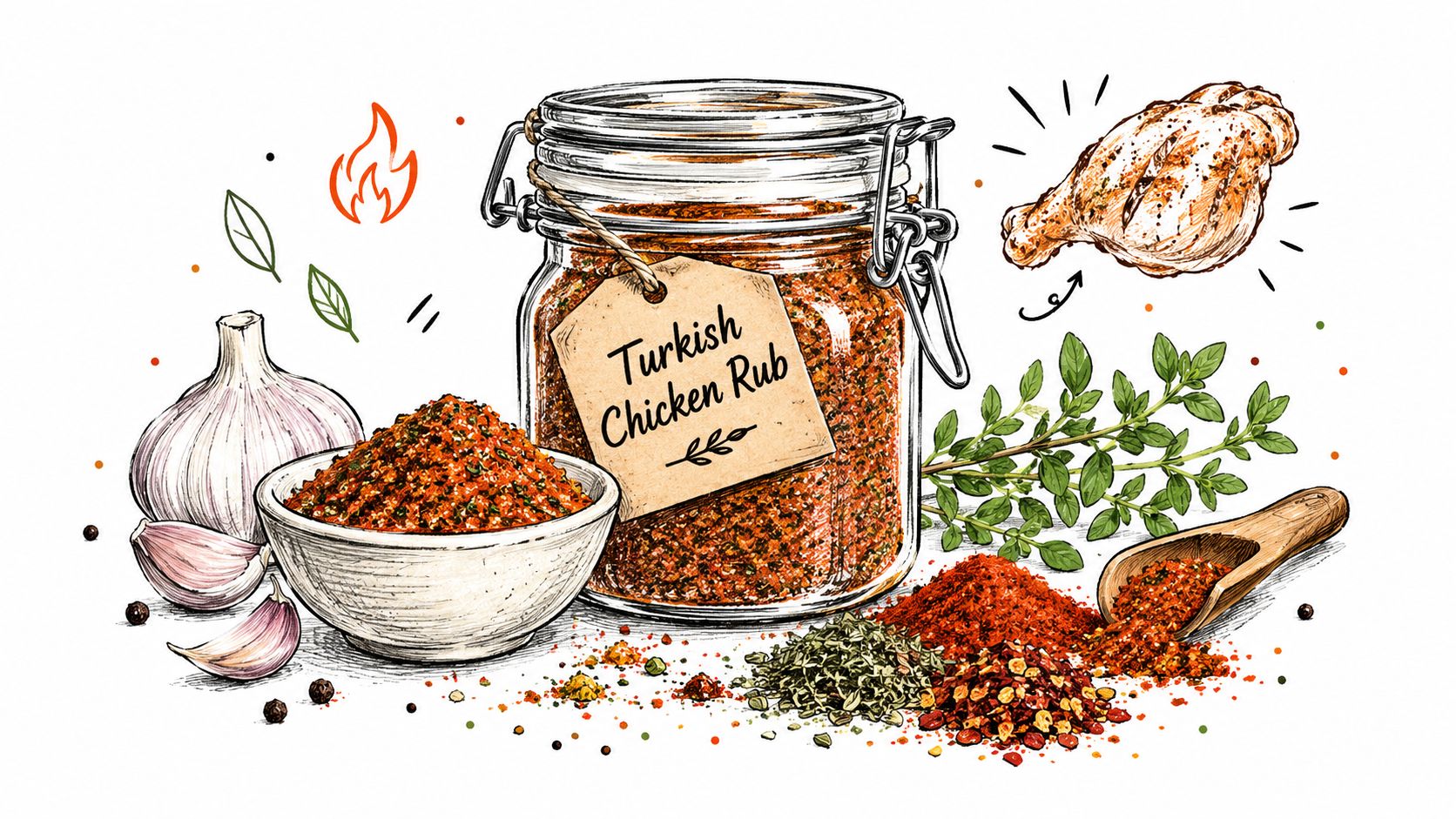
Turkish Chicken Seasoning: A Practical UK Guide
Friday evening, chicken's on the counter, the barbecue's warming up and the usual paprika-and-garlic routine feels a bit tired. Turkish chicken seasoning is a useful change of pace: aromatic rather than hot, easy to adjust for the family, and just as comfortable on a tray of thighs as it is on charcoal-grilled skewers.
The method matters as much as the mix. Keep raw chicken unwashed, use a dry rub or marinade with care, and treat the barbecue as a finishing step when you're cooking poultry for a crowd. With those basics sorted, you can build a Turkish-inspired flavour that works across everyday chicken, vegetables and plant-based proteins.
Why UK Cooks Are Reaching for Turkish Chicken Seasoning
Chicken is a familiar weeknight staple in the UK, which makes Turkish seasoning practical rather than specialist. In a typical Friday-evening kitchen, a few thighs can go into the oven while the barbecue heats for a quick smoky finish. The same flavour direction works for wings, skewers or a traybake, so you don't need to reserve it for a special occasion.

The domestic supply supports that everyday use. In 2024, UK home-fed poultry-meat production reached approximately 2.031 million tonnes, up 2.9% from 2023, and the country supplied 83% of its total poultry-meat demand domestically (UK government agriculture statistics). That's a substantial, routinely available ingredient base for a seasoning used on familiar meals, from roasting to grilling.
The flavour is also easy to make your own. Build it around paprika, cumin, garlic and herbs, then add tangy sumac or a controlled amount of chilli. A clean-label blend made with plant-based ingredients and without fillers keeps the spice profile clear, while allowing the cook to choose the salt level and heat.
If you're planning a longer meal around grilled chicken, the setting can matter too. For hosts pairing a barbecue with wine, Viansa estate wine offerings provide one place to explore options for the table. The next decision is the seasoning itself: which spices create a Turkish character, and which ones make a blend taste generically hot?
The Core Spice Components and Flavour Profile
A good Turkish-style chicken rub has layers, not just heat. Taste the ingredients separately, then combine them in stages so you can tell what each one contributes.
Start with aroma and warmth
Paprika gives the blend colour and a rounded, savoury sweetness. Use sweet paprika for a gentler profile; smoked paprika adds a barbecue note, but too much can make the result taste like a standard smoky rub rather than a Turkish-inspired one. Garlic supplies a familiar savoury backbone, while black pepper gives a dry, direct bite.
Cumin and coriander bring the earthy warmth. Cumin is more assertive and toasty, while coriander is lighter and citrus-adjacent. Together they make the seasoning feel full without relying on chilli. Turkish cooking traditions include ingredients such as pepper, paprika, garlic, cumin, coriander, mint and sumac, with stronger seasoning associated with southeastern regional cooking (University of Hohenheim's account of Turkish cuisine).
Add tang and herbs
Sumac is a useful way to add a dry, tangy lift. It brings acidity without adding liquid, so it's a natural choice for a rub that needs to cling to chicken skin or skewers. Lemon juice gives a fresher, juicier sharpness, but it belongs in a marinade or as a finishing squeeze rather than in a dry jar.
Oregano is familiar, dependable alongside grilled chicken. Mint tastes cooler and more distinctive, especially with yoghurt or a bright salad. Use one as the main herbal note, or combine them lightly; too much of both can crowd out the cumin and paprika.
Keep heat adjustable
Chilli should be a dial, not the foundation. Start with a mild base, then add chilli flakes or a hotter pepper to individual portions. That keeps the seasoning family-friendly while letting keen heat-seekers add a sharper edge at the table.
Practical rule: If the first thing you taste is chilli, reduce it and bring the blend back into balance with cumin, coriander, garlic and tang.
Regional Variations Across Anatolia and Beyond
“Turkish” isn't one fixed flavour. The useful distinction for a home cook is how much spice, smoke, acidity and herb character the dish needs. A charcoal skewer can take a bolder blend than a gentle roast, while a flatbread filling often benefits from freshness and a yoghurt dip.
Southeastern Anatolia is particularly associated with kebabs and more strongly seasoned meat dishes. For that direction, lean into paprika, pepper, cumin, garlic and a measured chilli element. Sumac can add a tart edge that cuts through rich chicken thigh and charred surfaces. If you want to explore chilli character in more detail, this guide to Urfa chilli flakes can help you think about heat as a flavour choice, not just a measure of intensity.
By contrast, an Aegean-inspired plate can be led by olive oil, herbs and citrus. Use oregano or mint more prominently, keep the chilli low, and finish with lemon. That approach suits roast chicken, vegetables and lighter traybakes where you want the aromatics to stay clear.
Istanbul's food culture draws on many regional and historical influences, making it a natural reference point for street-food flavours such as spiced meat served in bread. For a home version, season chicken with cumin, coriander, paprika and garlic, then serve it in flatbread with salad and yoghurt. It's a practical route to the kebab-shop format without pretending that one spice mix represents every Turkish kitchen.
Ottoman food history also helps explain why Turkish-inspired seasoning can include a broad range of spices. Historical scholarship identifies saffron, cinnamon, pepper, coriander, cumin and mustard among preferred Ottoman spices, and connects the growing range of spices to territorial expansion during Süleyman I's reign (Dublin Technological University's overview of Ottoman food history). You don't need to put all of them in a chicken rub. For most cooks, the key is to choose a clear regional direction rather than piling every spice into one jar.
Build Your Own Turkish Chicken Rub at Home
A small, balanced batch is easier to adjust than a jar that's too salty or too hot to rescue. This 100 g starting blend uses a savoury aromatic base, with salt kept separate from the main spice mix so you can control the finished seasoning.

Mix the base
Combine 35 g sweet paprika, 18 g ground cumin, 15 g ground coriander, 10 g garlic granules, 8 g black pepper, 6 g dried oregano, 5 g sumac and 3 g dried mint. Keep salt in a separate container and season the chicken deliberately. UK guidance sets an adult maximum of 6 g salt per day and recommends herbs and spices as alternatives for flavouring food (British Nutrition Foundation guidance).
Those quantities are a practical starting ratio, not a claim that every kitchen or palate needs the same formula. For the first test, season a small portion of chicken rather than a whole bird. Mix the spices thoroughly, apply them evenly, cook the sample and taste for aroma, tang, saltiness and heat. For repeatable batches, record the rub used per kilogram of chicken and keep the salt amount as a separate entry.
Batch control: Change one ingredient at a time. If you add extra chilli and more sumac together, it's harder to tell what improved the flavour.
For more on adjusting proportions and keeping a blend consistent, see this guide to blending spices.
Choose your direction
| Profile | Heat level | Acid partner | Best chicken use |
|---|---|---|---|
| Family-friendly | Mild, no added chilli | Sumac in the rub | Oven-roasted thighs or a traybake |
| Everyday Turkish-inspired | Gentle chilli, balanced with aromatics | Sumac, with lemon served separately | Wings, skewers or grilled thighs |
| Hot shish-kebab style | Add chilli to taste | Sumac, finished with lemon | Charcoal-grilled skewers |
The video below offers another look at preparing a spice blend before you scale up your own batch.
Store the blend in an airtight jar away from light and heat. Label it with the mix date and heat profile, and make a fresh test before using a batch for a whole chicken or a large event.
Cooking Methods for Chicken Across Cuts
The rub stays versatile, but the cooking method should change with the cut. A thin breast fillet needs a different approach from a drumstick, and a dark, paprika-heavy crust can colour before the centre is cooked. Use a clean probe for safety, rather than judging doneness by surface colour.
Charcoal grill and two-stage cooking
For a Weber-style kettle barbecue, season evenly, arrange the chicken over indirect heat and close the lid while it cooks through. Finish over direct heat for colour and a touch of char, turning as needed so the paprika doesn't burn. Keep pieces similar in size and avoid crowding, which makes it harder to manage heat and browning.
For caterers or batch cooking, UK guidance recommends thoroughly pre-cooking poultry before transferring it to a barbecue. Treat the grill as the finishing stage for smoke and surface texture, not the only safety step. The recognised target is 70°C at the core for 2 minutes, with equivalent combinations of 75°C for 30 seconds or 80°C for 6 seconds (UK government cooking guidance).
Match the method to the cut
- Boneless thighs: Apply the rub evenly and cook over indirect heat or in the oven before finishing over charcoal. Their shape and thickness can vary, so probe the thickest area.
- Skin-on breast: Season under the skin as well as on top if you want the flavour closer to the meat. Keep the heat controlled to avoid darkening the spice coating before the centre is ready.
- Wings and drumsticks: Turn them regularly for even colour. The joints and thicker sections need careful checking, especially if the pieces vary in size.
- Skewers: Cut the chicken into similarly sized pieces and leave space between them. Tight packing slows cooking and makes the centre pieces harder to assess.
Oven, rotisserie and air fryer
For an oven roast, spread pieces on a tray rather than stacking them. A little oil helps a dry rub adhere, while lemon, yoghurt or vegetables can be added as part of a traybake. If using yoghurt, coat the chicken separately and cook it through before any barbecue finish.
In an air fryer, work in a single layer and turn or shake the pieces during cooking so they colour evenly. A rotisserie gives a whole bird consistent exposure to moving heat, but probe the thickest part rather than assuming the exterior colour tells you enough. For a whole roast chicken, the Food Standards Agency identifies the thickest point between the leg and breast as the key checking place. It gives an oven reference of 180°C, or 160°C for a fan oven, and a timing guide of 45 minutes per kilogram plus 20 minutes, but the bird still needs to be steaming hot throughout, with no pink meat and clear juices (Food Standards Agency whole-bird guidance).
Dry Rub Versus Wet Marinade and Food Safety
A dry rub gives you a defined, savoury crust and is easy to apply just before cooking. A wet marinade clings well to uneven cuts and can carry yoghurt, oil, garlic or lemon into the surface, but it needs more handling care. Neither method makes raw chicken safe before cooking.
Keep the chicken unwashed. Splashing water can spread Campylobacter from raw poultry onto hands, worktops, clothing, utensils and equipment. Pat it dry with disposable kitchen paper if needed, season it, then clean and disinfect the surfaces used during preparation. Raw or undercooked poultry can contain Salmonella and Campylobacter, and yoghurt, lemon, oil and spices don't reliably remove those risks before cooking (UK food-safety guidance on raw chicken).
| Cut | Best format | Why | Safety note |
|---|---|---|---|
| Thighs for charcoal | Dry rub, then indirect cook | Gives the surface a savoury coating that can be finished over direct heat | Verify the thickest piece with a probe |
| Breast for oven or air fryer | Light wet marinade or a thin rub with oil | Helps a lean cut stay well coated | Keep raw marinade away from cooked food |
| Wings for barbecue | Dry rub | Easy to turn and season evenly | Don't use colour or char to judge doneness |
| Yoghurt-marinated skewers | Wet marinade, oven first, barbecue finish | Holds seasoning on small pieces | Cook fully before the grill finish |
If marinade has touched raw chicken, don't brush it onto cooked meat as a sauce unless you've heated it thoroughly until steaming hot. Keep raw-chicken plates, tongs and brushes separate from those used for cooked food. For a fuller guide to marinating chicken safely, focus on separation and safe cooking, not just flavour.
A darker crust tells you the surface has browned. It doesn't tell you what's happening at the centre.
Scaling for Catering and Gift Set Pairings
For a gathering, scale by grams of rub per kilogram of chicken, not by handfuls. Choose a ratio that suits your blend, apply it consistently, and write it into the prep notes. Multiply that ratio by the total chicken weight for your batch, then check a sample before seasoning the rest.
Keep the process repeatable: use the same grind and measure for each batch, arrange similarly sized pieces together, and check thick pieces with a disinfected probe. UK catering guidance accepts combinations including 75°C for at least 30 seconds or 70°C for at least 2 minutes, with checks taken at the centre of the food. It also advises checking poultry pieces in the centre and whole birds at the thickest part of the leg (UK catering cooking guidance). Keep cooked chicken away from plates and tools used for raw poultry, and use a controlled hot-holding process appropriate to your service setup.
For a buffet, make the seasoning visible without relying on a heavy coating. Consistent sizing and an even layer of rub help each piece look and taste alike. Keep sauces and fresh garnishes separate so diners can choose how much acidity or heat they want.
If you don't want to blend spices for a large cook, use an existing seasoning as a starting point and adjust with sumac, herbs or lemon to move it towards a Turkish-inspired profile. For a larger hosted meal, Kunde Winery's estate winery gathering spaces may be useful to explore when considering a venue for a food-focused event. The same planning principle applies at home: pick the cooking setup first, then choose how much seasoning prep you want to do yourself.
Storage, Pairings and Common Reader Questions
Store a homemade blend or opened shop-bought rub in an airtight container away from heat, moisture and direct light. A practical home-use window is 6 to 12 months, though aroma fades over time, so smell and taste the blend before using it. Label each jar with its mix date and heat profile; that's especially useful when you keep a mild and a hotter version side by side.
Serve the chicken with warm flatbread, rice or pilaf, a crisp salad and a yoghurt dip. Grilled peppers, mushrooms and cauliflower can take the same seasoning, as can chickpeas and plant-based proteins. For vegetables, use a light coating of oil to help the rub stick, then season in stages so the salt and spice don't overwhelm a smaller batch.
Frequently asked questions
Does Turkish chicken seasoning work on vegetables?
Yes. Use it on mushrooms, cauliflower, peppers or chickpeas, and add it gradually. The savoury paprika, cumin and garlic work well without chicken; sumac or lemon can bring the freshness.
How can I make it hotter without making it more acidic?
Add chilli flakes or a ground chilli to the portion you're cooking, rather than increasing sumac or lemon. That lifts heat while keeping the tangy element steady.
Can I use leftover marinade as a sauce?
Only after it has been heated thoroughly until steaming hot. Marinade that touched raw chicken can carry bacteria, so keep it separate from serving sauces unless you cook it first.
Smokey Rebel is a UK family-owned business making small-batch, plant-based BBQ rubs without fillers, with flavours inspired by global cooking and recyclable packaging. If you want a ready-made seasoning to adapt for Turkish-style chicken or a gift set for a keen griller, explore the range at Smokey Rebel.
Join our Mailing List
Sign up and get Smokey Rebel Recipes + weekly recipes straight to your inbox!
Recent articles
Turkish Chicken Seasoning: A Practical UK Guide
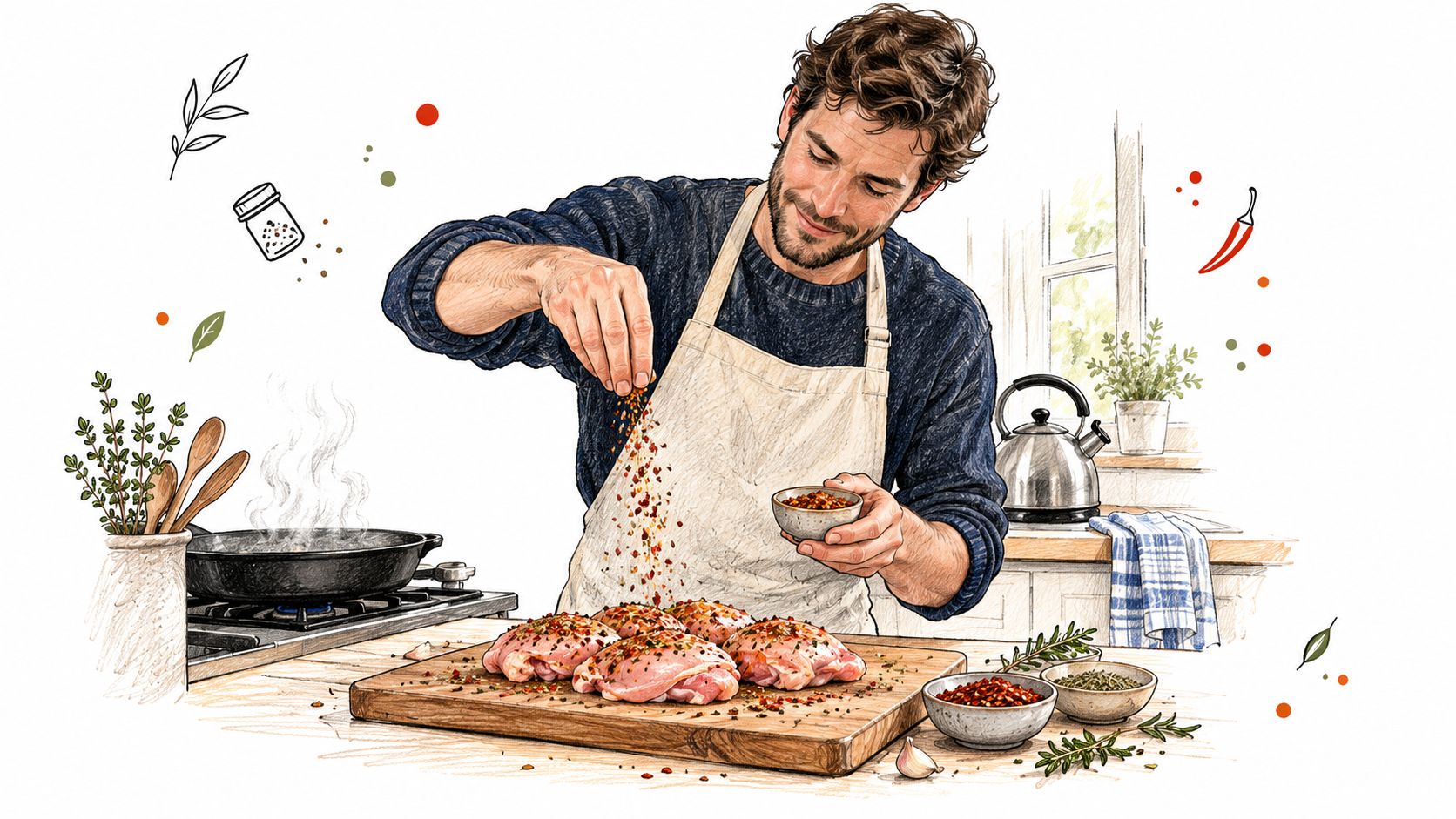
Learn what makes turkish chicken seasoning distinct, build a DIY rub, scale it for events, and pair it across chicken...
Read moreMushroom Seasoning Explained: Flavour, Uses, and DIY Blends
Discover what mushroom seasoning is, how to use it in BBQ and home cooking, and how to make your own...
Read moreBurnt Ends Pork: A UK Guide to Smoky Cubed Perfection
Learn how to make burnt ends pork the right way. UK-safe temperatures, smoking times, glazing tips and Smokey Rebel rub...
Read more