Mushroom Seasoning Explained: Flavour, Uses, and DIY Blends
You're probably here because you've got one of two problems. Food tastes flat, even after salt, or you want deeper savoury flavour without turning every dish into soy sauce, stock powder, or a heavy gravy. That's exactly where mushroom seasoning earns its keep.
I reach for it in the same moments most cooks reach for “something extra”. On a tray of potatoes before roasting. Over chicken thighs before the air fryer. In a pan sauce when a steak has good crust but the sauce still tastes thin. Around the smoker, it's even more useful, because smoke, fat and browned edges love savoury depth that doesn't shout over the meat.
This isn't a novelty ingredient dressed up with fancy language. Mushrooms already sit firmly in everyday UK cooking. A mushroom industry report recorded 81.6% household purchase penetration across the UK and Ireland, with £428.5 million in UK retail mushroom sales in the 52 weeks ending in early November 2019, and households buying mushrooms almost 20 times annually according to the UK mushroom market report. That matters because mushroom seasoning builds on a flavour people already know.
Why Mushroom Seasoning Belongs in Your Spice Rack
A good example is brisket trim night. You've salted the meat, cracked black pepper over it, maybe added garlic, and it still feels like it wants one more layer. Not sweetness. Not more heat. Just more depth. A pinch of mushroom seasoning fills in that savoury middle in seconds, without making the rub muddy.
The same thing happens off the BBQ. Roast carrots get sweeter as they colour, but they can still taste one-note. A quick dusting of mushroom powder and salt after roasting gives them the rounded savoury finish people usually assume came from butter, stock, or parmesan. That's the argument for keeping a jar on the shelf: mushroom seasoning behaves like a flexible flavour tool, not a niche ingredient for one style of cooking.
It fits the way people actually cook
In a real kitchen, one jar has to do more than one job. Mushroom seasoning earns its space because it can work as:
- A dry rub booster for steak, pork shoulder, chicken thighs, and burgers
- A finishing dust for roast veg, fried eggs, chips, and mushrooms on toast
- A sauce shortcut in gravies, pan sauces, bean chilli, and lentil ragù
- A plant-based flavour builder when beans, tofu, aubergine, or potatoes need more savoury character
Practical rule: If a dish tastes seasoned but still not satisfying, it often needs more savoury depth, not more salt.
This also makes sense in the UK specifically. Industry data shows mushrooms are already widely purchased in UK households, so the flavour is familiar rather than exotic. That familiarity matters more than it sounds. Because your diners already recognise the taste, you can use mushroom seasoning in places where an unfamiliar powder would stand out. A finishing dust over roast carrots reads as "savoury and well cooked", not as a mushroom dish. The same pinch stirred into a bean chilli reads as a richer base, not as a vegetarian trick.
That flexibility is what separates it from the one-purpose jars cluttering most spice racks. Smoked paprika has its lane. Celery salt has its lane. Mushroom seasoning works on meat, fish, vegetables, pulses, sauces, and BBQ because its main job is to make savoury food taste more complete.
Used well, it won't make everything taste like a bowl of mushrooms. It makes food taste fuller, rounder, and more cooked, even when the ingredient list stays simple. That's a rare trick for a single jar, and it's why mine sits next to the salt, not at the back with the novelty blends.
What Mushroom Seasoning Actually Is
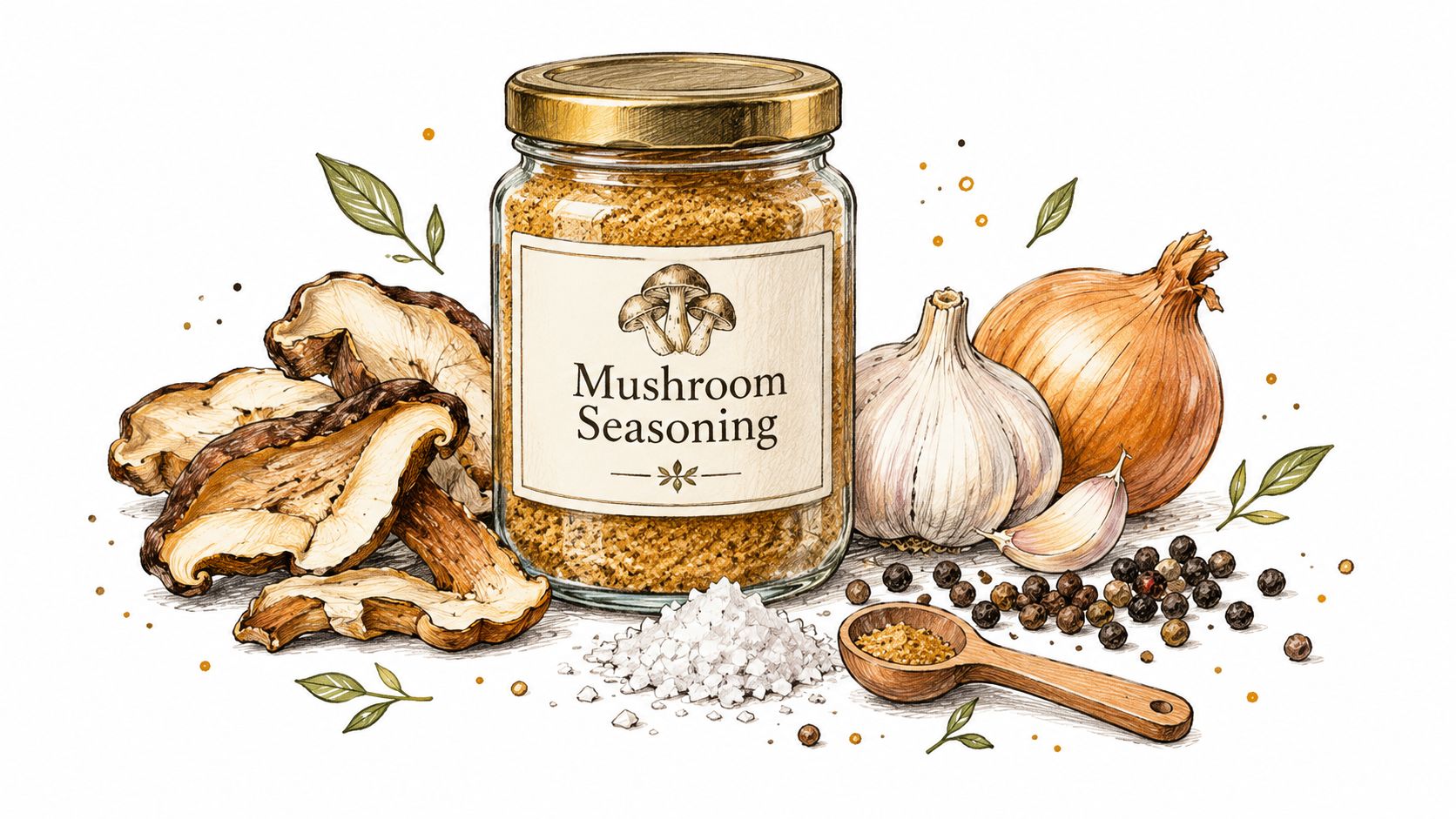
At its most basic, mushroom seasoning is a concentrated seasoning built around dried mushrooms. Sometimes that means a straight powder made from one mushroom. Sometimes it means a blend with salt, pepper, garlic, onion, herbs, or other savoury ingredients.
Drying is the key step. Fresh mushrooms are mostly water, which is why they shrink so dramatically in the pan. UK government nutrient analysis lists raw mushrooms at 92.9 g of water per 100 g, with only 4 mg sodium per 100 g and modest amounts of protein and minerals in the UK analytical report on fruit and vegetables. Once you remove that water, the flavour compounds become far more concentrated, so a small spoonful of powder can punch far above its weight.
Think tomato paste, not fresh tomato
The easiest comparison is tomato paste. You wouldn't expect one spoon of tomato paste to behave like one chopped tomato. Mushroom powder works the same way. It's the concentrated version, so it delivers quicker, denser flavour in small amounts.
That's why a teaspoon in a rub or sauce often does more than a pan full of fresh mushrooms ever could, unless you're prepared to cook those mushrooms right down. In practical cooking terms, the powder gives you the savoury character without the extra moisture.
The forms you'll see most often
On UK shelves and in home kitchens, mushroom seasoning usually turns up in a few forms:
- Pure mushroom powder, best when you want clean mushroom flavour and control the salt yourself
- Mushroom salt, where powder and salt are combined for a quick finishing seasoning
- Umami blends, where mushroom joins garlic, onion, pepper, herbs, or yeast-based savoury notes
- Mushroom rubs, made for grilling, roasting, and BBQ applications
One more distinction matters. Mushroom seasoning is not automatically a nutrition product. Some people assume any mushroom-based powder must be a wellness ingredient or a source of vitamin D. That isn't safe to assume. UK commentary on vitamin D in mushrooms makes a clear distinction between ordinary mushrooms and UV-treated mushrooms, and ordinary white mushrooms can contain negligible vitamin D, while UV-treated mushrooms may provide more than 10 micrograms per 100 grams as explained in this UK discussion of mushroom vitamin D. A seasoning is also used in gram-scale amounts, not as a full serving.
So in cooking terms, start with the right expectation. Mushroom seasoning is mainly a flavour ingredient. If a brand wants to make nutrition claims, the exact ingredient, treatment, and serving size need to support that.
Types of Mushroom Seasoning Worth Knowing
Not every mushroom seasoning behaves the same. Some are clean and punchy. Others are better as all-in-one finishing blends. If you buy the wrong format for the way you cook, you'll either underuse it or blame the ingredient for doing the wrong job.
Mushroom Seasoning Formats Compared
| Format | Flavour Intensity | Best Uses |
|---|---|---|
| Pure dried mushroom powder | High | Rubs, sauces, burger mix, chilli, beans, pan sauces |
| Umami blend | Medium to high | Weeknight cooking, roast veg, rice, eggs, mince |
| Porcini salt or mushroom salt | Medium | Finishing steaks, chips, grilled mushrooms, buttered potatoes |
| Mushroom-based rub | Medium | Chicken, pork, beef, aubergine, cauliflower, traybakes |
Pure powder for control
If you like building your own layers, pure dried mushroom powder is the most useful version. You can add it to a steak rub without affecting salt level too early, fold it into mince, or stir it into a pan sauce at the end. It's the strongest format and the easiest to overdo if you dump it in by the spoonful.
Best for cooks who already season by feel.
Umami blends for everyday cooking
An umami blend is what I'd hand to someone who wants one jar that improves dinner fast. These usually balance mushroom with garlic, onion, pepper and other savoury notes, so they're easier to sprinkle over potatoes, eggs, green beans or chicken without extra measuring.
If you want a broader read on the savoury side of flavour building, this guide on what umami seasoning is is useful alongside mushroom seasoning because the two overlap in the kitchen, even when they aren't the same thing.
A pure powder is a component. A blend is a shortcut. Neither is better. They just solve different cooking problems.
Porcini salt for finishing
This is the most forgiving format. Because the salt is already doing some of the heavy lifting, it tends to be less intense and easier to use at the table or right at the end of cooking. It's excellent on roast mushrooms, fries, sliced tomatoes, or a rested steak.
The downside is lack of flexibility. You can't control salt and mushroom separately.
Mushroom rubs for grill food
These pair mushroom with pepper, herbs, garlic and sometimes smokier spices, which makes them ideal for chicken, pork and vegetables. They're less about pure mushroom flavour and more about rounded savoury BBQ performance.
If you're new to the category, start with either a mushroom salt for finishing or a balanced mushroom rub for roast veg and chicken. Pure powder is brilliant, but it rewards a heavier hand only if you've used it a few times and know what you're aiming for.
The Flavour Science That Makes It Savoury

Mushroom seasoning tastes earthy, brothy, and often slightly meaty, even when there's no meat involved. That's why it works on a beef short rib, but also on lentils or roast cauliflower. It doesn't bring loud top notes like citrus or chilli. It builds the lower, savoury foundation.
That effect is tied to umami, the savoury taste that makes food seem fuller and more satisfying. In UK dietary modelling based on 1,834 adults from the National Diet and Nutrition Survey, replacing part of dietary salt with umami substances including glutamate, inosinate and guanylate was estimated to reduce daily salt intake by 9.09% to 18.59%, or roughly 0.45 to 0.92 g per person per day, depending on market uptake assumptions in the published Food Science & Nutrition analysis. That doesn't prove every mushroom seasoning will do the same job, but it does explain why umami-rich ingredients can help food stay satisfying when you hold back on salt.
Why this matters in actual cooking
Here's the practical version. If chicken thighs for the oven taste salty enough but still dull, more salt often makes them harsh. A little mushroom powder mixed into the rub can make the same chicken taste deeper and more complete.
That's particularly useful because around 80% of salt consumed in the UK comes from processed foods, which makes flavour-preserving reformulation and home cooking choices more relevant in this UK analysis of umami and salt reduction.
A good watch if you want to see savoury flavour building in action is below.
Mushroom seasoning versus other umami ingredients
Mushroom seasoning isn't the only route to umami, but it behaves differently from the usual suspects.
- Soy sauce brings salt, fermentation, and moisture
- Marmite is darker, more aggressive, and easier to overpower a dish with
- Parmesan adds umami plus fat and dairy richness
- Mushroom seasoning stays dry, flexible, and easier to use in rubs and roasted foods
Kitchen note: If you want savoury depth without extra liquid, mushroom seasoning beats soy sauce almost every time.
This is also why it performs so well in BBQ. Smoke likes fat. Fat likes savoury compounds. Mushroom seasoning sits in that overlap, helping bark, crust, pan drippings and charred veg taste more complete without stealing attention from the main ingredient.
How to Use Mushroom Seasoning in BBQ and Home Cooking
On the grill, mushroom seasoning works best when you treat it as a supporting layer rather than the entire show. On weeknights, it's one of the fastest ways to make simple food taste like you took more time than you did.
Fast wins for meat and veg
For steaks, mix mushroom powder into your usual salt, pepper and garlic base, then season the meat just before it hits the grill. It boosts crust and deepens the pan juices if you finish with butter.
For pork shoulder or pulled pork, use mushroom seasoning lightly under your main rub. Too much can make the bark read dusty or dark before the sugars and smoke catch up. For chicken thighs, it's excellent in an air fryer or on the BBQ because it rounds out the skin seasoning without needing a sweet glaze.
For vegetables, keep the blend simple:
- 1 teaspoon dried porcini powder
- 1 teaspoon salt
- 1 teaspoon black pepper
- 1 teaspoon garlic powder
- 1/2 teaspoon smoked paprika
Toss that with oil over sliced courgettes, mushrooms, onions, or cauliflower before roasting. It takes under two minutes, and it works because the mushroom flavour reinforces browning rather than fighting it.
Plant-based uses that don't taste fake
UK foodservice reporting says around 12% of the population, about 6.4 million people, follow a meat-free diet, while another 15% were reported as planning to adopt a meat-free lifestyle during 2025, and separate reporting citing the Food Standards Agency said 27% of UK households consumed plant-based meat alternatives in September 2024 in McCain Foodservice trend reporting. That lines up with what many cooks already see at home. Plenty of people want more plant-forward meals, but they don't want food that tastes thin, artificial, or relentlessly salty.
For plant-based cooking, dosage matters.
- Tofu: Use a light dusting before frying or roasting. Too much reads muddy.
- Aubergine: Mushroom seasoning loves aubergine because both ingredients respond well to char and oil.
- Beans and lentils: Stir in a small amount while they simmer, especially in chilli or ragù.
- Potatoes: Mix into roast potato seasoning or fold into butter for smashed potatoes.
If you grill mushrooms often, this guide on how to grill portobello mushrooms is worth keeping in your bookmarks because it shows exactly where mushroom-led flavour works and where it can get heavy.
A quick weeknight method
For a traybake, toss chicken thighs or chickpeas with oil, mushroom seasoning, and your main spice blend. Add red onion, peppers and potatoes. Roast until everything has colour, then finish with a squeeze of lemon or a splash of vinegar to wake it back up. The acid matters because mushroom seasoning builds savoury depth, but it doesn't replace brightness.
If you're designing a proper cook space for this kind of grilling and batch cooking, practical layouts matter as much as the rub. A guide to custom outdoor kitchen design is useful because prep flow, storage and heat zones affect how easily you can season and cook across meat and veg in one session.
The main mistake people make is piling mushroom seasoning on top of a fully loaded rub. If the rub already has heavy garlic, sugar, chilli, and smoke, mushroom can disappear or turn things murky. It works best when one layer stays clean and the other layer brings personality.
DIY Mushroom Seasoning Recipe and Variations
Homemade mushroom seasoning is easy, but there's a line between balanced and dusty. The goal is a blend that tastes savoury and clean, not a jar of powdered forest floor.

A solid base blend
For a small jar, use:
- 20 g dried porcini or mixed dried mushrooms
- 2 teaspoons flaky salt
- 2 teaspoons garlic powder
- 1 teaspoon onion powder
- 1 teaspoon black pepper
- 1/2 teaspoon dried thyme or rosemary
Grind the dried mushrooms first in a spice grinder. If you don't have one, use a mortar and pestle and accept a slightly coarser texture. Then mix in the rest.
Don't grind it into absolute dust. A little texture helps the blend sprinkle better and clump less.
Keep one batch fine for sauces and one batch slightly coarser for rubs. The flavour is similar, but the handling is much better.
Three variations that actually earn shelf space
Hot BBQ version
Add chilli flakes and smoked paprika. This is the one for roast potatoes, burgers, wings, and grilled chicken where you want a savoury base with a bit of smoke and heat.
Herby Mediterranean version
Swap thyme for oregano and add a little dried lemon zest. Good on chicken, white fish, courgettes, and traybaked vegetables.
Clean umami finishing blend
Strip it back to mushroom, salt and black pepper. This is the best one for eggs, chips, buttered toast with mushrooms, or finishing a steak after resting.
How to make it work better
A homemade blend is at its best when you keep the ingredient list tight. No fillers. No anti-clumping agents if you can avoid them. Just understand that cleaner blends may need a shake before use and should be kept dry.
For pairings at the table, savoury mushroom blends work especially well with reds that have enough structure to handle char and earthiness. If you want ideas beyond the usual guesswork, these Bordeaux wine blog posts are useful for thinking through how smoky meat, roast veg and mushroom-heavy dishes line up with fuller-bodied wines.
The smartest setup is usually one DIY jar for control, plus one dependable all-purpose savoury blend already on the shelf. That way you can build layers fast on busy nights instead of remixing from scratch every time.
Buying, Storing and Using Mushroom Seasoning Safely
When you buy mushroom seasoning, read the label like a cook, not a marketer. Look for the mushroom species, the balance between mushroom and salt, and whether the ingredient list is clean or padded out with fillers. If the jar sells itself as nutrition-first, check the details carefully. Mushroom powder and mushroom-based nutrition products aren't the same thing, and if you want to compare that category more broadly, a specialist collection like shop mushroom-based nutrition helps show how different those products can be from a seasoning blend.
Storage and safety that matter
Store mushroom seasoning in an airtight jar away from light, steam and heat. Use a dry spoon. If it clumps hard or smells stale, replace it.
For sourcing, don't get casual with wild mushrooms. The UK Food Standards Agency warns that wild mushrooms are easy to misidentify and that some are very poisonous, and says people should never forage or eat one unless they are certain of identification, while foraged foods should be washed and cooked thoroughly under the FSA's wild mushroom safety guidance. Drying or grinding doesn't make a bad mushroom safe.
If you use fresh mushrooms alongside your seasoning, storage still matters. The Food Standards Agency and Food Standards Scotland advised that imported enoki mushrooms should be kept refrigerated at 5°C or below, with careful hygiene and thorough cooking for pregnant people and those with weakened immune systems because of Listeria monocytogenes risk in the UK enoki safety notice. Different product, same lesson. Mushroom ingredients need controlled handling.
A useful practical companion is this guide on whether you can freeze mushrooms, especially if you like keeping both fresh mushrooms and dried seasoning in rotation.
Quick FAQs
- Does mushroom seasoning make food taste strongly of mushrooms? Only if you overdo it. Small amounts read as savoury depth.
- Is it only for vegetarian cooking? No. It's excellent on beef, pork, chicken and vegetables.
- Can it replace salt completely? No. It can help reduce reliance on salt in some dishes, but it isn't a direct one-for-one replacement.
- What can I cook in under 20 minutes with it? Mushrooms on toast, grilled chicken, smashed potatoes, or a burger glaze with pan juices and butter.
If you want bold savoury flavour without fillers, Smokey Rebel makes it easy to build a proper seasoning shelf with small-batch rubs, global flavour profiles, recyclable craft-can packaging, gift sets, and wood pellets for the grill. If mushroom seasoning has given you the bug for deeper, cleaner BBQ flavour, it's a smart place to stock up for weeknight cooking, smoking sessions, and food gifts that people will use.
Join our Mailing List
Sign up and get Smokey Rebel Recipes + weekly recipes straight to your inbox!
Recent articles
Mushroom Seasoning Explained: Flavour, Uses, and DIY Blends
Discover what mushroom seasoning is, how to use it in BBQ and home cooking, and how to make your own...
Read moreBurnt Ends Pork: A UK Guide to Smoky Cubed Perfection
Learn how to make burnt ends pork the right way. UK-safe temperatures, smoking times, glazing tips and Smokey Rebel rub...
Read moreHow to Season Steak for Grilling Like a Pro
Learn how to season steak for grilling with expert timing, rub choices and UK safety tips to achieve a perfect...
Read more