Buffalo Wing Rub: Mix, Cook and Serve It
A lot of buffalo wing advice makes wings go soft. Sauce them the second they leave the heat, toss them in a bowl, serve, and the steam trapped under the coating undoes the drying and crisping you have just done. The wing tastes fine and feels flabby.
Treat buffalo as two separate jobs. First, a dry rub of salt, garlic, paprika and cayenne on raw wings before they cook. Second, the butter, vinegar or hot honey finish, added only after the wings come off the heat and rest for a few minutes, so the coating settles instead of steaming the skin.
Keep those jobs apart and the skin stays crisp while the flavour gets as loud as you like.
The rest is order and numbers: spoon measures for a 500 g tray, cayenne rows from mild to very hot, the drying step that decides whether the skin crisps at all, five ways to cook the wings through, and a finish that goes on last.
Buffalo Wing Rub Ratios You Can Mix Tonight
A buffalo wing rub is the dry half of buffalo, and the distinction is worth being fussy about. The blend is salt, garlic, paprika, black pepper, onion and cayenne. The butter, vinegar and hot sauce that give buffalo its tang are a sauce, and a sauce goes on after cooking. Mix them together at the start and you're braising the wings, not roasting them.
Everything below scales to 500 g of wings, about eight to ten pieces, and the base stays identical on every row.
- Fine salt, 1 tsp. Table salt, not flakes. A flaky salt measures far lighter in the same spoon.
- Garlic granules, 1 tsp. Granules rather than powder, which clumps and scorches faster.
- Sweet or smoked paprika, 1 tsp. Smoked takes it towards barbecue, sweet keeps it closer to classic buffalo.
- Black pepper, 1/2 tsp. Freshly ground if you have it.
- Onion granules, 1/2 tsp.
One ingredient changes from row to row, and it's the cayenne.
Buffalo wing rub heat for 500 g of wings
| Heat | Cayenne | Sugar | Use when |
|---|---|---|---|
| Mild | 1/4 tsp | none | Mixed ages and first-timers |
| Medium | 3/4 tsp | 1/2 tsp soft brown, optional | A weeknight tray |
| Classic buffalo | 1 1/2 tsp | 1/2 tsp soft brown | Before a butter-hot sauce finish |
| Very hot | 2 tsp | none | Heat-seekers, with sauce used lightly |
Why the sugar stops at half a teaspoon
Sugar helps the skin brown, and it also blackens long before a wing is cooked through. Half a teaspoon is the ceiling on a 500 g tray. Over a direct flame, leave it out and take the colour from a longer indirect cook instead.
About 1 tbsp of the medium mix coats 500 g. For a second tray, double by weight.
Practical rule: weigh the second batch of rub rather than counting spoons again. A heaped tablespoon isn't a reliable unit, and the tray that tastes saltier than the first is a portioning slip, not a flavour decision.
If you'd rather skip the measuring, Wingman Wing Rub does the same job on wings, thighs and air-fryer dinners. Want more heat than the jar gives? Add a pinch of Holy Jalapeño Fajita Seasoning to the cayenne row rather than doubling the cayenne itself. And if you dust SPG Base Blend on first, drop the salt from the base so the skin doesn't cure too hard. For building your own ratios from scratch, this guide to blending spices covers how the base notes stack.
How to Dry and Season the Wings
Wings come out of the packet wet, and water on the skin is the reason a tray ends up pale and leathery. Moisture has to boil off before the skin can brown, and in a crowded tray it turns to steam instead. Drying isn't a nicety for when there's time. It decides whether the rub has anything to grip.
The move that matters most takes two minutes.

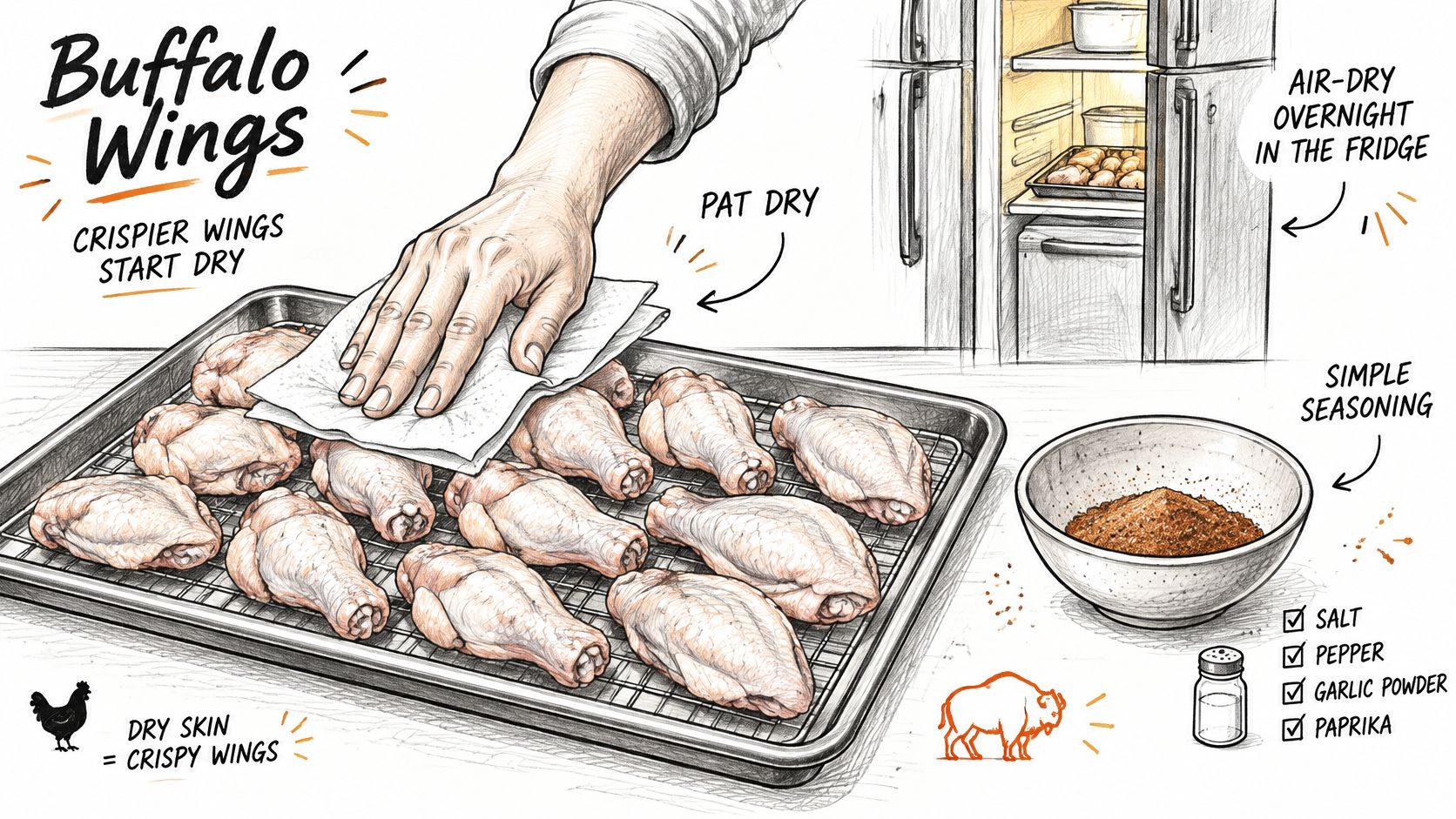
- Dry every surface. Tip the wings onto a tray and pat them with paper towels, including under the joint, around the bone ends and beneath any loose flap of skin. Swap the towel when it stops soaking.
- Air-dry them uncovered. Leave the tray in the fridge, uncovered, for at least 30 minutes, or overnight if you're cooking tomorrow. Cold air pulls moisture off the surface while the salt starts working inwards, which is the principle behind a dry chicken brine.
- Oil lightly. Toss with 1 tsp neutral oil per 500 g. Enough for the rub to cling, not enough to turn it into a paste that steams.
- Sprinkle the row you chose. About 1 tbsp of the medium mix per 500 g, pushed into the crevices and under any flap. A lidded bowl and a hard shake does the job as well as hands.
- Cook the rub onto the wings. The heat and the tang come from the sauce later, not from a second dusting of dry spice.
- Keep raw and cooked apart. Its own board, clean tongs, a clean plate at the end.
Here's the whole sequence in one go.
When you're cooking more than one tray, weigh the wings and weigh the rub so the second batch matches the first. Doubling by eye is how a party ends up with one tray people finish and one they leave.
There's a food-safety reason the rub goes on before cooking rather than after. UK Health Security Agency guidance on ready-to-eat foods notes that spices and spice products can carry high loads of Bacillus spores, with levels above 10^6 CFU/g considered unsatisfactory in that guidance, and that adding seasoning after cooking to food that won't be heated again is a recognised risk. Applied before the final cook, the spice gets the same heat treatment as the wings.
Grill, Bake or Fry Until the Skin Stays Crisp
The order of operations is cook through, then crisp. Every method below does both; they differ in how much attention they demand and how much margin they leave you when something runs late.
Wing cooking methods for one 500 g batch
| Method | Heat | Time | Crisp finish |
|---|---|---|---|
| Fan oven | 200°C fan, or 220°C conventional | 35-45 minutes, turn once | Rack over a tray, sauce after resting |
| Air fryer | 190-200°C | 18-24 minutes, shake halfway | Single layer, do not crowd |
| Two-stage grill | Indirect until nearly done, then direct | 2-4 minutes a side at the end | Colour only after the core is safe |
| Deep fry | 175-180°C oil | 8-12 minutes, small batches | Drain on a rack, then sauce |
| Pellet or covered barbecue | Gentle fruit-wood smoke, then a hot finish | Until the largest wing reaches a safe core | Short sear after the core is safe |
The oven is the most forgiving for volume and the least crisp, and the rack matters more than the dial. The air fryer gets closest to deep-fried texture in a small batch, and it punishes crowding harder than anything else. A two-stage grill produces the best skin of the four, on the condition that the first phase is fully indirect. Deep frying is the fastest and the least forgiving: small batches, and let the oil come back up to temperature between them.
The only test that counts
A hot grate, dark skin and clear juices aren't evidence of anything. Food Standards Agency cooking guidance gives three validated combinations for poultry: 70°C held for 2 minutes, 75°C for 30 seconds, or 80°C for 6 seconds. Probe the thickest part of the meat with the tip clear of the bone.
Test several of the largest pieces, not one. Flats and drumettes sit at different distances from the heat and finish minutes apart, so a reading from a small flat tells you about that wing and nothing else. The same guidance recommends cooking poultry fully before finishing it on a barbecue, which is exactly why the two-stage method works. High heat at the end colours the skin long before it makes the centre safe.
For a crowd: note the batch weight, the rub weight, the cooking time and the final core temperature. When a tray disappoints, you can hold it against one that worked, which nobody manages from memory.
Rest the wings 3 minutes on a clean rack before anything wet goes near them. That's the gap where the skin sets, and it's what stops the finish soaking in rather than sitting on top.
On a pellet cooker, use mild fruit-wood pellets from the pellets collection at gentle heat for the smoke, then a short hot finish for the colour. Long and lazy first, brief and fierce second.
Hot Honey Dips and What to Put on the Table
Say you're feeding eight and the wings come out in two trays. The first gets sauced the moment it lands on the counter. The second waits five minutes, takes a lighter coat, and reaches the table second. People go back for the second tray, and it isn't the rub they're noticing. It's the skin.
The finish is a coat, not a bath. Two versions work for 500 g.
- Classic buffalo. Melt 40 g butter, take it off the heat, stir in 2 tbsp vinegar-based hot sauce, then toss the rested wings for about 20 seconds and serve straight away.
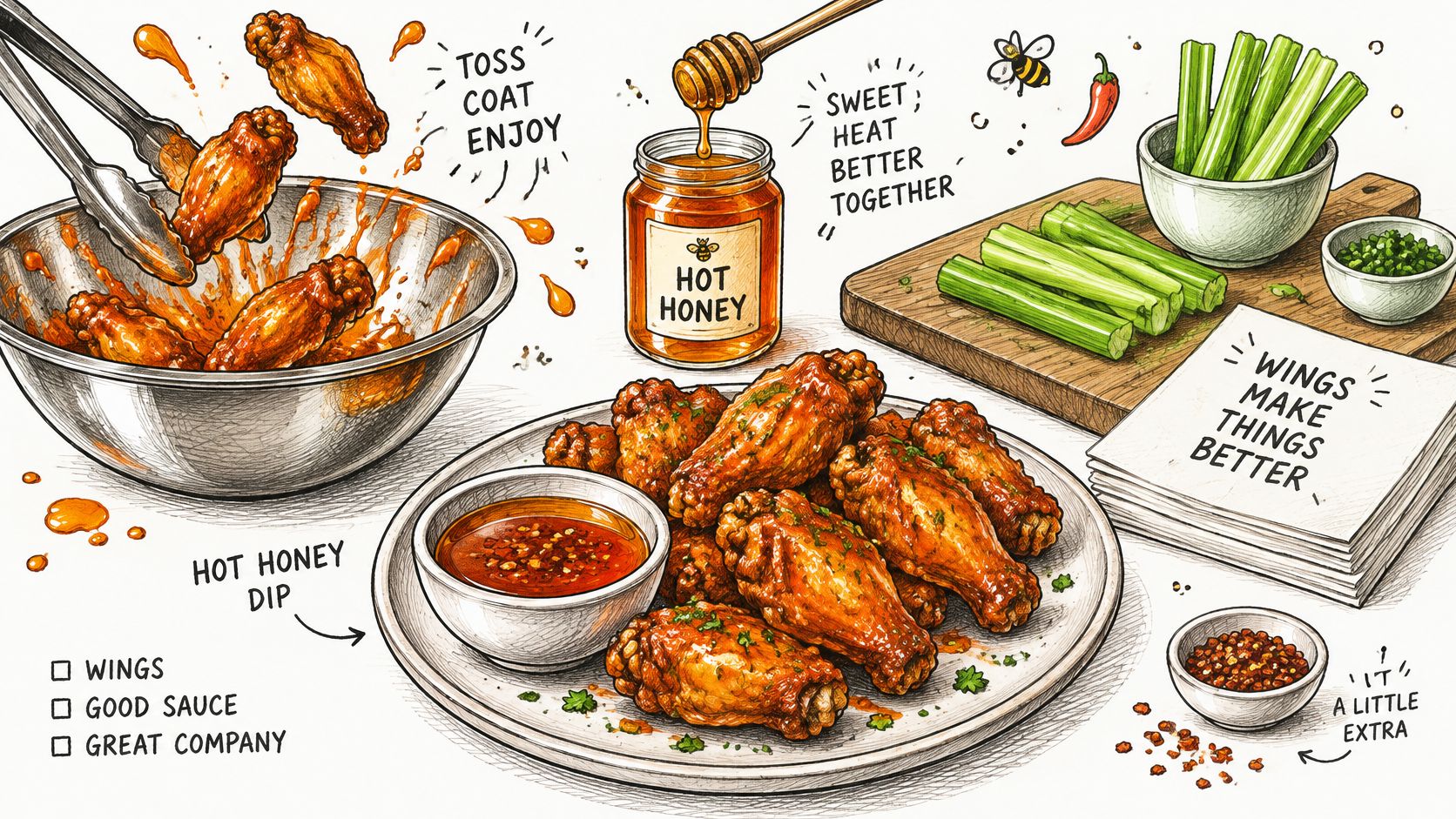
- Hot honey. Warm 3 tbsp honey with 1 tsp Holy Jalapeño Fajita Seasoning and 1 tsp water, then drizzle rather than toss. It should glaze the skin, not flood the tray.

The hot honey is the pairing that surprises people. Honey alone reads sweet and one-note against cayenne, so the jalapeño does the work of keeping it savoury.
For the cool dip, use thick yoghurt or mayonnaise loosened with a squeeze of lemon, and leave it unsalted. The rub has salt in it and the sauce has salt in it, so a salted dip pushes the whole plate over the edge. Serve celery sticks, a sharp slaw and oven chips, and put the best BBQ side dishes on the table rather than another basket of bread.
For a mixed group, put mild and very hot wings on separate boards with their own tongs. Labels help when there are children at the table and adults who'll take the hottest thing going.
The allergen check before anyone helps themselves
UK food businesses must identify 14 regulated allergens, and prepacked products must emphasise allergenic ingredients in the ingredients list, as the allergen guidance for food businesses sets out. Dry rubs can carry mustard, celery, sesame, soya and milk-derived powders, sometimes as part of a blend rather than a headline flavour.
Read the jar you are using rather than the recipe, keep separate utensils for each sauce, and don't describe a blend as free-from unless the pack or the supplier statement says so.
For a match-day spread, the Game Day Party BBQ Rub Gift Set covers several rubs at once.
Fixes When Wings Go Soggy or Scorch
Nearly every disappointing tray traces back to one decision, and each has a single fix for the next cook. Change one variable at a time so you know which one worked.
Where the prep goes wrong
Soggy skin. The wings were wet when they went in, or they were packed tight and steamed each other. The fault is surface moisture, and the fix belongs back at the drying step, not in a hotter oven.
A batch saltier than the last. An SPG dusting plus a full salted rub is two salty layers. If you want the garlic and pepper from SPG, pull the salt out of the base blend and use one salty layer only.
Where the heat goes wrong
Scorched spice. Brown sugar or a heavy cayenne coat sitting over the hottest part of a direct flame. Drop the sugar and keep the long part of the cook indirect.
Pale, soft skin. The oil was skipped, or the final hot minute never happened. Add the oil and give the wings a brief high-heat finish once the core is already safe.
Pink meat near the bone. Someone probed a small flat. Test the largest drumette, tip off the bone, and give it more time rather than more rub.
Diagnostic habit: one change per cook. Make two and you've learned nothing about which one fixed it.
A harsh, thick sauce. The butter finish was too heavy, or the hot honey was poured rather than drizzled. Thin it with a spoon of water instead of scraping the rub off the skin to rescue it. And if the wings came out flabby and the sauce went on anyway, sauce a smaller amount next time: the finish is the last 5% of the job, not the part that decides it.
Choose a Wing Rub and Cook This Week
One jar and a bottle of hot sauce will get you through the season. Building a spice cupboard for a single style of wing is the expensive way round, and most of those jars go stale long before they're finished.
Wingman Wing Rub is the default: it's the brand's wing rub, and a ready blend removes the cayenne measuring entirely. Chipotle Cowboy Chicken Rub is the alternate when you want chipotle on chicken, and it earns its place on drumsticks and thighs as well as wings.
Whichever jar you pick, the order stays the same: rub, cook through, rest, then finish. The butter or hot honey goes on after a short rest, while the wings are still hot but no longer steaming. Wet finish over resting wings keeps skin crisp; wet finish over steaming wings undoes the cook.
If wings are one part of a bigger chicken habit, the Ultimate Chicken 4 Pack or the Build Your Own Bundle covers the same dry-then-cook method across a week of dinners. Rubs come in 50g packets, and they're built for smoking and grilling as well as ovens, pans, air fryers and slow cookers.
Gifting and the winter kitchen
The Christmas Feast BBQ Rub Gift Set suits a roast dinner table. Tesco's 2024 Christmas Trends Report, based on 6,000 UK adults, found that 55% of respondents planned to take a bottle of alcohol when visiting friends or family, so a food gift slots into a habit that already exists.
Weather doesn't shut the category down either. Mordor Intelligence's analysis of the UK barbecue grill market reports that 40% moved grills indoors during poor weather and that 26% of consumers continued barbecuing during record rainfall. And chicken is hardly niche: Family Food data show purchases rose from 115 grams per person per week in 1974 to 211 grams in the financial year ending 2025, with chicken the most purchased meat in UK households that year.
One jar earns its place in an April garden and a December kitchen equally.
Frequently Asked Questions
Can I make the rub ahead?
Yes. Mix a full batch, store it in an airtight jar away from heat and light, and label it with the date. It holds for a few weeks, and the paprika fades first, so taste a pinch before you use it on a big tray.
Should the rub go on before or after cooking?
Before, so the seasoning gets the same heat as the wings. Only the sauce goes on afterwards. Give the rubbed wings at least 30 minutes before they hit the heat, or leave them overnight as a dry brine if you're organised.
Can I cook frozen wings?
Thaw them fully in the fridge, pat them very dry, then rub and cook as usual. Frozen wings carry more surface water, and if they go in cold they steam through the middle while the skin stays soft.
Is buffalo wing rub gluten-free?
Check the exact jar and the supplier's allergen statement. Carriers in blends can contain gluten, and a spice-based rub isn't automatically free of anything. Read the pack you're holding rather than the recipe that sent you out to buy it.
How much rub for a family tray?
About 1 tbsp per 500 g of wings, doubled by weight for a second tray. Weigh the second batch rather than counting spoons again, and you'll get the same result twice.
Can I use the rub on vegetables?
Yes. Toss sliced vegetables in a little oil, then roast until tender. Cauliflower and potato wedges take a buffalo rub particularly well, and they're a fair test of whether your heat row is where you want it.
Smokey Rebel blends small-batch rubs in the UK without fillers, and the Wingman Wing Rub is the jar built for this method: dry the skin, cook it through, finish it late. Start with that one, or put a bundle together if you're cooking for a crowd or shopping early for Christmas. Take a look at Smokey Rebel and pick the rub that matches how you cook.
Join our Mailing List
Sign up and get Smokey Rebel Recipes + weekly recipes straight to your inbox!
Recent articles
Spicy Gift Sets for Chilli Lovers: 7 Picks for 2026
Compare seven spicy gift sets across heat levels, from mild chilli samplers to superhot sauce boxes, and find the right...
Read moreBuffalo Wing Rub: Mix, Cook and Serve It
Mix a buffalo wing rub, set the heat, then grill, bake or fry crisp wings and finish with hot honey.
Read moreBeef Rub for Roast: Seasoning Tips for Tender Results
Learn how to make a flavorful beef rub for roast, with the spices, timing and resting tips that give you...
Read more