Beef Rib Rub: Ratios, Methods and Flavour Pairings
A rack of beef ribs is the most expensive thing a home cook puts in a smoker, and the rub is the cheapest part of the cook. That gap matters. In 2025, 26% of surveyed UK consumers said beef ribs would be among the BBQ items they would struggle to afford, according to Crave Magazine's report on UK BBQ trends, which makes a measured rub a value decision as much as a flavour one.
A beef rib rub does three jobs at once. It carries the seasoning, it builds the crust, and it sets the salt dose on a cut that spends hours over heat. Get the ratio right and the ribs taste like beef with a savoury edge. Get the salt or the sugar wrong and no amount of smoked paprika rescues them.
Two numbers decide most of the outcome. The first is the weight of rub per kilo of meat, because it fixes everything downstream. The second is the salt inside that dose, because salt is the only ingredient that changes flavour, surface texture and food-safety assumptions together.
Beef Rib Rub Ratios for a Full Rack
A workable default is 52 g of rub per kilogram of beef, mixed from ten ingredients you probably already have in the cupboard. The amounts below are for a single kilogram, so scale them by the weight of the rack you bought. Nothing in the list is exotic, and nothing in it is filler.
| Ingredient | Role on beef | Grams per 1 kg beef | Low-salt adjustment |
|---|---|---|---|
| Fine sea salt | Seasons and firms the surface | 10 g | Cut to 5 g and add flaky salt at carving |
| Coarse black pepper | Warmth and bite | 6 g | Keep as written |
| Dark brown sugar | Sweetness and bark colour | 10 g | Halve or omit to limit scorching |
| Smoked paprika | Smoky depth and red colour | 8 g | Keep as written |
| Garlic powder | Savoury backbone | 5 g | Keep as written |
| Onion powder | Sweet savoury base | 4 g | Keep as written |
| Ground cumin | Earthy warmth | 2 g | Keep as written |
| Dried thyme | Herbal lift | 2 g | Keep as written |
| Mustard powder | Tang and rub adhesion | 2 g | Keep as written |
| Ground coffee, optional | Bitter depth that rounds beef richness | 3 g | Keep as written |
Weigh the salt, don't scoop it
A tablespoon of fine sea salt weighs different amounts depending on the brand, the grind and how tightly it's packed, and that variance runs straight into the finished crust. A set of scales costs less than one rack of ribs. Salt is the biggest lever you have, so treat it as a measured ingredient rather than something you pour from the container.
If you're building the blend from whole spices, toasting and grinding your own spice mixes makes the biggest difference to the pepper and cumin, which fade fastest once ground.
Taste the mix before it touches the meat
Put half a teaspoon of the blend into a little oil, fry it in a clean pan for a few seconds and taste it. The blend should read savoury and faintly sweet, with pepper arriving at the end. If it tastes dusty or flat, the salt or the pepper is light. If it tastes like a dessert, the sugar is too high for a long cook.
That single spoonful tells you more than any recipe note, because it accounts for your salt, your paprika and your palate at the same time. Adjust the jar, not the ribs.
Scale from the rack, not the recipe
Multiply the weight of the ribs by the grams per kilogram, then round to something you can weigh. A 1.5 kg rack at 52 g per kilogram needs about 78 g, which rounds to 80 g. A 2 kg rack takes 104 g, and a small 900 g half-rack takes roughly 47 g.
Season both sides, then press the rub in with the back of a spoon rather than rubbing it with your hands. The bone side takes less than the meat side, and any rub left in the bowl after coating goes in the bin if it touched raw meat.
Flavours and Low-Salt Crusts for Beef Ribs
Seasoning is the first thing that touches the meat, so it's worth knowing what each layer is doing before the ribs go anywhere near heat.

The flavour families beef actually needs
Beef ribs bring iron, rendered fat and gelatin to the party, which means the rub should sharpen those notes rather than bury them.
The savoury base is garlic, onion, salt and something with umami behind it, such as dried mushroom powder or a spoon of ground coffee. This group does the heavy lifting on a long cook, because those flavours hold up when the surface dries and sets.
The warm aromatics add the smoke-adjacent notes and most of the colour:
- Smoked paprika: carries red colour and a genuine smoke note through a six-hour cook, where sweet paprika fades to nothing.
- Coarse black pepper: the backbone of any beef rub, and better ground coarse so it doesn't dissolve into the surface paste.
- Cumin: earthy and warm, and the single ingredient that most clearly signals Tex-Mex rather than Sunday roast.
- Dried thyme or rosemary: a herbal lift that stops a heavy pepper rub from tasting one-dimensional.
The sweet balance comes from dark brown sugar or muscovado, used sparingly. Sugar earns its place by browning the crust and rounding the pepper, not by making the ribs taste sweet.
Bark rule: sugar browns the crust, heat sets it. If the crust tastes bitter, the sugar has done all it can and the heat has done too much.
Match the lead flavour to the cooking style
Choose one family to lead and let the other two support it, so the beef still tastes like beef.
For taco-style or Tex-Mex ribs, cumin and chilli lead, with sugar pulled back and lime or vinegar at the table instead. For a classic British Sunday-roast profile, thyme and coarse black pepper lead, with no sugar at all and a spoon of mustard powder for tang. On a long overnight smoke, ground coffee makes a good lead, because its bitterness cuts through rendered fat in a way that paprika can't.
Here's the seasoning and cook in sequence if you want to see how the layers go on.
A low-salt route that still builds bark
Salt reduction is now a mainstream ask rather than a niche one. Recent UK barbecue coverage cited 58% of surveyed consumers saying they cook healthier dishes, while 47% said plant-based options on the barbecue are important, in IndexBox's report on shifting summer barbecue habits. A rub built on 10 g of salt per kilogram sits awkwardly against that.
The fix is straightforward: drop the salt to 5 g per kilogram, keep every aromatic where it is, and add flaky finishing salt at the board. Less salt gives a milder crust, and that's the trade you're accepting. Don't chase the missing punch with more sugar, which darkens and turns bitter long before the ribs are tender. Push pepper, paprika, garlic, onion, chilli, coffee or dried mushroom instead.
The sequence matters more than the numbers. Season with the salt-free aromatic mix first, rest the ribs so the flavours settle, then add a small pinch of flaky salt when you carve. Remember that sauces, cheese and pickles on the table all carry salt, so taste before you add more anywhere.
Practical rule: separate the salt from the aromatics in your jar, so you can dial one without rebuilding the other.
If you want the wider set of swaps, this guide to low-sodium seasoning covers the substitutions properly. For a savoury foundation under a heavier layer, SPG Base Blend gives you the salt, pepper and garlic base to build on. If you'd rather skip the ten jars, Revolution Beef Rub is the beef-led ready-made option, built on pepper, garlic, smoked paprika, chilli and coffee.
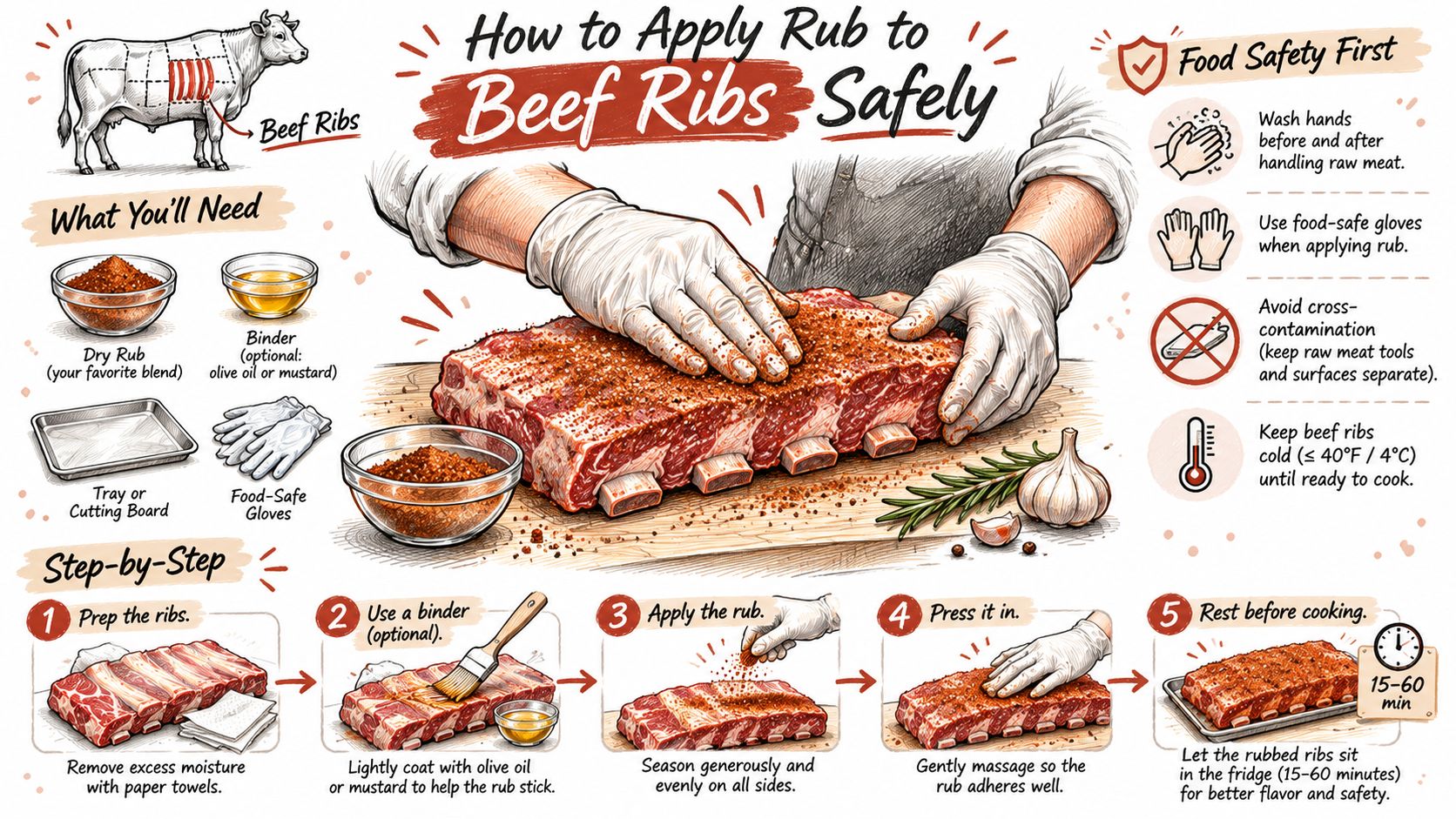
How to Apply Rub to Beef Ribs Safely
Rubbing a rack looks harmless, and that's the problem. Applying seasoning is a raw-meat handling step, and it moves bacteria onto hands, containers, utensils and anything ready-to-eat nearby. UK Food Standards Agency guidance is direct on this: keep raw meat separate from ready-to-eat food, use different plates and utensils, wash hands after handling raw meat, and keep food chilled until cooking.
The routine below takes about five minutes and removes almost all of that risk.

- Dry the surface and peel the membrane. Pat the ribs with paper towel and work the silver skin off the bone side using a blunt knife, gripping it with a piece of towel. A wet surface stops the rub sticking, and a membrane stops it penetrating.
- Weigh the rub into a clean bowl first. Portion it before your hands go anywhere near the beef, so you never dip a contaminated hand or spoon back into the jar. Weighing also tells you exactly how much salt is going on the rack, which makes the low-salt mixes from the previous section repeatable instead of guesswork.
- Apply with clean, dry hands or a dedicated shaker. Cover the meat side fully and the bone side lightly, pressing the rub in rather than rubbing it around. Use a shaker for larger batches so the coating stays even across racks.
- Cover and chill for one hour up to overnight. The salt needs time to work into the surface, and a longer rest gives a deeper seasoning. Keep the tray covered on the bottom shelf of the fridge, where nothing can drip onto other food.
- Keep raw beef away from everything else. Separate boards, plates and tongs for raw and cooked, and wash your hands with soap after handling the meat. This matters most when you're cooking several things on one barbecue.
- Bin any rub that touched raw beef. Returning it to the jar contaminates the whole batch, and a 50 g packet is a small loss against that.
- Clean up properly. Hot soapy water on the board, the sink area, the scales and the knife, then a food-safe sanitiser on the worktop.
A rub seasons the meat; it does not preserve it, and it does not make undercooked beef safe. Cook the ribs until they're steaming hot throughout, with clear juices and no pink meat where it should be cooked through. Beef ribs, burgers, sausages, chicken and pork all carry different expectations, so treat the rack as its own job rather than an extension of the burger tray.
Smoking and Grilling Times for Rubbed Ribs
A rubbed rack of beef ribs takes hours, and the clock only gets you within range. The finish signs underneath the table are what tell you when to pull the meat, because no timer knows how thick your ribs are.
| Method | Typical time | Finish when |
|---|---|---|
| Smoker, low and slow | 5-7 hours | Bark is set to a deep mahogany and the probe slides in with little resistance |
| Kamado or charcoal, indirect | 4-6 hours | Bark is set and the rack bends between tongs |
| Gas grill, indirect | 4-5 hours | Bark is set and the probe reads 90-95°C in two places |
| Oven on a wire rack | 3-4 hours | Probe tender after foil wrap, then rested |
Sugar in the rub darkens as the cook runs, so hold the smoker or grill inside these ranges rather than pushing for a faster result. Aim for bark set to a deep mahogany. A surface turning glossy and dark around the three-hour mark tells you the pit is running hot or the sugar load is heavy, and both are easier to prevent than to repair.
On a gas grill, cook indirect: burners lit on one side, ribs sitting on the other. Sort the fuel supply before cook day, because a low-salt rub gives you a long, patient cook and a stalled burner midway through it costs you the bark. If the home tank still needs fitting, find propane tank installation services well ahead of the weekend rather than discovering the problem on Saturday afternoon.
Probe tenderness beats the clock every time. Test in two places along the rack, aiming for around 90-95°C with little resistance, and expect firmer going near the bone end. Doneness and tenderness arrive together here: a probe-tender rack is steaming hot through to the bone with juices running clear, which is what properly cooked beef ribs look like.
Rest the rack under foil for 20 minutes before cutting, so the juices settle back into the meat. Plan backwards from serving time: full cook, plus the rest, plus ten minutes of slack. The same rub works in a smoker, a grill, an oven, an air fryer or a slow cooker, which matters when the weather doesn't cooperate. Our guide to cooking beef ribs in the smoker walks through the low-and-slow version in detail.
In an air fryer, use the same probe check at 90-95°C and the same 20-minute rest, with the timer set by the probe rather than the dial. A slow cooker follows the same rule: it finishes when the meat is probe tender, not when the recipe says so.
Bark, Salt and Sticking Problems Fixed
Most disappointing racks fail for one of five reasons, and four of them are about heat and sugar rather than the spice list.
| Symptom | Likely cause | Fix |
|---|---|---|
| Black, bitter bark | Sugar scorched at high heat | Drop the smoker temperature by 10°C and halve the sugar |
| Crust too salty | Salt dose above 10 g per kg | Use 5 g per kg and add finishing salt at carving |
| Rub falls off | Wet surface or no binder | Pat dry and brush on a thin layer of mustard or oil first |
| Pale, soft bark | Humid smoker or too little sugar | Keep the lid closed and add a little more sugar |
| Tough meat at the planned time | Pulled before probe tender | Cook another hour and probe again in two places |
Bark problems are heat and sugar problems. If the crust is black and bitter, halving the sugar is the faster of the two fixes, and dropping the temperature by 10°C protects the next cook. A pale, damp crust usually means the lid came off too often and the surface never dried.
When the rub slides off in patches, the ribs were wet or the coating was too thin. Pat them dry, brush on a thin binder of mustard or oil, then apply the rub and press it in. You don't need a heavy binder, just enough tack for the particles to grip.
Too salty is harder to fix after the fact, which is why the dose matters more than the taste test on the day. There's no useful rule of thumb to lean on either: UK advisory guidance notes that salt's antimicrobial effect varies with the microorganism, concentration, moisture and storage, and that no universal safe salt level can be assigned to a food, as summarised in this Advisory Committee on the Microbiological Safety of Food paper. Season for flavour, not for imagined preservation.
If the meat is tough at the planned time, the cook isn't finished. Another hour and a fresh probe reading in two places beats an extra hour of guessing.
After every cook, write the rub dose, the smoker temperature and the finish time on the recipe card. Next time you change one variable, you'll know exactly what moved the result.
Choose Your Beef Rib Rub for Your Next Cook
The UK barbecue seasoning market was estimated at USD 580.3 million in 2025, with barbecue rubs identified as the largest segment, according to Grand View Research's UK barbecue seasoning outlook. Much of what's on the shelf is built for chicken or pork, and plenty of it is too sweet for a rack that cooks for six hours.
For a single rack, a ready-made beef rub beats weighing out a row of separate spices. Revolution Beef Rub is the beef-led option in the range, leading with pepper, garlic, smoked paprika, chilli and coffee.
One trade-off to know before you buy: a blended rub fixes its salt level, so the dose is the only lever you control. Weigh it rather than shaking from the packet. If you want a stronger savoury backbone, layer SPG Base Blend underneath and add the aromatics on top. If you're cooking low-salt, cut the dose and rebuild the flavour with extra pepper, garlic or paprika rather than leaning on the blend's salt to carry the bark. Rubs in the collection start from £5.49 and the Rebel packets are 50 g, a workable size for testing a rub across a couple of racks before you commit.
December changes the brief slightly. The Christmas Feast BBQ Rub Gift Set is the gifting option in the range if you're buying for someone who cooks.
Three steps for the next cook. Choose the rub. Weigh the ribs. Set the dose at 52 g per kilogram from the ratio table, and trim the salt column if you're going low-salt.
Beef Rib Rub Questions Answered
How much beef rib rub do I need? Use 52 g per kilogram of ribs, weighed and rounded to the nearest 5 g. A 1.5 kg rack needs about 80 g.
Can I leave out the sugar? Yes. Halve it or omit it to reduce scorching, but expect a paler bark and a longer set.
Can I still get a bark if I cut the salt? Yes. Reduce the salt inside the blend rather than the total dose, and keep the rub weight per kilogram the same. A dry surface and steady heat do the crust-building; the salt mainly controls how far the cure travels into the meat.
Can I rub the ribs the night before? Yes. Cover and chill them for one hour up to overnight, so the salt works into the surface. Any longer than that and the surface starts to cure and firm.
Does the rub make undercooked beef safe? No. Cook the ribs until they're steaming hot throughout, with clear juices and no pink meat where it should be cooked through.
Which Smokey Rebel rub suits beef ribs best? The Revolution Beef Rub is the beef-led blend in the range and the natural starting point for a rack.
Can I use a rub on pork ribs too? Yes. The Hickory Hog Pork Rub is the pork-side match, and the same weighing method applies.
Smokey Rebel is a family-run UK business making small-batch, filler-free rubs and seasonings from plant-based ingredients, sold in packets and bundles that suit a single rack or a full gifting season. Everything in this guide maps to something in the range, from the beef-led Revolution Beef Rub to the SPG Base Blend that sits under it and the Christmas Feast gift set. Start with one rub and one rack, weigh the dose properly, and see how much difference a measured approach makes. Browse the full range at Smokey Rebel and build the bundle that matches how you cook.
Join our Mailing List
Sign up and get Smokey Rebel Recipes + weekly recipes straight to your inbox!
Recent articles
Beef Rib Rub: Ratios, Methods and Flavour Pairings
Beef Rib Rub ratios per kilo, the flavours that suit beef, and step-by-step smoking and grilling methods, with low-salt tips...
Read moreSpatchcocking a Turkey: Even Roasting and Safe Doneness
Learn spatchcocking a turkey step by step: how to flatten it, season it, roast it evenly and check it is...
Read moreSecret Santa Food Gifts: 7 Tasty Ideas for 2026
Stuck on secret santa food gifts? These 7 edible presents under £25 cover spice fans, cheese lovers and chocolate fiends...
Read more