BBQ Seasoning Recipe with Ratios You Can Repeat
You've got chicken on one tray, mushrooms on another, and a jar of rub that tasted better last weekend. Today the chicken's harsh, the vegetables seem flat, and another shake feels like a gamble. A dependable BBQ seasoning recipe starts with a scale, not a heavier hand.
Why a Measured BBQ Seasoning Recipe Matters
The trouble often starts before the barbecue's lit. A heaped spoon of seasoning goes onto a small tray, a level spoon goes onto a larger one, and both look reasonably coated. Once cooked, they taste nothing alike.
That doesn't necessarily mean the rub's wrong. You've changed the relationship between food weight, spice weight and salt, without recording any of them. Weighing gives you something useful to repeat or adjust next time.

A seasoning for ordinary dinners
Barbecue cooking isn't limited to a garden party. AHDB's analysis of the 2020 barbecue season recorded 100 million UK BBQ occasions between April and August, up 44% on the same period in 2019. Weekends accounted for 49% of occasions, but weekday grilling also increased as people worked from home.
Those are historical figures, not a prediction of today's habits. They do offer a useful reminder: a rub needs to work for repeated dinners, not just a showpiece pork shoulder.
A practical blend should handle chicken in an air fryer, mushrooms under the grill and pork in a smoker. You shouldn't need a different cupboard for each appliance.
- Weighed salt: You can adjust the seasoning without blindly increasing saltiness.
- Controlled heat: Chilli should suit the people eating, rather than overwhelm the other spices.
- Flexible application: Change how you apply the blend to suit the food and cooking method.
Homemade and ready-made can share the same logic
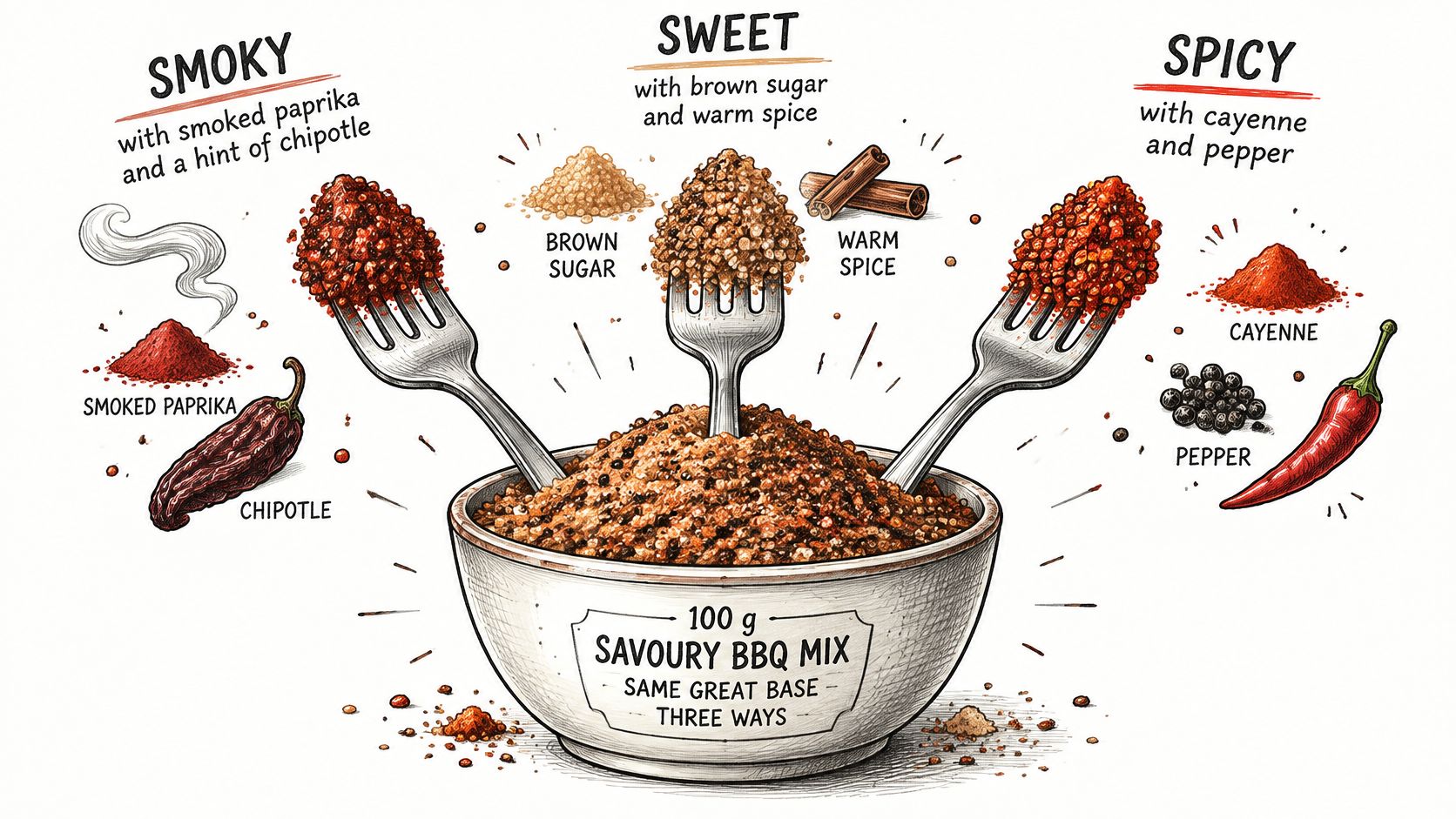
A useful starting point is a 100 g base, with smoky, sweet and spicy directions made by substitution rather than endless additions. The point isn't to create the biggest ingredient list. It's to know what each ingredient contributes.
The same thinking applies to small-batch, ready-made rubs built from plant-based ingredients, without fillers. Authentic cultural flavour inspiration and craft-can packaging can make them appealing, but the practical test remains simple: does the blend suit tonight's food?
Homemade gives you control over individual ingredients. A ready-made rub removes the weighing job when you're trying to get dinner cooked. Neither option excuses guessing how much goes onto the tray.
Build a Repeatable Base Rub by Weight
Keep salt as a measured component, not the bulk of the jar. For this savoury base, use fine salt, black pepper, dried garlic, onion, paprika and a mild dried herb such as oregano.
The following is a proposed kitchen formula, not a claim about a tested commercial product. Keep notes and judge it on cooked food before deciding what you'd change.
Base BBQ Rub Ratios per 100 g
| Blend | Fine salt | Other spices | Use per 500 g | Best when |
|---|---|---|---|---|
| Standard savoury | 10 g | 30 g paprika, 20 g garlic, 20 g onion, 10 g black pepper, 10 g oregano | 8–12 g | Unsalted ingredients, especially shorter cooks |
| Lower-salt sibling | 6 g | 30 g paprika, 20 g garlic, 20 g onion, 10 g black pepper, 10 g oregano, 4 g salt-free dried lemon zest | 8–12 g | Serving with bottled sauce, brined food or salty accompaniments |
Use salt-free garlic and onion, not garlic salt or onion salt. Choose a finely cut herb and food-grade dried zest so the ingredients distribute reasonably evenly.
The benchmark of 6–10 g salt per 100 g blend, applied at 8–12 g rub per 500 g food, contributes roughly 0.5–1.2 g salt across that food, before sauces, brines or existing salt. These are batch calculations, not a recommended individual portion.
For dietary context, the NHS advises adults to have no more than 6 g salt daily. That's why I'd start at the lower end when bottled barbecue sauce is going on later.
Make the batch consistently
- Weigh separately: Put a bowl on your digital scale, tare it, then record each ingredient as it goes in.
- Check coarse pieces: Sieve or break up large particles rather than leaving lumps of garlic or herb stems.
- Mix thoroughly: Stir for at least 2 minutes, scraping the base and sides of the bowl.
- Keep a reference: Set aside a labelled 10 g sample for comparison with your next batch.
Those preparation quantities are working instructions for this recipe. The reference sample is particularly useful if a new paprika or garlic powder tastes different from your previous purchase.
Tablespoons aren't interchangeable with grams. Salt, paprika and dried herbs pack differently, so a spoon-based substitution won't reproduce this formula reliably.
Practical rule: Taste the cooked food before changing the jar. A dry pinch won't tell you how the blend tastes with rendered fat, cooking juices and an acidic sauce.
The lower-salt version uses dried lemon for brightness rather than trying to imitate salt. If your household likes heat, substitute a little chilli for some paprika, rather than adding chilli salt.
Smoky Sweet and Spicy Rub Variations
Choose a direction before mixing your batch. Replace ingredients within the base, rather than adding everything to a finished jar and losing track of its composition.
These are suggested variations for your own kitchen trials. Keep the salt allocation unchanged unless you're deliberately choosing the lower-salt version.

Smoky for pork and mushrooms
Swap the plain paprika for smoked paprika. For a chipotle direction, replace a small portion of that paprika with chipotle powder, tasting cautiously because chilli strength varies.
Leave sugar out if you want a savoury seasoning for mushrooms or pork shoulder. With seasonings for BBQ ribs, decide whether sweetness belongs in the rub or in a finishing sauce, rather than automatically putting it in both.
If you prefer smoke through the salt component, you can buy Maldon smoked salt from Vitamin Planet. Crush and weigh it as a replacement for the existing salt, never an extra handful on top.
Don't assume smoked paprika can take unlimited direct heat. A fine coating can darken before a thick piece of food is ready.
Sweet without turning the rub into sugar
For a restrained sweet trial, replace 10 g of the paprika with 10 g sugar. That makes sugar a measured part of the blend rather than its main ingredient.
At a recipe application of 10 g rub per 500 g food, that variation contributes 1 g added sugar across the batch. The sugar per serving is that amount divided between the portions you serve, before any glaze or sauce.
For context, UK government free-sugar guidance gives daily maximums of 30 g for people aged 11 and over, 19 g for children aged four to six, and 24 g for children aged seven to ten.
Sugar can help build a browned coating, but it also needs gentler heat management. Thin chicken pieces and vegetables are poor candidates for a thick, sugary coat over fierce direct heat.
For a different approach to rounded flavour, explore spices that are sweet before reaching for more sugar.
Spicy without making it saltier
Build heat by replacing some paprika with chilli and some oregano with extra black pepper. Leave the salt unchanged, and leave sugar out when you want a sharper, savoury result.
- Wings and thighs: Try a chilli-led blend with garlic still clearly present.
- Fajita vegetables: Keep enough paprika and onion to support the chilli.
- A mixed family table: Keep the main batch mild and offer extra heat separately.
More seasoning doesn't have to mean more salt or more sugar. Change the flavour ingredients, not just the size of the shake.
Season Meat Veg and Cook with Control
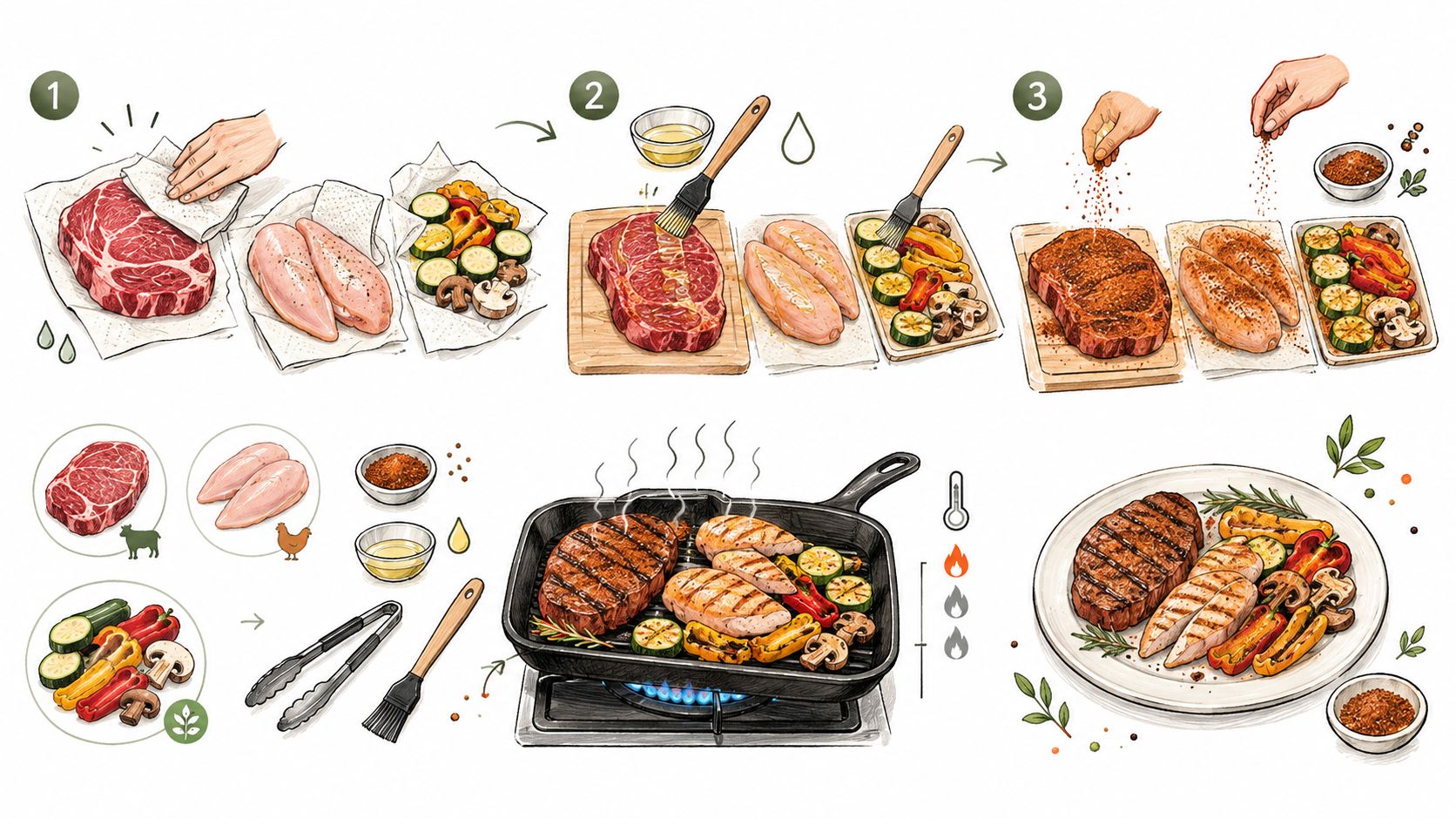
The same blend needs different handling on chicken skin, pork shoulder and an aubergine slice. Start by patting surfaces dry, then use a thin neutral-oil film on very lean meat or vegetables that need help holding the seasoning.
For a stronger crust, an application around 1.5–2.5% of food weight is a useful working range. It overlaps with the everyday application above, but don't treat the heavier end as compulsory, especially when sauce follows.

Match the application to dinner
Chicken thighs for the grill or air fryer: Coat evenly, including folded areas, without leaving piles of powder. Refrigerate small cuts for 30–60 minutes; use a second light dusting only if the first coat has dissolved into surface moisture.
In an air fryer, leave space around the thighs and follow the appliance's guidance for the cut. On a barbecue, keep a cooler area available so you can move them away from a darkening coating.
Pork for pulled-style cooking: Choose the smoky variation and refrigerate a thicker piece for several hours. Cook with low, indirect heat, and judge tenderness separately from the appearance of the bark.
Beef steak or kebabs: Start with the plain savoury base. Keep sweet sauce separate so you can taste whether the pepper and garlic balance suits the beef.
- Corn and aubergine: Brush with a light oil coating before seasoning, keeping the layer even.
- Mushrooms: Coat gently rather than filling their gills with dry powder.
- Delicate vegetables: Reserve some seasoning for a clean, light finishing dusting instead of exposing the whole coating to fierce heat.
For more ingredient-specific handling, use the guide to how to season vegetables.
Separate heat control from doneness
A two-zone grill gives you direct heat above the fuel and indirect heat away from it. Start thicker, sugar-touched pieces on the indirect side, then finish briefly over direct heat if the surface needs more colour.
Keep plant-based food on a separate clean tray with its own utensils. A cooler grill zone isn't a substitute for keeping raw-meat juices away from a vegetarian portion.
The Food Standards Agency's barbecue guidance says chicken, pork, minced-meat products, burgers, kebabs and sausages shouldn't be served pink or rare. The thickest part should be steaming hot, without visible pink meat, and with clear juices; turn and move meat regularly for even cooking.
The same guidance says charcoal should be glowing red with a grey, powdery surface before cooking. Chicken or pork can be started in the oven and finished on the barbecue.
If burgers are on the menu, Jolitee's hamburger recipe for your holiday BBQ offers another meal idea. Apply the same thorough-cooking checks regardless of the seasoning.
Store the Blend and Keep the Cook Safe
A good jar needs protection from moisture and careless handling. Flavour storage and food safety are separate checks: a fragrant blend can still be contaminated, while a safely handled blend can lose its appeal.
Keep the rub in a dry, airtight container, away from light, steam and repeated wet-hand contact. Pour what you need into a separate bowl before handling raw food, rather than reaching back into the main jar.
Keep a useful batch record
For repeat cooking, jot down enough information to explain why the next batch might taste different. A kitchen notebook is sufficient.
- Ingredient identity: Record the supplier and lot details where available.
- Weights and yield: Note what went into the bowl, including substitutions.
- Sieve condition: Record coarse pieces removed or ingredients that needed breaking up.
- Sensory comparison: Compare aroma and taste with the retained reference sample using clean utensils.
For larger batches, Food and Drink Federation guidance on herbs and spices recommends checking incoming ingredients against agreed specifications and rejecting non-compliant material. At home, the useful habit is to inspect each ingredient before mixing it into everything else.
Don't mistake an evenly coloured blend for proof that it's safe. Clean storage doesn't remove the need for normal raw-food precautions.
Keep the jar away from the raw-food board
The Food Standards Agency's barbecue safety survey found that 51% of respondents used the same tongs for raw and cooked meat, while 19% didn't keep raw and cooked food on separate plates. The survey was conducted in 2014, so it's a historical warning about handling habits, not a measure of current behaviour.
Campylobacter is a reason to take those habits seriously, not a reason to fear the spice jar. Wash hands after handling raw meat, use clean utensils and keep seasoned meat chilled until shortly before cooking.
Never reuse a marinade that has touched raw meat on cooked or ready-to-eat food. For checking the centre rather than trusting the crust, consult the meat thermometer guide.
Keep the main batch clean: A spoon that has touched raw meat must never go back into your stored rub.
For allergy-aware cooking, retain a written ingredient list, check purchased ingredients and prevent cross-contact between trays. Plant-based ingredients alone don't establish that a blend suits every allergy.
Discard damp or suspicious clumps, a stale-smelling batch, or any stored blend contaminated by a raw-meat spoon. Don't try to rescue it by drying or sieving it.
Pair Flavours and Pick Your Next Rub
There's no prize for weighing paprika while everyone waits for dinner. A ready-made rub is a sensible weeknight choice when you want a clear flavour direction without building another batch.
Choose according to the meal, then read the label for ingredients and application guidance. The following are alternatives to the homemade directions, not claims that their recipes or salt levels are identical.
Choose the flavour job
- Savoury base: SPG (Salt Pepper Garlic) Base Blend is the straightforward starting point for pepper-and-garlic cooking.
- Pork night: Consider Hickory Hog Pork Rub for ribs or pulled pork.
- Beef or a different direction: Explore Revolution Beef Rub or Cherry Force BBQ Rub.
- Chicken and wings: Choose between Wingman Wing Rub, Spitfire Spice Blend and Chipotle Cowboy Chicken Rub according to the flavour and heat you want.
- Vegetable trays: Try Holy Jalapeño Fajita Seasoning for fajita vegetables or Miami Mojo Citrus Blend for a citrus direction.
For tacos, gyros or chilli, choose a blend intended for that meal: Al Pastor Taco Seasoning, Greek Odyssey Gyros Rub or Texas Red Chili Mix.
Smoker owners can browse wood pellets as fuel, not as an ingredient to add to the rub.
For mixed cooks or gifts, use Build Your Own Bundle, or browse Flavour Heroes, Chilli Heroes, Bar-B-Que Heroes, Weeknight Wonders and the Ultimate BBQ Seasoning Gift Set.
Frequently asked questions
Can I use this BBQ seasoning recipe without sugar?
Yes. The savoury base contains no added sugar, and the smoky and spicy directions don't require it.
Can I use the same rub on chicken and vegetables?
Yes, but use the different application methods above and keep the portions and utensils separate during preparation.
Is a spice-heavy rub automatically low in sodium?
No. Read the label and consider the complete meal, including brine, sauce and any already-seasoned ingredients.
What should I try first?
Season a chicken tray and a separate vegetable tray with your chosen blend this week. Record the amount used and whether you'd change the salt level next time.
Small-batch rubs made with plant-based ingredients, no fillers and a “no added crap” approach offer a ready alternative to weighing your own, with authentic cultural flavour inspiration and craft-can packaging. Visit Smokey Rebel to choose a rub for that chicken-and-vegetable cook, then keep a note of how it tastes before adding sauce.
Join our Mailing List
Sign up and get Smokey Rebel Recipes + weekly recipes straight to your inbox!
Recent articles
BBQ Seasoning Recipe with Ratios You Can Repeat
Make a BBQ seasoning recipe by weight, with smoky, sweet and spicy versions, safe cooking tips, storage advice and meat...
Read moreBest Dry Rub Steak: A UK Guide to Blends and Grilling
Find the best dry rub steak approach for your grill, pan or reverse-sear. Compare flavour profiles, ingredients and UK cooking...
Read moreBBQ Seasoning for Ribs: A Practical UK Guide
BBQ seasoning for ribs made simple. Learn rub recipes, application timing, sauces, smoking vs grilling tips and flavour pairings for...
Read more