7 Spicy Salmon Recipes for Bold Home Cooking
Why do so many spicy salmon recipes treat chilli sauce as the starting point, when the cooking method decides whether it tastes fresh, smoky or burnt? Choose the heat before the pan. A sweet glaze needs different handling from a dry chilli crust, and neither behaves like fermented chilli paste.
These preparations separate sweet smoke, citrus warmth, a hard sear, a sticky glaze, low smoke, fermented paste and a bowl you can assemble fast. Match the method to the kit you already use, whether that's an oven, pan, air fryer or smoker. Keep the seasoning light enough that the salmon stays the point of the plate.
Use temperature, not surface colour, to judge safety. The UK government's cooking guidance recommends that the centre reaches 70°C for 2 minutes, or an equivalent combination such as 60°C for 45 minutes. Check the thickest part with a clean food thermometer. A dark glaze or flaky edge doesn't tell you what's happening in the middle.
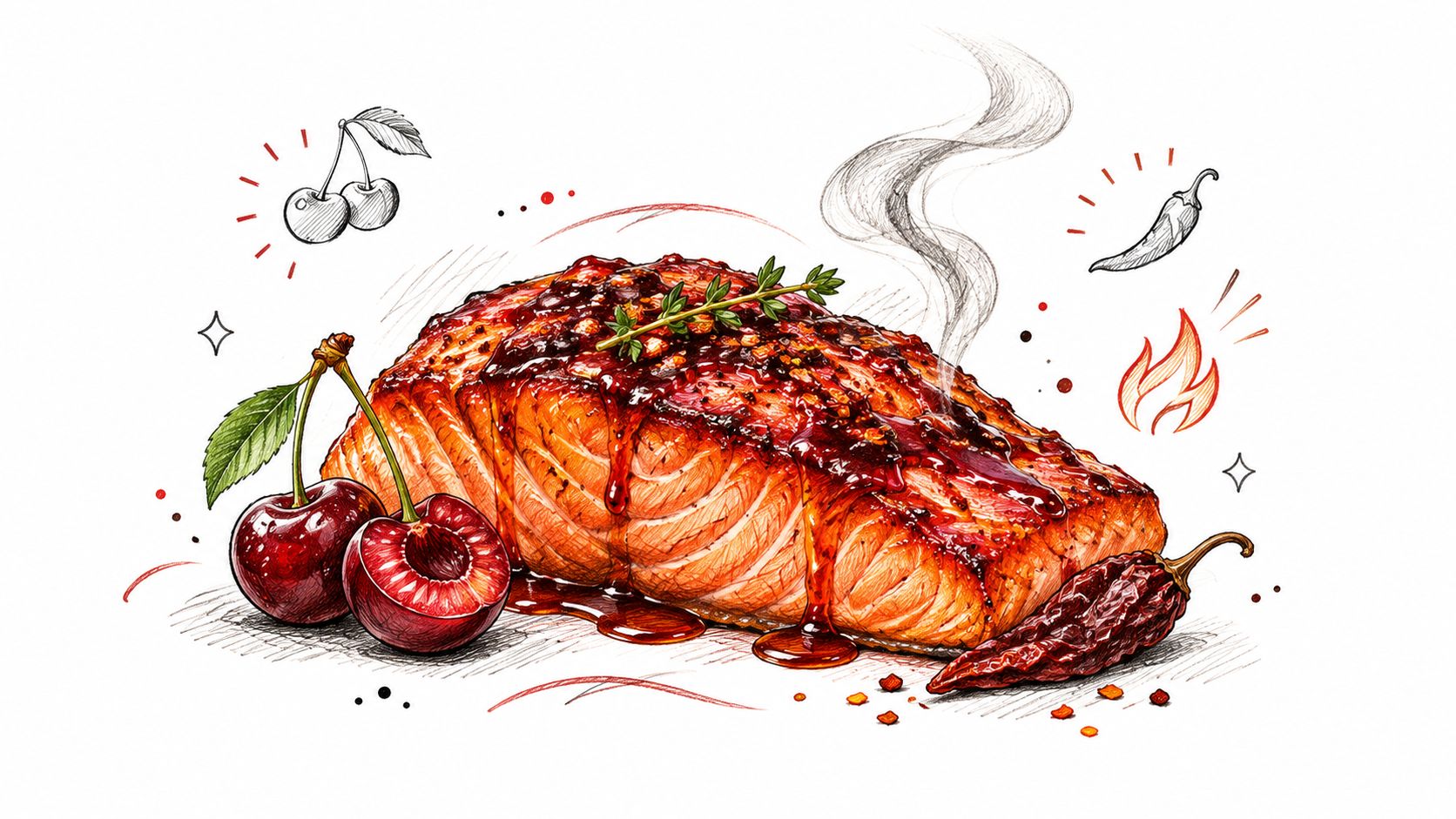
1. Cherry Chipotle Glazed Salmon Fillets
Cherry gives this salmon a rounded sweetness, while chipotle adds smoky chilli warmth. Bake it for a rice-and-greens supper, or cook it over indirect barbecue heat before a brief glazed finish.

Pat the fillets dry and apply a light coating of Cherry Force BBQ Rub. For the glaze, loosen cherry preserve with lime juice and stir in chipotle paste gradually, tasting before the mixture touches raw fish.
Build the flavour in stages
- Start dry: Place the seasoned salmon skin-side down on a lightly oiled tray or the indirect side of the barbecue.
- Cook gently: Let the fish cook most of the way through before adding anything sticky.
- Finish thinly: Brush on a light glaze near the end, allowing it to become tacky rather than black.
- Rest briefly: Transfer to a warm plate and let the glaze settle while you spoon out the rice.
The trade-off is sweetness versus crust. A thick coat looks generous but can scorch before the centre is ready, particularly over charcoal. Keep extra glaze in a separate clean bowl for serving.
Glaze rule: Cook the fish first and set the sweetness at the end. Don't use a burnt surface as evidence that the centre is cooked.
For a wood-fired version, the guide to cherry wood for smokers helps you plan the smoke alongside the fruit glaze. Serve with greens dressed in lemon rather than another sweet sauce.
2. Miami Mojo Citrus-Spiced Salmon
For a lighter plate, take the citrus-and-garlic direction associated with Cuban and Floridian mojo. Add chilli for warmth, then use fresh lime at the table rather than leaving the fish submerged in acidic juice.
Apply Miami Mojo Citrus Blend lightly to dry salmon. Let it stand briefly in the fridge while you prepare mango, red onion, coriander and lime for a salsa. Add chopped fresh chilli separately so each person can choose their heat.
Choose fillets or lettuce cups
For grilled fillets, oil the skin lightly and place the salmon over moderate heat. Leave it undisturbed until the skin releases, then move it away from fierce heat if the seasoning colours before the centre is ready. Spoon the mango salsa alongside, not over the skin.
For air-fried salmon bites, cut the fish into even chunks and coat lightly with oil and seasoning. Arrange them with space between each piece, cook until they meet the safe cooking benchmark, then tuck them into lettuce leaves with salsa.
- Timing rule: Add fresh lime after cooking. Keep any acidic pre-cook coating brief rather than using it as a long soak.
- Heat control: Put extra chilli in the salsa instead of increasing every seasoning on the fish.
- Trade-off: Smaller pieces give more seasoned edges, but they also need closer attention to avoid drying out.
The same citrus-and-garlic approach works across a mixed seafood meal. These garlic-lime mojo grilled prawns offer a complementary dish for guests without making every plate taste identical.
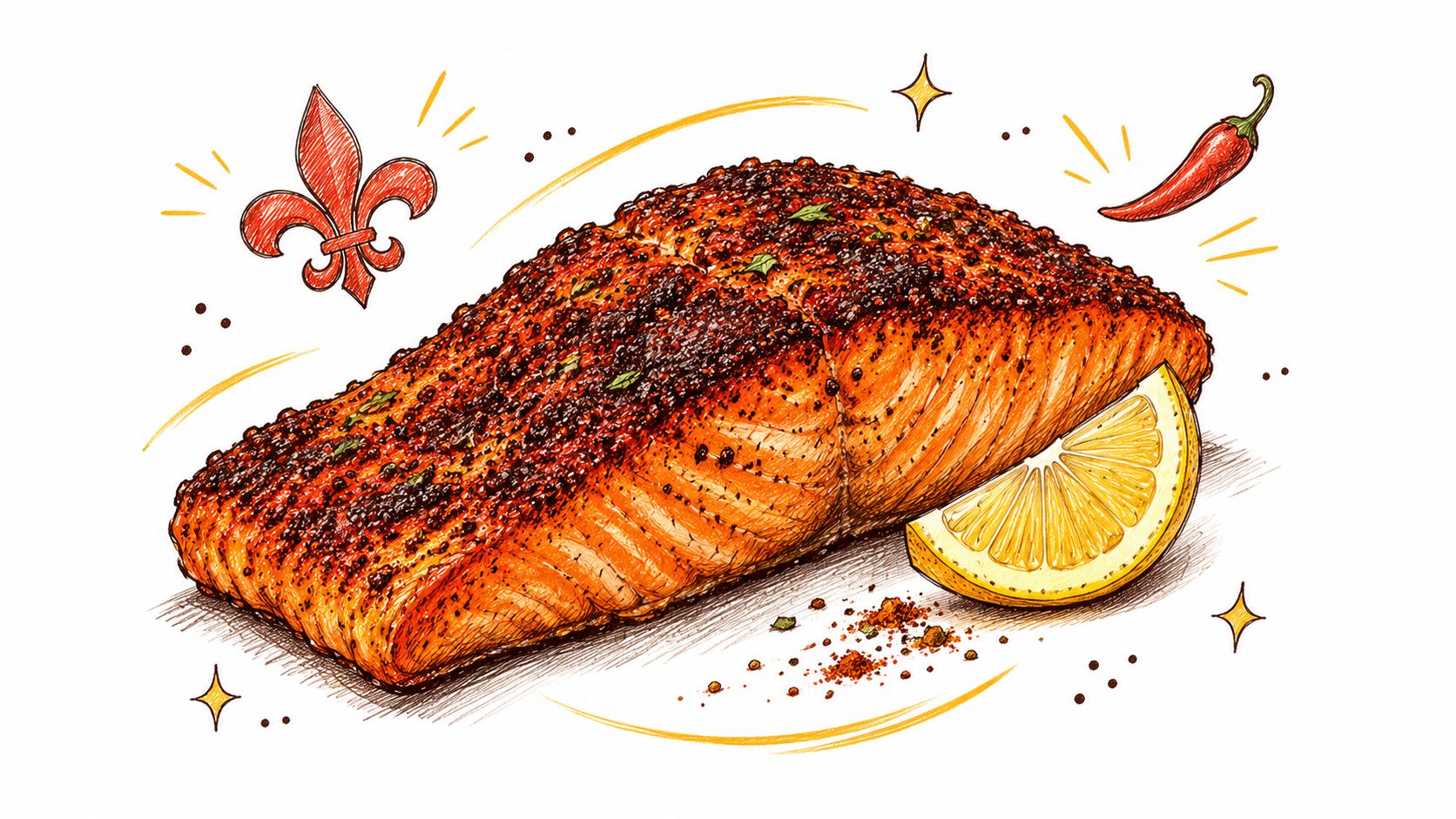
3. Cajun Blackened Salmon
Blackened salmon should have a dark, aromatic crust, not a bitter layer of burnt spices. The Louisiana-style approach uses paprika, cayenne and herbs with a hard sear, followed by gentler cooking when the thickness demands it.

For a hotter variation, use a light coating of Spitfire Spice Blend rather than treating it as a traditional Cajun blend. Dry the salmon thoroughly first. Wet fish steams against the pan and makes a clean crust harder to achieve.
Sear hard, then ease off
Heat a cast-iron pan over high heat and add a thin film of suitable frying oil. Lay the salmon skin-side down, pressing gently with a fish slice so the skin makes contact. Let it release before turning the seasoned flesh towards the pan.
Reduce the heat once the crust forms. For a thick fillet, finish in a moderate oven rather than repeatedly turning it in a fiercely hot pan. Check the centre without relying on the blackened exterior.
A hard sear is a finishing technique, not a reason to keep the pan at maximum heat throughout cooking.
Open the windows and use the extractor, or cook outdoors on a griddle. Chilli-heavy seasoning can produce an uncomfortable amount of smoke.
Serve with Creole-style rice and sharp cabbage slaw. For tacos, flake the cooked salmon into warm tortillas and add lime crema. The cool dressing softens the heat without covering the crust in another strong sauce.
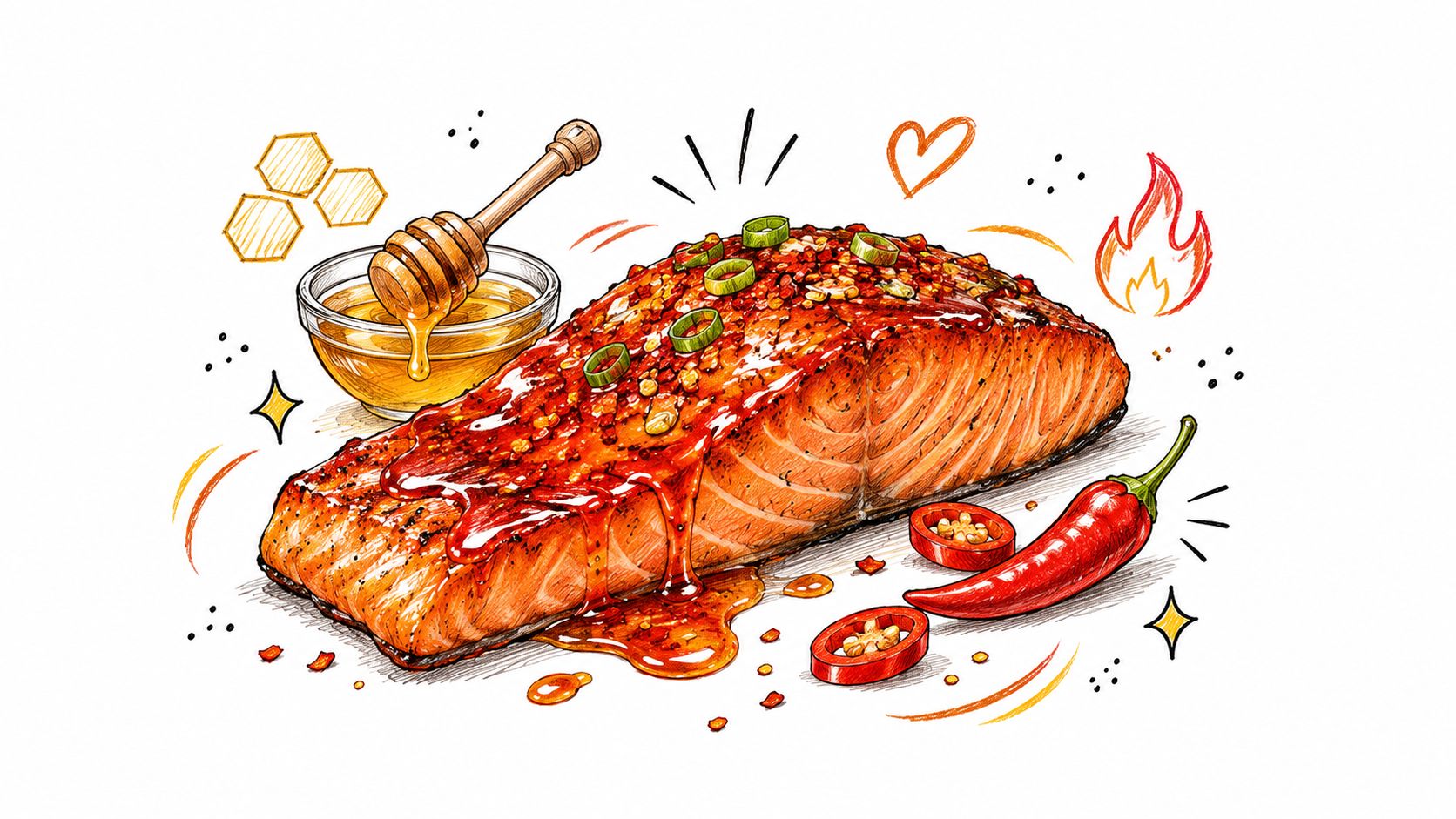
4. Sriracha Honey Salmon
This is the sticky, sweet-hot option for steamed rice and cucumber. Sriracha provides chilli and tang, honey rounds it out, and soy sauce or tamari adds savoury depth.

Whisk the sauce ingredients with grated garlic and a squeeze of lime. Taste before adding more honey, since a very sweet glaze is harder to manage under a grill. Split the mixture into two bowls, one for cooking and one for serving, before either portion touches raw salmon.
Keep the honey away from fierce heat
Sugar burns long before salmon overcooks, so treat the glaze like a finishing varnish rather than a marinade. Season the fish sparingly with salt, pepper and a little garlic. Soy sauce already contributes salt, so the fillet needs only a light dry coating.
- Bake first: Put the salmon on a lightly oiled tray in a moderately hot oven.
- Glaze late: Brush on the cooking portion when the fish is nearly ready, then watch it closely.
- Finish cleanly: Spoon over the untouched serving sauce once the salmon reaches its safe cooking endpoint.
For barbecue skewers, use evenly cut chunks and keep them away from direct flames while the centre cooks. Turn carefully with tongs rather than pulling at the fish.
The trade-off is a softer exterior: sticky salmon won't keep the same crisp surface as a dry-seared fillet. Let the glaze be the feature.
For a more savoury finish, these Thai fish sauce pairing tips offer another direction. Add fish sauce cautiously rather than stacking it freely with soy and salted seasoning.
5. Chipotle Hot-Smoked Salmon
How do you get smoke and chipotle flavour without drying out the salmon? Use indirect heat, keep the fish away from the fuel, and treat the wood as a supporting flavour. A smoker or covered kettle barbecue works for this method.
Keep curing and cooking separate
A light salt treatment seasons the flesh before smoking, but it does not cook the fish. Keep it refrigerated during preparation, pat the surface dry, then apply chipotle sparingly. If your paste is salty, use less separate salt.
Choose a wood type recommended by your smoker or kettle manufacturer, and check that the fuel suits your appliance before you start. Keep the cooking chamber steady and use a probe in the thickest part of the fish. Limit lid checks, since opening the cooker interrupts the heat.
Smoke rule: Low heat still needs a verified cooking endpoint. Don't remove salmon just because its centre feels warm.
For the full preparation sequence, follow this guide to smoking salmon. Use its temperature-and-hold guidance to decide when the fish is ready, rather than relying on a fixed smoking time.
This video offers a visual companion to the process.
Serve the cooked salmon flaked over bagels with crème fraîche, or over leaves with a sharp chilli dressing. Smoking takes more attention than oven cooking, but gives the fish a distinct smoky flavour.
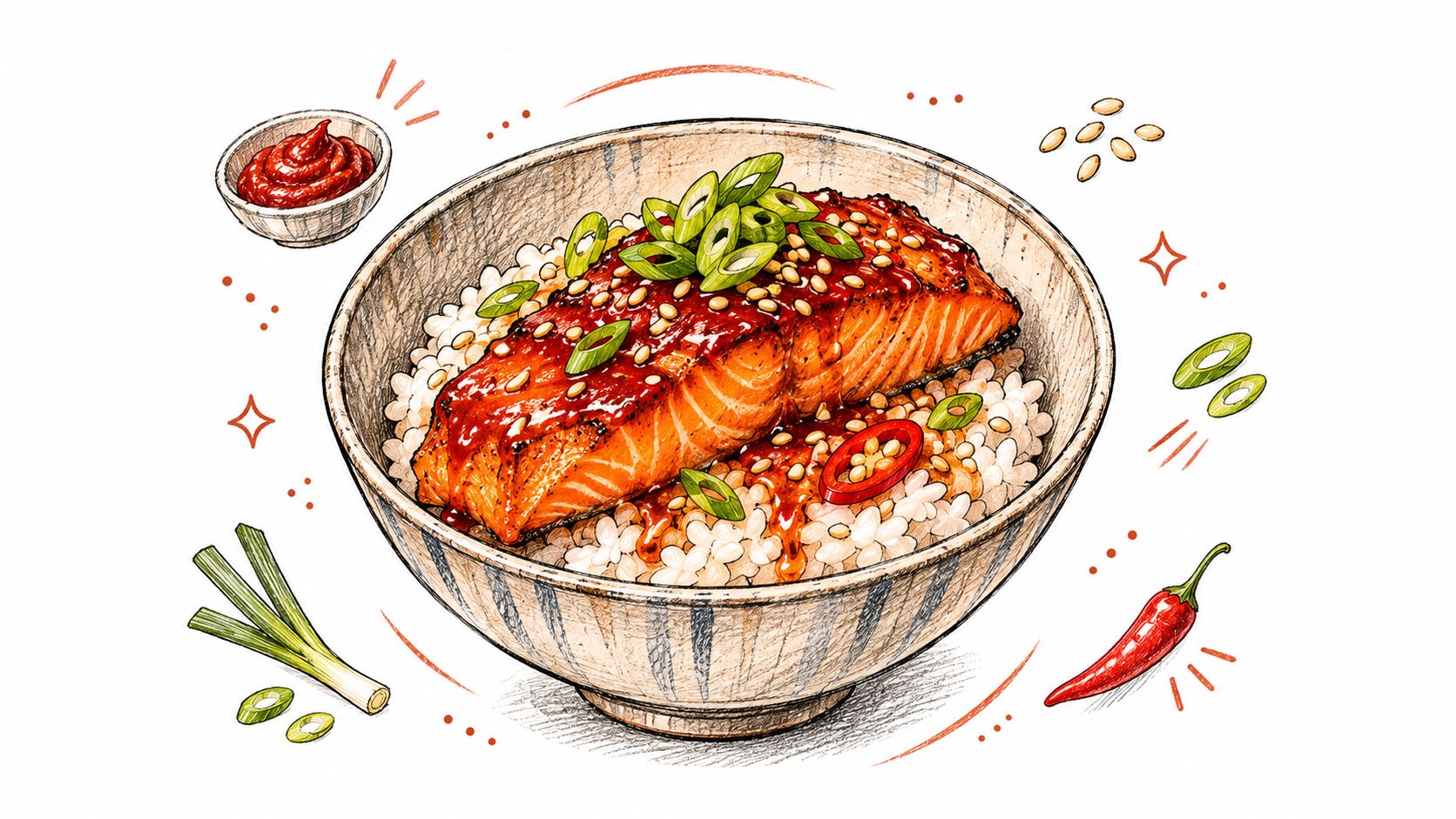
6. Gochujang Glazed Salmon
Gochujang gives salmon a fermented, savoury chilli flavour that differs from a straightforward hot sauce. This Korean-inspired preparation works particularly well with rice, pickled cucumber and sesame greens.

Whisk gochujang with soy sauce, rice vinegar and a little honey. Add enough water to make it brushable, then taste before adding toasted sesame oil. Keep the paste's flavour clear rather than drowning it in sweetness.
Start with the skin, finish with the paste
For a pan-cooked version, dry the skin and place the salmon skin-side down in a lightly oiled pan over medium-high heat. Let the skin crisp, then reduce the heat and continue cooking gently. Brush the glaze over the exposed flesh near the end.
Don't score through the fish to force glaze inside. A thin surface coating gives plenty of flavour, while deep cuts make a delicate fillet more likely to break.
- Timing rule: Add the fermented paste after the initial sear, not underneath the fish in a fiercely hot pan.
- Bowl option: Roast the salmon with a thin coating, then add a separate clean spoonful of sauce when serving.
- Contrast: Use drained pickled cucumber, fresh herbs and sesame seeds to balance the rich fish.
The trade-off is that a thick gochujang coating can catch and become bitter. If the glaze darkens before the centre is ready, reduce the heat or move the fish to the oven. Don't keep adding paste to conceal a scorched layer.
7. Spicy Salmon Bowl with Sriracha Mayo
Build this bowl around cooked salmon, then add sushi-style rice, avocado, cucumber and a cool chilli mayonnaise. You get the familiar contrast of a spicy salmon roll without rolling anything or needing to handle raw fish.
Start the rice before cooking the salmon. While it cooks, slice cucumber, prepare edamame and cut the fish into evenly sized chunks. Mix sriracha into mayonnaise gradually, then sharpen it with lime or rice vinegar.
Assemble everything before searing
Pat the salmon cubes dry and add a light dusting of the Spitfire blend. Heat a frying pan with a thin coating of oil, add the fish without crowding it and leave the first side alone until it releases. Turn carefully and check a larger piece for the safe cooking endpoint.
- Build the base: Spoon rice into bowls and arrange cucumber, avocado and edamame around it.
- Add the fish: Lift the cooked salmon from the pan without breaking every piece into flakes.
- Finish cool: Drizzle with sriracha mayo, then add pickled ginger, spring onion or nori.
Timing rule: Make the dressing before the salmon goes into the pan, but add it after cooking. This keeps the sauce creamy and stops mayonnaise becoming a burnt coating.
For a family dinner, put toppings and extra sriracha on the table separately. Everyone can adjust their bowl without needing a separate batch of fish.
Raw salmon needs a different food-safety approach. A sushi-grade description or a packet marked previously frozen isn't, by itself, enough to establish that fish is suitable for eating raw. Cooking is the straightforward choice for this recipe.
How These Spicy Salmon Recipes Compare
Read it by heat first, then method. The timing column is the guardrail that keeps chilli, sugar and smoke from overtaking the fish.
| Recipe | Heat profile | Main method | Typical cook time | Best served as |
|---|---|---|---|---|
| Cherry Chipotle Glazed Salmon Fillets | Sweet, smoky, slow-building heat | Bake, grill, or pan-cook; glaze at the end | About 12–15 minutes | Weeknight dinner with rice and greens |
| Miami Mojo Citrus-Spiced Salmon | Bright citrus with warming spice | Grill, bake, or air-fry | About 8–10 minutes | Light meal with tropical salsa or rice |
| Cajun Blackened Salmon | Bold, savoury paprika and cayenne heat | Sear in a very hot pan | About 3–4 minutes per side | With Creole rice and slaw, or in tacos |
| Sriracha Honey Salmon | Sweet, garlicky, hot | Bake or grill with a sticky glaze | About 12–15 minutes at 200°C | With rice, noodles, and vegetables |
| Chipotle Hot-Smoked Salmon | Smoky with steady chilli warmth | Hot-smoke over indirect heat | Low and slow at 60–80°C until the thickest part reaches 70°C for 2 minutes or 60°C for 45 minutes | Flaked over bagels or in salad |
| Gochujang Glazed Salmon | Savoury, sweet, mildly smoky heat | Pan-cook or bake with glaze | About 8–10 minutes | In rice bowls or with sesame greens |
| Spicy Salmon Bowl with Sriracha Mayo | Creamy, spicy heat | Assemble with cooked salmon | Assembled in minutes | Lunch or a filling bowl meal |
Cook One and Keep the Rest for Later
Start with the method that matches tonight's kitchen. Choose the cherry glaze for oven cooking, citrus-spiced bites for the air fryer, or blackened salmon when you can manage a hot pan and good ventilation. Save smoking for a cook where you can monitor both the chamber and the fish.
The useful habit across these spicy salmon recipes is to separate cooking from finishing. Establish the crust before easing off the heat. Add sugary glazes late, fresh citrus after cooking and creamy dressing at the table.
Make the next cook easier
Keep the sides simple while you learn a new method. Rice and cucumber make it easier to judge whether a glaze needs more acidity, while greens and potatoes suit a dry-spiced fillet. Change the chilli level separately from the salt whenever you can.
For a winter table or food gift, the Christmas Feast BBQ Rub Gift Set offers a ready selection, or you can build a smaller seasoning bundle. Our best-selling flavours start from £5.49, and orders come with recipes and cooking guides. Our UK-made seasonings bring authentic cultural flavours to everyday cooking, with no added crap: no fillers or silica dioxide, and signature aluminium craft cans.
Frequently Asked Questions
Can I use frozen salmon?
Yes, thaw it safely according to the pack instructions and pat it dry before seasoning. Excess surface water makes searing and glazing harder to control.
How do I make spicy salmon milder?
Reduce the chilli rather than adding more honey. Serve extra heat separately, with yoghurt, cucumber or mayonnaise alongside.
What stops a glaze burning?
A thin coating and a late application help. If it darkens before the centre is safely cooked, lower the heat rather than accepting a burnt exterior.
Choose a preparation, get the thermometer ready and prepare the cold toppings first. That leaves you free to concentrate on the fish when it reaches the pan.
Smokey Rebel offers small-batch rubs and seasonings for fish, meat and vegetables, with recipes to help you use them beyond the barbecue. Visit Smokey Rebel to choose a flavour for your next salmon supper or put together a practical gift for someone who loves cooking.
Join our Mailing List
Sign up and get Smokey Rebel Recipes + weekly recipes straight to your inbox!
Recent articles
7 Spicy Salmon Recipes for Bold Home Cooking
Try 7 spicy salmon recipes with distinct heat, cook methods and serving ideas, from citrus rubs to hot-smoked fillets.
Read moreHow to Cook BBQ Cauliflower Wings
Cook BBQ cauliflower wings on the grill or in the oven. Season, coat and glaze so they stay crisp, with...
Read moreBeef Rib Rub: Ratios, Methods and Flavour Pairings
Beef Rib Rub ratios per kilo, the flavours that suit beef, and step-by-step smoking and grilling methods, with low-salt tips...
Read more