Smoked Beef Brisket Rub: The UK Backyard Guide
Saturday morning, you're weighing a 3 to 4kg supermarket brisket on the patio while rain threatens the offset and the pellet hopper needs checking. It isn't the giant American packer you see in competition videos, and the price makes an under-seasoned, dry or poorly barked result harder to shrug off.
That's why a smoked beef brisket rub needs to be judged by more than its ingredient list. It must season a smaller UK cut properly, create a durable bark through changing humidity, and make the finished joint feel worth the cook. A bold but restrained base, such as Revolution Beef Rub or an SPG Base Blend, gives you a more repeatable starting point than throwing every jar in the cupboard at the meat.

The UK market already has a strong appetite for dry, spice-led barbecue applications. Grand View Research's UK barbecue seasoning outlook estimates the market at USD 511.1 million in 2021, with a projection of USD 716.2 million by 2030, equivalent to a 3.8% CAGR. Barbecue rubs were the largest segment and represented 57.27% of revenue in 2024, so a proper dry rub isn't a niche approach.
For more ideas on choosing and using seasoning in British conditions, keep the wider UK barbecue rub guide nearby. The rest comes down to balance, weighing the seasoning against trimmed meat, giving the bark time to develop, and knowing when the brisket is ready rather than blindly following the clock.
Why the Right Brisket Rub Matters More in the UK
A supermarket brisket can shrink twice before it reaches the smoker. The label may show a respectable joint, then trimming removes hard fat and leaves a smaller flat with less margin for seasoning or heat mistakes. A whole US-style packer gives you more usable thickness. A smaller UK cut demands tighter control.
That control protects value. AHDB's 2026 consumer insight report records total beef volume down 2.0% year on year in the 12 weeks to 9 August 2026, while spend rose 3.3% as average prices increased 5.4%. Its wider 2026 outlook forecasts total beef volume sales at -1% compared with 2025 and -6% compared with 2024. The figures do not set your butcher's price, but they make a failed cook harder to justify when a smaller joint already costs more per kilogram.
Salt needs weighing against the trimmed meat, not the packet weight. On a 3-4kg flat, the centre is closer to the surface, so an over-salted rub shows up quickly in every slice. A thicker packer spreads the same surface seasoning across more beef and gives salt more distance to travel. Keep the salt measured, then adjust pepper and aromatics for bark rather than using them to mask poor seasoning control.
Practical rule: weigh the trimmed brisket, record the rub amount, and change one variable per cook. UK humidity and smoker airflow can alter bark development, but a measured base gives you a fair comparison.
Revolution Beef Rub suits a cook who wants a beef-focused starting point without several open jars. Build from it only after checking its salt level, then add paprika, chilli or mustard powder by weight if the bark needs more colour or heat. The aim is a repeatable crust, not a cupboard-clearance blend.
For seasoning ideas suited to British conditions, use this UK barbecue rub guide. UK spice demand also supports the dry-rub approach. IndexBox's UK spice market analysis reports consumption reaching 85K tons in 2024, up 2.1% from the previous year, while market value reached about $331M and grew 4.6% year on year.
The Core Flavours Behind a Smoked Beef Brisket Rub
A smaller UK supermarket brisket can go from properly seasoned to over-salted in a single cook, especially when the smoker runs hot at the edges. Build the rub around three flavours, salt, coarse black pepper and granulated garlic, then add accents only when they serve the beef.
Salt seasons below the surface and helps create the dry conditions bark needs. Coarse black pepper provides the dark, textured crust associated with Central Texas brisket. Granulated garlic adds savoury depth without making the bark taste like toast.
Build the blend in layers
Start with the salt and pepper backbone. A Central Texas-style blend commonly uses equal parts coarse kosher salt and coarse black pepper, with garlic forming the familiar SPG variation, as described by Brisket and Bark's seasoning guide. That restrained base suits variable UK smoker airflow because it leaves room to correct colour and aroma without pushing the salt level higher.
Grind size affects both coverage and texture. Use coarse salt and roughly 16-mesh pepper for a bark that remains distinct after a long cook. Fine particles dissolve quickly, concentrate on thin flats and can leave the crust dusty. Granulated garlic should be smaller than the pepper, but not powdered.
| Ingredient | Practical specification | Starting share |
|---|---|---|
| Coarse salt | Kosher-style crystals, measured by weight | 1 part |
| Coarse black pepper | Around 16-mesh for visible bark | 1 part |
| Granulated garlic | Medium granules, evenly distributed | About half a part |
| Paprika | Fine powder for colour and mild sweetness | Small accent |
| Mustard powder | Fine powder for dry tang | Small accent |
| Brown sugar | Fine crystals, prone to darkening | Minimal, or omit |
Paprika changes the bark's colour and adds mild sweetness. Mustard powder brings dry, savoury tang, particularly under a thin binder. Brown sugar can supply caramelised notes, but it darkens quickly on hotter edges and may taste sticky on a lean flat.
A plain-text Revolution Beef Rub reference makes sense for cooks who want a beef-focused starting point without several jars. Check its saltiness before adding anything, then introduce one accent at a time. The SPG Base Blend can serve the same purpose as a measured starting point, with paprika, chilli or mustard powder added only when the bark needs a change.
The finished rub should sharpen the brisket's beef and smoke, not bury them under sweetness or heat. That balance protects value from a costly, smaller cut, where moisture loss leaves aggressive seasoning more exposed.
Getting the Ratios Right for UK Brisket Sizes
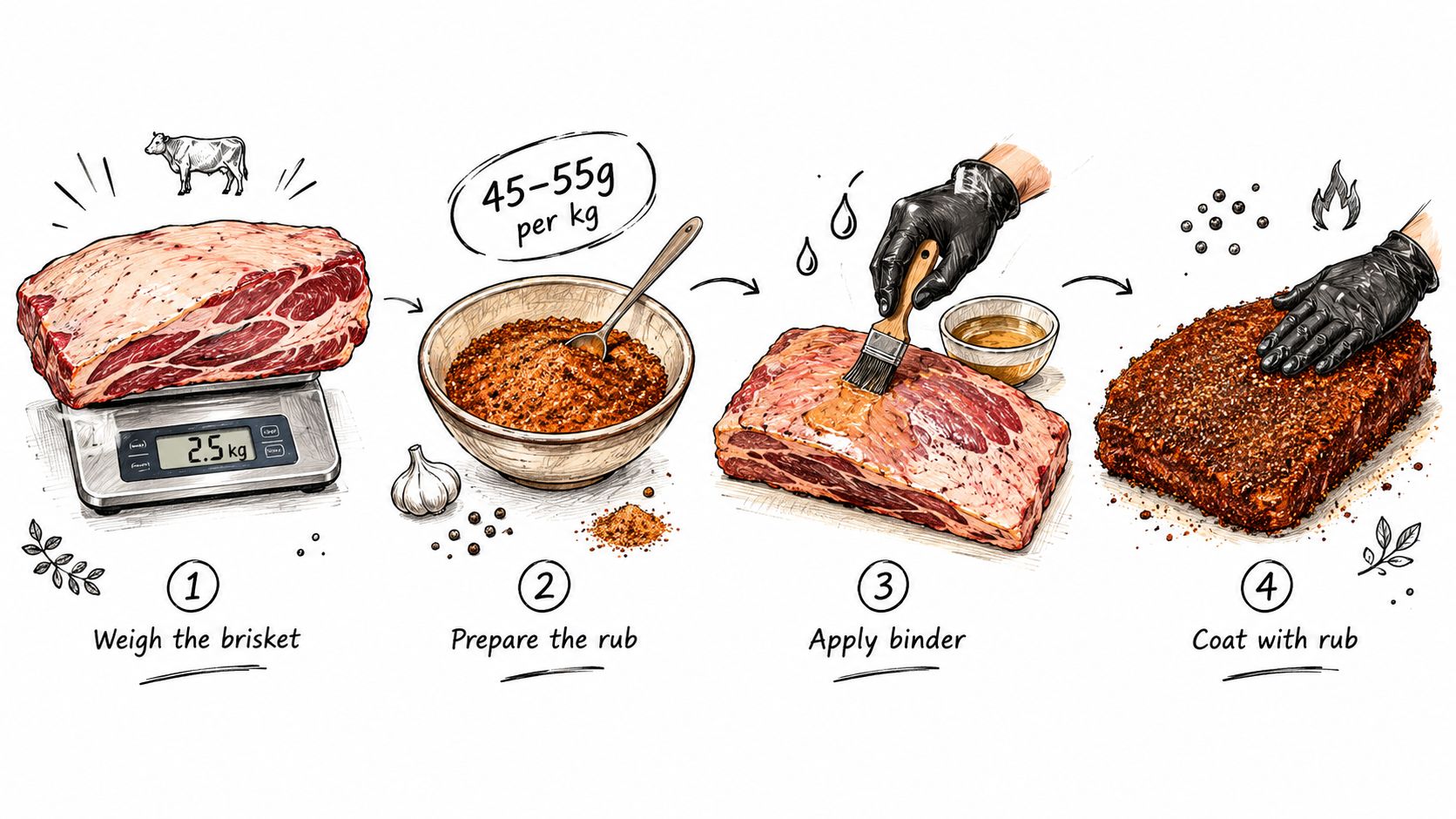
A smaller UK supermarket brisket leaves less room for seasoning errors. Weigh it after trimming, then set the salt from the meat weight rather than copying a spoon measure from a larger American packer. A practical target is 0.7% to 1% of post-trim weight, with whole packers commonly around 0.75% to 0.9%, following the brisket rub calculator guidance from Miss Vickie.
The calculation applies to salt, not the whole jar. Check the blend label for its salt percentage, because two rubs with the same weight can season very differently. A bold beef base such as Revolution Beef Rub or SPG Base Blend can reduce guesswork, but the label still decides how much you need.
Use pepper to shape the bark
For a bark-forward profile, set pepper at a 1.5:1 to 2:1 pepper-to-salt ratio, using coarse particles that remain visible after a long cook. Equal parts salt and pepper is a reliable benchmark. More pepper gives a darker, more textured crust without increasing the salt load.
A 4kg trimmed brisket needs 28g to 40g of salt at the stated target. For a 5kg brisket, the range is 35g to 50g. For 6kg, it is 42g to 60g. UK weather and smoker airflow can change how much seasoning remains on the surface, so use enough rub for an even, opaque coat rather than treating the table as an exact dispensing measure.
Suppose a blend label states 35% salt. A 5kg brisket with a 0.7% salt target needs 35g of salt. Divide 35g by 0.35, giving 100g of total rub. If the same brisket is pushed to a 1% target, it needs 50g of salt, which requires about 143g of that blend. This calculation protects bark coverage without oversalting a lean, expensive cut.
The BBQ Experts indicate approximately 150g to 200g of rub for a 5kg to 6kg brisket when full coverage is required, as described in their brisket rub guidance. Use the lower end when the blend is salt-heavy, and the upper end when its salt concentration is lower or the brisket has broad exposed surfaces.
Applying the Rub and Building Bark Before the Smoker
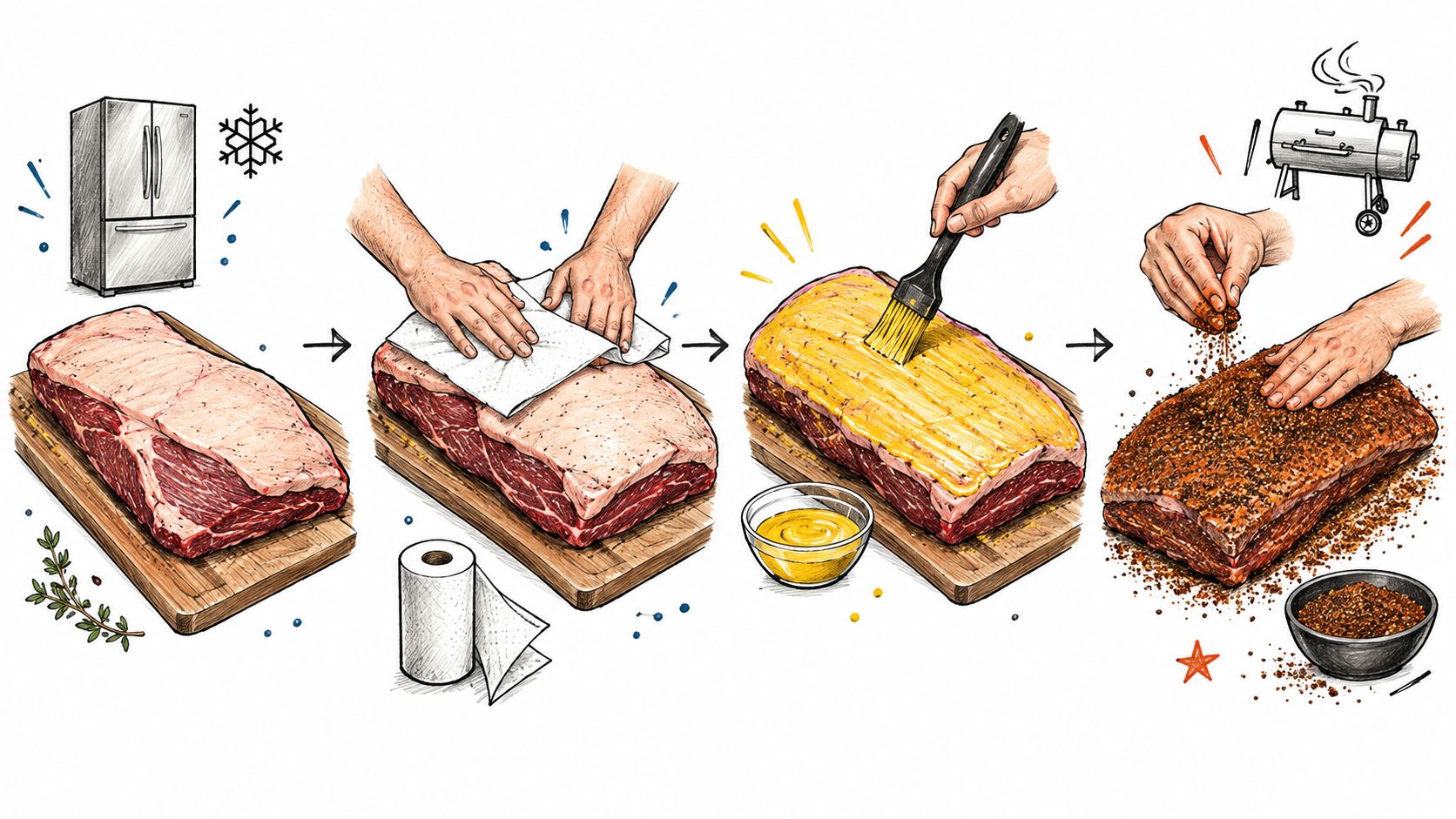
Start with a cold, trimmed brisket. Pat every surface dry with kitchen paper, leaving the fat cap neat and removing hard fat that won't render. A dry surface gives the binder and seasoning something to grip, rather than allowing the granules to slide across beads of moisture.

Apply in a controlled sequence
- Choose a thin binder. Yellow mustard, beef tallow or light oil works as an adhesion layer. You're not trying to marinate the brisket, so spread it thinly enough that the meat still feels tacky rather than wet.
- Season the lean side first. Dust from a height so the particles spread evenly, then turn the joint and cover the fat cap. Coat the edges separately, particularly around the thinner flat where gaps show after trimming.
- Press, don't scrub. Gentle pressure helps coarse pepper and garlic settle into the binder. Rubbing aggressively can drag seasoning into piles and leave bare patches.
- Check the point and seams. An uneven packer has exposed muscle around the point and the central fat seam. Treat those areas as separate surfaces rather than assuming one pass covers everything.
A useful starting point is roughly one tablespoon per 450g of meat, but weighing the rub gives better repeatability. The finished surface should look opaque, with no obvious meat showing, but it shouldn't resemble a thick crust of loose powder.
For more on choosing binders and building a reliable coating, use this dry rub guide for meat. A quick rest can help adhesion, but it won't give salt the same opportunity to move into the surface as an overnight dry brine.
Leave the brisket uncovered on a rack in the refrigerator for 8 to 12 hours. The cold air dries the exterior while the salt works into the surface, giving the bark a stronger chance of setting. A 30-minute rest is useful when you're short on time, but it's the compromise, not the benchmark.
The video below shows the kind of preparation sequence worth following before the brisket reaches the cooker.
Don't add a fresh salty coating just before smoking. Late re-seasoning can make the outer slices taste harsh while the centre remains under-seasoned.
Smoking Temperatures and Timing That Protect the Bark
Set the cooker for a steady 107 to 115°C and look for clean, thin smoke. Billowing white smoke leaves a harsher flavour on a small brisket, especially when the surface has already been heavily seasoned.
An offset needs fire management first. Keep the brisket on the cooler shelf, use the fat side according to the heat path, and watch the thinner flat more closely than the thick point. On a kamado, stabilise the fire before loading the meat, because vent corrections after the cook starts can change the bark. A pellet smoker benefits from a low or super-smoke setting around 105°C, provided the cooker maintains clean combustion.
Read the bark before you wrap
The internal temperature is a guide, not a finish line. Let the bark become matte and resistant to a fingertip press before wrapping. That usually occurs around 71 to 77°C internal, but surface dryness and colour matter more than one exact reading.
The brisket internal temperature guide is useful when you're comparing probe readings with tenderness. Plan roughly 1 to 1.25 hours per kilogram as a starting estimate, then stop treating time as a promise. A probe should meet diminishing resistance in the flat, and the brisket should develop a relaxed jiggle as connective tissue softens.
| Cooker Type | Pit Temp | Target Bark Internal | Estimated Time per kg |
|---|---|---|---|
| Offset smoker | 107 to 115°C | 71 to 77°C | 1 to 1.25 hours |
| Pellet smoker | Around 105°C on low or super-smoke | 71 to 77°C | 1 to 1.25 hours |
| Kamado cooker | 107 to 115°C | 71 to 77°C | 1 to 1.25 hours |
These are working ranges, not guarantees. A windy, damp British day can alter fire behaviour and surface drying, while a sheltered pellet cooker may hold conditions more consistently. Keep a cooking log with the pit temperature, weather and bark appearance. A resource such as master every cookout can help you organise the wider grill setup, but the brisket still needs hands-on judgement.
Wrap only after the bark has set. Butcher paper protects texture better than foil, while foil pushes the cook along more aggressively at the cost of a softer exterior. Once wrapped, the brisket needs less smoke exposure, so focus on steady heat and probe tenderness.
Resting, Slicing and Serving Without Losing Moisture
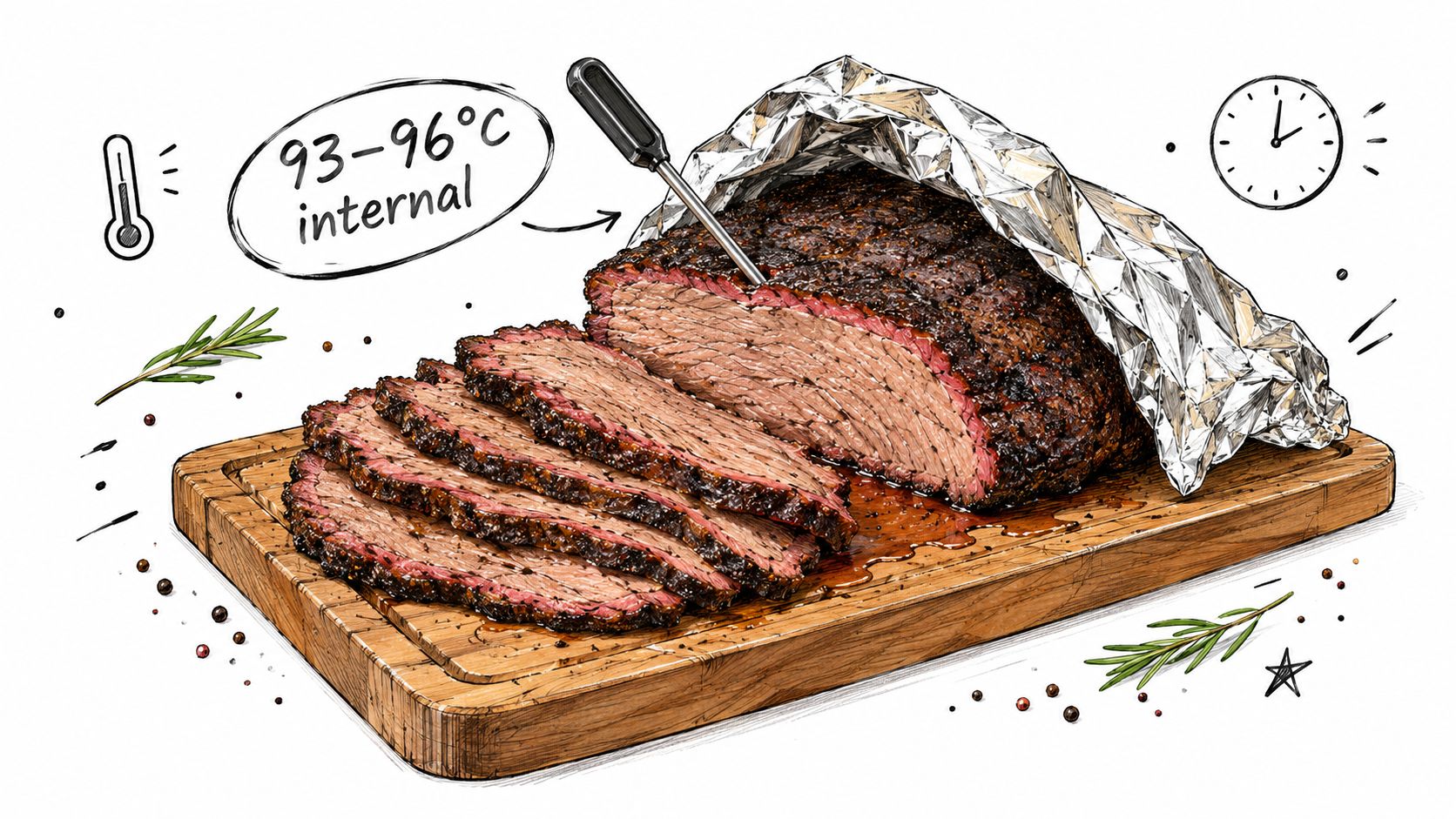
Take the brisket off when the flat probes with the resistance of warm butter, usually around 93 to 96°C internal. The number helps you find the zone, but a probe sliding into the lean section tells you more than a target temperature alone.
Give the brisket a short vent before the long hold. Loosely tent it with foil for 20 minutes, allowing excess steam to escape rather than trapping it against the bark. Cutting immediately is a common mistake. The centre stays loose and hot, and the board receives the juices that should have remained in the slices.

Choose the rest that matches the day
For a same-day meal, rest the brisket for at least 45 minutes once it has vented. For a longer hold, Swaledale's UK brisket method recommends judging tenderness rather than relying on time alone, with UK recipes commonly finishing around 90 to 95°C internal.
An overnight service needs more care. Cool the cooked brisket to 60°C within 90 minutes, wrap it in butcher paper, then hold it in a cool box or oven at 55 to 60°C for up to 8 hours. Keep it wrapped during the hold, and don't allow the temperature to drift into an unsafe range.
Slice the flat across the grain in 5 to 7mm pieces. The point has a separate grain direction, so rotate the brisket 90 degrees before continuing. Thick slices can seem juicy but eat chewy, while very thin slices lose structure and make the bark harder to appreciate.
Serve with warm white bread, pickles and slaw. Acid, crunch and plain bread give the rub room to lead. Heavy sauce can cover a carefully balanced bark, so put it on the side rather than pouring it over the board.
Your Repeatable Brisket Rub Game Plan
A smaller UK supermarket brisket costs more per kilogram, so each cook needs a record you can trust. Use the sheet below to compare rub choices against changing weather, smoker temperature and bark quality, rather than repeating a full routine from memory.
One-page brisket log
- Post-trim weight: ______
- Salt grams: ______
- Rub grams: ______
- Binder used: ______
- Pit temperature: ______
- Wrap temperature: ______
- Finish temperature: ______
- Bark score: ______ / 10
- Weather and cooker notes: __________________________
- Total cook time: __________________
Base salt on the trimmed weight, then record the complete rub quantity separately. A bold beef blend or a straightforward SPG profile can both work, but the log shows whether stronger flavour came from the seasoning or from a drier, cleaner cook. Keep the coating measured when the brisket is small, because excess salt is harder to hide in thinner flat sections.
Score bark after the rest, using colour, firmness and flavour rather than appearance alone. If the result is salty, reduce the salt component next time while keeping the rest of the rub similar. If it is pale or soft, note rain, wind, surface moisture, smoke quality and wrapping time before changing the spice balance.
The Sonoma winery event calendar offers a useful reminder to plan food around a serving time. Add your target meal time to the log, then work backwards from the required rest and cooking window. UK weather can shift pit performance, so the notes matter as much as the recipe.

Smokey Rebel makes small-batch, filler-free BBQ rubs and seasonings in the UK, including Revolution Beef Rub and SPG Base Blend for controlled brisket seasoning. Visit Smokey Rebel to choose a beef-focused blend or build a bundle for your next smoke.
Join our Mailing List
Sign up and get Smokey Rebel Recipes + weekly recipes straight to your inbox!
Recent articles
Smoked Beef Brisket Rub: The UK Backyard Guide
Master the smoked beef brisket rub with our UK backyard guide — ratios, application, smoking temps, and resting tips for...
Read moreUrfa Chilli Flakes Guide Flavour Uses and Pairings
Discover urfa chilli flakes - smoky Turkish isot flavour, heat level, uses, swaps, storage and easy Smokey Rebel recipes for...
Read morePork Belly Strips BBQ: How to Smoke & Grill Them Perfectly
Master pork belly strips BBQ with a two-stage method for crispy edges and tender meat. Learn rubs, temps, and timing...
Read more