Your Ultimate Guide to Dry Rub for Meat
Think of a dry rub as the ultimate flavour armour for your meat. It’s a carefully crafted blend of salt, sugar, spices, and herbs that you apply to the surface before cooking. Unlike a liquid marinade, a dry rub creates a delicious, savoury crust—what pitmasters call ‘bark’—when it hits the heat, locking in natural juices while building incredible flavour.
The Secret to Unforgettable BBQ Flavour
At its heart, a good dry rub is the foundation of incredible BBQ. It’s your first and most important step in turning an everyday piece of chicken, pork, or beef into something truly special. The kind of meal that has friends and family begging for your secret. At Smokey Rebel, we pack authentic cultural flavours into every craft can, with no added crap, so you can focus on the flavour.
But how does it actually work its magic? It all comes down to a bit of science.
The salt in the rub is the key player, pulling moisture from the surface of the meat through osmosis. This creates a highly concentrated brine that then gets reabsorbed, pulling all those herbs and spices deep into the muscle. It’s so much more than a surface-level seasoning; it flavours the meat from the inside out.
Creating The Perfect Crust
When you add heat from a grill, smoker, or even your oven, that’s when things get really exciting. The sugars and spices in the rub caramelise and toast, forming that legendary dark, crunchy, and intensely flavourful crust we all crave.
That bark does two brilliant things at once:
- Locks in Juices: It forms a protective barrier, keeping the meat unbelievably moist and tender as it cooks.
- Adds Texture: It gives you that satisfying crunch that contrasts perfectly with the soft, succulent meat underneath.
This is what separates decent barbecue from the stuff you remember for weeks. It’s a technique used by championship pitmasters and backyard heroes alike to build layers of flavour that a simple sauce just can’t touch.
Start With a Solid Foundation
Every great cook needs a reliable starting point, and in the world of rubs, that’s often a classic Salt, Pepper, and Garlic (SPG) blend. It’s the ultimate workhorse, designed to enhance the natural taste of the meat, not overpower it.
A perfectly balanced version like our SPG Salt, Pepper, Garlic Seasoning provides a flawless base you can use on its own or build upon. To get a better feel for the individual components that make these blends tick, check out our guide to the most popular meat rub spices.
Understanding the Four Pillars of Flavour

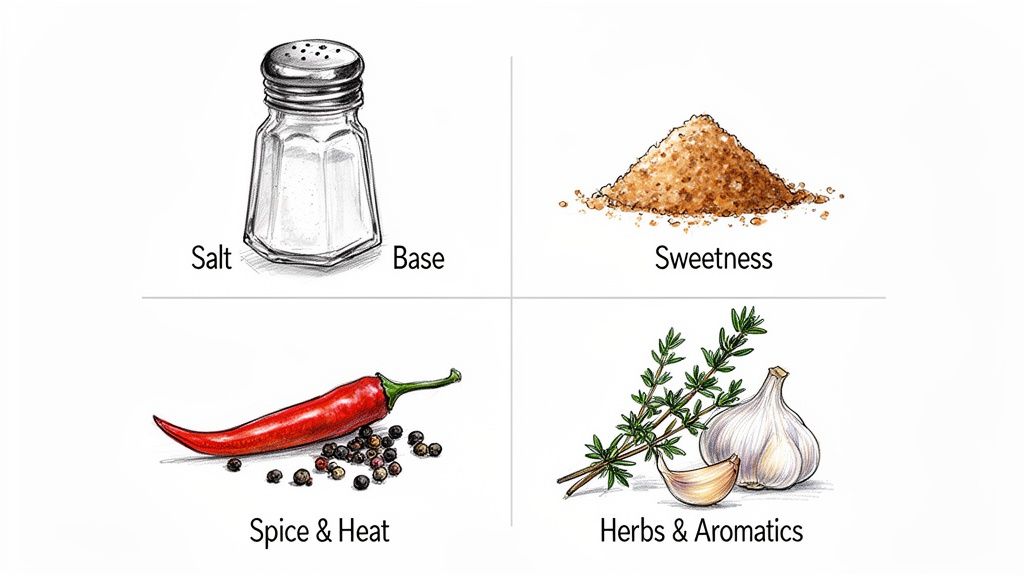
Every truly great dry rub is a masterclass in balance, built on four pillars of flavour. Think of it like a band. Each instrument has a crucial part to play, and when they all work together, you get a complex, layered tune that you won't forget.
And it seems everyone’s getting in on the act. The UK seasoning market is absolutely booming, thanks to a serious love for dry rubs among BBQ fanatics and the ever-growing popularity of backyard smokers. While salt is still the biggest player, dry rubs are stealing the show on meat. In fact, premium rubs for poultry and beef are on track to grab a 28% market share, driven by a 15% annual rise in premium, pre-seasoned meats. You can dig into the full market trends on Deep Market Insights if you're curious.
So, let's break down the four pillars that make these rubs work so damn well.
The Base: The Rhythm Section
Salt is the undisputed powerhouse of any dry rub. It’s the rhythm section, laying down the beat for every other flavour to follow. It does more than just make things taste "salty" – it's a chemical flavour enhancer, waking up the natural taste of the meat itself.
Just as important, salt tenderises. It pulls moisture to the surface, dissolves into a natural brine, and then gets reabsorbed, breaking down muscle fibres for a more succulent bite. It's the foundation. No question.
Sweetness: The Catchy Melody
Next up is sweetness, the melody that cuts through all those savoury notes. Ingredients like brown sugar, coconut sugar, or turbinado sugar do a lot more than just add a sweet taste. As they cook, these sugars caramelise, which is absolutely essential for creating that dark, crunchy crust we all know and love as "bark."
This element is the perfect counterpoint to the salt and spice, creating a beautifully rounded profile. The sweetness tames any harsh edges and helps build that iconic, irresistible BBQ crust.
Pro Tip: Watch your sugar content when you're grilling over high, direct heat. Sugars burn fast. Rubs with a higher sugar ratio are usually better suited for low-and-slow cooking like smoking, where they have time to caramelise perfectly without turning to charcoal.
Spice and Heat: The Guitar Solo
This is where a rub's personality really comes alive. The spice and heat are the electrifying guitar solo that makes you sit up and pay attention. This pillar isn't just about blowing your head off with fire; it’s about adding warmth, depth, and complexity.
Common players here include:
- Paprika: Lays down a mild, sweet, smoky base and gives great colour.
- Chili Powder: Brings a deeper, earthy warmth with a gentle kick.
- Black Pepper: Delivers that pungent, sharp heat that cuts right through rich, fatty meats.
- Cayenne or Chipotle: For those who like it spicy, this brings a more direct and lingering heat.
Herbs and Aromatics: The Soulful Vocals
Finally, you've got the herbs and aromatics—the vocals that pull the whole song together. These are the final layers of savoury, earthy, and fragrant notes that make a rub truly special.
Garlic and onion powders are the non-negotiable stars here, giving a deep, savoury foundation that works with pretty much any meat. From there, herbs like thyme, oregano, or cumin can introduce distinct regional character, taking you from Mediterranean hillsides to smoky Southwestern fire pits.
Once you understand how these pillars work together, you can start to predict how a rub will perform. For example, our Revolution Beef Rub leans hard into the savoury and peppery notes of the "Spice & Heat" pillar, making it perfect for big, robust cuts. In contrast, the Hickory Hog Pork Rub expertly balances the "Sweetness" and "Spice" pillars, creating an ideal partner for pork.
How to Apply Dry Rub for Maximum Impact

Applying a dry rub is an art, but it's one that's surprisingly easy to master. Getting the technique right is the difference between a good crust and a legendary one, making sure every single bite is packed with perfectly balanced flavour.
How to Season Chicken Thighs for the Air Fryer in 2 Minutes
Need a quick, practical example? Here's how to get amazing flavour fast:
- Pat Dry: Take 4-6 chicken thighs and pat them completely dry with a paper towel. This is crucial for crispy skin.
- Light Oil: Drizzle a tiny bit of olive oil over them and toss to coat. This acts as a binder.
- Season Generously: Grab your Chipotle Cowboy Chicken Rub and sprinkle it evenly over all sides of the thighs. Don't be shy!
- Air Fry: Place them in the air fryer basket, skin-side up, and cook at 200°C (400°F) for 18-22 minutes, or until the internal temperature reaches 74°C (165°F) and the skin is golden and crispy.
The Binder: A Pitmaster's Secret Weapon
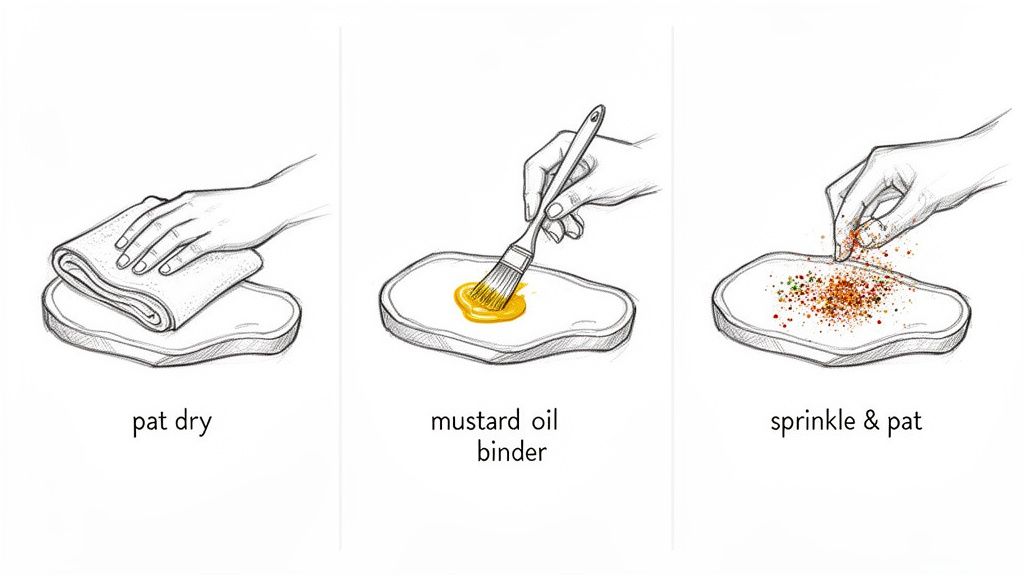
For bigger cuts and smokers, a ‘binder’ is a pitmaster's best friend. This is just a thin layer of a wet ingredient that acts like a flavourful glue, helping the rub cling evenly across the entire surface. It’s a simple trick, but it guarantees you get a consistent coating without any bald spots.
You don’t need much at all; a light slather is all it takes. Popular choices include:
- Yellow Mustard: The classic choice in BBQ circles. The sharp vinegar flavour cooks off completely, leaving no trace behind but a perfectly adhered rub.
- Olive Oil: A brilliant neutral option that also helps the meat brown beautifully.
- Hot Sauce: For those who want to build an extra, subtle layer of heat right from the start.
Just brush a thin, even layer over the meat before you bring in the seasoning.
Application: The Sprinkle and Pat Method
Now it's time for the main event. The key to a perfect coating is to avoid rubbing the seasoning in, which can make it clump up and go on unevenly. Instead, you want to adopt the ‘sprinkle and pat’ method.
Use one hand to generously sprinkle the rub from a height of about 12 inches. This lets the particles separate and fall evenly across the meat. Then, use your other (clean) hand to gently pat the seasoning onto the surface, pressing it into the binder and meat without creating a pasty mess.
Don't be shy with the application—you're looking for a solid, visible layer of flavour.
Timing Your Seasoning for Perfect Results
The final piece of the puzzle is timing. When you apply your rub has a massive impact on the final flavour and texture. You have two main strategies, each with its own advantage.
For thinner cuts like steaks or chicken breasts that you’re grilling quickly, applying the rub just before cooking is ideal. This creates a fantastic surface crust without drawing out too much moisture from the meat.
Dry Brining: The Low-and-Slow Game Changer
Applying a rub hours ahead, or even overnight, is a technique called 'dry brining'. The salt in the rub draws out moisture, creates a concentrated brine on the surface, and then reabsorbs it, pulling flavour deep into the meat. It tenderises and seasons from the inside out—an absolute game-changer for big cuts like pork shoulder or brisket.
Dry Rub Application Timing Guide
Getting the timing right depends entirely on what you're cooking. A thin steak needs a different approach than a hulking brisket. Here’s a quick guide to help you nail it every time.
| Type of Meat | Recommended Resting Time with Rub | Why It Works Best |
|---|---|---|
| Steaks & Chops (less than 1.5" thick) | 15-40 minutes | Allows the surface to dry slightly, creating a superior sear and crust without losing moisture. |
| Chicken Pieces (breasts, thighs, wings) | 30 minutes to 4 hours | Gives the salt enough time to start seasoning the poultry without making the texture too firm. |
| Whole Chicken or Turkey | 12 to 24 hours (uncovered in fridge) | Dry brining seasons the meat deeply and helps create incredibly crispy skin. |
| Pork Shoulder & Brisket (large roasts) | 12 to 24 hours | Essential for flavour penetration. This allows the rub to work its way deep into these large, tough cuts, tenderising them along the way. |
| Fish Fillets | 15-30 minutes maximum | Fish is delicate. Any longer and the salt can start to "cook" the flesh, changing its texture. |
Remember, these are just guidelines. The best way to learn is to experiment and see what works for you and your cooker.
For more in-depth techniques, explore our guide on how to use BBQ rubs in your everyday cooking. Mastering these simple steps will seriously elevate your cooking, turning every meal into a flavour-packed masterpiece.
Matching Your Rub to Your Meat and Method

The real secret to an unforgettable meal is pairing the right flavour with the right cut of meat and cooking style. You wouldn't throw a delicate seasoning on a massive cut of beef, and you wouldn’t overpower a beautiful piece of fish with a heavy, smoky blend. It’s all about creating harmony.
This is what separates a good cook from a great one. The perfect dry rub for meat should complement and elevate the protein, not mask its natural taste.
Pairing Rubs with Bold Meats Like Beef
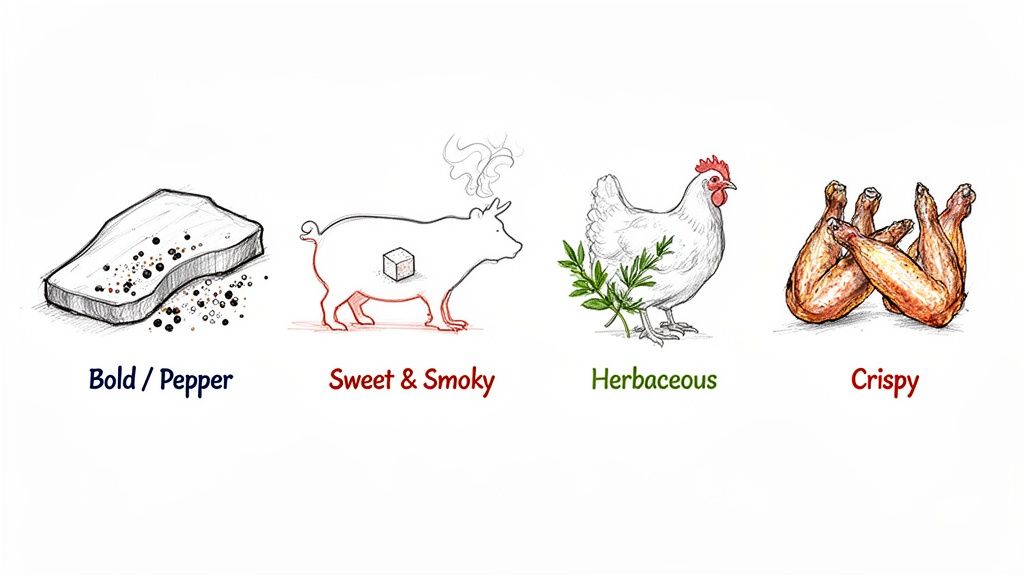
Beef has a rich, deep flavour that demands a rub that can stand right up to it. Think bold, savoury, and peppery. For cuts like brisket, short ribs, or a hefty ribeye steak, a rub with a coarse black pepper base is your best friend.
Pepper’s sharp, pungent character is brilliant at cutting through the richness of beef fat, creating a perfectly balanced bite. Our Revolution Beef Rub is built on this exact principle, using a robust blend of pepper, garlic, and savoury spices to build a crust that just makes the meat sing.
The Perfect Match for Pork
Pork is a much milder character, which makes it the perfect canvas for a huge range of flavours. It works exceptionally well with sweeter and smokier profiles, which is why brown sugar and smoked paprika are staples in so many classic pork rubs.
For pulled pork, ribs, or chops, you want a rub that’s going to caramelise beautifully during a low-and-slow cook. This is where a blend like our Hickory Hog Pork Rub comes into its own, delivering that ideal balance of sweet and smoky. For a more adventurous twist, the fruity tartness of something like our Cherry Force BBQ Rub can add a surprising and delicious layer of complexity.
To really get to grips with pairing, understanding how different cuts are prepared can give you a massive advantage. Exploring something like a butcher shop equipment guide offers some incredible insight into the process.
Crucial Tip: Match Sugar Content to Cooking Method
Here’s a classic mistake: using a high-sugar rub for high-heat grilling. Sugar burns fast, leaving you with a bitter, blackened crust. Save your sweeter rubs for low-and-slow smoking where they have time to melt and caramelise into a perfect bark. For direct grilling, reach for rubs with less sugar and more savoury, herbaceous notes.
Seasoning Versatile Proteins Like Chicken
Chicken is probably the most versatile meat out there, welcoming just about any flavour you can throw at it. This is where you can really get creative. A zesty, herbaceous blend works wonders on grilled chicken breasts, while a spicier, more aromatic rub is perfect for thighs.
Our Chipotle Cowboy Chicken Rub brings a smoky heat and savoury depth that’s spot-on for grilling or roasting. But for something specific like wings, you need a rub engineered for the job. Our Wingman Wing Rub is designed with a finer grind to help create that crispy, flavour-packed skin everyone is after. For a deeper dive, check out our complete guide to the best barbecue rubs for chicken.
Here in the UK, BBQ enthusiasts are embracing these diverse flavours like never before. With strong meat consumption of over 80kg per person annually and a vibrant food scene, tastes are evolving. More and more home cooks are choosing clean-label rubs over those packed with artificial additives, marking a major shift toward filler-free products. By matching your Smokey Rebel rub to your meat and method, you’re not just cooking—you’re creating a deliberate and unforgettable flavour experience.
Building Your Personal Flavour Arsenal
Right, you’ve got the basics down. You know how to apply a dry rub for meat, and you're getting great results. Now for the fun part: building your own flavour arsenal.
The world of rubs is huge, drawing inspiration from incredible food cultures across the globe. This is your ticket to turning a standard midweek meal into something genuinely memorable. Forget boring; think bigger. Imagine the bright, citrus-and-chilli hit of proper Mexican street food on pork, or the sun-drenched herbs of the Mediterranean that make lamb sing.
Having a few killer rubs on hand means you’re ready for anything. It’s about having the confidence to turn a simple piece of meat into a real culinary adventure.
Curating Your Go-To Collection
Starting a collection doesn't mean buying dozens of rubs at once. The smart move is to pick a few that offer genuinely different flavour profiles. That way, you've always got the right tool for the job.
- For Authentic Tacos: A proper taco seasoning is non-negotiable. Our Al Pastor Taco Seasoning nails that authentic Mexican taste for pork, with a blast of pineapple and chilli that’s just spot on.
- For a Taste of the Mediterranean: Cooking lamb or whipping up some chicken gyros? You need a specific blend. The Greek Odyssey Gyros Rub is loaded with the aromatic herbs you need for that classic flavour.
- For a Fiery Kick: Sometimes, you just need heat. A blend built around chillies, like our Spitfire Spice Blend, is perfect for giving wings, ribs, or even a pot of chilli a serious kick.
These aren't just trendy flavours; they're part of a bigger shift. Dry rubs for meat are booming in the UK, with multicultural tastes driving demand for more complex, interesting seasonings. In fact, retail sales of spice-infused meat have jumped, and dry rubs are leading the way, especially for chicken. For anyone with a smoker, a quality rub is seen as essential for building a better bark and locking in moisture. You can dig into the numbers and global market trends on DataIntelo.
A Flavour for Every Occasion
The whole point of building an arsenal is simple: being prepared. With the right collection, you're never more than a sprinkle away from a brilliant meal, whether it's a last-minute dinner or a full-on weekend BBQ.
The Smart Way to Build Your Stash
Want the easiest way to get started? A curated set is your best bet. It gives you a guided tour through a range of flavours without any of the guesswork. Our Best Sellers Seasoning Gift Set is the perfect introduction, packing our most popular and versatile blends into one box.
If you already know what you love or want to create a truly personal toolkit, our Build Your Own Bundle is the way to go. You get to hand-pick the rubs that suit your cooking style, ensuring your spice rack is locked and loaded. These bundles are the simplest way to make sure you're always ready to turn an ordinary meal into an extraordinary one.
FAQs: Your Dry Rub Questions Answered
What's the difference between a dry rub and a marinade?
The key difference is liquid. A dry rub is a blend of dry spices and herbs applied to the meat's surface to create a flavourful crust (or 'bark'). A marinade is a liquid-based soak, often with acid and oil, used to tenderise and infuse flavour deeper into the meat.
How much dry rub should I use on meat?
A good starting point is about one tablespoon of rub per pound of meat. However, the real goal is to achieve a generous, even coating that covers the entire surface. For large cuts like pork shoulder or brisket, don't be afraid to apply it liberally to build that essential, flavour-packed crust.
Can I use a dry rub on vegetables?
Absolutely! A dry rub is fantastic for adding a savoury, smoky flavour to vegetables. Simply toss your chopped veg (like potatoes, peppers, or cauliflower) in a little olive oil, then sprinkle generously with a balanced seasoning like our SPG Base Blend before roasting or grilling.
How long should a dry rub sit on meat before cooking?
It depends on the cut. For thinner items like steaks, chops, or chicken pieces, 30 minutes to a few hours is perfect. For large roasts like brisket or pork shoulder, applying the rub 12-24 hours in advance (a technique called dry brining) allows the seasoning to penetrate deeply, resulting in more flavourful and tender meat.
What is the best seasoning for BBQ ribs?
For classic BBQ ribs, you want a rub that balances sweet and savoury notes to create a caramelised crust. A blend like our Hickory Hog Pork Rub is ideal, offering smoky depth and a touch of sweetness that perfectly complements pork. For a fruitier, tangier profile, our Cherry Force BBQ Rub is also a fantastic choice.
Ready to create some serious flavour? Dive into the full range of authentic, filler-free seasonings at Smokey Rebel and find your new secret weapon. Start your journey with our Best Sellers Seasoning Gift Set.
Join our Mailing List
Sign up and get Smokey Rebel Recipes + weekly recipes straight to your inbox!
Recent articles
Amazing Marinades for Salmon Fillets You Need to Try
Discover the best marinades for salmon fillets! Our guide provides easy recipes, techniques, and tips to infuse your salmon with...
Read more10 Flavourful High Protein Diet Foods for Your BBQ in 2024
Discover the top 10 high protein diet foods perfect for your grill. Learn how to season meats, fish, and plant-based...
Read moreUnforgettable Recipes for Chicken Rubs to Master Your Grill
Discover bold recipes for chicken rubs that deliver incredible flavor. Learn how to make and use homemade seasonings for grilling,...
Read more