Dry Rub Salmon Guide: Best Seasonings and Methods for 2026
You've seasoned a handsome salmon fillet, put it on the barbecue, and started planning the sides. Then the tail turns dry, the centre stays soft, and the rub tastes more like burnt crust than balanced seasoning. Dry rub salmon isn't difficult, but salmon exposes careless preparation faster than a thick steak does.
The fix is practical: dry the surface, control the heat, shield the thin tail, and check the centre with a thermometer. The right seasoning should add character without hiding the fish, whether you're cooking a family dinner, feeding friends outdoors, or preparing consistent portions for a small event.
Why Your Salmon Turns Out Dry and Bland
A disappointing fillet usually starts with a familiar weekend scene. The salmon comes straight from its packaging, still glossy with moisture, and the rub gets sprinkled over the top. On the grill, the surface browns quickly, so it looks ready before the thick centre has finished cooking. By the time the loin flakes, the narrow tail has lost most of its moisture.
That result can feel like a seasoning problem, but the rub often isn't the main culprit. Surface water dilutes spices, prevents proper browning, and encourages the coating to slide or steam. A thick layer of seasoning won't compensate. It can make the outside harsh while the fish beneath remains under-seasoned.
The three failures behind bland dry rub salmon
- Wet fish: Patting the fillet dry gives the seasoning a surface to cling to. It also helps the rub roast rather than turn into a damp paste.
- Uneven thickness: A side fillet can be thick through the loin and dramatically thinner at the tail. Both areas receive the same heat, but they don't need the same cooking time.
- Colour mistaken for doneness: A browned rub tells you that the surface has been heated. It doesn't prove that the centre has reached a safe temperature.
Tail shielding is the small technique that makes the biggest visible difference. Fold the thin end underneath itself, or cover it loosely with foil once it has taken on enough colour. This reduces direct heat on the narrow section while the thickest part catches up.
Practical rule: Treat the thickest part as the cooking target and the tail as a section that may need protection.
Salmon is a particularly useful fish for this approach because it's a familiar UK staple. Seafish reported that salmon represented an estimated 31% of UK seafood sales by value and 17% by volume in the 52 weeks to 23 March 2024, with farmed salmon making up more than 92% of salmon sold through UK retail by value. Those figures are reported in Seafish market coverage, and they help explain why repeatable fillet preparation matters for home cooks and caterers.
The answer isn't more rub or a hotter grill. It's a controlled surface, a manageable heat source, and a plan for the fillet's changing thickness.
Preparing the Perfect Base for Your Rub
Good seasoning starts before the seasoning reaches the fish. A dry surface lets salt, herbs, pepper, and aromatics form an even layer instead of sliding towards the tray.

A repeatable preparation sequence
- Remove excess moisture. Use paper towels to pat the flesh and skin until they feel dry rather than shiny. If you regularly cook fish, keeping a stack of kitchen towels for quick delivery nearby makes this simple job less awkward.
- Inspect the fillet. Trim loose skin or ragged edges, and run clean fingers over the flesh for pin bones. Remove any you find with kitchen tweezers.
- Choose the orientation. Put the thick loin where the heat is most stable. Leave the tail accessible so you can fold it under or shield it later.
- Apply a measured coating. A light film of oil can help dry seasoning adhere, but don't soak the fish. Sprinkle evenly, then press the rub gently into the flesh.
- Rest under refrigeration. Salt draws limited moisture towards the surface. A short chilled rest allows the seasoning to settle, after which you can blot away any visible liquid before cooking.
A wire rack helps air circulate around the fillet, particularly if you're preparing it ahead. Centre-cut loins usually tolerate direct heat more evenly than long side fillets, while thin portions need closer attention from the start. Light scoring can help a very thick section cook more consistently, but don't cut far enough to divide the flesh.
The same surface principle applies beyond fish. Smokey Rebel's guide to dry rub for meat is useful when you're building a general seasoning routine, but salmon needs a lighter touch because its flesh is delicate and its surface can brown quickly.
Don't leave the fish exposed at room temperature for longer than your cooking workflow requires. Keep it chilled while the rub settles, then move directly to the grill, oven, or air fryer once your equipment is ready.
Choosing Your Cooking Method and Timing
The best method depends on the result you want and how closely you can watch the fish. Grilling brings smoke and char, baking gives the most predictable heat, and air-frying creates a quick, crisp-edged portion with little equipment.
Timing should be treated as an estimate, not proof of doneness. Fillet thickness, starting temperature, equipment behaviour, and whether the fish is fresh or thawed all change the finish point.
Cooking methods comparison
| Method | Best For | Time | Crust Quality | Difficulty |
|---|---|---|---|---|
| Medium grill | Smoke, char, and outdoor cooking | Use the recipe time as a guide, then check the centre | Strong browning and grill character | Moderate |
| Oven baking | Even heat and family meals | Use the recipe time as a guide, then check the centre | Even, gentler crust | Easy |
| Air fryer | Fast portions and crisp edges | Use the recipe time as a guide, then check the centre | Crispest edges | Easy |
Direct grilling
Start skin-side down over medium, controlled heat. Keep the thickest section away from flare-ups and avoid repeatedly turning the fillet. If oil drips onto the coals and flames rise, move the salmon to a cooler zone rather than allowing the rub to burn.
Fold the tail underneath or shield it with foil after the surface has browned. This keeps the narrow section from racing ahead while the loin cooks. A fish spatula is more useful than tongs here, since it supports the fillet and reduces tearing.
Oven baking
Baking is the calmest option for uneven fillets. Place the salmon skin-side down on a lined tray, and use a loose foil shield over the tail if it colours too quickly. The foil should protect the thin section, not wrap the whole fillet tightly and trap steam.
For a deeper smoky result, combine baking with a carefully managed wood-fired cooking stage rather than blasting the fish over direct heat. Smokey Rebel's guide to smoking salmon is relevant when you want smoke to become part of the flavour rather than just chasing a darker crust.
Air-frying
Air-frying suits weeknight portions. Leave space around the fillet so hot air can circulate, and check early because a small portion can move from juicy to dry quickly. Use a parchment liner only if it's suitable for your appliance and won't block the airflow.
The NHS describes salmon as oily fish and recommends at least two portions of fish each week, including one portion of oily fish. It defines a portion as approximately 140 g when cooked, and lists baked and grilled fish as healthier choices than fried fish because frying can increase fat content. Those points come from the NHS fish and shellfish nutrition guidance.
Whichever method you choose, position the thickest part where the heat is most dependable. The clock can tell you when to start checking. The thermometer tells you when the fish is ready.
Selecting the Right Smokey Rebel Seasoning
Salmon has enough richness to carry bold flavours, but a heavy pork or beef-style coating can bury its natural character. Choose the rub according to the meal you want to build, then apply it evenly rather than thickly.

Four useful flavour directions
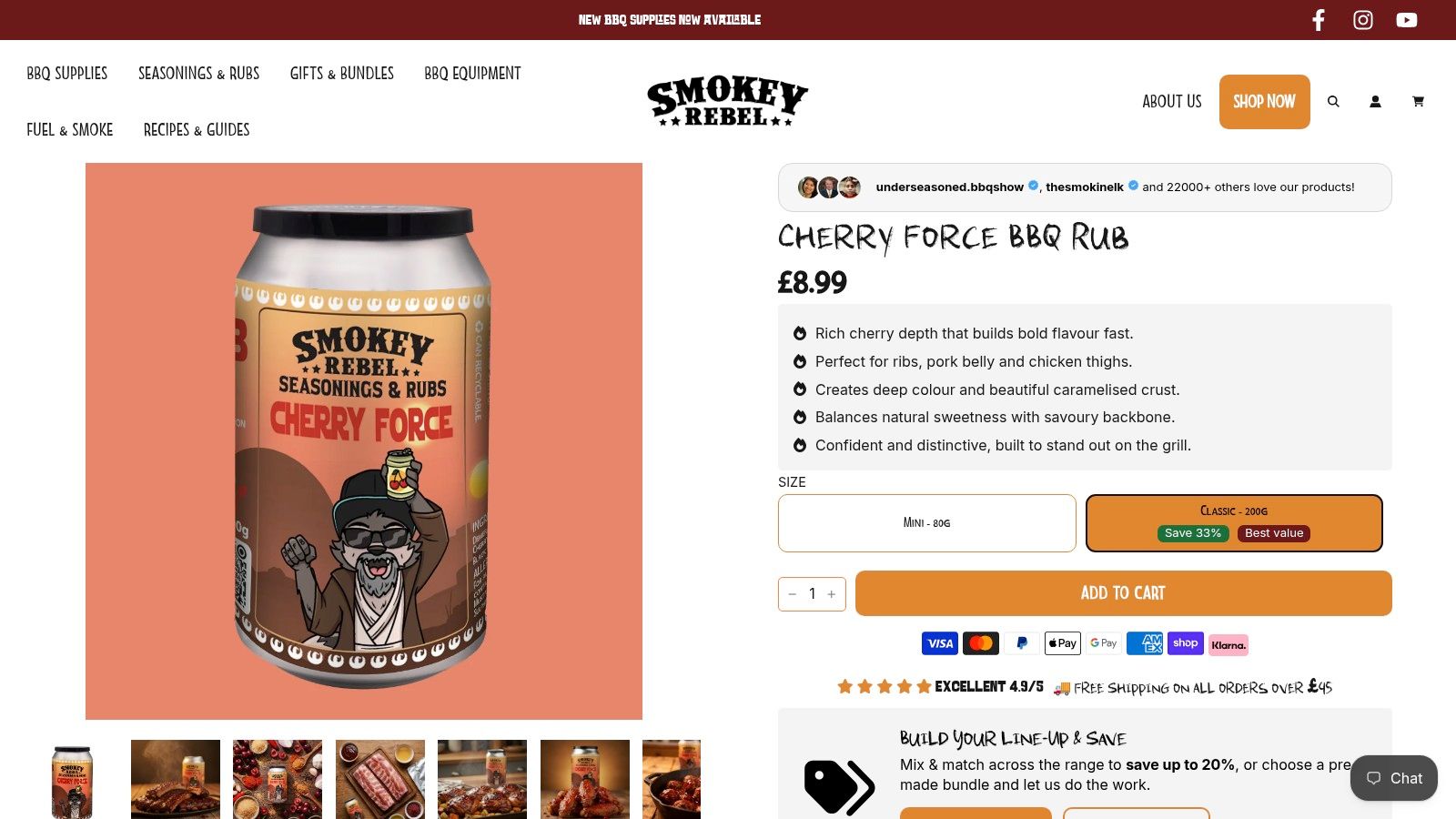
Cherry Force BBQ Rub works when you want a sweet-smoky barbecue profile without turning the salmon into a sticky glaze. Use it on a grilled fillet, then serve with charred corn, a sharp slaw, or roasted peppers. A dry cider or sparkling water with citrus keeps the plate from feeling heavy. You can view the Cherry Force BBQ Rub when you want this darker barbecue direction.
SPG Base Blend is the restrained choice. Salt, pepper, and garlic give the fish a savoury foundation while leaving room for lemon, herbs, yoghurt, or a punchy green sauce. It suits oven-baked salmon with new potatoes and steamed greens, especially when several people prefer different sauces at the table. See the SPG Salt Pepper Garlic Base Blend for a straightforward starting point.
Wingman Wing Rub brings a hotter, more playful angle. Use a thinner coating than you might use on chicken wings, and pair the cooked salmon with cooling yoghurt, cucumber, or a crisp cabbage salad. It's a good fit for a casual barbecue where the fish needs to stand up to bold side dishes.
Miami Mojo Citrus Blend suits a brighter plate. Citrus-led seasoning cuts through the richness of salmon, especially when served with rice, beans, grilled courgette, or a tomato and herb salad. It also works well for family meals because the flavour feels fresh rather than aggressively smoky.
These choices reflect a broader distinction between flavour intensity and seasoning quantity. A strong blend doesn't need a thick crust. Start with an even dusting, cook one portion, and adjust the next batch if the fish needs more salt, heat, or aromatic depth.
The range is made in the UK by a family-owned business, with plant-based ingredients, recyclable packaging, and no fillers presented as part of its product positioning. Smokey Rebel's spices for salmon guide can help you compare flavour directions before choosing a rub for the meal.
Mastering the Internal Temperature Check
A browned surface and easy flaking can tempt you to remove salmon too early. They're useful quality clues, but neither replaces a core temperature check. A dry rub can colour before the centre is ready, particularly when it contains darker spices or the grill runs hot.
Probe the thickest point correctly
Insert a cleaned probe from the side of the fillet into the centre of the thickest section. Keep the tip away from the tray, grill bars, and any bone, since contact with a hot surface can give a misleading reading.
Start checking several minutes before you expect the fish to finish. If you're cooking multiple portions, check the thickest piece first and assess thinner portions separately. One fillet may need shielding or removal while another remains over the heat.
UK food-safety guidance advises that the centre of cooked food should reach 70°C for 2 minutes, or an equivalent validated combination such as 75°C for 30 seconds, 65°C for 10 minutes, or 60°C for 45 minutes, as set out in UK food temperature guidance. These are safety controls, not seasoning advice. Smoke, spices, browning, and charring don't make an undercooked centre safe.
The Food Standards Agency also advises checking that fish flesh has changed colour and texture and separates easily with a fork. Use those observations alongside the thermometer rather than treating them as substitutes.
Probe from the side, not straight down. The tip needs to reach the middle of the thickest flesh, where the temperature changes last.
If the tail reaches the target first, shield it or remove that portion and return the loin to the heat. Don't let a thin section dictate the finish of the whole fillet. For catering, record the cooking conditions and use a documented checking process, especially when portions vary in size.
A thermometer reading is only useful if the probe is clean and positioned correctly. Wipe and sanitise it between batches, and avoid touching the tray or bone. Once the applicable time and temperature combination has been achieved, serve promptly. If the fish must be held for later service, follow documented catering controls rather than leaving it at ambient temperature.

Troubleshooting Common Dry Rub Mistakes
Dry rub salmon becomes easier once each failure has a recognisable cause. Fix the process, not just the finished plate.
- The rub burns: Direct heat or a thick sugar-heavy coating can darken the surface before the centre is ready. Move the fish to indirect heat, lower the cooking temperature, or choose a blend that doesn't rely on heavy sugar browning.
- The coating turns sticky: The fillet was probably wet when seasoned, or moisture collected during the rest. Pat the fish dry before applying the rub, and blot visible liquid before cooking.
- The flavour is too strong: A delicate fish can disappear beneath an aggressive coating. Use a lighter layer on the next portion and add brightness through lemon, herbs, yoghurt, or a fresh salad instead of more seasoning.
- The rub slides away: A damp surface gives the seasoning nothing to grip. Dry the flesh thoroughly, use only a light film of oil if needed, and press the blend gently into place.
- The tail is dry: The narrow end has cooked faster than the loin. Fold it under, cover it loosely with foil, or remove it once it reaches the safety target while the thick section continues.
- The centre is undercooked: Colour and flaking were trusted without checking the thickest point. Return the fish to controlled heat and use a cleaned probe thermometer from the side.
Frozen salmon deserves a fair trial, particularly when convenience and waste matter. UK analysis recorded 71,070 tonnes of salmon purchases in 2024, including 61,748 tonnes chilled and 9,232 tonnes frozen, according to the official assessment of salmon stocks. The same analysis estimated consumption-based emissions intensity of 3.620 tonnes CO₂e per tonne consumed for frozen salmon and 3.763 tonnes CO₂e for chilled salmon, and modelled an annual reduction of about 1,765 tonnes CO₂e if 20% of chilled consumption were replaced by frozen products. That modelling doesn't make every frozen product automatically better, because packaging, sourcing, storage, and waste still matter.
Thaw frozen fillets overnight, pat them completely dry, and season only once the surface is no longer wet. If cooking from frozen, use gentler heat and rely on the centre temperature rather than expecting the same crust as a thawed portion.
A final distinction matters in the UK. Commercially purchased salmon is commonly farmed Atlantic salmon, while wild salmon figures describe tightly managed fisheries rather than a general supermarket supply. Official 2025 reporting for England and Wales recorded 4,053 declared rod-caught salmon, with 3,977 released, and 143 salmon caught by nets, as detailed in the salmonid and freshwater fisheries statistics. Separately, a UK and Ireland aquaculture overview reports that Atlantic salmon represented 96% of aquaculture value in its cited 2023 data. For cooking, focus on the fillet in front of you, dry it properly, shield its thin section, and verify the centre.
Smokey Rebel offers small-batch BBQ rubs and seasonings for cooks who want bold, global-inspired flavour without fillers, plus recyclable packaging and bundles suited to everyday meals or gifts. Choose a salmon-friendly profile such as Cherry Force BBQ Rub, SPG, Wingman, or Miami Mojo, then visit Smokey Rebel to build your next dry rub salmon cook around the flavour you want.
Join our Mailing List
Sign up and get Smokey Rebel Recipes + weekly recipes straight to your inbox!
Recent articles
Dry Rub Salmon Guide: Best Seasonings and Methods for 2026

Master dry rub salmon with expert recipes, cooking methods, and timing tips. Discover the best Smokey Rebel seasonings for perfectly...
Read morePork Loin Dry Rub Oven: The Complete Guide
Master pork loin dry rub oven cooking with simple steps, perfect rub recipes, and expert tips for juicy results every...
Read moreBest BBQ Seasoning: A Practical UK Buyer's Guide
Find the best BBQ seasoning for UK grilling. Learn what to look for in rubs and finishing blends, flavour profiles,...
Read more