
Pork Rub Recipe for Ribs That Actually Bark
Most rib advice starts with the wrong promise: find one brown-sugar-heavy bottle, cover every rack, and wait for the magic. That approach fails on a UK kettle because back ribs and spare ribs don't cook the same way, and a sweet coating that behaves on a thick, fatty rack can scorch on a leaner one.
A dependable pork rub recipe for ribs starts with the cut, then accounts for salt, sugar, smoke, heat and the cooker you own. UK pork is hardly a niche ingredient. Processed pork retail spend reached about £4.1 billion in the 52 weeks ending September 2024, while ribs remain one of the primary pork categories tracked in the UK market by AHDB market reporting summarised by Statista. You want a rub that gives you bark without leaving the edges bitter or black.
Why One Rub Will Never Fit Every Rack
A supermarket rub can be convenient, but convenience isn't the same as control. Back ribs are leaner and more curved, with meat sitting close to the bone. Spare ribs are flatter, thicker and better protected by fat. The rack determines how much salt it can take, how much sugar the surface can tolerate and how long the spices have to develop before the meat turns tender.
That matters even more on a British backyard cooker. A UK kettle or compact smoker can have hot spots, a shorter distance between charcoal and meat, and less forgiving airflow than a large offset pit. Put a high-sugar blend on lean back ribs and the outside may darken before the meat has softened. Use a timid blend on fatty spares and the bark can taste flat once the rendered fat has worked through it.
Practical rule: choose the rack first, then choose the rub. Never start with the jar.
The salt load creates a second problem. Thin back ribs can taste over-seasoned and dry if you apply the same heavy cure intended for a substantial spare rack. Spare ribs, by contrast, have more fat and connective tissue, so they can carry a fuller seasoning layer through a longer cook.
There isn't one universal timing formula either. UK guidance places ribs in a low-and-slow cooking range around 225 to 250°F, with doneness judged by tenderness as well as internal temperature in this UK smoker temperature guide. The rub must survive that process, not merely taste good from the mixing bowl.
The fix is simple. Build a clean base, reduce sugar when the cooker runs hot, and match the spice weight to the thickness of the rack. That's how you get a dry surface, proper bark and pork flavour that still tastes like pork.
Building Your Clean Pork Rub Pantry
A good rib rub doesn't need a crowded cupboard. Start with ingredients you can identify, weigh and replace easily:
- Salt: use fine sea salt or kosher salt. Fine salt distributes more evenly, while kosher salt gives you a lighter-looking handful for the same seasoning effect.
- Sweetness: soft light muscovado brings molasses depth without turning the mix into dessert.
- Colour and warmth: smoked paprika supplies colour and gentle smoke. Ground cumin adds savoury depth, but keep it behind the pork rather than letting it dominate.
- Savoury structure: garlic granules and onion granules form the backbone of the blend.
- Pepper and lift: cracked black pepper gives bite, while mustard powder adds a dry, savoury sharpness.
Buy spices without anti-caking agents, MSG or added oils if a clean-label cupboard matters to you. Check the date, smell each jar before mixing and discard anything dusty, dull or musty. Whole cumin and peppercorns stay lively longer than pre-ground spices. Toasting isn't necessary for a rib rub, but grinding whole spices shortly before use gives the bark a more pronounced aroma.
The working ratio
Use a 2:2:1 ratio of salt to sugar to dry spices by volume as a starting point for a balanced homemade blend. It's a practical kitchen ratio, not a law. Reduce the sugar for a hotter kettle or a cook close to the coals, and allow more sweetness when the rack will spend its time in gentle, indirect smoke.
A weight-based check gives you better repeatability. Dry-rub guidance places salt at roughly 25% to 35% of the rub by weight, sugar at about 20% to 30%, and a standard application at around 6% of the meat's raw weight using this dry-rub calculator and reference. Spare ribs can take roughly 6% to 8% of meat weight when you need heavier coverage, according to the same source.
Mix in a bowl, break up muscovado lumps with your fingers and transfer the finished rub to an airtight Kilner jar. Keep it cool and dry. For a useful UK-made alternative rather than mixing from scratch, compare the seasoning approach with this guide to pork spice rubs. Keep your pantry formula separate from any prepared blend so you can adjust salt and sugar without guessing.
Matching the Rub to Back Ribs or Spare Ribs
One rub will not suit every rack. Thin, curved back ribs need restraint and a pepper-led bark. Fatty spare ribs can handle more sugar, paprika and a wider spice profile. Match the blend to the cut, then adjust it for the heat of your UK garden cooker.
Use these as practical batch formulas. For back ribs, combine 60g salt, 40g muscovado, 20g smoked paprika, 15g garlic granules and 10g cracked black pepper. For spare ribs, raise muscovado to 80g and add more paprika, garlic and pepper, plus mustard powder and cumin. That fuller mix holds its shape and flavour as the fat renders.
| Ingredient (per 100g batch) | Back Ribs (Lean) | Spare Ribs (Fatty) |
|---|---|---|
| Salt | 60g | 50g |
| Muscovado sugar | 40g | 80g |
| Smoked paprika | 20g | 30g |
| Garlic granules | 15g | 20g |
| Cracked black pepper | 10g | 15g |
| Mustard powder | 0g | 10g |
| Ground cumin | 0g | 5g |
Treat those figures as working batch quantities, not a universal nutritional formula. The spare-rib column totals more than a small test batch because it is designed to scale. Weigh out less while keeping the same proportions for a single family rack.
Pick the profile before you season
Back ribs need a thin coat with controlled sugar. They cook faster, and a less sugary surface gives you more room if the charcoal side of a kettle or small ceramic cooker runs hotter than planned. Spare ribs benefit from the extra muscovado, which builds a darker, sweeter bark. Paprika and mustard keep that sweetness from becoming flat.
A ready-made rib rub can save mixing time, but still match it to the cut. Hickory Hog Pork Rub is positioned for pork ribs and bark, while Cherry Force BBQ Rub suits pork ribs when you want a sticky, smoky finish. Apply either lightly to lean backs and more generously to spares. On a compact UK cooker, keep sugar modest if the rack sits near the coals.
Prep, Application, and the Rest That Builds Bark
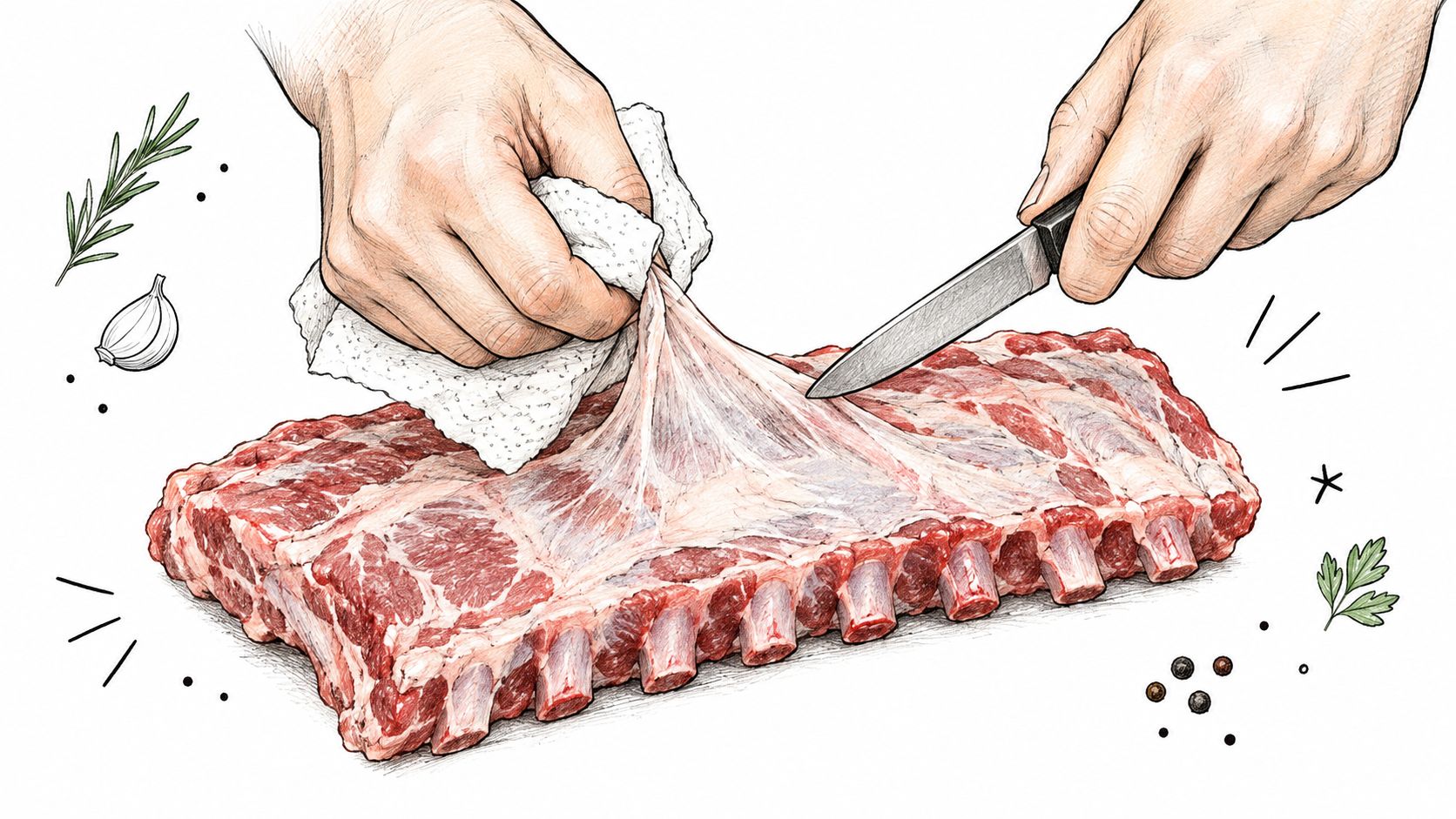
Start with the bone side facing up. Slip a blunt knife under a corner of the membrane, lift enough to grip it, then pull with a paper towel. The towel stops the slippery membrane escaping your fingers. If it tears, grab another edge and continue until the bone side feels clean.

Pat the rack dry before seasoning. A wet surface dilutes the rub and encourages patchy bark. UK BBQ guidance also recommends drying the ribs, removing the membrane and seasoning all sides evenly before resting in this British BBQ advice guide.
Use salt separately when you have time
For a dry brine, weigh the rack and apply 0.75% of its weight in fine sea salt four to twelve hours before cooking. Put the salted rack uncovered on a wire rack over a tray in the fridge. This gives the salt time to move into the meat while the exposed surface dries.
Take the rack out and let the surface lose its fridge chill for 30 to 60 minutes. If the rub contains plenty of sugar, keep the exposed resting period shorter. Salt-and-spice blends tolerate a longer cure, but sugar can draw moisture towards the surface and leave the coating wet.
Build the coating in layers
Use mustard or a little oil as a binder only when the dry rub needs help sticking. A thin film is enough. Press on the first coat rather than rubbing it aggressively into the meat, wait 15 minutes, then add a second, heavier coat where you want the bark to develop.
Set the seasoned rack on a wire rack over a tray for at least 30 minutes and up to 4 hours. You're looking for a tacky surface, no loose powder and visible moisture absorption. If the rub still looks like dry sand, it hasn't set. This guide to using dry rub on ribs follows the same practical principle, seasoning should adhere before the rack meets smoke.
Watch the video after you've handled the rack once. The visual detail matters most around membrane removal and even coverage.
Low-and-Slow Temperatures and Doneness Targets
Set a garden cooker to 107°C with indirect heat and clean, thin smoke. On a Weber Kettle, the snake method gives a practical long burn. A ProQ or Weber Smokey Mountain bullet smoker can hold the same temperature, provided you make small vent changes instead of chasing every reading.
Choose oak for steady savoury smoke, or apple for a softer fruit note. Keep the smoke clean. Billowing white smoke turns the rub bitter, especially when the bark already contains muscovado.
Let the bark develop in phases
Cook the rack unwrapped until the meat reaches about 71°C internally. The rub dries, the colour sets and the surface stops looking wet. Wrapping early softens the bark and traps moisture against the seasoning, so leave it exposed through this stage.
Continue unwrapped as the ribs move towards 88 to 93°C. Fat renders and the bark firms. If the cook stalls and tenderness needs help, wrap the rack briefly in butcher paper, then unwrap it again so the outside can dry and tack up.
Temperature guides the cook, but tenderness makes the final call. Back ribs usually finish around 90°C. Spare ribs often need 96 to 99°C for a satisfying bite. Check the thermometer between the bones, never against one, using this guide to check rib temperature safely and use a meat thermometer. The probe should slide into the meat with little resistance.
| Rib Cut | Target Internal Temp | Texture Test | Bark Status |
|---|---|---|---|
| Back ribs | 90°C | Probe slides in with little resistance, like warm butter | Dry, dark and set |
| Spare ribs | 96 to 99°C | Clean probe pull with a tender but defined bite | Firm, tacky and rendered |
Use a bend test as a second check. Lift the rack with tongs from one end. It should bend well and show surface cracking without falling apart. UK barbecue guidance also lists 90°C as a practical low-and-slow cooked internal benchmark for ribs in this BBQ temperature chart.
Do not guess fuel consumption for a cooker you have not measured. For a six-hour kettle cook or a four-hour bullet-smoker cook, load enough fuel for the planned burn, then learn your pit's consumption through a trial run. Open the vents only enough to recover the target. Make small adjustments, because UK wind, rain and cold air can change the cooker response quickly.
Food safety comes first. UK Food Standards Agency guidance recommends cooking food to 70°C for 2 minutes, with equivalent combinations including 75°C for 30 seconds and 80°C for 6 seconds as summarised in this UK smoker temperature reference. Rib tenderness requires a higher finish than that safety threshold, but the guidance remains the handling baseline.
Adapting the Rub for UK Flavour Trends
Generic smoky-sweet BBQ still works, but it shouldn't be your only option. UK cooks are reaching for Korean-style BBQ, Japanese BBQ, char siu, peri peri, Cajun and suya flavours, while classic smoky BBQ continues to attract attention in this UK BBQ flavour report. Your rib rub should meet that curiosity without abandoning the bark mechanics.
Start with the back or spare formula you already trust. Change no more than 25% of the base ratio in one experiment. Replace too much salt, sugar or dry spice at once and you lose the structure that makes the rub cling and dry properly.
Coffee and chilli for spare ribs
Use the richer spare-rib formula as your base. Replace 15% of the sugar with finely ground espresso, then add ancho and chipotle for warmth rather than blunt heat. The coffee deepens the savoury edge, ancho brings a rounded dried-chilli character and chipotle adds smoke that works with the darker fat on spares.
Apply the mix lightly at first. Coffee can make the bark look darker before it has fully set, so judge readiness by whether the surface smears when touched, not by colour alone. A Texas-style beef profile can also work here when you want bark ahead of sweetness. Revolution Beef Rub is a cupboard option for that direction, although the pork remains the centre of the plate.
Wild garlic for back ribs
For leaner backs, make fresh wild garlic paste your binder. Pair it with coarse black pepper, fennel seed and a small amount of lemon zest. The green, aromatic profile cuts through smoke without needing a heavy sugar layer, and the fennel reinforces pork's natural sweetness.
Add the paste just before the dry spices and keep the coating thin. Fresh ingredients introduce moisture, so don't give the rack the same long uncovered rest you'd use for a dry salt-and-spice blend. For a citrus-led variation without building another full cupboard, Miami Mojo Citrus Blend gives you a different route while keeping the seasoning focused.
Smokey Rebel's range is made in small batches with plant-based ingredients and no fillers, and its recyclable packaging suits a cupboard where you want clearly defined blends rather than anonymous additives. Use a prepared blend as a flavour shortcut, then control application by cut, heat and bark stage.
Scaling, Pairing, and Your Next Cook Day
Scale the rub by rack count, then adjust for the cut. Use the 60/30/10 split, salt, sugar and spice blend, as your production formula. Back ribs take roughly 30 to 40g per rack. Spare ribs need around 50 to 60g per rack.
| Racks | Cut | Total Rub Weight | Kosher Salt (60%) | Sugar (30%) | Spice Blend (10%) |
|---|---|---|---|---|---|
| 2 | Back ribs | 80g | 48g | 24g | 8g |
| 2 | Spare ribs | 120g | 72g | 36g | 12g |
| 5 | Back ribs | 200g | 120g | 60g | 20g |
| 5 | Spare ribs | 300g | 180g | 90g | 30g |
| 10 | Back ribs | 400g | 240g | 120g | 40g |
| 10 | Spare ribs | 600g | 360g | 180g | 60g |
| 20 | Back ribs | 800g | 480g | 240g | 80g |
| 20 | Spare ribs | 1,200g | 720g | 360g | 120g |
For a UK garden cooker, apple smoke keeps pork fruity without taking over. Oak is safer for guests who find hickory too forceful, while cherry darkens the surface. Add a cider vinegar and apple juice spritz at the 90-minute mark, then leave the lid shut. Every unnecessary peek costs heat and slows the cook.
For prepared blends, use Spitfire Spice Blend when you want more heat, and Texas Red Chili Mix when a firm, savoury bark matters more than sweetness. For a milder everyday pork profile, use the pork blend selected earlier in the article.
Your next cook-day checklist
- Trim: remove the membrane, pat the rack dry and tidy loose edges.
- Brine: apply the calculated salt four to twelve hours ahead when the schedule allows.
- Rub: press on the base coat, wait 15 minutes, then add the bark coat.
- Manage the stall: keep the rack unwrapped through bark development, then wrap only if tenderness needs a push around 71°C.
- Rest: hold the finished ribs in a Cambro or foil wrap for 20 to 30 minutes before slicing.
A competition pit is unnecessary. Use a cut-specific rub, stable heat and a tenderness test rather than obeying the clock.
Smokey Rebel offers pork-focused blends, chilli seasonings and BBQ flavour bundles for cooks who want a small-batch alternative to mixing every rub from scratch. Visit Smokey Rebel, choose a pork seasoning for the next rack, and build the cupboard around the cut you cook.
Join our Mailing List
Sign up and get Smokey Rebel Recipes + weekly recipes straight to your inbox!
Recent articles
Pork Rub Recipe for Ribs That Actually Bark
A UK-friendly pork rub recipe for ribs with clean ingredients, exact ratios, low-and-slow timing, and scaling tips for events.
Read moreHow to Make Crispy Dry Rub Chicken Wings
Master crispy dry rub chicken wings with our step-by-step guide. Learn the best oven, air fryer and BBQ methods using...
Read moreSmoke Flavour Powder: What It Is and How to Use It
Learn what smoke flavour powder is, how it's made, and how to use it on meats, veg and rubs for...
Read more