Chili with Beef Brisket: A Practical Step-by-Step Guide
You've got a brisket resting on the board, the kitchen smells of smoke and rendered beef, and the obvious question is what to do with the pieces that won't make it into neat slices. Chili with beef brisket is the answer when you want that deep barbecue character in a spoonable, family-friendly meal. The trick is to protect the brisket's texture, build a sauce with enough backbone, and handle the finished pot safely.
This guide covers the smoker, oven and slow cooker routes, then shows how to choose between a brisket-heavy pot and versions stretched with beans, lentils or mushrooms. It also uses UK food-safety guidance for cooling, storing and reheating, because a great batch isn't useful if it's left warm in a deep pot all afternoon.
Why Brisket Earns Its Place in a Pot of Chili
The best moment comes just after the rest. You lift the cover from the brisket, the bark has darkened, and the fat has softened into the meat. A knife slides through the centre, but the edges are already threatening to fall apart. Some of that brisket deserves to be sliced, especially the point where the marbling is generous. The rest can be pulled into a tomato-rich chili where its smoky crust and rendered juices season the whole pot.
Brisket brings something lean mince can't. Its connective tissue softens during long, moist cooking, while marbling gives the sauce a fuller mouthfeel. Mince is convenient and can make a good weeknight chili, but brisket gives you distinct strands and chunks that hold their identity instead of disappearing into the sauce.
Practical rule: Cook the brisket until it's tender enough to pull, but don't shred it so finely that it becomes indistinguishable from mince.
A cheaper beef cut can work, but the trade-off changes. Shin delivers excellent gelatin and needs patient cooking. Chuck gives a balanced result and is often easier to cube. Brisket makes sense when you already have a smoked joint, want to use leftovers intelligently, or enjoy building a dish around low-and-slow flavour. It isn't automatically the economical choice, particularly when beef prices are strong.
UK beef is a substantial, high-value food sector. In 2024, home-fed beef and veal production rose 3.8% year on year to 937,000 tonnes, prime-cattle slaughter reached 2.116 million head after rising 4.1%, and the overall value of UK beef and veal production increased 9.3% to £4.1 billion, according to the UK Government's livestock statistics. The national cattle and calf population fell 1.5% to 9.4 million, while GB prime-cattle deadweight prices stood 25% above the five-year average, so brisket deserves deliberate portion planning rather than careless trimming.
The flavour direction matters
Brisket chili needs seasoning that can survive smoke, stock, tomatoes and a long simmer. A clean beef rub on the joint creates the first layer, while the pot needs a dedicated chilli blend that rounds out the sauce instead of making it hotter.
For that style of cooking, use plant-based, filler-free seasonings and flavours inspired by different food traditions. Recyclable craft-can packaging also suits a kitchen where the same blends move between the smoker, hob and barbecue. The point isn't to bury the beef. It's to give the beef a clear, repeatable frame.
Hold back a few slices if you want contrast. Fold the remaining brisket into the pot while it's warm, then let the sauce collect the juices from the cutting board. That combination gives you both the pleasure of smoked brisket and the comfort of a proper bowl of chili.
Choosing, Trimming and Seasoning the Brisket
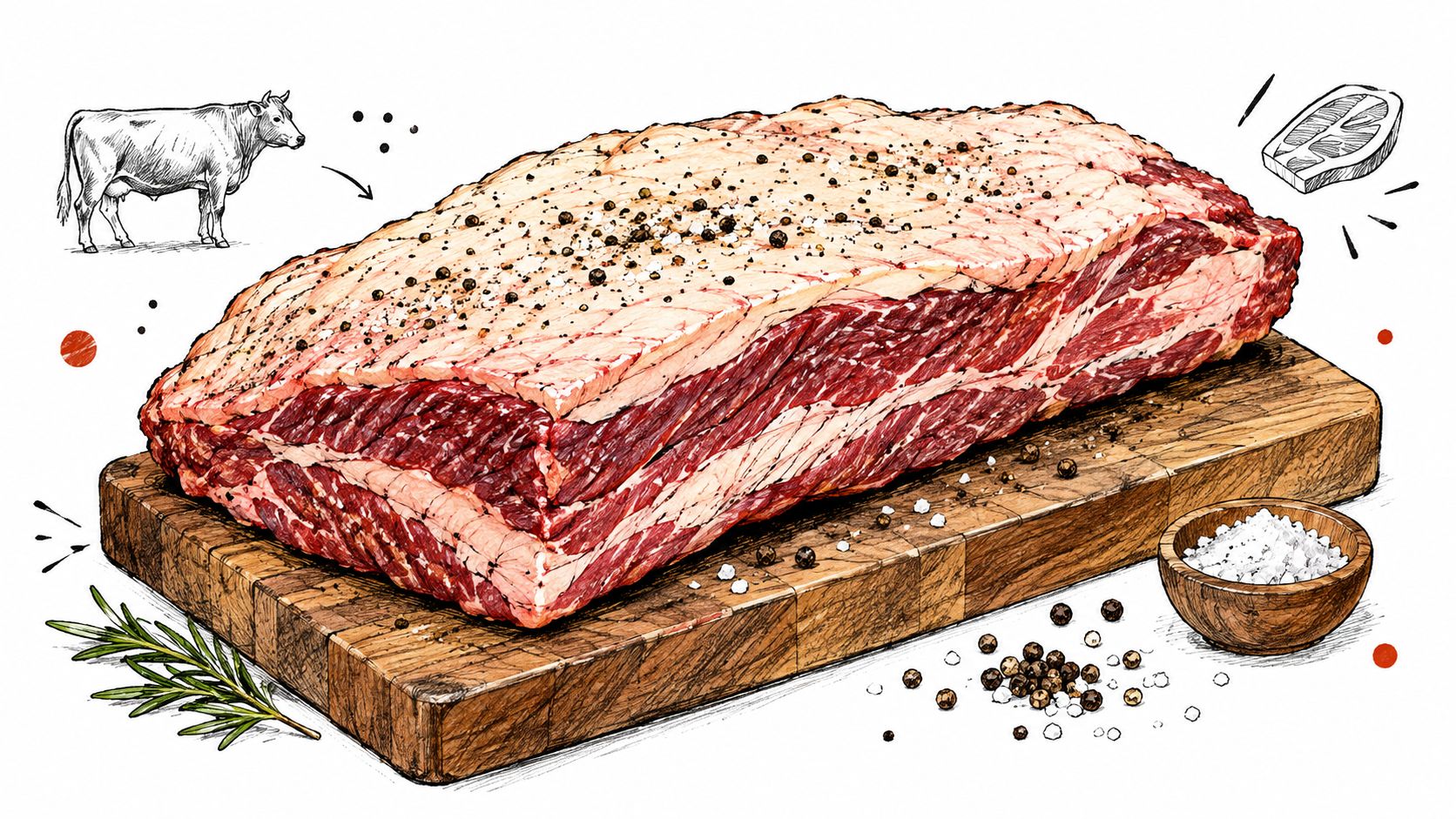
Start with the joint you can cook comfortably. A whole brisket is useful for a large gathering, but a smaller flat or point is easier to manage in a domestic oven or slow cooker. The flat is leaner and slices neatly. The point carries more fat and is usually more forgiving when shredded into chili.
Look for a fat cap that's substantial but not excessively thick. Remove hard, waxy sections because they won't render into a pleasant texture. Leave a thin, even layer over the surface, then trim loose flaps that may burn or make portioning awkward.

Seasoning without burying the beef
For a straightforward starting point, apply Revolution Beef Rub to the brisket, with SPG Base Blend as a supporting layer when you want a clear salt, pepper and garlic profile. You can follow this guide to the best seasoning for brisket for the wider seasoning logic, but the useful kitchen method is simple:
- Pat the brisket dry and trim the fat.
- Apply a light, even coating of SPG Base Blend if the beef needs a savoury foundation.
- Add Revolution Beef Rub over the top and sides, pressing rather than rubbing aggressively.
- Place the brisket uncovered on a tray in the fridge overnight, or season it immediately before cooking if the day is tight.
- Take it out while the cooker comes to temperature so the surface isn't wet and chilled when it goes on.
Don't treat the rub as a mathematical coating. The exact amount depends on the joint's surface area, the salt level of the blend and whether the finished meat will be diluted into a full pot of chili. Use enough to cover the surface in a fine, visible layer without creating a crust of seasoning that overwhelms the sauce.
Seasoning just before cooking gives a direct, fresh spice profile. Seasoning overnight lets salt move further into the outer meat and helps the surface dry, which improves browning and bark. Neither route is wrong. The overnight option suits a planned weekend cook, while immediate seasoning works perfectly when the brisket is being turned into a same-day family meal.
The brisket should smell savoury and aromatic before it goes into the cooker, not aggressively salty.
Low-and-Slow Cooking Routes for Brisket
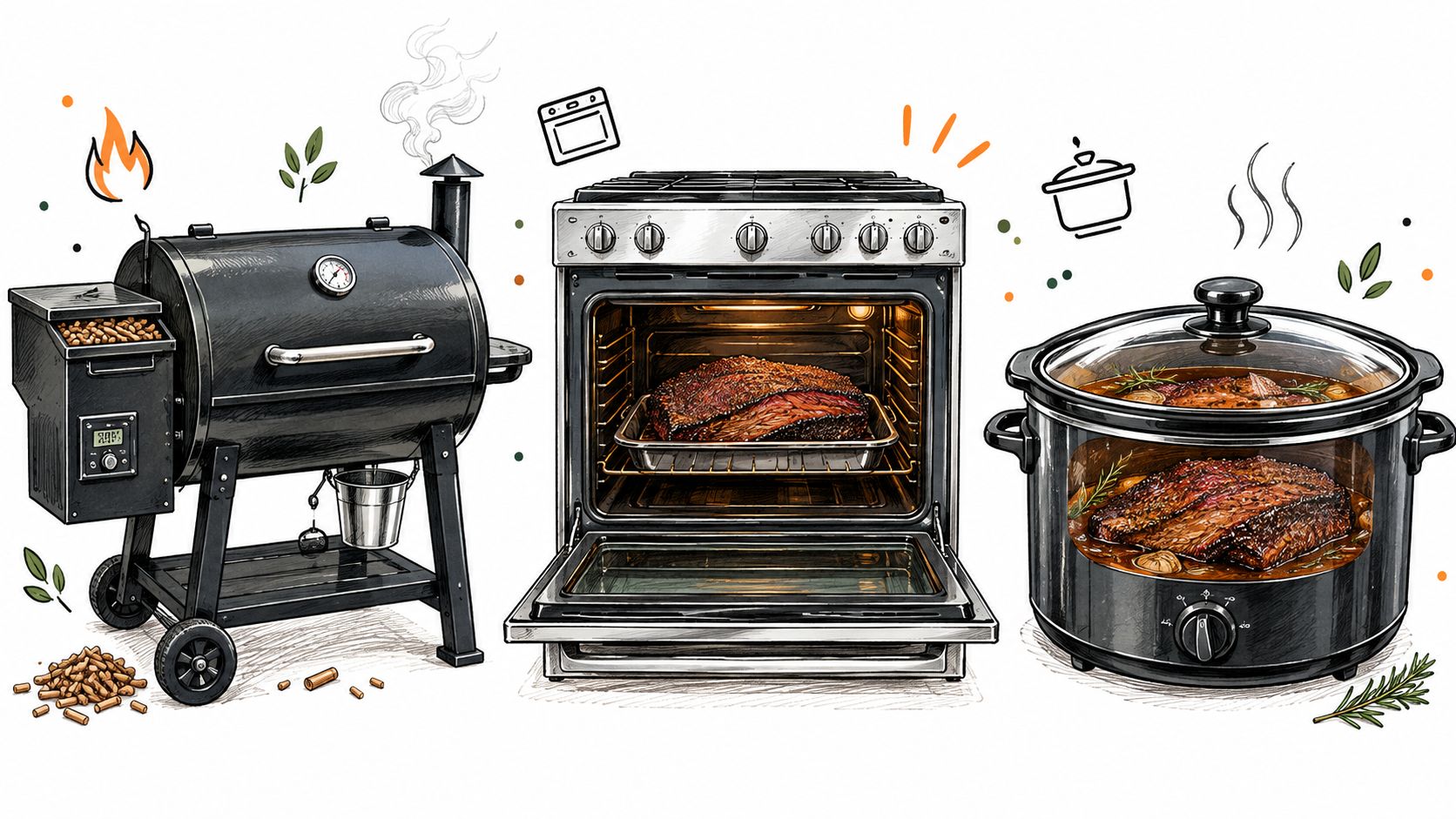
There are three dependable routes to tender brisket, and the right one is the route you can control. A pellet smoker gives the strongest outdoor character. The oven is stable and practical in poor weather. A slow cooker gives you soft meat with almost no monitoring, though it won't build the same bark.

Pellet smoker
Set the smoker for low, steady heat and choose a mild wood such as a fruitwood or a balanced beef-friendly pellet from the Smokey Rebel wood pellet collection. Keep the brisket uncovered while the bark develops. Once the exterior has the colour and texture you want, wrap it in butcher's paper or foil with a small amount of liquid.
The exact cooking time changes with joint size, weather, cooker recovery and how cold the meat was when it went on. Judge doneness by feel rather than a clock. A skewer or thermometer probe should enter the thickest section with little resistance, similar to pushing into softened butter.
For a closer look at the technique, use this guide to smoking brisket in a smoker. Rest the cooked brisket before cutting. If you're making chili, a covered rest keeps the meat juicy and gives you time to prepare the pot.
Domestic oven
The oven route works best when you create a moist, enclosed environment. Roast the seasoned brisket uncovered long enough to colour, then place it in a covered roasting dish with a modest amount of stock. Seal the lid or foil tightly so steam stays in the dish.
You're looking for tender fibres rather than a particular number on the display. A joint that still resists the probe needs more time. A joint that feels soft throughout can be rested, shredded and added to the chili.
Slow cooker
A slow cooker needs less liquid than many cooks expect. Add enough stock or sauce to create a moist environment, but don't submerge the brisket completely. Too much liquid washes away the seasoning and leaves you with boiled-tasting beef.
Keep the lid closed during the cook. Every lift releases heat and extends the process. Once the brisket is soft, transfer it to a board, rest it briefly, and reserve the cooking liquid for the chili base after skimming excess fat.
The video below gives another visual reference for the cooking stages.
Shredding the Brisket and Building the Chili Pot
Shred the brisket while it's warm enough to handle. Pull along the grain first, then break larger strands across the grain so each spoonful is easy to eat. Keep some pieces larger than others. Fine shreds disappear into the sauce, while rough chunks give the bowl the unmistakable feel of brisket.
Separate excess rendered fat, but don't throw every drop away. A spoonful can fry the onions and carry beef flavour through the base. Hard, waxy fat should be discarded.
Build the base in layers
Use the same Dutch oven or heavy pot where possible. Sweat diced onions until soft, add garlic, then bloom your dried seasoning briefly in the fat. Add tomatoes and stock before anything catches on the bottom.
A practical seasoning route is Texas Red Chili Mix, which is designed for slow-simmered beef and brisket chili and can also be used on the brisket before smoking. Add it gradually so you can control intensity. The blend should support the beef, not turn the pot into a one-note heat test.
Don't rush the base: Raw spices taste dusty. A short bloom in fat gives them a rounder, deeper flavour.
For a generous crowd pot, use enough tomato and stock to surround the meat without making soup. Add beans if you want them, but drain and rinse tinned beans first so their liquid doesn't cloud the sauce. For a smaller weeknight version, use less liquid and rely on the brisket's cooking juices for body.
Fold the brisket through once the sauce has come together. Simmer gently with the lid partly on, then remove the lid if the chili needs concentration. Stir from the bottom every so often, especially once the brisket starts breaking down.
Taste at the right moment
Seasoning changes as the sauce reduces. Taste near the end for salt, acidity, warmth and richness. If the pot tastes heavy, a small amount of acidity can sharpen it. If it tastes thin, reduce it uncovered rather than adding more spice.
The brisket doesn't need hours in the finished chili. It's already cooked. Give it enough time to absorb the sauce and become part of the dish, then stop before every strand turns soft and anonymous.
Brisket-Heavy, Brisket-and-Bean, and Brisket-and-Mushroom
A brisket chili doesn't have to be all beef to taste like brisket. The format you choose affects texture, cost and how many people the pot can feed. Beans and lentils add body. Mushrooms contribute savouriness and a meaty chew, though they won't imitate brisket's collagen.
| Format | Texture | Smoky depth | Approx cost per serving | Best for |
|---|---|---|---|---|
| Brisket-heavy | Large, tender strands and chunks | Most pronounced | Higher | A barbecue-centred meal |
| Brisket-and-bean | Soft beans with distinct beef pieces | Strong when the sauce is reduced properly | Lower | Family meals and batch cooking |
| Brisket-and-mushroom | Rich, savoury and slightly springy | Beef remains noticeable without dominating | Moderate | Stretching a joint while keeping a hearty texture |
The brisket-heavy version is the most direct. Use larger pieces, fewer fillers and enough sauce to coat rather than drown the meat. It suits cooks who have smoked a joint specifically for chili and want the beef to remain the star.
The bean and lentil format is more forgiving on portion size. Add the legumes after the tomato base has developed, then fold in brisket towards the end. Don't boil the brisket aggressively with the beans, or the meat will lose its texture before the sauce is ready.
Mushrooms need different treatment. Chop them finely, cook them until their moisture has gone, and brown them before adding the tomatoes. If you add raw mushrooms straight to a wet pot, they release water and make the chili taste diluted.
Protecting smoky depth
When reducing the amount of brisket, keep the flavour architecture intact. Use a little more Texas Red Chili Mix if the sauce can handle it, or add a small splash of strong coffee for bitterness and depth. A knob of butter at the finish can soften sharp edges, but it shouldn't turn the chili greasy.
The UK health context also matters. NHS guidance suggests an average of no more than 70g of cooked red or processed meat per day, and advises cutting down when average intake exceeds 90g per day, as explained in its guidance on meat and nutrition. Those figures don't dictate the size of a chili bowl because beans, tomatoes and vegetables contribute to the dish, but they're useful when distributing cooked brisket across meals.
A blended pot can feel generous without making every portion meat-heavy. That's often the smarter choice when beef is expensive, when you're feeding children, or when the same batch needs to cover more than one meal.
Batch Safety, Storage and Reheating Without the Worry
Chili often tastes better after resting overnight, but improved flavour isn't the same as safe storage. Treat the pot as a temperature-controlled batch from the moment it leaves the hob.
The UK Food Standards Agency advises cooling cooked food and getting it into refrigeration within two hours, eating leftovers within 48 hours, or freezing them. Divide the chili into shallow containers rather than placing a full Dutch oven or stockpot in the fridge. A deep pot holds heat in the centre for too long.
A reliable home routine
- Portion the chili while it's still hot, using shallow containers or flat freezer packs.
- Let steam escape briefly, then cool at room temperature for no more than one to two hours.
- Cover, label with the cooking date and refrigerate promptly.
- Freeze portions you won't eat within 48 hours.
- Defrost frozen portions overnight in the fridge.
- Reheat only the amount you need, and reheat the batch just once.
For the full process, follow the UK guidance on chilling, freezing and defrosting food safely. Keep cooked meat away from raw meat during storage.
For reheating, stir several times so dense beans and brisket don't form cold pockets. The FSA's standard is 70°C for two minutes, with equivalent combinations including 60°C for 45 minutes, 65°C for 10 minutes, 75°C for 30 seconds, or 80°C for six seconds, as set out in its cooking guidance. Heat the centre thoroughly until steaming hot throughout.
The bacterial danger zone is 8–63°C, so the practical goal is to move the chili through that range quickly. At an outdoor gathering, transfer it into a cool bag with ice packs within one to two hours, especially in hot weather. Don't leave a large pot beside the barbecue all afternoon, and don't keep reheating the same pot for successive servings. The FSA barbecue food-safety guidance covers the outdoor version of these controls.
For a repeatable batch system, portioning and labelling matter as much as the recipe. This guide to batch-cooking BBQ meals follows the same practical principle: cook once, divide carefully and reheat only what you'll eat.
Serving, Leftover Ideas and Troubleshooting
Serve brisket chili with rice, jacket potatoes, cornbread or tortilla chips. The best topping is usually something fresh and sharp, such as chopped onion, herbs, jalapeño or a spoonful of sour cream, because it cuts through the smoky richness.
Leftovers can become nachos, stuffed peppers, sloppy joes or a quick chili pasta bake. Keep the brisket pieces intact where possible, then add a little stock when reheating if the sauce has tightened in the fridge.
- Too thin: Simmer uncovered until the sauce coats a spoon.
- Too thick: Add warm stock a little at a time.
- Dry brisket shreds: Fold in extra sauce and stop cooking sooner.
- Flat flavour: Check salt first, then add a small amount of acidity or more Texas Red Chili Mix.
For consistency next time, use Revolution Beef Rub on the joint, SPG Base Blend when you want a simple savoury foundation, and Texas Red Chili Mix in the pot. Those layers keep the smoked beef recognisable without forcing you to rebuild the seasoning from memory.
Smokey Rebel offers small-batch rubs and seasonings for the brisket, the chili pot and the wider barbecue spread, including Texas Red Chili Mix, Revolution Beef Rub and SPG Base Blend. Visit Smokey Rebel to choose the flavours that fit your next slow cook and turn the leftovers into another proper meal.
Join our Mailing List
Sign up and get Smokey Rebel Recipes + weekly recipes straight to your inbox!
Recent articles
Chili with Beef Brisket: A Practical Step-by-Step Guide
Learn how to make bold, smoky chili with beef brisket. Step-by-step prep, seasoning, cooking, storage and serving tips for UK...
Read moreDry Rub Salmon Guide: Best Seasonings and Methods for 2026
Master dry rub salmon with expert recipes, cooking methods, and timing tips. Discover the best Smokey Rebel seasonings for perfectly...
Read morePork Loin Dry Rub Oven: The Complete Guide
Master pork loin dry rub oven cooking with simple steps, perfect rub recipes, and expert tips for juicy results every...
Read more