Cast Iron Frying Skillet: The Ultimate UK Guide 2026
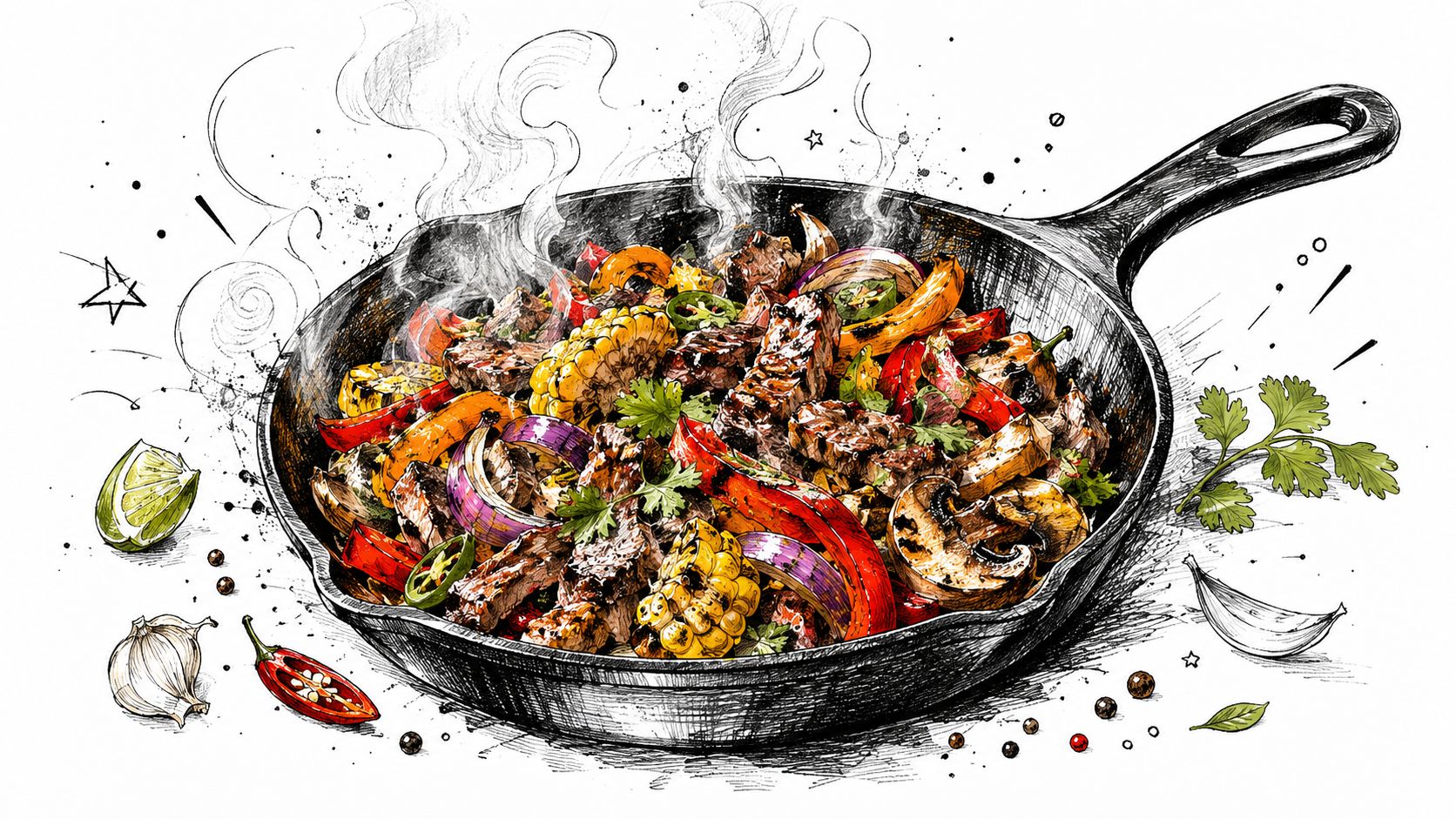
You've probably got one of those thin, wobbly pans in the cupboard right now, the kind that scorches in the middle, goes cold at the edge, and never quite behaves when dinner needs to be on the table. A cast iron frying skillet is the opposite of that experience. It's heavy, steady, and once you learn its rhythm, it becomes one of the most useful pieces of cookware in a UK kitchen, especially if you care about good searing, reliable hob performance, and food that tastes properly cooked rather than merely warmed through.
Why Every UK Kitchen Needs a Cast Iron Skillet
A good skillet earns its place by handling the daily jobs better than most pans ever will. Cast iron holds heat, so when a cold steak, chicken thigh, or pile of mushrooms hits the surface, the pan does not sag in temperature the way a lighter pan often does. That is the difference between a proper crust and pale, steamy food.
In a UK kitchen, that matters even more when space is tight and the hob is doing a lot of work. Many homes are short on cupboard space, worktop room, and patience for pans that only behave on one type of cooker. A cast iron frying skillet sits happily on gas, ceramic, or induction, and if you have a smaller induction hob or one of the common mixed-brand setups found in British kitchens, the extra weight also helps it stay put while you cook.
The technical reason is simple. Cast iron's thermal mass is high, and that matters because cast iron has a density of about 7.2 g/cm³ and a specific heat capacity of roughly 0.46 kJ/kg·K. In practice, a heavy skillet stores more energy and loses less heat when food goes in, which is why it works so well for searing and browning.
Practical rule: heat the pan gradually, then let the full body of the skillet come up to temperature before you add oil or food.
Why it beats flimsy pans in real cooking
Non-stick pans are handy, but they are not built for the same job. They are fine for quick eggs and gentle heat, but they do not give you the same retained heat for roast finishing, pan sauces, or repeat batches of food. Stainless steel is tougher, but it still asks more of the cook when the goal is steady browning rather than fast responsiveness.
Cast iron also fits the way many UK kitchens are set up. It is ferromagnetic, so it works efficiently on induction, and its thick base helps smooth out hotspots compared with lightweight aluminium pans. That is useful on the kind of mixed hob setups common in British homes, where burner size and pan stability matter as much as heat output. If you have a compact flat kitchen, a narrow cooker hood, or an induction zone that is fussier than it should be, a solid skillet is often the pan that behaves best. A well-made option such as the Hornbeam No. 10 cast iron skillet gives you that steady feel without needing much more effort from the cook.
There is a cultural angle too. Cast-iron cooking pots were pioneered in mass production by Abraham Darby of Shropshire, England, in the early 18th century, and that industrial breakthrough helped make heavy cookware practical at scale for ordinary kitchens, not just workshops and estates. The UK was part of the story from the start. Abraham Darby's early cast iron breakthrough
For most home cooks, the payoff is straightforward. You get a pan that can go from hob to oven, handle demanding heat, and last for years if you treat it properly. That combination is hard to beat.
How to Choose the Right Cast Iron Skillet
Start with the pan you can use well. A skillet that is too large is awkward to lift when it is hot, takes up more storage space than you want, and can be slower to heat evenly. A skillet that is too small limits you the moment you try to cook burgers, chicken thighs, or a proper one-pan breakfast for more than one person.
For many UK kitchens, the right size depends on the way you cook most evenings. If you usually cook for one or two, a smaller pan is easier to handle and easier to tuck away. If you batch-cook, finish dishes in the oven, or want enough room to sear without crowding the pan, a larger skillet makes more sense. The best choice is the one you will reach for often, not the one that looks best on the shelf.
Good buying habit: choose the skillet size you can lift confidently when it is hot, full, and greasy, not the size that looks impressive on the shelf.
Pre-seasoned or raw cast iron
For UK buyers, the practical split is simple. Pre-seasoned cast iron skillets are the easier choice for most home cooks because they are ready to use sooner and remove some of the early trial and error. Bare cast iron still has its place, but it asks for more work up front and suits cooks who are comfortable building the surface themselves. Enameled variants are worth considering if you want easier handling with acidic food or prefer a finish that is simpler to keep looking tidy.
If your cooking often includes tomato sauces, wine reductions, or other acidic dishes, enameled cast iron can save some fuss. Plain cast iron can still handle plenty of everyday cooking, but it is less forgiving if you leave acidic food sitting in the pan. That trade-off matters in real kitchens, especially if you want one pan that can move between searing, simmering, and serving without extra care.
What to look for before you buy
- Weight you can manage: heavy is normal, but it should still feel controllable when empty.
- A handle that suits your grip: a long main handle helps on the hob, while a helper handle makes two-handed lifting safer.
- A flat, even base: this matters on induction and on smaller UK gas rings.
- A finish that feels consistent: rougher pans can still cook well, but a cleaner finish usually makes seasoning easier over time.
If you want a straightforward example to compare against, look at the Hornbeam No. 10 Cast Iron Skillet and then match that style against the pans you already use. A good skillet should suit your hob, your storage space, and the way you cook in a real UK kitchen. You are not buying a gadget. You are choosing a workhorse.
The Essential Guide to Seasoning Your Skillet

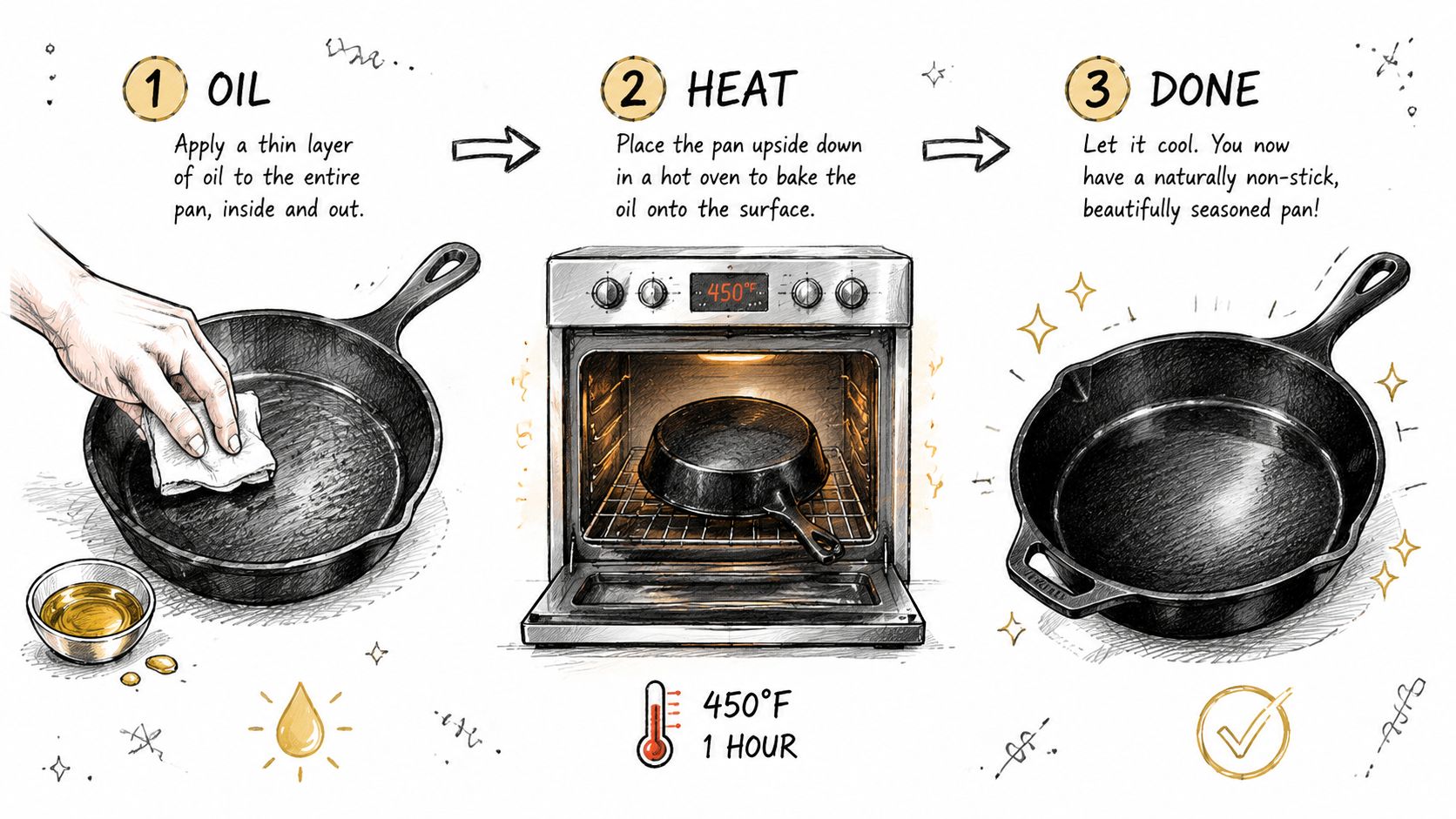
Seasoning is a thin layer of baked-on oil that bonds to the iron and helps build a protective cooking surface. It is not complicated, but it does need a bit of care the first few times. Once it is established, it makes the pan easier to use and less likely to stick.
For UK cooks, the practical point is simple. A well-seasoned skillet handles everyday jobs better, whether it sits on a gas hob, an electric ring, or induction. It also gives you more freedom if you plan to move from eggs and bacon to roast potatoes, chops, or a quick pan sauce without babying the pan.
A simple seasoning routine that works
- Wash the pan first. If it is new, remove any factory residue with warm water and a little mild soap.
- Dry it completely. Any trapped moisture can work against the finish.
- Add a very thin coat of oil. Wipe it on, then wipe most of it off. The surface should look nearly dry.
- Heat it until the oil bonds. An oven usually gives the most even result, especially for a fresh pan.
- Repeat if needed. Several thin layers give a better surface than one heavy, sticky coat.
Use less oil than you think. Too much leaves a tacky finish that feels wrong in the hand and performs badly on the hob. The aim is a barely visible film, not a glossy layer sitting on top.
Keep building the surface through normal use
Seasoning gets better through cooking. Frying, roasting, and searing all help, especially if you keep using a little fat and avoid leaving the pan wet after washing. A skillet used regularly usually improves faster than one that is put away for special occasions.
Acidic food is where the trade-off shows up. Tomato sauces, wine reductions, and long simmers are harder on plain cast iron than dry frying or searing, so a good seasoning helps, but it does not make the pan invincible. If you want a clear step-by-step refresher, the how to season cast iron guide is a useful reference. Use it as a practical check, then keep the routine consistent. Cast iron responds best to steady use and sensible care.
Mastering Everyday Cooking and Maintenance
The best cast iron users don't baby the pan, they treat it correctly every time. Start with a slow preheat, because a heavy skillet needs time to come up evenly. Then add a thin layer of fat before the food goes in, especially if you're searing meat or cooking anything that likes a stable surface.
Hob control that actually helps
On gas, choose a burner that matches the pan base as closely as you can. On electric, give the pan more time than you think before cooking. On induction, the pan will respond well, but you still need to resist the urge to rush it. Cast iron spreads heat more slowly than aluminium, so the pan needs a bit of patience at the start.
Cast iron works best when the cook is calm at the beginning. Rush the preheat and you chase hot spots for the rest of the meal.
Use oven mitts, or a handle cover if you've got one, because the handle heats up along with the pan. That sounds obvious, but it's where a lot of new users get caught out. A skillet full of hot oil is not the moment to discover the handle is blazing.
Cleaning without stripping the seasoning
For day-to-day cleaning, scrape out the food while the pan is still warm, then wash it promptly. A little mild soap is fine if the pan needs it, but don't soak it and don't leave it wet. Dry it straight away, then wipe on a trace of oil before storing it.
Acidic cooking needs a bit more care. Guidance for UK cooks stresses immediate cleaning, drying, and re-oiling after routine tomato-based dishes so the seasoning layer doesn't get stripped Esquire UK on cast iron care. That doesn't mean you can't use tomatoes. It means you shouldn't leave a tomato sauce sitting in the pan for hours after dinner.
A practical routine looks like this:
- Scrape first: remove stuck bits while the pan is still warm.
- Wash lightly: use hot water and a soft sponge or scraper.
- Dry fully: heat it briefly on the hob if needed.
- Oil lightly: one thin wipe is enough.
- Store dry: keep it somewhere moisture won't build up.
That routine keeps the skillet useful for weeknight cooking, not just Sunday roasts. It's the difference between a pan that slowly improves and one that starts to rust at the back of the cupboard.
Smokey Rebel Recipes to Unleash Your Skillet

A skillet earns loyalty when it turns simple ingredients into something worth repeating. Steak is the obvious headline, but the same pan also handles chicken thighs, cornbread, fajitas, and tray-style vegetable meals without fuss. The trick is to match the seasoning and heat to the job.
For a steak, keep the surface dry, season lightly, and let the pan do the heavy lifting. A strong all-purpose beef rub works well here, and the pan's retained heat gives you the crust you want. For step-by-step technique, this guide is a handy companion: pan-seared steak.
Three skillet uses that pay off fast
1. Steak with a hard sear
Pat the steak dry, season it, and preheat the skillet until it's properly hot. Add a small amount of fat, lay the steak in away from you, then leave it alone long enough to build colour. Flip once, finish to your liking, and rest it before slicing.
2. Chicken thighs with crisp skin
Chicken thighs love cast iron because the skin renders slowly and the meat stays juicy. Start skin-side down and keep the pan steady rather than blasting it too hard. For a flavourful result, a rub built for chicken gives a stronger crust and deeper aroma.
3. Cornbread or a quick veg hash
Cast iron is excellent for baking because it spreads heat evenly and holds it long enough to brown the edges. A simple salt-pepper-garlic base works on vegetables, cornbread, and many one-pan breakfasts. If you like building bold plates around the skillet, it's also worth browsing a good cookbook for hearty chilli ideas, especially for nights when you want something with a bit more depth.
A key advantage is flexibility. A single skillet can move from searing to baking to serving, and that makes weeknight cooking simpler rather than more complicated. When the pan is seasoned well, you stop thinking about whether it can handle the job and start thinking about what to cook next.
Troubleshooting Common Cast Iron Mistakes
Rust, sticking, and patchy seasoning are normal. They're not signs that the pan is ruined, they're signs that it needs a bit of attention. Cast iron is forgiving, which is exactly why people keep using it after years of rough treatment.
Fixing the usual problems
If food sticks, the likely cause is usually one of three things. The pan wasn't hot enough, it wasn't given enough oil, or the food was moved too soon. Start with a proper preheat, then let the crust form before you try to lift or flip anything.
If the seasoning looks weak, keep cooking with it. Frying with a little fat and wiping the pan clean after use helps the surface improve over time. You don't need to strip it back at the first dull patch.
Rust is more annoying, but it's still fixable. Scrub the affected area, dry the pan completely, then re-oil and heat it so the surface is protected again. For serious damage, you can restore the pan rather than replace it.
UK kitchens add a few real-life constraints that generic advice often ignores. Weight, storage, and hob compatibility matter in smaller spaces, and Which? highlights gradual preheating and careful handling as part of practical cast iron use Which? cast iron buying guidance. That's the mindset to keep. Don't force the pan to behave like a lightweight non-stick skillet.
A cast iron skillet is hard to ruin permanently. Most problems are maintenance problems, not terminal failures.
If you can lift it safely, dry it fully, and keep it lightly oiled, the skillet will keep coming back into service. That's why old cast iron survives in kitchens for decades.
Your Cast Iron Frying Skillet FAQs
Can I use soap to clean my cast iron skillet?
Yes, a small amount of mild soap is fine when the pan needs a proper clean. Don't soak it, and don't leave it wet afterwards. Dry it fully, then wipe on a very thin coat of oil before storing it away.
What's the best oil for seasoning?
Use a neutral cooking oil that spreads thinly and does not leave the pan sticky once you wipe back the excess. The key is a thin layer and enough heat to bond it to the iron. Too much oil causes a tacky surface, so wipe off more than you think you need to.
Is a rusty cast iron pan salvageable?
Usually, yes. Rust normally means moisture sat on the surface too long, not that the pan is finished. Scrub the rust away, dry the skillet completely, then re-season it so the surface is protected again.
How do I store my skillet properly?
Store it somewhere dry, with no trapped moisture. If you stack pans, put a paper towel or cloth between them so the seasoning does not get scratched. Before it goes away, make sure it is dry and has had a light oil wipe.
Can I cook tomatoes in cast iron?
You can, but don't leave acidic food sitting in the pan for long periods. Tomato sauces are fine for short cooking sessions if the skillet is in good condition and you clean it promptly afterwards. After tomato-based cooking, clean, dry, and re-oil the skillet so the seasoning stays intact.
What should a first-time buyer prioritise?
Choose a skillet you can lift comfortably, with a flat base and a handle that suits your grip. That matters more than chasing a pan that looks impressive but feels awkward on a busy hob or in a small cupboard. On UK cooktops, a stable base and sensible weight make day-to-day use much easier, especially if you cook on gas, electric, or induction and want a pan that heats evenly without being a chore to handle.
Join our Mailing List
Sign up and get Smokey Rebel Recipes + weekly recipes straight to your inbox!
Recent articles
Best BBQ Seasoning: A Practical UK Buyer's Guide
Find the best BBQ seasoning for UK grilling. Learn what to look for in rubs and finishing blends, flavour profiles,...
Read moreHow to Dry Rub Chicken Breast for Juicy Results Every Time
Learn how to dry rub chicken breast for bold flavour and juicy results. Covers rub application, rest times, cooking methods,...
Read moreHow to Make the Best Sausage & Apple Traybake
A practical guide to making a better sausage and apple traybake, from choosing the sausages and apples to seasoning, roasting...
Read more