Your Complete Guide to the Diet Atkins in the UK
The Atkins diet is one of the most famous low-carb plans out there, and for good reason. For decades, it’s helped people shift their metabolism away from burning sugar for energy and towards torching stored body fat instead. This simple but powerful switch, known as ketosis, is the secret behind its lasting success.
What Is the Atkins Diet and How Does It Work?

At its core, the Atkins diet is all about strategically cutting back on carbohydrates and sugar to change how your body is fuelled.
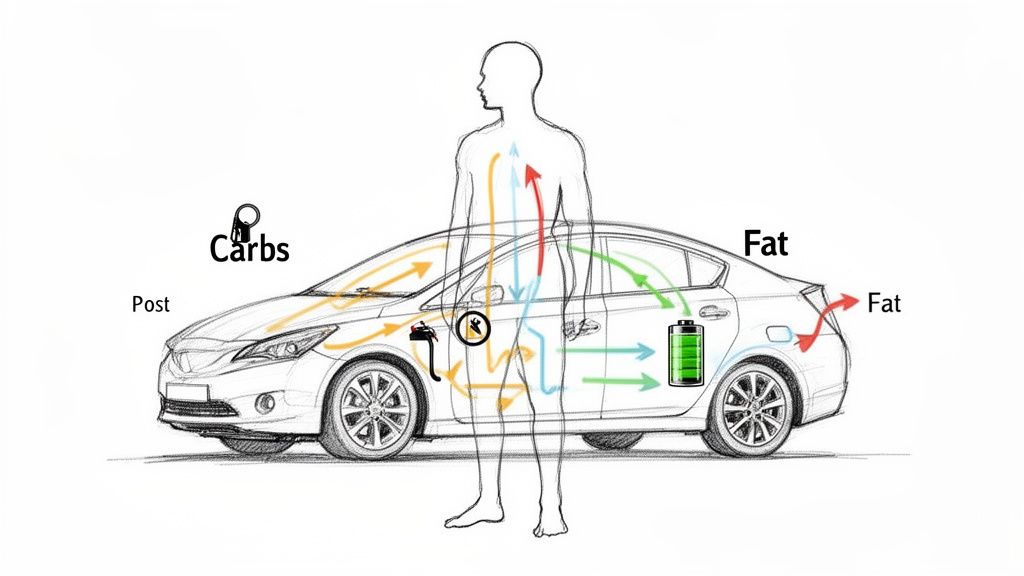
Think of your body like a hybrid car. It can run on petrol (carbs) or tap into its big electric battery (your stored body fat). Most modern diets keep us topped up on petrol, so we rarely ever use the battery. The Atkins diet flips that, teaching your body to rely on its powerful and efficient fat-burning battery first.
Normally, when you eat things like bread, pasta, potatoes, or sugary snacks, your body breaks them down into glucose for a quick energy hit. Anything you don't use right away gets stored, often as fat. By slashing your carb intake, Atkins lowers your blood sugar and insulin levels, forcing your body to look elsewhere for fuel.
With less glucose around, your body turns to its fat reserves. It breaks them down into molecules called ketones, which it can then use for energy. This metabolic state is called ketosis. Once you're in ketosis, your body becomes a fat-burning machine, using both the fat from your food and your own stored body fat to power you through the day.
The Evolution of the Atkins Approach
The original diet, introduced by Dr. Robert C. Atkins back in the 1970s, has changed quite a bit over the years. It’s now far more flexible, with different plans to suit different goals and lifestyles. You'll mainly hear about two popular versions today:
- Atkins 20®: This is the classic, more intense version. You start with just 20 net grams of carbs a day. It’s brilliant for people with a lot of weight to lose or for anyone wanting to kick-start their weight loss with a rapid induction phase.
- Atkins 40®: A more relaxed starting point, this plan allows for 40 net grams of carbs daily right from the beginning. It's a great fit if you have less weight to lose or prefer having a wider variety of foods, like some fruits and starchy veg, from day one.
No matter which plan you choose, the core idea is exactly the same: control your carb intake to stabilise your blood sugar, get a handle on cravings, and encourage your body to burn fat for fuel. The different plans just give you different starting lines.
It’s this straightforward, science-backed approach that keeps the Atkins diet a go-to method for people all over the UK looking for a reliable path to managing their weight. It’s not about starving yourself; it’s about retraining your metabolism to work for you.
Navigating The Four Phases Of The Atkins Diet
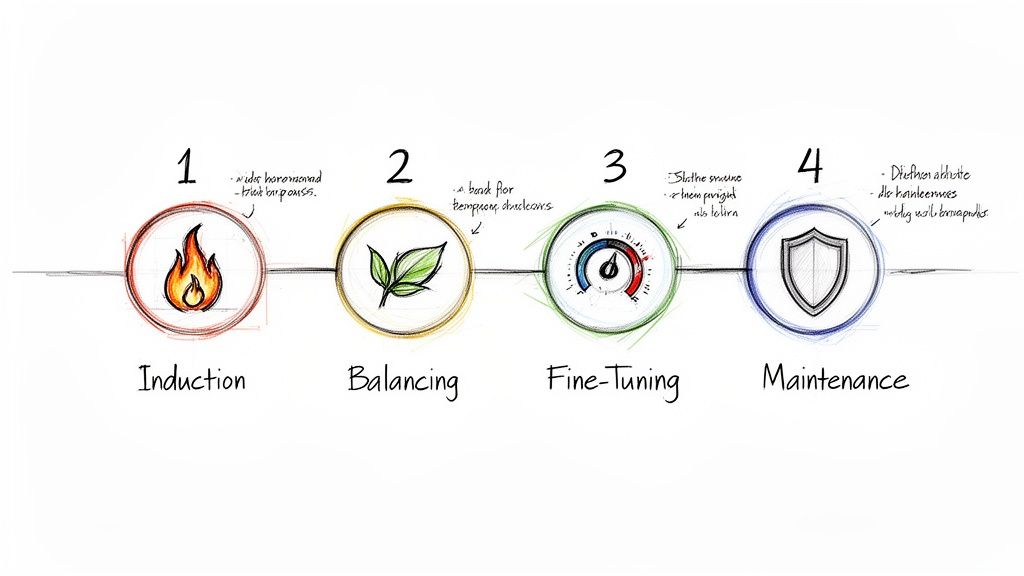
The Atkins diet isn't a single, rigid plan. Think of it more like a journey with four distinct stages, each designed to get you closer to your goal while teaching you how your body handles carbs. It’s a structured roadmap that takes you from a powerful weight-loss kick-start right through to a sustainable way of eating for life.

This phased approach makes the whole process feel much more manageable. You’re not just following rules; you’re learning what works for you.
To give you a clearer picture, here’s a quick overview of how the four phases break down.
A Snapshot of the Four Atkins Diet Phases
| Phase | Primary Goal | Typical Duration | Daily Net Carbs |
|---|---|---|---|
| 1: Induction | Kick-start rapid weight loss and enter ketosis | 2 weeks | 20g |
| 2: Balancing | Continue losing weight while finding your personal carb balance | Until you're ~10 lbs from your goal | 25g+, increasing by 5g weekly |
| 3: Fine-Tuning | Slow down weight loss and prepare for maintenance | At least 1 month after reaching your goal | Increases by 10g weekly |
| 4: Maintenance | Maintain your goal weight for life | Lifelong | Your personal carb tolerance |
Each stage plays a crucial role in not just losing weight, but learning how to keep it off for good. Let’s dive into what each one involves.
Phase 1: Induction
This is the launchpad. The first two weeks are the most restrictive part of the diet atkins, designed to flip your body’s metabolic switch from burning sugar to burning fat. This state is called ketosis, and getting there fast is the name of the game.
For two weeks, your daily net carb intake is capped at just 20 grams. This forces your body to use up its stored glucose and start tapping into fat for fuel.
- What to eat: Your plate will be built around high-quality proteins like meat, fish, poultry, and eggs, alongside healthy fats from things like olive oil and avocados.
- Carb sources: Carbs will come almost exclusively from high-fibre, non-starchy "foundation" vegetables—think leafy greens, broccoli, cauliflower, and peppers.
- The goal: Initiate rapid weight loss and get your blood sugar under control, which is a massive help for knocking cravings on the head early on.
Phase 2: Balancing
Once you’ve completed the initial two-week induction, you move into the Balancing phase. The mission here is to figure out your personal "carb balance"—the sweet spot where you can still consistently lose weight while slowly reintroducing more foods.
You’ll start by bumping your daily net carbs to 25 grams for a week, then 30 grams the next, and so on in 5-gram increments. This is where you can bring back more variety.
You can start adding things like:
- Nuts and seeds (almonds, sunflower seeds)
- Berries (raspberries, blueberries)
- Certain dairy products like Greek yoghurt
You’ll stay in this phase until you’re about 10 pounds (4.5 kg) from your goal weight. It’s a huge learning curve, teaching you exactly how your body reacts to different types of carbs.
Phase 3: Fine-Tuning
Getting close to the finish line! When you’re nearly at your target weight, you enter Phase 3. This stage is all about slowing things down to a steady, sustainable loss of about one pound per week. It’s the bridge between losing weight and keeping it off.
Here, you’ll increase your daily net carbs by 10 grams each week. This lets you bring back an even wider range of healthy, nutrient-packed foods.
This is where you can carefully reintroduce foods like starchy vegetables (carrots, sweet potatoes), legumes (chickpeas, lentils), and even small portions of whole grains. The key is to watch the scales and ease off if your weight loss stalls.
You should aim to stay in the Fine-Tuning phase for at least a month after hitting your goal. This gives your body time to stabilise at its new weight before you move into the final phase for good.
Phase 4: Lifetime Maintenance
This is it—the final phase of the Atkins diet is a sustainable eating plan for life. By now, you’ve discovered your personal carb tolerance: the maximum amount of net carbs you can eat each day without putting weight back on. If you're looking for inspiration on what to eat, our guide to high protein diet foods is a great place to start.
This phase is about freedom, not restriction. You have a massive variety of foods to choose from, and the focus is squarely on maintaining your hard-earned results. If you notice the weight creeping back up, you know exactly what to do—just dial back the carbs a little or even dip back into an earlier phase for a week or two to get back on track. Phase 4 is the ultimate goal: a healthy, satisfying, and sustainable way of eating that lasts a lifetime.
The Rise and Evolution of Atkins in the UK
The Atkins diet didn't just quietly appear in the UK; it crashed onto the scene in the early 2000s. It felt like you couldn't escape it. From celebrities on magazine covers to chatter in the office canteen, it was the diet everyone was talking about. It became a proper cultural phenomenon, promising a completely new way to lose weight without the constant hunger that came with low-fat plans.
This new way of thinking really struck a chord with a British public fed up with counting calories and eating bland, unsatisfying meals. The idea that you could eat things like steak, cheese, and eggs and still lose weight was revolutionary. It completely flipped the long-held belief that fat was the enemy, putting the blame squarely on carbs and sugar. That simple but powerful message cut through all the noise and grabbed the nation's attention.
The Atkins Boom
The diet’s popularity went through the roof, becoming a defining part of the early noughties. It was more than just a diet; it was a movement. Restaurants started adding "Atkins-friendly" dishes to their menus, and supermarket shelves were suddenly stocked with low-carb alternatives. Its influence was undeniable, changing how millions of us thought about food.
A YouGov poll from that time really showed the scale of it all, estimating that around 3 million people in the UK had given the diet a go. The survey found that roughly 7% of men and 10% of women had used Atkins to lose weight, a noticeable difference between the sexes. You can read more about its initial surge in this detailed report on Atkins' UK popularity.
Shifting Tides: The New Wave of Low-Carb Diets
But things never stand still in the world of wellness. As the years rolled by, new low-carb challengers started to appear, most famously the Ketogenic (Keto) and Carnivore diets. These newer plans took the basic principles Atkins had laid out and pushed them further, often with more specific or restrictive rules.
- The Keto Diet: This one is all about getting your body into a state of ketosis by sticking to strict macronutrient ratios—very high fat, moderate protein, and next to no carbs. It gained a following for its supposed health benefits beyond just weight loss.
- The Carnivore Diet: An even more extreme version, this diet strips out all plant-based foods, focusing only on animal products like meat, fish, and eggs.
These new kids on the block gained momentum, attracting people with promises of better metabolic health and mental sharpness. They borrowed the core idea that Atkins had made famous—slashing carbs—but repackaged it with a different philosophy. For a while, this made Atkins feel like the "original" but maybe less intense version of low-carb living.
Despite the new competition, Atkins remains the foundation of modern low-carb eating. It was the diet that brought the whole concept into the mainstream, paving the way for everything that followed, from Keto to Carnivore.
Today, Atkins has found its place not as a passing fad but as a solid, flexible framework. It offers a more gradual, phased approach that many people find easier to stick with for the long haul. It isn't outdated; it’s the bedrock of low-carb nutrition—a reliable and adaptable starting point for anyone looking to cut down on carbs and get a handle on their health.
Does the Atkins Diet Really Work for Weight Loss?
Celebrity stories are one thing, but when you're thinking about changing the way you eat, you want to know if the science actually stacks up. So, does the Atkins diet really deliver the goods when it comes to losing weight? Let's get into the evidence.
Over the years, the Atkins diet has been put through its paces in countless studies, often going head-to-head with traditional low-fat, calorie-counting plans. The results are pretty compelling, especially in the early days. That rapid initial drop on the scales during Phase 1 is a massive motivator for many people, and it’s a real effect driven by both shedding excess water and your body flicking the switch into fat-burning mode.
This isn’t just hype. A deep dive into multiple clinical trials found that the vast majority showed the diet produced "clinically meaningful" weight loss in the short term, with most longer-term studies backing up its lasting effects. It's a solid scientific footing.
Why It Clicks for So Many People
So what's going on under the bonnet? There are a few key reasons why Atkins gets results for weight loss, and understanding them can help you figure out if it's the right fit for you.
- Appetite Control: Here’s the big one. Protein and fat are far more filling than carbs. By centring your meals around them, you just naturally feel satisfied for longer. This often leads to eating fewer calories without even trying—or feeling like you're starving.
- Kicking Cravings to the Curb: When you ditch sugar and refined carbs, your blood sugar stops behaving like a rollercoaster. You avoid those dramatic spikes and crashes that send you hunting for the biscuit tin, which makes sticking to the plan a whole lot easier.
- A Small Metabolic Edge: Some research suggests your body uses a bit more energy to process protein compared to carbs or fat. It's not a huge difference, but this slight metabolic nudge can contribute to your overall daily calorie burn.
The Real-World Challenge: Sticking with It
While the science looks good on paper, the biggest hurdle for any diet isn't how it performs in a lab—it's whether you can actually live with it. The best diet in the world is always the one you can stick to.
Let's be honest, the initial Induction Phase of Atkins can be a shock to the system. Cutting carbs that drastically means rethinking your shopping list, your cooking habits, and how you eat out. This is where a lot of people fall off the wagon.
The bottom line is this: the Atkins diet can be a seriously effective way to lose weight, but success all comes down to how well you can build it into your life. It’s less about a diet’s theoretical perfection and more about its practicality on your plate.
For anyone looking to understand weight management more broadly, it's always useful to explore different methods. You can find excellent information on other safe and effective strategies for rapid weight loss that can offer a wider perspective.
Ultimately, finding a sustainable path that fits your tastes and lifestyle is what matters most. The structured phases of Atkins are designed to guide you there, but it takes planning and commitment to see it through.
Making Atkins Delicious with Flavourful Low-Carb Meals

Let’s be honest, one of the biggest myths about the diet atkins plan is that your meals will be bland and boring. The thought of endless plates of plain chicken and steamed broccoli is enough to put anyone off before they even start.
But here’s the thing: low-carb eating doesn't mean low-flavour eating. Far from it.
The real secret to loving your food on Atkins is mastering the art of seasoning. When you cut out sugar and starchy carbs, the natural, rich flavours of meat and vegetables really get a chance to shine. This is where a top-notch, authentic seasoning can take a simple meal and turn it into something genuinely special.
But you have to be careful. A lot of shop-bought rubs and spice mixes are packed with hidden sugars, fillers like maltodextrin, and other carb-heavy nasties that will completely derail your progress. At Smokey Rebel, our rubs are crafted with no added crap—just pure, expertly blended herbs and spices. They're the perfect partner for your Atkins journey.
From Bland to Brilliant with Zero-Carb Flavour
Forget boring dinners. With the right seasonings, your Atkins-friendly proteins can become the highlight of your day. It’s all about pairing the right flavour profile with the right cut of meat or fish to create a meal so satisfying you won't even miss the carbs.
Let's get practical with a few mouth-watering examples you can try tonight.
How to Season the Perfect Atkins-Friendly Steak
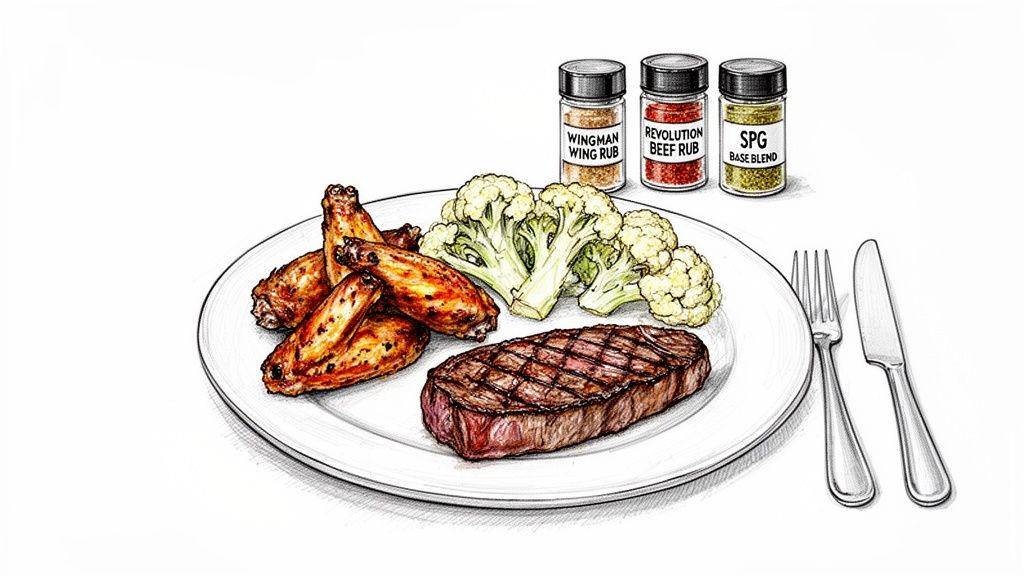
A juicy, perfectly cooked steak is a cornerstone of the Atkins diet, loaded with protein and healthy fats. But to really take it to the next level, you need a rub that complements that rich, beefy flavour without a single grain of sugar.
- Choose Your Cut: Grab a good quality steak like a ribeye, sirloin, or rump. Pat it completely dry with a paper towel—this step is absolutely crucial for getting a perfect crust.
- Season Generously: Don't be shy here. Liberally coat every surface of the steak with Smokey Rebel's Revolution Beef Rub. Its blend of salt, pepper, and savoury spices is specifically designed to create an incredible bark when it hits the heat.
- Rest and Sear: Let the seasoned steak sit at room temperature for about 20 minutes. Then, sear it in a screaming hot pan with a knob of butter or tallow for a deep, unforgettable crust.
That simple process creates a restaurant-quality steak that is 100% compliant with every phase of the Atkins diet.
How to Season Chicken Wings for the Air Fryer in 2 Minutes
Chicken is another staple, but it can get old, fast, if you don't get creative. Whether you’re roasting a whole bird, grilling thighs, or making a batch of wings for the weekend, flavour is your best friend. For crispy, irresistible chicken wings that won't kick you out of ketosis, a dedicated wing rub is a total game-changer.
- Pat the Wings Dry: This is the most important step for crispy skin. Use a paper towel to get the chicken wings as dry as possible.
- Coat & Season: Place the dry wings in a bowl, add a light drizzle of oil, and sprinkle generously with our Wingman Wing Rub. Toss well to ensure every wing is evenly coated.
- Air Fry to Perfection: Arrange the wings in a single layer in your air fryer basket. Cook at 200°C (400°F) for 18-20 minutes, flipping halfway through, until golden brown and super crispy.
Our rub delivers that classic, savoury flavour with just a hint of warmth, making it ridiculously easy to whip up delicious, Atkins-approved wings in minutes.
Don't Forget Your Vegetables
On the Atkins diet, especially during the induction phase, most of your carbs will come from non-starchy vegetables. It’s vital to make these as tasty as possible so you actually look forward to eating them. Roasting is a fantastic way to bring out the natural sweetness in veg like broccoli, cauliflower, and peppers.
A versatile, sugar-free seasoning is your secret weapon here.
- Roasted Cauliflower: Toss cauliflower florets in olive oil and a generous sprinkle of our SPG (Salt Pepper Garlic) Base Blend. Roast at 200°C (400°F) until it's tender and starting to caramelise at the edges. Simple, but so effective.
- Sautéed Green Beans: Add a pinch of the SPG blend to green beans sautéed in butter for an instant flavour upgrade.
- Grilled Courgettes: Slice courgettes, brush with oil, season with SPG, and grill until tender with beautiful char marks.
By using high-quality seasonings, you can make sure every single part of your meal is exciting. This approach doesn't just make the diet atkins more enjoyable—it makes it sustainable for the long haul. For more ideas on amazing low-carb cooking, check out our guide to recipes for a ketogenic diet, which shares many of the same principles.
The Good, The Bad, and The Common Mistakes
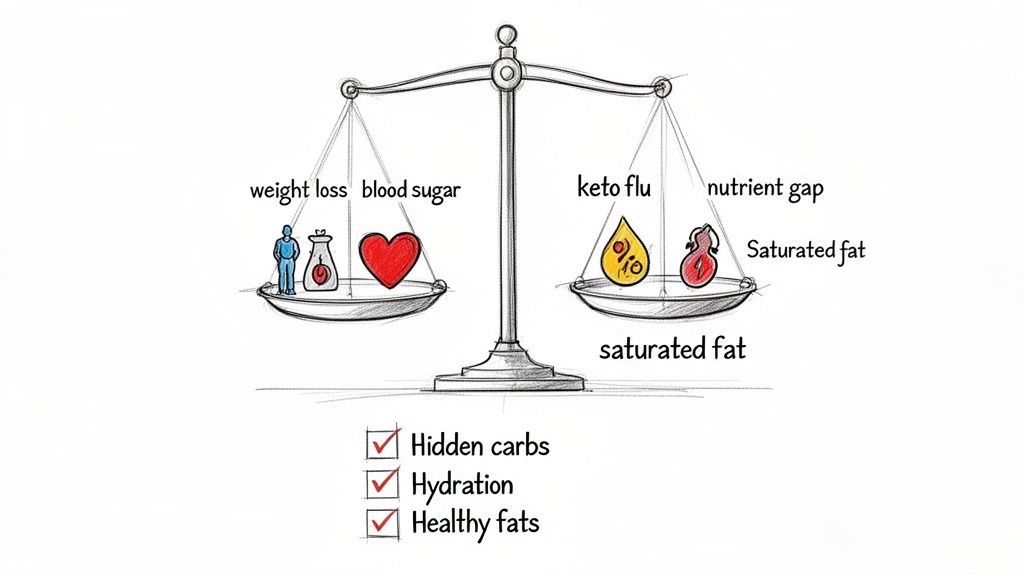
Before jumping into any new way of eating, it's smart to weigh things up properly. You need the full picture—the benefits, the risks, and the easy mistakes that can trip you up. The Atkins diet is no different.

Getting to grips with these pros and cons is the key to doing it safely and actually getting the results you want. Let's break it all down.
The Potential Health Benefits of Atkins
Weight loss might be the headline act, but the perks of a well-managed Atkins plan often go much deeper. When you stabilise your blood sugar and cut your reliance on carbs, some seriously positive things can happen.
- Effective Weight Loss: As we've covered, Atkins is brilliant at curbing your appetite and flipping your body's switch to fat-burning mode, making it a powerful tool for shifting pounds.
- Improved Blood Sugar Control: Cutting out sugar and refined carbs naturally leads to more stable blood glucose levels. This is a game-changer for anyone with insulin resistance or type 2 diabetes.
- Better Cardiovascular Markers: Some studies have shown that low-carb diets can actually improve several risk factors for heart disease. This often includes boosting "good" HDL cholesterol and lowering triglycerides (the fats floating around in your blood).
Understanding the Risks and Side Effects
Now for the other side of the coin. It's just as important to know the potential downsides. Many are temporary and can be managed, but they're not something to ignore. That initial switch can be a bit rough as your body gets used to a totally new fuel source.
The most common hurdle right at the start is the infamous "keto flu." As your body adjusts from burning carbs to burning fat, you might feel sluggish, irritable, and headachey for a few days. This is almost always temporary and is usually a sign of dehydration and an electrolyte imbalance.
Other potential risks include:
- Nutrient Deficiencies: If you're not careful, slashing carbs can mean missing out on certain fruits, veggies, and whole grains. This can lead to a shortfall in fibre, vitamins, and minerals.
- Constipation: A lower intake of high-fibre foods like beans and grains can, well, block things up. It’s absolutely crucial to pack your plate with low-carb, high-fibre vegetables to keep things moving.
- The Saturated Fat Debate: Because the diet is high in fat, it can lead to a higher intake of saturated fat. The jury is still out on its long-term impact on heart health, and it remains a hot topic of debate.
It's also worth thinking about how you cook. To make sure your kitchen is as healthy as your diet, you might want to look into the benefits of using PFOA and PTFE-free cookware.
Common Mistakes to Avoid on the Atkins Diet
Success often comes down to sidestepping a few common slip-ups. Know what they are, and you're already halfway there.
- Ignoring Hidden Carbs: Sauces, dressings, and even some processed meats can be loaded with sneaky sugars and starches. Get into the habit of reading every label.
- Not Drinking Enough Water: On a low-carb diet, your body flushes out more water and salt. Dehydration makes "keto flu" symptoms a lot worse, so keep that water bottle topped up.
- Fearing Healthy Fats: Remember, fat is your new fuel. If you skimp on it, you'll feel tired, hungry, and miserable. Embrace good fats from avocados, olive oil, nuts, and seeds.
- Forgetting Fibre: Don't let your veg intake slide. Load up on leafy greens and other low-carb, high-fibre veggies to support your digestion and overall well-being. For more ideas on making smart choices, our guide to healthy eating has plenty of practical tips.
Your Atkins Questions Answered
Got questions about starting the Atkins diet? You're not the only one. Let's clear up some of the most common queries with straightforward, no-nonsense answers.
What's the Real Difference Between Atkins and Keto?
Think of it as flexibility. The Keto diet is all about locking your body into a state of ketosis by sticking to a rigid formula: very high fat, moderate protein, and next-to-no carbs. It’s a constant balancing act.
Atkins, on the other hand, plays the long game. It starts strict to get you into ketosis quickly, but its phased approach is designed to help you gradually bring healthy carbs back into your diet. The goal is to figure out your own personal carb limit—the amount you can eat while still losing or maintaining weight. This makes it a much more sustainable and varied way of eating for many people.
Can I Have a Drink on the Atkins Diet?
During the first two-week Induction Phase, it’s best to steer clear of alcohol completely. When you drink, your body hits pause on burning fat and switches to burning the alcohol for energy instead. This will stall your progress right out of the gate.
Once you’re into the later phases, you can reintroduce a drink here and there. Just be smart about it. Go for low-carb options like a dry white wine or spirits like gin, vodka, or whisky with a zero-calorie mixer. Beer, sweet wines, and sugary cocktails are packed with carbs and are best avoided.
Are Smokey Rebel Seasonings Atkins-Friendly?
Absolutely. Our seasonings are a perfect match for the Atkins lifestyle. We make them with no added sugar, fillers, or gluten—just pure, natural herbs and spices. They're all about adding massive flavour without sneaking in any of those unwanted carbs.
Our SPG (Salt Pepper Garlic) Base Blend, Revolution Beef Rub, and Chipotle Cowboy Chicken Rub are all brilliant for livening up your meals. They prove that low-carb eating can be seriously delicious.
Is the Atkins Diet Still Popular Today?
Honestly, its heyday has passed. While it was once the biggest name in low-carb dieting, its popularity has faded as new trends have taken over. In the UK, Google search data shows a huge 84.33% drop in monthly searches for the diet.
It now sits at around tenth place among the UK's most searched-for diets. If you want to dig deeper into its modern-day relevance, the Mayo Clinic offers a great overview of the Atkins diet's current standing.
Ready to make your Atkins meals unforgettable? At Smokey Rebel, our seasonings are designed to deliver incredible taste without the carbs. Explore our full range and find your new favourite flavour.
Shop the Smokey Rebel Best Sellers Seasoning Gift Set now!
Join our Mailing List
Sign up and get Smokey Rebel Recipes + weekly recipes straight to your inbox!
Recent articles
How to Smoke Ribs: Your Ultimate Guide for 2026
Learn how to smoke ribs at home with our ultimate guide. From choosing ribs and rubs to mastering temperature and...
Read moreA UK Smoking Meat Guide for Perfect Backyard BBQ in 2026
Your ultimate smoking meat guide to master backyard BBQ. Learn to choose smokers, pair wood with rubs, and conquer the...
Read moreDiscover American BBQ Rubs UK: Best Flavours & How to Use
Discover the ultimate american bbq rubs uk guide for 2026! Learn key flavours, how to use them on pork, chicken...
Read more