How to Clean BBQ Grill: A Guide to Better Flavour in 5 Steps
Let's bust one of the biggest BBQ myths right now: a dirty grill does not 'add flavour'. Not good flavour, anyway.
All that caked-on grease and blackened carbon from your last cookout? It just creates bitter, acrid smoke that completely ruins the authentic taste of your food. A properly cleaned grill is the only true foundation for bold, pure flavours, letting your premium seasonings and quality meat do the talking.
Your Secret to Unforgettable Flavour Is a Clean Grill
Think of your grill as the canvas for your culinary masterpiece. You wouldn't see an artist start painting on a dirty, used canvas, and a true flavour pioneer would never cook on a grimy grate.
The lingering residue from past meals doesn't add a seasoned, smoky character; it adds a layer of burnt, stale taste that completely overpowers the fresh ingredients and quality rubs you've carefully chosen. Every time you fire up a dirty grill, you're essentially steaming your food in the ghosts of barbecues past.

This isn't just about taste, it's about performance. A clean grill heats more evenly, preventing those frustrating hot spots that char one side of your chicken while leaving the other undercooked. It also dramatically reduces the risk of dangerous flare-ups caused by old grease igniting, giving you far better control.
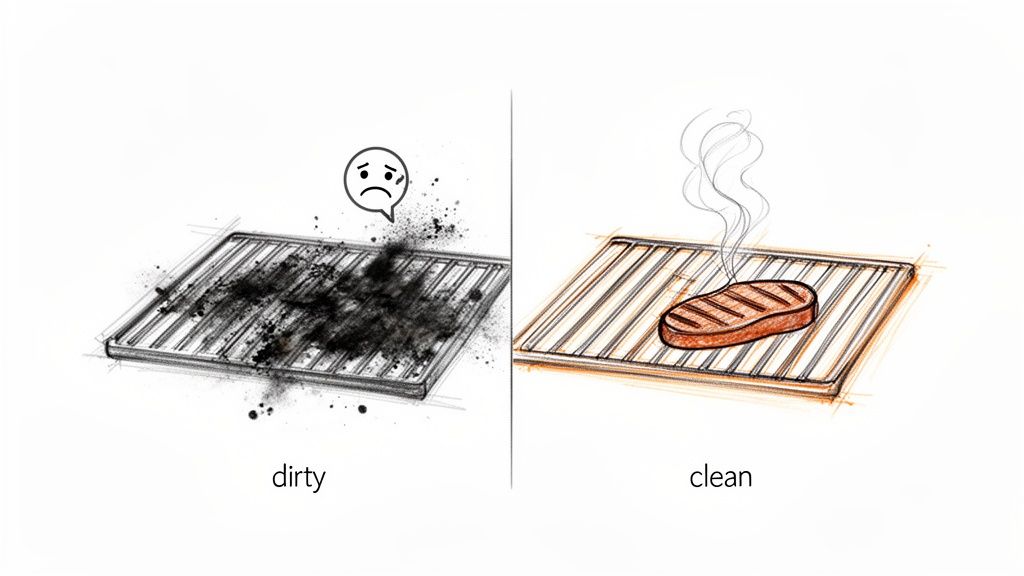
The difference in how your food tastes is night and day. A clean grill lets the real flavours sing, while a dirty one just adds a layer of unwanted bitterness.
Clean Grill vs Dirty Grill Flavour Impact
| Aspect | Clean Grill | Dirty Grill |
|---|---|---|
| Primary Taste | The pure flavour of your meat and seasonings. | Burnt, bitter, and stale 'off-flavours'. |
| Smoke Profile | Clean, aromatic smoke from wood chips/charcoal. | Acrid smoke from burning old grease and carbon. |
| Food Texture | Creates a perfect, clean sear and crust. | Food can stick, tear, and pick up black flakes. |
| Overall Result | Fresh, bold, and exactly as you intended. | Unpleasant and overpowered by old grime. |
Ultimately, a clean surface is non-negotiable if you care about the end result. It ensures that when you season ribs with our authentic Hickory Hog Pork Rub, you taste the smoky, sweet notes of hickory, not last week's burnt marinade.
The Great British Grime Myth
You might be surprised to learn that the idea of a "seasoned" dirty grill is a pretty common misconception here in the UK. Some shocking research revealed that over 25% of Brits genuinely believe a dirty grill 'adds flavour' to their food.
This belief is surprisingly widespread in UK households, where millions of families host barbecues all summer, often compromising the taste and safety of their meals without even realising it. You can read more about these surprising UK BBQ habits to see just how common the issue is.
By taking just a few moments to clean your BBQ, you ensure that the only flavours your family and friends experience are the ones you actually intended. This is what allows the complex notes of a great rub or the subtle smokiness from your wood chips to really take centre stage.
A clean grill is the difference between tasting last week's burnt sausages and this week's perfectly seasoned steak. It's the first and most important step in honouring your ingredients.
At the end of the day, proper maintenance protects your investment and makes every single meal taste infinitely better. It ensures that the distinct character of the wood you use—a detail we explore in our guide to choosing smoked wood for your BBQ—is what infuses your food, not old carbon.
This guide will walk you through everything, from quick post-cook wipe-downs to the essential deep seasonal cleans for both gas and charcoal models. Let's get you set up for flavour success.
Gathering Your Essential Grill Cleaning Toolkit
Before you even think about tackling the grime, getting the right tools lined up makes all the difference. Honestly, it’s like trying to cook without decent ingredients – you just make the job harder for yourself. Being prepared turns a dreaded chore into a quick, satisfying bit of maintenance.
The whole point is to work smarter, not harder. A well-stocked toolkit means you can get your grill looking its best safely and efficiently, protecting both you and your pride and joy.

The Essential Cleaning Arsenal
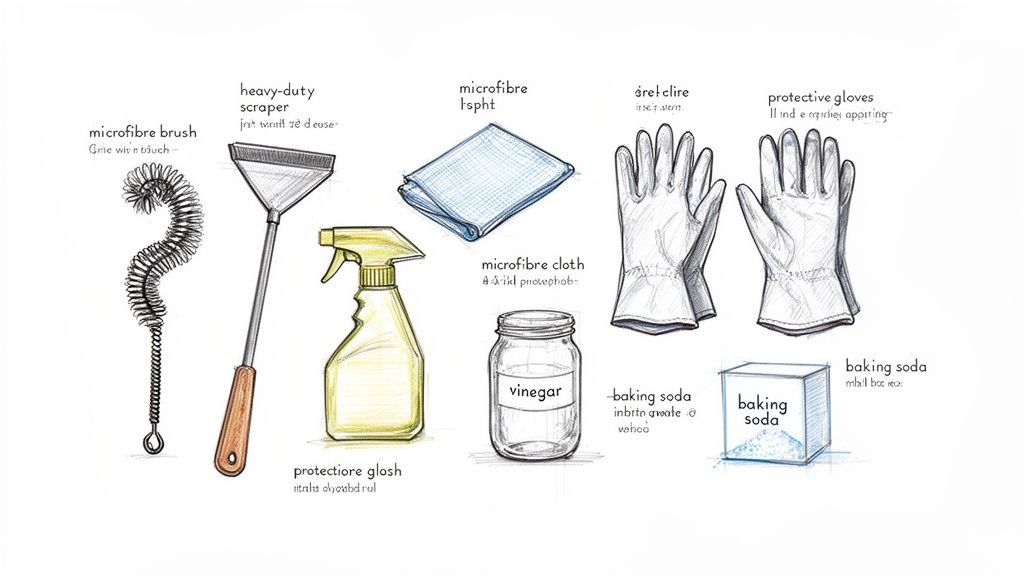
Your cleaning kit doesn't need to be complicated, but every item has its part to play. Here’s what every grill owner should have ready to go:
- A High-Quality Coiled Wire Brush: Ditch the old bristle brushes. I can't stress this enough. Coiled or woven wire brushes are a much safer bet, as you completely sidestep the risk of stray bristles breaking off and ending up in your food.
- A Heavy-Duty Scraper: For those properly stubborn, carbonised bits that a brush just laughs at, a good scraper is your best friend. A plastic or metal one gives you the leverage you need without scratching up your grill's interior.
- Protective Gloves: Grill cleaning is a messy business. A solid pair of heavy-duty rubber gloves will save your hands from a world of grease, grime, and hot water.
- Microfibre Cloths & Sponges: You'll want a few of these for wiping down surfaces, applying cleaning solutions, and giving the exterior a final polish. A non-abrasive sponge is perfect for any delicate parts.
- A Large Bucket or Tub: This is a game-changer for soaking grates and other removable bits. It lets your cleaning solution do all the hard work for you.
To make sure your setup is always ready for action, have a look at our guide on essential BBQ accessories in the UK for more ideas.
Powerful Pantry-Friendly Cleaners
We’re all about a "no added crap" philosophy here, and that applies to cleaning too. You really don’t need harsh, industrial chemicals to get a sparkling clean grill. Your kitchen cupboards probably hold some of the best food-safe degreasers you can find.
A simple mix of white vinegar and baking soda creates a powerful, fizzing reaction. It’s brilliant for cutting through grease and loosening baked-on gunk without leaving any nasty chemical residues behind.
You can make a simple paste with baking soda and a bit of water for scrubbing, or just fill a spray bottle with a 50/50 solution of white vinegar and water. These natural solutions are tough on grime but gentle on your grill, your food, and the environment. Job done.
Your Guide to Cleaning a Gas Grill
Gas grills are the undisputed champions of convenience in the UK. They’re quick to heat up, easy to control, and perfect for a spontaneous weeknight cook. But that same convenience often leads to a bit of neglect. It’s all too easy to turn it off, shut the lid, and tell yourself you’ll clean it "next time."

Sound familiar? You’re not alone. A study comparing BBQ habits found that we Brits can be the worst culprits for grill hygiene. A shocking 30% of English BBQ owners admit to waiting until their grill is visibly caked with grease and old food before they even think about cleaning it. You can read more about these surprising findings and see just how our habits stack up.
Let's walk through how to give your gas grill a proper deep clean. Think of it as protecting your investment and making sure every future cook is as delicious as the last.
Start with a High-Heat Burn-Off
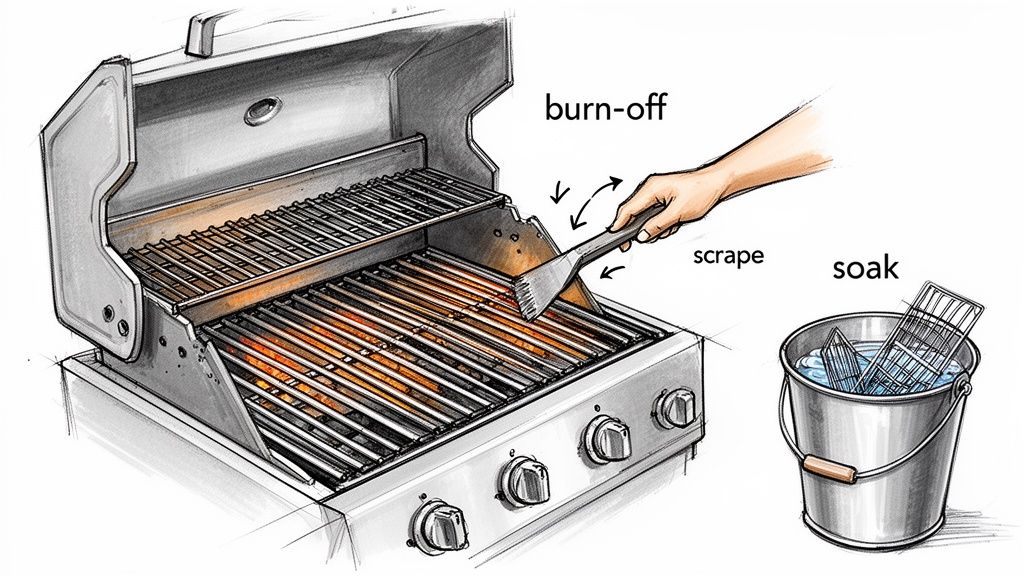
Before you even think about grabbing a brush, let the grill do some of the heavy lifting. Close the lid, crank all the burners up to high, and leave it to run for around 15 minutes.
This blast of heat acts like a self-cleaning cycle in an oven. It incinerates most of the gunk clinging to the grates and internal bits, turning that sticky grease into a dry, flaky ash. Trust me, this step makes the scraping and scrubbing that comes next a whole lot easier.
Tackle the Grates and Flavouriser Bars
Once the burn-off is done and the grill has cooled down enough to touch, it's time to get stuck in. First, make sure the gas is disconnected. Then, pull out the cooking grates and the metal tents that cover the burners (you might know them as flavouriser bars or heat shields).
- Scrape the Grates: Using your coiled wire brush, give both sides of the grates a good, hard scrub to get rid of all that carbonised ash.
- Give Them a Soak: Pop the grates and flavouriser bars into a big bucket of hot, soapy water. A decent squirt of washing-up liquid will do the trick. Let them sit there while you move on to the rest of the grill.
A rookie mistake is to only clean the top of the grates. The underside is a magnet for grease and carbon build-up, which is what causes those nasty flare-ups and foul-smelling smoke. Always give both sides a thorough clean.
Clear the Burners and Cook Box
With the grates and bars out of the way, you can get right into the heart of the grill. Take a look at the burner tubes – you're checking for blockages. Spider webs and bits of food are the usual suspects. Use a small brush or even a straightened paperclip to gently poke out any clogged ports. This is key to getting a nice, even flame.
Next, grab a plastic scraper and push all the debris from the sides and bottom of the cook box down into the grease tray. If you have a shop vac, now’s the time to use it – it makes short work of sucking up all that loose ash and grime.
Finally, slide out the grease collection tray and the drip pan underneath. Scrape out any solidified fat and give them a proper wash in the sink with more hot, soapy water.
Let everything dry completely before putting it all back together. Now you’ve got the ultimate clean canvas, ready to show off the deep, rich notes of a quality seasoning like our Revolution Beef Rub on your next steak. Your taste buds will thank you.
Mastering Charcoal Grill and Smoker Cleaning
For the traditionalists who swear by the authentic flavour of charcoal, cleaning is a totally different ball game compared to gas models. It’s a much more hands-on process, less about degreasing and more about managing ash and soot. Nailing this routine is absolutely crucial for both performance and flavour.

Letting a charcoal grill go doesn’t just look messy; it directly impacts your cooking. A thick bed of old ash can block the vents, choking the airflow your fire needs to breathe and making temperature control a nightmare. That same ash also traps moisture, which is a fast track to rust and corrosion, seriously shortening the life of your beloved kettle or smoker.
The First Job: Ash Management
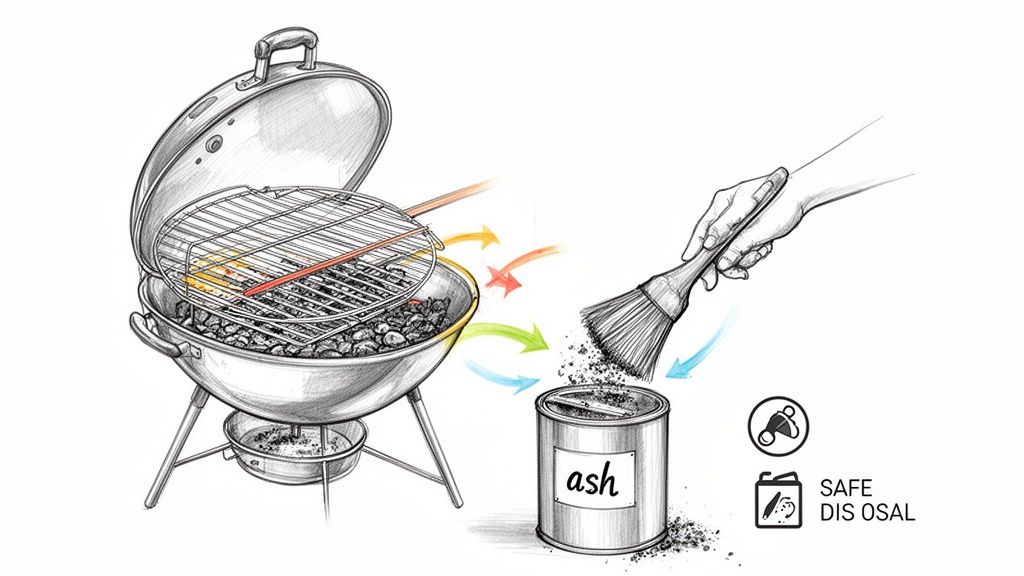
Before you even think about touching the grates, you’ve got to deal with the ash. This is the single most important part of cleaning a BBQ that runs on charcoal.
Always wait at least 12-24 hours after your last cook. You need to be 100% sure the coals are completely cold, as hot embers are a serious fire hazard if you chuck them in the bin too early.
Once everything’s cool, use a brush or scraper to sweep all the ash from the bottom of the kettle into the ash catcher. If your grill doesn’t have a built-in catcher, you’ll have to scoop it out by hand. For safe disposal, pop the ash into a metal bin or wrap it tightly in foil before it goes in your general waste. Never, ever put it straight into a plastic bin.
Cleaning The Grates And Kettle Bowl
With the ash out of the way, it’s time to focus on the cooking surfaces. The cooking grate on a charcoal grill often gets caked in a thick layer of carbonised food and fat. Grab your coiled wire brush and give it a really vigorous scrape on both sides.
For those times it needs a proper deep clean:
- Soak and Scrub: Plunge the grate into a bucket of hot, soapy water for about 30 minutes to an hour. This does wonders for loosening the most stubborn, baked-on grime.
- Wipe the Interior: Use a damp cloth or even a scrunched-up ball of newspaper to wipe down the inside of the kettle bowl and the lid. This gets rid of any loose soot and grease.
If you’re just starting your charcoal journey, getting the light-up right is just as important as the clean-up. You can learn more by checking out our guide on how to use a charcoal chimney starter for a perfect fire, every single time.
A classic mistake is forgetting to clean the charcoal grate—the one the coals actually sit on. This grate needs to be clear of debris to let oxygen flow from the bottom vents to the fuel. Just give it a quick brush after every cook.
A Special Note For Smokers
If you're using a smoker, you have one extra enemy to fight: creosote. This is a black, tar-like gunk that builds up inside your smoker from the wood smoke. A thin, flaky layer is just good seasoning, but a thick, shiny, or sticky build-up is bad news.
Too much creosote will give your food a bitter, acrid taste, ruining those delicate smoky notes you’ve worked so hard to create. It will completely overpower the clean aroma you get from quality fuel.
Use a plastic scraper to gently flake off any thick creosote from the inside walls and lid of your smoker. I’d aim to do this every few cooks, or whenever you notice it looking particularly shiny. This simple step is the key to ensuring your smoked meats taste pure, rich, and delicious—never bitter.
Building a Simple Grill Maintenance Routine
Deep cleaning has its place, but the real secret to a grill that’s always ready for action is simple consistency. The pros don’t wait for a total mess to build up; they rely on simple, repeatable habits.
When you break down maintenance into small, manageable chunks, you prevent the caked-on grime that turns cleaning into a dreaded, day-long chore. It’s all about spending a few minutes now to save hours of hard scrubbing later. A well-maintained grill isn't just cleaner—it performs better, lasts longer, and is always ready for a spontaneous cookout.
The After-Every-Cook Quick Clean
This is the single most important habit you can build. It takes less than five minutes but makes the biggest difference in keeping your grill in top shape.
- Heat and Scrape: Once you've pulled the food off, crank the grill to high and leave it for 10-15 minutes. This incinerates most of the gunk, turning it into ash. Then, while the grates are still nice and hot, give them a good, hard scrub with your coiled wire brush.
- A Quick Wipe: Let the grill cool down a bit, then give the exterior a quick wipe with a damp cloth to get rid of any splatters or drips. Job done.
The Monthly Check-Up
About once a month during peak BBQ season, it pays to spend 20 minutes going a little deeper. This is your chance to catch minor issues before they become major headaches.
- Interior Wipe-Down: Make sure the grill is cool and disconnected. Pull out the grates and flavouriser bars. Scrape out any debris that’s fallen into the cook box and give the inside a wipe with a damp cloth.
- Grease Management: Empty the grease trap or drip pan. Honestly, don't skip this. It’s a critical step for preventing nasty flare-ups.
- Burner Inspection: For gas grills, take a quick look at the burner tubes for any blockages. A small brush is perfect for clearing out any clogged ports.
As part of your routine, it's vital to know how to tackle rust, which is a common enemy for any metal grill. For some solid tips that can be adapted for your grill, you can learn how to remove rust from various surfaces.
The End-of-Season Deep Clean
Before packing the grill away for winter (or at the very start of the season), set aside an hour for a proper deep clean. This is when you’ll follow the detailed steps for your specific grill type—gas or charcoal—to completely reset it for the months ahead. It means soaking grates, detailing burners, and getting every component spotless.
Adopting these simple routines is the key to overcoming 'cleaning fatigue'. It makes grill ownership a pleasure, not a burden, ensuring your grill is always ready for that perfect sprinkle of SPG (Salt Pepper Garlic) Base Blend.
Interestingly, this proactive approach combats a common problem. Google search data from 2020 showed a huge drop in UK searches for 'how to clean a BBQ' right in the middle of peak grilling season. Even with millions of barbecues happening, the clean-up was often ignored, partly because 37% of parents find it a massive deterrent.
By making it a simple, regular habit, you sidestep that problem entirely. You can discover more insights about these UK BBQ trends and see why a little routine goes a long way.
FAQs: How to Clean Your BBQ Grill
Even with a solid guide, there are always a few specific questions that pop up. Here are the answers to the queries we hear most often from fellow UK grillers, designed to give you that last bit of confidence before you get scrubbing.
How often should I deep clean my BBQ grill?
For most of us in the UK, a big, thorough deep clean at the beginning and end of the BBQ season is the perfect rhythm. What’s far more important, though, is the quick 5-minute scrape and wipe of the grates right after each cook. This simple habit stops gunk from building up and makes those big seasonal cleans a whole lot less painful. If you're a serious griller hitting the BBQ several times a week, a monthly check-up to clean out the flavouriser bars and empty the grease trap is a fantastic idea.
Can I use oven cleaner on my BBQ grates?
Honestly, I’d steer well clear of using harsh oven cleaners on your grill grates, especially if they're cast iron or have a porcelain coating. The aggressive chemicals can permanently wreck the finish. Worse, they can leave behind a nasty residue that taints your food with a chemical taste nobody wants. It’s much safer for your grill and your health to stick with natural methods, like a good soak in hot, soapy water or a simple baking soda paste. If you absolutely have to use a commercial product, make sure it’s specifically labelled as safe for BBQ grills.
Always prioritise food-safe cleaning methods. A beautiful-looking grill is pointless if the food it produces tastes of chemicals. Your goal is clean flavour, which starts with a clean grill, free from harsh residues.
What’s the best way to stop food sticking to the grill?
Prevention is definitely the best cure here. Nail these three steps, and you’ll solve 99% of your sticking problems:
- Start Clean: Always begin with a clean, well-brushed grill. Old, burnt-on bits are the number one reason food sticks.
- Oil the Grates: Before you fire it up, wipe a very thin layer of high-smoke-point oil (like rapeseed or sunflower) onto the grates with a paper towel.
- Preheat Properly: Get that grill properly hot before any food even thinks about touching it. High initial heat creates a fast sear, which helps the food release naturally.
And be patient! Food will release from the grates on its own once a good crust has formed. Trying to flip it too early is a guaranteed way to make it stick and tear apart.
My grill grates are rusty. Can I still save them?
Absolutely, in most cases. A bit of surface rust on cast iron or stainless steel grates is usually salvageable. Grab a stiff wire brush or a ball of steel wool and give it some elbow grease, scrubbing all the rust away. Once it's gone, wash the grates thoroughly with soap and water. Now, this next bit is crucial: dry them immediately and completely to stop the rust from coming straight back. If you have cast iron grates, you must then re-season them. Apply a thin, even coat of cooking oil over the entire surface and heat the grill for about an hour. This process bakes the oil into the metal, creating a protective, non-stick shield against moisture.
With your grill sparkling clean and ready for action, it's time to focus on what matters most: incredible flavour. At Smokey Rebel, we believe that every meal should be an adventure. Our small-batch, filler-free seasonings are crafted to bring authentic, bold tastes to your backyard cooking.
Ready to transform your next BBQ? Explore our best-selling rubs and discover your new favourite flavour.
Join our Mailing List
Sign up and get Smokey Rebel Recipes + weekly recipes straight to your inbox!
Recent articles
Explore What Is Anti Caking Agent: Essential Insights (2026)
What is anti caking agent - Learn what an anti-caking agent is, why it's in your food, and how it...
Read moreHow Much Water to Cook Rice: Perfect Ratios for Fluffy
Stop guessing how much water to cook rice! Get perfect ratios for fluffy, delicious results on stove or in a...
Read moreChicken Salt UK: Ultimate Savoury Seasoning Guide
Discover chicken salt uk! Explore its origin, ingredients, & best uses for this Aussie favourite. Learn how to make your...
Read more